

What are the essential elements of a corporate retreat agenda in 2027?

An effective 2027 corporate retreat agenda has five essential elements: a single stated decision or outcome, a pre-read that front-loads context, deep-work blocks of 90 minutes or less, unstructured social time protected on the grid, and a written commitment list with owners and dates published within 48 hours of the closing session.
The outcome you should expect
A retreat is not a morale event with a budget line. It is a decision-forcing mechanism that costs you the fully loaded time of everyone in the room, and the outcome you should expect is a small number of decisions that would not have happened over Slack. If you gather 30 people for two days, you have spent roughly 480 person-hours plus travel, lodging, and facilitation. At a blended loaded cost of $85 to $150 per hour, that is $40,000 to $72,000 in labor alone before anyone books a flight. The right question is not "did people enjoy it" but "what is now true that was not true on Monday."
The concrete deliverable to expect is a commitment list: eight to fifteen decisions, each with a named owner, a date, and a one-line definition of done. Fifteen is roughly the ceiling for a two-day retreat with a mixed leadership group; past that, the list stops being a plan and becomes a wish inventory that nobody tracks. If your closing session produces forty action items, you did not make decisions — you generated homework, and the follow-through rate on retreat homework is dismal precisely because ownership was never forced in the room.
The second outcome, harder to measure but real, is relational bandwidth. People who have eaten dinner together escalate to each other faster. In distributed and hybrid organizations — which is most of them by 2027 — the retreat is often the only high-bandwidth channel the org has, and the practical payoff shows up as fewer stalled cross-functional threads in the following quarter. You can proxy this: count the cross-team decisions that stalled more than two weeks in the quarter before and the quarter after. It is a rough measure, but it is directionally honest and beats a smile-sheet survey.

What you should not expect is strategy invention. Retreats are terrible at generating strategy from a blank page and quite good at pressure-testing, choosing between, and committing to strategy that was drafted beforehand. Teams that arrive with nothing written spend day one arguing about framing and day two rushing to consensus they will quietly abandon. Teams that arrive with a six-page pre-read spend day one interrogating it and day two deciding. That difference — draft in hand versus blank page — predicts retreat quality more reliably than venue, catering, or facilitator pedigree.
Set expectations explicitly in the invitation. Say what the retreat is for, what will be decided, and what will not be discussed. An agenda that promises "alignment" promises nothing and will be judged against every attendee's private hope. An agenda that promises "we will choose one of three 2028 go-to-market motions and staff it" is falsifiable, and falsifiable goals are the only kind you can actually hit.
What drives that outcome
The mechanism is straightforward: cognitive capacity is finite, decisions require both context and energy, and an agenda either protects those or burns them. Every essential element of a corporate retreat agenda maps to one of three levers — front-loading context so the room starts warm, sequencing blocks so energy is spent on the hardest thing while it exists, and forcing written commitment before people scatter.
Front-loading context is the highest-leverage move and the most commonly skipped. A pre-read of five to ten pages, sent five to seven business days ahead, converts the first session from an exposition into an interrogation. Amazon's six-page narrative practice popularized the twenty-minute silent read at the top of a meeting, and the retreat version works the same way: if you cannot trust people to read in advance, read together for twenty-five minutes and start from a shared floor. That single change reclaims two to three hours from a two-day agenda — hours you would otherwise burn on someone presenting numbers everyone could have absorbed on a plane.

Energy sequencing is the second lever. Attention degrades measurably across a day, and the degradation is steepest after lunch. Put the hardest decision in the first working block of day one, not day two afternoon; teams that save the big question for the end reliably run out of clock and settle. Cap working blocks at 75 to 90 minutes with 15-minute breaks that are actually 15 minutes, and schedule the post-lunch slot for something kinetic — a walking pair discussion, a site visit, a hands-on workshop — rather than a slide deck nobody will remember.
The third lever is commitment forcing. Decisions that are not written down with an owner and a date are not decisions; they are consensus vibes that evaporate within a week. The mechanism that works is a visible running list — physical wall, shared doc projected, doesn't matter — updated live during sessions so people watch their names get attached in real time. Ambiguity is easy to sustain when the record is written later by a note-taker; it is nearly impossible to sustain when the sentence "Priya owns this, due March 14" appears on the wall while Priya is in the room.
There is an adjacent dynamic worth naming: psychological safety governs whether the hard conversation happens at all. A retreat agenda that stacks senior leaders presenting to junior attendees for six straight hours will produce polite nodding and zero dissent. Small-group breakouts of four to six people, mixed by function and level, reliably surface objections that never appear in a plenary of thirty. Report-outs then carry the objection into the room with group cover, which is a structural fix for a social problem — and structural fixes outperform exhortations to "speak freely" every time.

Benchmarks and realistic ranges
Duration: two to three days is the working range for a leadership or team retreat. One day is a long offsite meeting — useful, but rarely enough to reach the second-day breakthrough where people stop performing. Four or more days runs into diminishing returns and real operational cost, and is generally reserved for whole-company gatherings at fully distributed organizations where the retreat substitutes for an office entirely.
Session length: 60 to 90 minutes per working block, with 15 minutes between. Plan for six to seven working blocks per full day maximum. If your grid shows nine blocks, you have built a conference, not a retreat, and the last three will be attended by bodies rather than minds.
Structured versus unstructured time: a defensible split is roughly 60 to 70 percent structured, 30 to 40 percent open. That open portion is not slack — it is where the corridor conversations happen, and treating it as fat to be trimmed is the single most common agenda error. When a retreat runs long and something must be cut, the temptation is always to cut the free afternoon. Cut a working session instead.

Group size: plenary discussion degrades past roughly 12 to 15 participants — beyond that, a handful of people talk and the rest spectate. Breakouts of four to six are the sweet spot for genuine debate. If your retreat has 40 attendees, your agenda should be mostly breakouts with short plenary framing and report-outs, not the reverse.
Budget: per-person costs vary enormously by geography and format. A domestic, drive-to, non-resort venue can land in the $500 to $1,200 per person range for two days including meals and meeting space. Fly-in destination retreats at resort properties commonly run $2,000 to $5,000 per person, and international or multi-day executive retreats go well past that. Facilitation, if you hire outside help, is typically a separate line item and is worth it primarily when the CEO or senior leader needs to be a participant rather than a referee — you cannot both run the room and argue in it.
Pre-read: five to ten pages, sent five to seven business days ahead. Longer than twelve pages and read rates collapse. Shorter than four and you have not given people enough to react to.

Recap latency: publish within 48 hours. Beyond that, memory diverges, people reconstruct different versions of what was agreed, and the recap becomes a negotiation rather than a record. The 48-hour rule is the cheapest quality control in the entire process.
Follow-through cadence: 30 / 60 / 90 day check-ins against the commitment list, each a 30-minute standing review, not a new meeting series. Retreat outcomes decay on a predictable curve, and the check-in is what flattens it. Organizations that skip this consistently report that the retreat "didn't stick," which is accurate but misattributed — the retreat worked, the operating system around it did not.
Frequency: annual for company-wide gatherings, semi-annual or quarterly for leadership teams. Quarterly leadership offsites of one to one and a half days paired with one longer annual retreat is a common and effective rhythm, and it lets the annual event focus on the genuinely hard questions rather than routine planning.
Risks, edge cases, and failure modes
The dominant failure mode is the packed grid. Someone builds an agenda in a spreadsheet where every 30-minute cell is filled, ships it, and the retreat runs 20 minutes behind by 10 a.m. and 90 minutes behind by dinner. Every subsequent session gets compressed, the closing commitment session — the one that actually mattered — gets cut to eleven minutes, and everyone flies home with a warm feeling and no plan. Build the grid with 20 percent air in it and defend that air.

The second failure is the theater retreat, where the decisions were made before anyone boarded a plane and the agenda exists to manufacture buy-in. Attendees detect this fast. The tell is that no proposed alternative ever survives a session. The cost is not just a wasted retreat; it is durable cynicism about the next one. If a decision is genuinely already made, say so, present it as context, and spend the room's time on how rather than whether — that is an honest and perfectly legitimate agenda.
Third: mandatory fun. Trust falls, forced karaoke, and personality-assessment workshops with no operational tie generate eye-rolling and, worse, actively exclude people — introverts, people who don't drink, people with mobility constraints, people with caregiving obligations who resent an evening commitment. The fix is optionality with a real default. Offer two or three parallel evening options including one that is quiet, and make clear that skipping carries no cost. Social bonding happens over shared meals and unstructured downtime far more reliably than over engineered activities.
Fourth: accessibility and inclusion failures baked into the agenda itself. Dietary restrictions handled as an afterthought, venues with stairs and no lift, evening programming that runs past 9 p.m. for people with childcare, sessions with no remote option for the colleague who could not travel. By 2027, hybrid attendance is a design constraint, not a courtesy — and half-hearted hybrid, where remote attendees are a laptop propped on a table, is worse than an honest "this session is in-person only, here is the recorded readout." Either commit to real remote infrastructure with a dedicated facilitator watching the chat, or scope sessions explicitly.

Fifth: the CEO who talks for six hours. Speaking time is the clearest signal of what a retreat is actually for. If the most senior person in the room holds the floor for more than roughly 25 percent of plenary time, you have a broadcast, not a retreat, and you would have been better off recording a video. A practical intervention is having the facilitator track speaking time and report it back after day one — it is uncomfortable and it works.
Sixth: no clear owner for the retreat itself. Someone must own the agenda, own the follow-up, and have the standing to tell a VP that their 90-minute deep dive is being cut to 30. Without that authority, agendas accrete — every executive lobbies for a slot, and the retreat becomes a series of departmental presentations glued together, which is the exact structure that produces nothing.
An edge case worth planning for: the retreat that surfaces a genuine, unresolvable conflict. Sometimes the hard conversation goes somewhere real and the room discovers two leaders fundamentally disagree about direction. The wrong move is to paper over it to protect the schedule. The right move is to name it, park it explicitly with a stated resolution path and date, and move on — an honestly parked conflict with a follow-up owner is a legitimate retreat outcome. A conflict buried under a group photo is a liability.

Finally, watch the offsite-versus-retreat conflation. Adjacent formats — a one-day strategy offsite, a two-day team onsite for a distributed group, a sales kickoff, an executive planning session — share mechanics but differ in purpose. A sales kickoff is a broadcast-and-energize event and it is fine for it to be top-down and heavily programmed. A retreat borrowing kickoff structure will feel hollow. Match the agenda architecture to the actual job.
A practical rollout plan
Start six to eight weeks out by writing the retreat's purpose as a single falsifiable sentence and getting the sponsoring executive to sign off on it in writing. If you cannot write that sentence, you are not ready to book a venue. This one artifact kills more bad retreats than any other intervention, because a purpose that cannot survive being written down usually cannot survive two days of scrutiny either.
At five to six weeks, run short input interviews — 20 to 30 minutes each — with a cross-section of eight to twelve attendees. Ask two questions: what decision would make this trip worth it for you, and what conversation are we avoiding? The second question is where the real agenda comes from. Cluster the answers, and the three or four genuine themes will be obvious. Do not survey; interview. Surveys produce safe answers and interviews produce the actual ones.

At four weeks, lock the venue and draft the grid. Assign an owner to every working block, and give each block a stated output, not a topic. "Pricing discussion" is a topic. "Choose between the three pricing models in section 4 of the pre-read and name an owner for the rollout" is an output. Every block should be reviewable against whether its output was produced.
At two weeks, circulate the draft agenda for objections, then freeze it. Late agenda churn is a reliable predictor of a chaotic retreat because it signals unresolved disagreement about purpose that will simply relocate into the room.
At one week, send the pre-read. Five to ten pages, with a clear statement of what you want people to have opinions about. Include the agenda, the logistics, and an explicit note about what is optional. If you have hybrid attendees, send them their specific participation plan separately so they are not improvising.
During the retreat, run the commitment wall from the first session. Someone owns it, updates it live, and reads it back at the end of every day. Day one closes with a five-minute readback and a question: what is missing, and what did we avoid today. Day two closes with the full readback, owner by owner, out loud, with each owner confirming verbally. That verbal confirmation in front of peers is the highest-compliance mechanism available and it costs fifteen minutes.
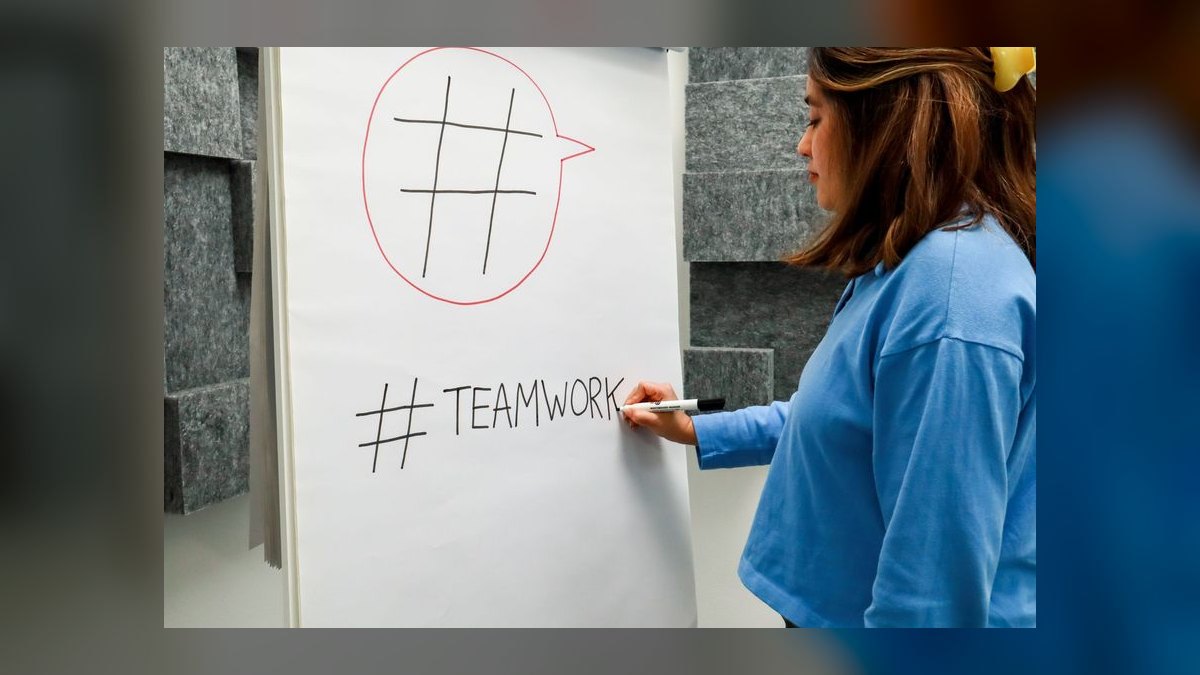
Within 48 hours, publish the recap: decisions, owners, dates, definitions of done, and — importantly — the parked items with their resolution paths. Send it to attendees and to the teams they lead. Broadcasting outward matters because it converts a private commitment into a public one and gives the wider organization a reason to ask about progress.
Then schedule the 30 / 60 / 90 reviews before anyone leaves the venue. Calendar invites sent from the room. The single most common cause of retreat decay is that these get scheduled "next week," and next week the quarter reasserts itself.
One adjacent practice worth borrowing: treat the retreat like a product launch with a post-mortem. Two weeks after, ask attendees three questions — what was worth the trip, what would you cut, what did we not talk about. Keep the answers in a running doc. Retreat quality compounds across years when someone maintains that memory, and resets to zero when the organizer changes and nobody wrote anything down.
Related questions
How long should a corporate retreat be?
Two to three days is the practical range for leadership and team retreats. One day functions as an extended offsite; four-plus days hits diminishing returns except for fully distributed companies where the gathering replaces an office. Leadership teams often pair quarterly one-day offsites with one longer annual retreat.
What should go in the retreat pre-read?
Five to ten pages: the retreat's stated purpose, the specific decisions to be made, the relevant data or options in enough detail to form an opinion, the agenda, and logistics. Send five to seven business days ahead. Beyond twelve pages, read rates collapse sharply.
How much unstructured time should an agenda include?
Roughly 30 to 40 percent. Corridor conversations and shared meals produce much of a retreat's relational value, and open time absorbs the inevitable overruns. When the schedule is over-full, cut a working session rather than the free block — that inversion is the most common agenda mistake.
How do you make retreat decisions actually stick?
Write every decision with a named owner, a date, and a definition of done on a live commitment wall during the sessions. Read it back owner-by-owner at close with verbal confirmation, publish a recap within 48 hours, and schedule 30 / 60 / 90 day reviews before anyone leaves.
Can a retreat work with remote attendees?
Yes, but only with real design: a dedicated facilitator monitoring remote participants, proper room audio, and breakouts that pair remote people with each other rather than isolating them. Half-hearted hybrid — a laptop on a table — is worse than scoping some sessions explicitly in-person with recorded readouts.
FAQ
What are the essential elements of a corporate retreat agenda?
Five: a single stated decision or outcome the retreat exists to produce; a pre-read circulated five to seven days ahead; working blocks capped at 75 to 90 minutes with the hardest question placed first; protected unstructured and social time at roughly a third of the schedule; and a written commitment list with owners, dates, and definitions of done, published within 48 hours. Everything else — venue, catering, activities, branding — is execution detail layered on top of those five.
Should the CEO facilitate the retreat?
Usually not. If the senior leader needs to argue positions, defend a strategy, or change their mind in the room, they cannot simultaneously manage time, call on people, and enforce the agenda. Use an internal facilitator from another function or an external one. When the CEO's role is genuinely to inform rather than debate, self-facilitation is workable — but that is a narrower set of retreats than most leaders assume.
How many action items should come out of a retreat?
Eight to fifteen for a two-day leadership retreat. Past fifteen, ownership dilutes and tracking collapses. If your closing session generated forty items, the room avoided prioritizing — go back and force a ranking before publishing the recap. A short list that gets done beats a comprehensive one that gets forgotten by the second week of the quarter.
Are team-building activities worth including?
Shared meals and genuinely unstructured downtime outperform engineered exercises for building trust. If you include activities, make them optional with real alternatives, avoid anything requiring physical or emotional exposure, and never make attendance a loyalty signal. A walking session or a hands-on workshop tied to actual work usually beats a generic bonding exercise.
What's the difference between a retreat and an offsite?
Mostly duration and depth. An offsite is typically one day, focused on a specific agenda, and returns people to normal work immediately. A retreat runs two or more days, includes overnight stays, and deliberately creates the second-day condition where people stop performing and start talking honestly. Both are legitimate — the mistake is running a one-day offsite and expecting retreat-depth outcomes.
How soon should the recap go out?
Within 48 hours. After that, individual recollections diverge and the recap becomes a negotiation about what was agreed rather than a record of it. Include decisions, owners, dates, definitions of done, and explicitly parked items with their resolution paths. Send it to attendees and to their teams — public commitment holds better than private.
Sources
- https://hbr.org/2015/03/how-to-design-an-agenda-for-an-effective-meeting
- https://hbr.org/2016/07/how-to-run-a-great-offsite-meeting
- https://www.mckinsey.com/capabilities/people-and-organizational-performance/our-insights/if-were-all-so-busy-why-isnt-anything-getting-done
- https://rework.withgoogle.com/guides/understanding-team-effectiveness/steps/introduction/
- https://sloanreview.mit.edu/article/the-implications-of-working-without-an-office/
- https://www.atlassian.com/blog/teamwork/how-to-run-a-team-offsite
- https://basecamp.com/gettingreal
- https://www.gitlab.com/handbook/company/culture/all-remote/
- https://www.gallup.com/workplace/236927/employee-engagement-drives-growth.aspx
Related on PULSE
- How do you run a quarterly business review that changes behavior?
- What makes a sales kickoff worth the travel budget?
- How should distributed teams structure in-person gatherings?
- What belongs in a leadership pre-read document?
- How do you track commitments after a planning session?
 pulse-recentWhat are the key logistics to arrange when planning a corporate retreat in 2027?
 pulse-recentWhat are the concrete steps to planning a family reunion in 2027?
 pulse-recentWhat is the ideal length for a corporate retreat in 2027?
 pulse-recentHow do you choose a location for a corporate retreat in 2027?
 pulse-recentWhat is the first step in organizing a corporate retreat in 2027?
 pulse-recentWhat are the concrete steps to planning a corporate retreat in 2027?
 pulse-recentThe 10 Best Outdoor Birthday Party Venues in the United States in 2027
 pulse-gatheringsTop 10 best Gatherings options in 2027
 pulse-gatheringsThe 10 Best Dallas Wedding Venues in 2027
 pulse-recentWhat is the most common mistake when booking a corporate retreat venue, and how do you avoid it in 2027?