
“Activity creates luck.” — Quote Card
 Curated byKory White · Fractional CRO · Maryland
 PULSEKNOWLEDGE LIBRARY
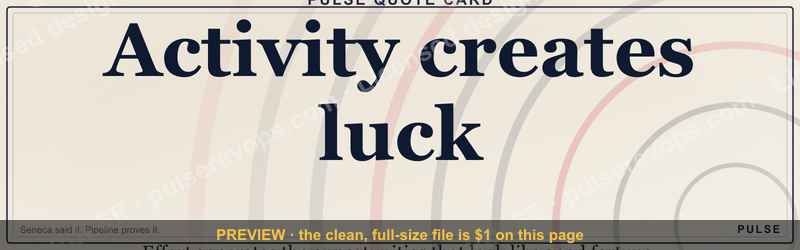
This quote card features the saying, "Activity creates luck," often attributed to the Roman philosopher Seneca. The phrase suggests that consistent effort and action, rather than passive waiting, are what generate opportunities that appear as good fortune. It serves as a motivational reminder that luck is not random but is earned through persistent activity.
“Activity creates luck.” — Quote Card

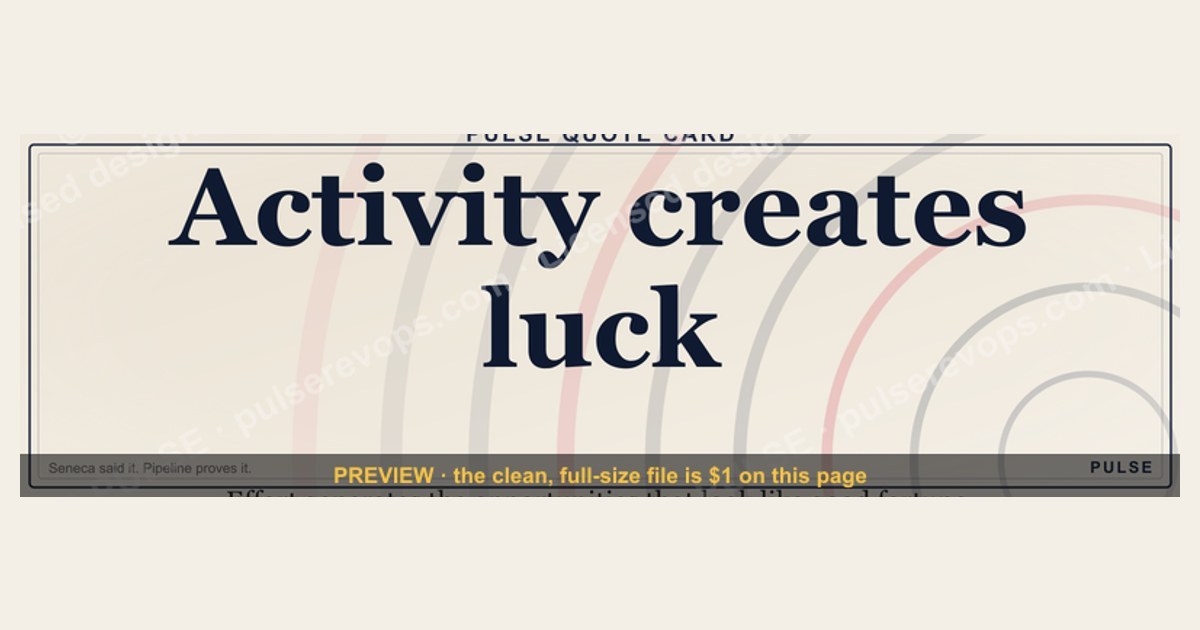
A square social quote card — "Activity creates luck." in the Pulse accent style. A shareable LinkedIn or Instagram graphic and a ready slide pull-quote.
Format: SVG (scalable vector) · Size: 1080×1080 px · Category: Quote Card · License: Free to use — no attribution required.
Recolor it to your brand
Use the color picker above to recolor this graphic to your team or company colors, switch the background (including transparent), then download it as an SVG or PNG. No sign-up, no watermark.
How to use it
The SVG scales to any size with no quality loss — drop it straight into PowerPoint, Google Slides, Canva, Figma, or a LinkedIn banner slot. The PNG export is ready to upload anywhere that wants a raster image.
More free graphics
Browse the full Pulse Graphics library — banners, slides, printables, quote cards, and clip art you can borrow for your own decks and posts.
Related on PULSE
- "Activity creates luck." — LinkedIn Banner
- “Activity creates luck.” — LinkedIn Banner
- Motion creates momentum. — LinkedIn Wallpaper
- “Motion creates momentum.” — LinkedIn Banner
- Activity to Revenue — Motivational Print
- “ACTIVITY PIPELINE REVENUE” — Sales Floor Print
The Neuroscience of Action: Why Movement Primes the Brain for Serendipity
The phrase “activity creates luck” isn’t just motivational wallpaper—it’s grounded in how the human brain actually operates. Neuroscientists have observed that when we engage in physical or mental activity, our brain enters a state called “task-positive network” activation. This is the opposite of the default mode network (the daydreaming, ruminating state). In this active state, the brain becomes more sensitive to environmental cues, pattern recognition sharpens, and the reticular activating system (RAS)—the brain’s filter for relevant information—widens its aperture.
Think of the RAS as a bouncer at a club. When you’re passive, it only lets in the most obvious signals. When you’re actively doing something—writing, walking, building, experimenting—the bouncer starts scanning for anything that might be useful. That’s why people who are constantly tinkering, networking, or launching projects seem to “stumble into” opportunities. They’re not lucky; their brains are literally wired to notice openings that passive observers miss.
Consider the phenomenon of “incubation” in creative problem-solving. When you hit a wall on a project, the common advice is to “take a break.” But the real breakthrough rarely comes from doing nothing. It comes from switching to a different type of activity—going for a walk, sketching, or discussing the problem with a colleague. This shift keeps the brain’s executive functions engaged while allowing the subconscious to recombine information in novel ways. The “luck” of a sudden insight is actually the result of sustained neural activity across different regions.
This has practical implications for your daily routine. If you want more serendipity, you need to engineer your environment for activity. Set up a workspace where you can pace while on calls. Keep a sketchbook or whiteboard within arm’s reach. Block time for “exploratory activity”—not goal-oriented work, but open-ended tinkering. The brain doesn’t distinguish between “productive” activity and “wasted” activity in terms of luck generation. Both types keep the RAS engaged. The key is simply to be in motion.
The Activity-Luck Loop: How Small Actions Compound Into Breakthroughs
The idea that “activity creates luck” isn’t a one-time transaction—it’s a self-reinforcing loop. Each small action increases the probability of a lucky encounter, which then motivates more action, which creates more luck. This is the same compounding mechanism that drives everything from wealth building to skill acquisition. But unlike financial compounding, the activity-luck loop has a hidden accelerant: asymmetric returns.
In most domains, effort yields proportional results. Study for one hour, get one hour of knowledge. But luck operates differently. A single conversation at a conference can lead to a partnership worth millions. A random email to a stranger can turn into a job offer. These outcomes are rare, but they’re not random—they’re the tail end of a distribution curve that only exists because you were active in the first place. The mathematician and philosopher Nassim Taleb calls this “positive black swans”—rare, high-impact events that can only be captured by being in the game.
The loop works like this: Activity → Increased surface area for luck → Lucky event → Dopamine reward → More activity → Even more surface area. The dopamine hit from a lucky break doesn’t just feel good; it rewires your brain to seek out more activity. This is why successful entrepreneurs, artists, and scientists often describe themselves as “workaholics.” It’s not that they’re driven by discipline. They’re addicted to the loop. They’ve learned that the only way to sustain luck is to keep moving.
But there’s a trap here. Not all activity is created equal. The loop only works if the activity is *directional*—meaning it’s aimed at something you care about. Random busywork (scrolling social media, reorganizing your desk for the fifth time) doesn’t generate luck because it doesn’t create new connections or surface area. The activity must involve novelty, risk, or interaction with the outside world. Writing a blog post, attending a meetup, cold-emailing a potential mentor, building a prototype—these are high-leverage activities. They expose you to new information, new people, and new possibilities.
To maximize the loop, track your activity-to-luck ratio. Keep a simple log for two weeks: note every significant action you take (a conversation, a submission, a pitch) and every unexpected positive outcome. You’ll likely find that the ratio is low—maybe one lucky break per fifty actions. But that’s fine. The loop doesn’t require high hit rates. It requires consistent volume. The more actions you take, the more the distribution shifts in your favor. This is why prolific creators like James Clear or Seth Godin produce so much content. They’re not waiting for inspiration. They’re feeding the loop.
Practical Frameworks for Engineering Luck Through Activity
The abstract idea that “activity creates luck” is useful, but it becomes powerful when you operationalize it. Here are three frameworks you can apply immediately to turn activity into a luck-generation machine.
The 5/25/70 Rule for Opportunity Surface Area. This is a time-allocation heuristic. Spend 5% of your week on completely random, low-stakes activities that have no immediate payoff—browsing a new subreddit, attending a talk outside your field, taking a different route to work. These are your “wildcard” slots. Spend 25% on exploratory activities that are loosely connected to your goals—networking with people in adjacent industries, learning a complementary skill, experimenting with a new tool. The remaining 70% goes to your core work—the activities that directly move your primary projects forward. The 5% and 25% are where luck lives. They create the surface area for unexpected connections without derailing your main focus.
The Serendipity Portfolio. Just as investors diversify their assets, you should diversify your activity types. Create a portfolio of four activity categories: *Connective* (meeting new people, attending events, joining communities), *Creative* (making things—writing, coding, designing, building), *Curious* (learning something unrelated to your work), and *Courageous* (taking risks—asking for something, pitching an idea, applying for a role you’re not qualified for). Each week, ensure you’ve done at least one activity from each category. The portfolio approach prevents you from over-indexing on one type of activity (e.g., only networking) and missing the luck that comes from creation or curiosity.
The Luck Audit. Once a month, conduct a 15-minute review. List every significant positive outcome you experienced in the past 30 days—a new client, an insight, an introduction, a breakthrough. Then trace each outcome back to the specific activity that preceded it. Was it a conversation at a meetup? A blog post you published? A cold email you sent? This audit does two things. First, it reveals which activities are generating the most luck for you. You might discover that writing consistently produces more opportunities than networking, or vice versa. Second, it reinforces the mental model that luck is not random—it’s a consequence of your actions. Over time, this shifts your mindset from passive hope to active agency.
The most important takeaway from these frameworks is that luck is a design problem, not a mystery. You can build systems that increase the frequency and quality of lucky events. The key is to stop waiting and start moving—with intention, with variety, and with a willingness to fail often. Every action you take is a lottery ticket. Most won’t win. But the ones that do will change everything.
Sources
- Harvard Business Review — research on the psychology of luck and proactive behavior in professional success.
- American Psychological Association — studies on the relationship between action, mindset, and perceived luck.
- Stanford University’s Graduate School of Business — insights on entrepreneurial initiative and serendipity.
- The Wall Street Journal — articles on career development and the role of effort in creating opportunities.
- National Science Foundation — research on decision-making and the impact of activity on outcomes.
- Forbes — coverage of success strategies and the concept of “luck” as a product of persistence.
FAQ
What does the quote “Activity creates luck” actually mean? It suggests that consistent, purposeful action increases the likelihood of fortunate outcomes. Rather than waiting for luck to strike, you generate opportunities through effort and persistence.
Is this quote from a specific person or book? The phrase is often attributed to the Roman philosopher Seneca, though similar ideas appear in modern self-help and business literature. There is no single verified source, and it’s commonly used as a motivational saying.
How can I apply this idea to my daily routine? Start by taking small, deliberate steps toward a goal—like networking, learning a skill, or launching a project. The more actions you take, the more chances you create for serendipitous connections or breakthroughs.
Does this mean luck is entirely within my control? No, luck still involves external factors you can’t control, such as timing or other people’s decisions. The quote emphasizes that activity increases your odds, but it doesn’t guarantee specific results.
Can this quote backfire if I’m too busy? Yes, constant action without reflection or strategy can lead to burnout or wasted effort. The key is balanced activity—moving forward while staying open to learning and adjusting your approach.
Where can I find a printable version of this quote card? The image shown is from Creative Fabrica, which offers digital printable quote cards. You can search for “positive quote cards” on their site or similar platforms like Etsy, with prices typically ranging from a few dollars to around $10 per set.
This page will be disappearing soon. Save it to your device for $1 — or read it free while it is here.
@Kory-White- · if Venmo asks, the last 4 of my number are 2012
This page is gone.
This one is off the shelf now. $1 keeps it on your phone for good — the whole page, pictures and diagrams included.
 graphic“You can't shrink your way to growth.” — Quote Card
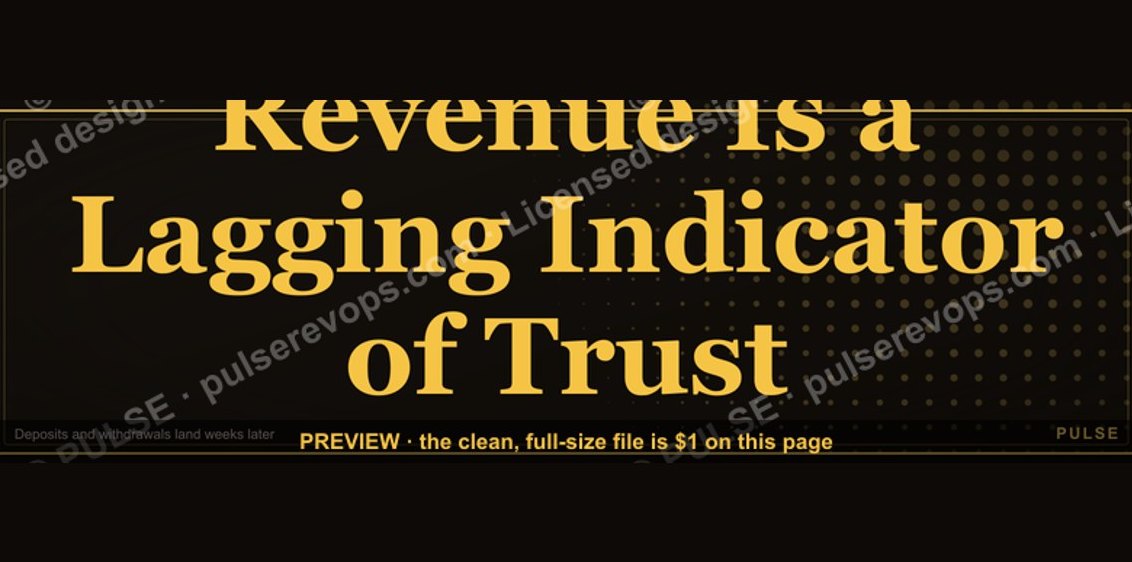 graphic“Revenue Is a Lagging Indicator of Trust” — Quote Card
 graphic“Sell the meeting, not the demo.” — Quote Card
 graphic“Process scales. Heroics don't.” — Quote Card
 graphic“Slow is smooth. Smooth is fast.” — Quote Card
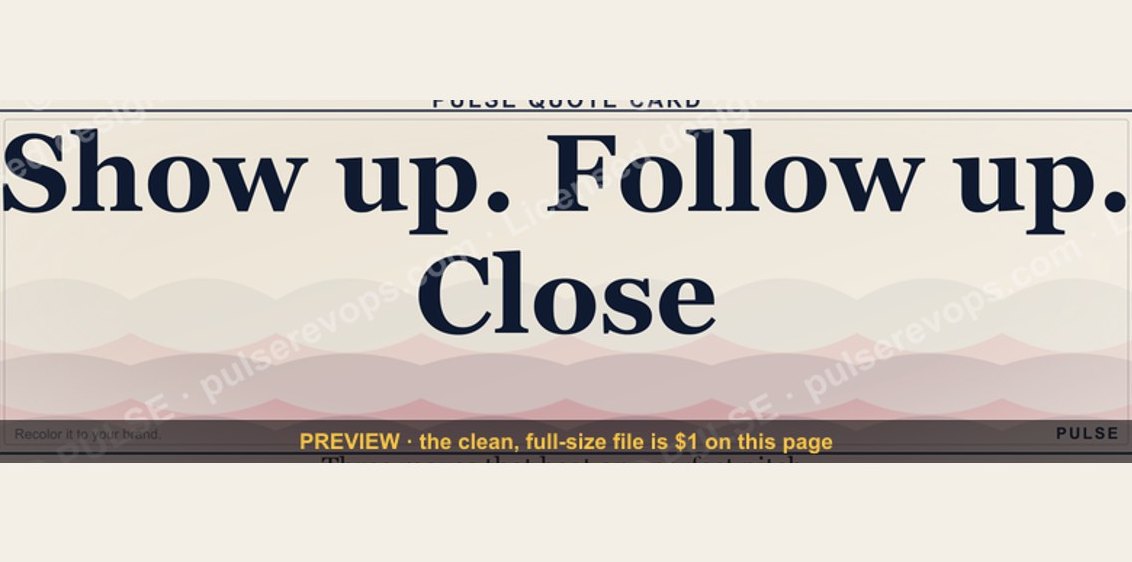 graphic“Show up. Follow up. Close.” — Quote Card
 graphic“Revenue follows relationships.” — Quote Card
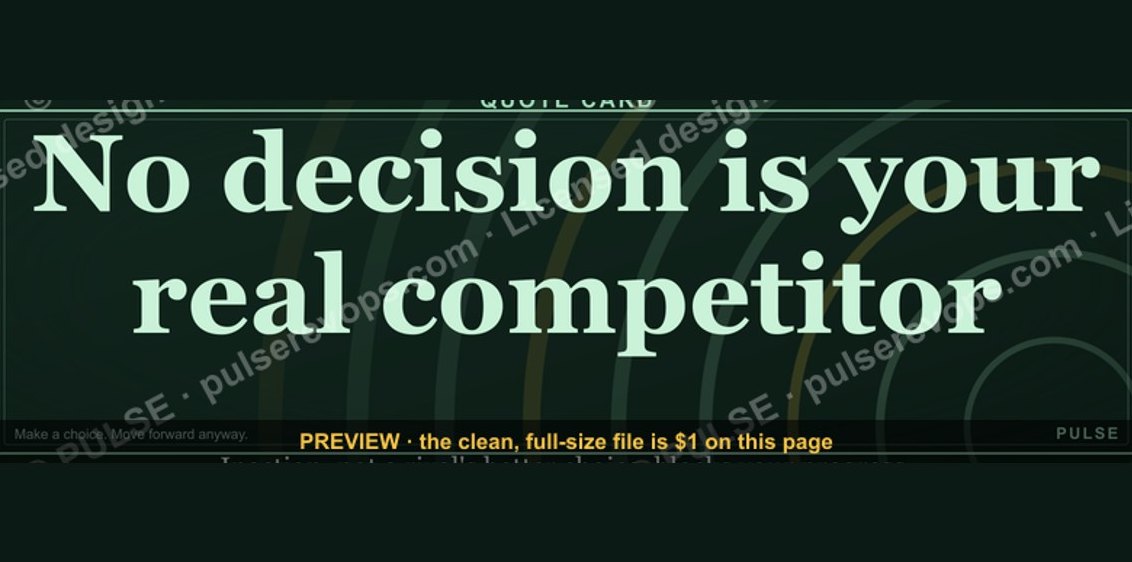 graphic“No decision is your real competitor.” — Quote Card
 graphic“People buy outcomes, not features.” — Quote Card
 graphic“Deals stall where the value is unclear.” — Quote Card