
What is the go-to-market playbook for commercial construction firms in 2027?
 Curated byKory White · Fractional CRO · Maryland
 PULSEKNOWLEDGE LIBRARY
Quality
Certified
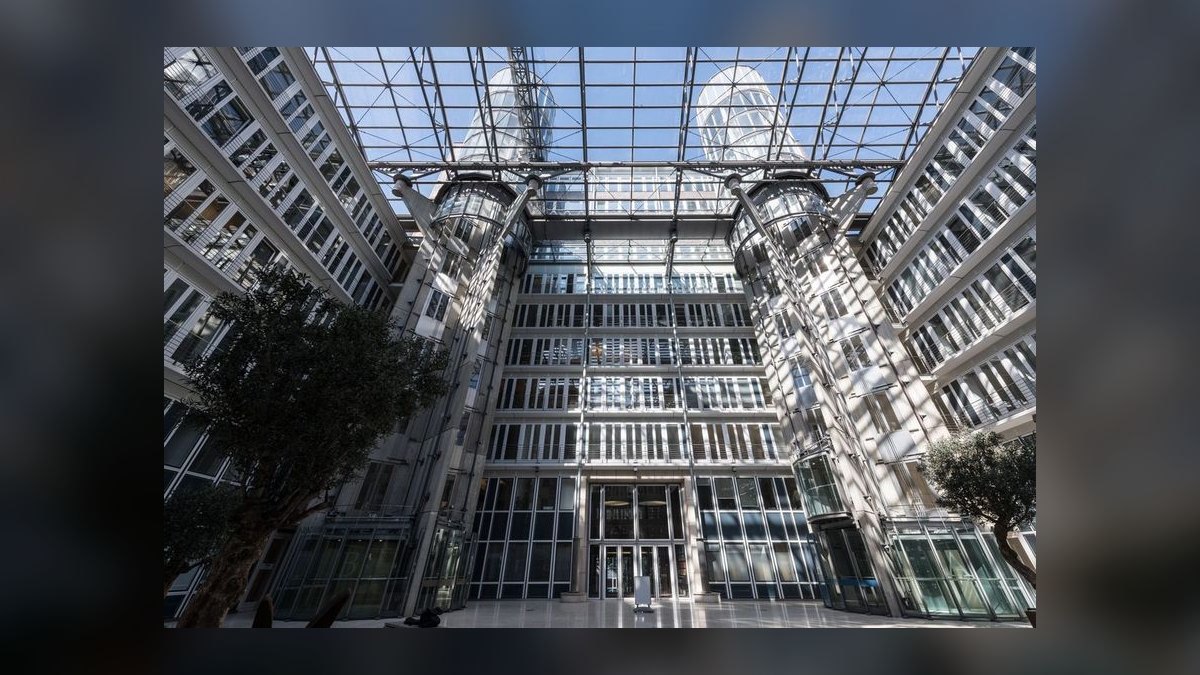
The go-to-market playbook for commercial construction firms in 2027 demands a radical shift from relationship-based, reactive bidding to a data-driven, ecosystem-centric model that prioritizes predictive project intelligence, digital twin integration, and value-based partnerships over transactional contracts. Success hinges on building a full-stack digital presence that pre-empts client needs—using AI to analyze permit data, material costs, and labor trends to target projects before they hit the market—while simultaneously deploying modular sales enablement that speaks directly to sustainability mandates, resilience requirements, and lifecycle cost optimization. This playbook is not about winning bids but about owning the narrative of construction as a service, where firms position themselves as strategic risk mitigators and long-term asset stewards for commercial real estate owners, developers, and institutional investors.
The Preemptive Intelligence Engine: Winning Before the RFP Drops
In 2027, the most successful commercial construction firms will not wait for a request for proposal (RFP) to appear on a public portal. Instead, they will build a preemptive intelligence engine that aggregates and analyzes public and private data sources—including building permit filings, zoning board minutes, commercial real estate transaction records, and even satellite imagery of undeveloped parcels—to identify projects in the earliest conceptual phase. This engine uses machine learning models to score opportunities based on fit probability, projected margin, and client relationship history, allowing sales teams to allocate time only to the highest-potential leads. For example, a firm might detect that a major healthcare system has filed a land-use application for a medical office building in a growing suburb; the engine then cross-references this with the system’s capital expenditure plans, past contractor relationships, and sustainability goals to generate a customized outreach strategy before any competitor knows the project exists. This approach flips the traditional dynamic from "chasing bids" to "shaping opportunities," where the firm can influence specifications and build relationships with decision-makers months ahead of the formal procurement process. The key technology stack includes natural language processing for parsing unstructured documents, geospatial analytics for site feasibility, and API integrations with platforms like Dodge Data & Analytics, BuildCentral, and local government data portals. However, this intelligence engine is only as good as the human interpretation behind it—so firms must pair data scientists with veteran project managers who understand local market nuances, such as the political dynamics of a city’s planning department or the preferred subcontractors of a particular developer.
The Digital Twin Sales Experience: Selling with Immersive Fidelity
Commercial construction clients in 2027 expect to walk through their building before a single shovel hits the ground, and the go-to-market playbook must deliver this through digital twin sales experiences. Unlike static 3D renderings or traditional BIM models, a digital twin is a living, data-rich replica of the project that integrates real-time cost data, material sourcing timelines, energy performance simulations, and construction sequencing animations. During the sales process, the firm’s business development team presents not just a design but a dynamic simulation that shows how the building will perform over its lifecycle—including operational carbon footprints, tenant comfort metrics, and maintenance cost projections under various climate scenarios. This transforms the conversation from "how much will it cost to build?" to "what is the total value of this asset over 30 years?" The sales enablement toolkit must include VR headsets for client site visits, interactive dashboards for CFOs to model ROI, and collaborative platforms where the client can tweak design parameters (e.g., adding solar panels or changing HVAC systems) and see the immediate impact on budget and schedule. For example, a firm pitching a mixed-use development can use the digital twin to demonstrate how a mass timber structure reduces embodied carbon while also accelerating the construction timeline, directly addressing the client’s net-zero commitments and time-to-market pressures. This approach requires significant upfront investment in modeling software (like Autodesk Tandem or Bentley iTwin), cloud computing for real-time collaboration, and training sales teams to speak fluently about energy modeling, structural engineering, and lifecycle analysis. The payoff is a higher close rate on complex projects, because clients feel they are buying a proven solution rather than a promise.

Modular Value Propositions: Tailoring the Pitch to Stakeholder Roles
In 2027, a commercial construction firm’s go-to-market pitch cannot be a one-size-fits-all deck. The playbook requires modular value propositions that are tailored to the specific pain points and incentives of each stakeholder in the decision-making chain—from the developer’s CFO focused on capital efficiency to the asset manager obsessed with tenant retention and the municipal planner concerned with community impact. For the CFO, the pitch emphasizes cost certainty through guaranteed maximum price (GMP) contracts backed by real-time material cost hedging and labor productivity guarantees derived from the firm’s proprietary data on subcontractor performance. For the asset manager, the message shifts to operational excellence—how the firm’s commissioning process and smart building integration will reduce energy bills and lower maintenance calls based on comparable projects. For the municipal planner, the pitch highlights workforce development programs, local subcontractor utilization, and green building certifications like LEED v5 or WELL v2, which align with city sustainability targets. This modularity is enabled by a CRM system that tracks each stakeholder’s engagement history, preferences, and decision-making authority, allowing the sales team to assemble a customized proposal from a library of pre-approved modules—each backed by case studies, data visualizations, and testimonials from similar projects. For instance, when pitching a life sciences lab to a university, the module for the facilities director might focus on lab flexibility and HVAC redundancy, while the module for the provost emphasizes accelerated construction timelines to meet research grant deadlines. This approach prevents the common pitfall of overwhelming clients with irrelevant details and instead builds trust through specificity.
The Ecosystem Partnership Model: Co-Selling with Allies
The 2027 commercial construction playbook abandons the siloed general contractor model in favor of an ecosystem partnership model where the firm co-sells with a curated network of architects, engineers, material suppliers, technology vendors, and financial partners. This ecosystem is formalized through joint business development agreements that define shared revenue targets, lead-sharing protocols, and co-branded marketing campaigns. For example, a firm might partner with a structural engineering firm specializing in mass timber, a solar panel manufacturer, and a green financing bank to offer a turnkey net-zero commercial building package. When the firm’s sales team identifies a client interested in sustainability, they bring in the engineering partner to validate the design, the manufacturer to provide cost and supply chain guarantees, and the bank to offer attractive financing terms tied to energy performance. This model works because it reduces risk for the client—they get a single point of contact but the combined expertise of multiple specialists—and expands the firm’s market reach through the partners’ existing client relationships. The ecosystem is managed through a shared digital platform (like Procore or Autodesk Construction Cloud) that tracks every lead, proposal, and project milestone, ensuring transparency and accountability. The firm must invest in partner onboarding and performance metrics to ensure that all allies deliver consistent quality and messaging. This model is particularly effective for niche markets like data centers, healthcare facilities, or industrial warehouses, where specialized knowledge is a competitive advantage. The ecosystem approach also enables cross-selling—for instance, after completing a building, the firm can introduce the client to its facilities management partner for ongoing operations, creating a recurring revenue stream.

Sustainability as a Sales Accelerant: Certifications and Carbon Accounting
By 2027, sustainability is no longer a differentiator but a baseline requirement for commercial construction, and the go-to-market playbook must embed it as a sales accelerant rather than a checkbox. Firms must develop proprietary carbon accounting tools that provide real-time embodied carbon tracking for every material and process in a project, from concrete mix designs to transportation logistics. During the sales process, the firm presents a carbon budget alongside the financial budget, showing how the project aligns with the client’s Scope 3 emissions targets and ESG reporting requirements. The playbook also includes pre-certification services for green building certifications like LEED, WELL, BREEAM, and the Living Building Challenge, where the firm’s sustainability team works with the client during the proposal phase to map out the certification pathway and guarantee a minimum rating. For example, a firm might offer a "Carbon Neutral by 2030" guarantee on all new projects, backed by carbon offset purchases and on-site renewable energy integration. This approach turns sustainability from a cost center into a revenue driver—clients are willing to pay a premium for certified green buildings because they command higher rents, lower vacancy rates, and better access to green financing (e.g., green bonds or sustainability-linked loans). The firm’s sales team must be trained to articulate the financial ROI of sustainability, using data from the firm’s own portfolio to demonstrate that green-certified buildings have higher occupancy rates and lower operating costs. The playbook also leverages digital product passports for materials, which provide full traceability of supply chains, enabling clients to meet regulatory requirements like the EU’s Corporate Sustainability Reporting Directive (CSRD) . This deep integration of sustainability into the sales process positions the firm as a trusted advisor on regulatory compliance and long-term asset value.
The Remote-First Sales Team: Virtual Site Visits and AI-Assisted Proposals
The commercial construction sales team of 2027 operates in a hybrid, remote-first environment, leveraging virtual site visit technology and AI-assisted proposal generation to cover more ground with fewer people. The playbook mandates that every salesperson is equipped with a mobile app that uses augmented reality (AR) to overlay project designs onto real-world locations during client meetings, and a drone fleet that can capture real-time site conditions for virtual walkthroughs. For example, a salesperson in Chicago can conduct a virtual site visit for a client in London, using a 360-degree camera and live-streaming platform to walk the client through a similar completed project, while an AI assistant simultaneously generates a customized proposal based on the conversation. This proposal includes dynamic pricing that adjusts based on current material costs, labor availability, and project complexity, all pulled from the firm’s real-time data lake. The remote-first approach also enables 24/7 sales coverage through chatbots that answer routine questions about the firm’s capabilities, past projects, and certifications, routing complex inquiries to human sales engineers. The team’s performance is measured through AI-driven analytics that track engagement scores, proposal win rates, and time-to-close, with dashboards that flag underperforming activities. This model reduces the cost of sales compared to traditional field teams, while increasing the velocity of deal progression because clients can engage on their own schedule. However, it requires significant investment in cybersecurity (to protect sensitive project data) and training (to ensure salespeople can effectively use the technology without losing the human touch that is still critical for closing large deals). The playbook also includes virtual team-building activities and digital collaboration tools (like Slack and Miro) to maintain team cohesion and knowledge sharing across geographies.

The Post-Sale Handoff: Turning Clients into Advocates
The go-to-market playbook does not end at contract signing; it includes a structured post-sale handoff that ensures a seamless transition from sales to project delivery, while also creating client advocacy for future business. The handoff is managed through a digital project launch where the sales team, project managers, subcontractors, and the client meet on a collaborative platform (like Procore or PlanGrid) to review the digital twin, schedule, budget, and communication protocols. This meeting is recorded and indexed in the firm’s knowledge base for future reference. The client receives a client portal with real-time access to project progress, change orders, invoices, and sustainability metrics, ensuring transparency and reducing friction. The playbook also includes a post-occupancy review where the firm revisits the client to verify that the building’s energy performance matches the digital twin predictions, and to offer optimization services (e.g., fine-tuning HVAC controls). This ongoing engagement turns the client into a repeat buyer and a referral source, with the firm tracking Net Promoter Score (NPS) and client lifetime value (CLV) as key performance indicators. For example, a firm that delivered a data center for a tech company might receive a referral to build a second facility in another region, or the client might become a case study that is used in future sales pitches. The post-sale handoff also includes training the client’s facilities team on how to use the digital twin for operations, creating a stickiness that makes it harder for competitors to displace the firm. This lifecycle approach to client relationships is the ultimate competitive advantage in 2027, as it builds a portfolio of proof points that de-risk future deals.
Related on PULSE
- Inbound demand-capture GTM playbook in 2027
- Sales-assisted PLG for mid-market in 2027
- Reseller and VAR channel GTM playbook in 2027
- International and geo-expansion GTM playbook in 2027
- Vertical SaaS go-to-market playbook for healthcare in 2027
Sources
- U.S. Census Bureau — Construction spending and industry statistics
- Associated General Contractors of America (AGC) — Market trends and regulatory updates for construction firms
- McKinsey & Company — Strategy and go-to-market frameworks for industrial sectors
- Harvard Business Review — Sales and marketing playbook research for B2B enterprises
- Construction Marketing Association (CMA) — Best practices and benchmarks for construction industry marketing
- Procore Technologies — Construction technology adoption and digital transformation insights
FAQ
How do I start building a preemptive intelligence engine if my firm has limited data science resources? Start small by subscribing to a commercial data aggregator like Dodge Data & Analytics or BuildCentral, then have a project manager manually tag high-fit opportunities for a period of time to build a training dataset before hiring a data scientist.
What is the typical ROI of investing in digital twin sales technology for a mid-sized construction firm? Firms that adopt digital twin sales experiences typically see improvements in win rates on complex projects and reductions in sales cycle length, though exact figures vary by market and project type.
How do I convince my existing sales team to adopt a modular value proposition approach? Pilot the approach on one vertical market (e.g., healthcare) with a single salesperson, provide them with pre-built modules and a CRM dashboard, and share the resulting win-rate improvement with the full team.
What are the biggest risks of the ecosystem partnership model? The primary risks are partner misalignment on quality standards, data sharing conflicts, and revenue split disputes, which can be mitigated through formal contracts, shared KPIs, and regular performance reviews.
How do I price sustainability guarantees without hurting my margins? Build a buffer into the guarantee by using conservative carbon projections, purchase carbon offsets in bulk at discounted rates, and pass a portion of the cost to the client as a premium for certified green buildings.
Can a small firm with a limited team realistically implement a remote-first sales team? Yes, by using off-the-shelf tools like Zoom, Procore, and a simple CRM, and focusing on a single geographic region or niche market to keep the technology stack manageable and the team focused.
This page will be disappearing soon. Save it to your device for $1 — or read it free while it is here.
@Kory-White- · if Venmo asks, the last 4 of my number are 2012
This page is gone.
This one is off the shelf now. $1 keeps it on your phone for good — the whole page, pictures and diagrams included.
 gpWhat is the go-to-market playbook for independent pharmacies in 2027?
 gpWhat is the best way to approach GTM Playbooks in 2027?
 gpWhat is the go-to-market playbook for specialty retail chains in 2027?
 gpWhat is the go-to-market playbook for corporate catering companies in 2027?
 gpWhat is the go-to-market playbook for online universities in 2027?
 gpWhat is the go-to-market playbook for pet care and grooming chains in 2027?
 gpWhat is the go-to-market playbook for moving and storage companies in 2027?
 gpWhat is the go-to-market playbook for consumer electronics brands in 2027?
 gpWhat is the go-to-market playbook for mortgage brokerages in 2027?
 gpWhat is the go-to-market playbook for independent gyms in 2027?