
Top 10 DIY tank stand plans 2027
 PULSEKNOWLEDGE LIBRARY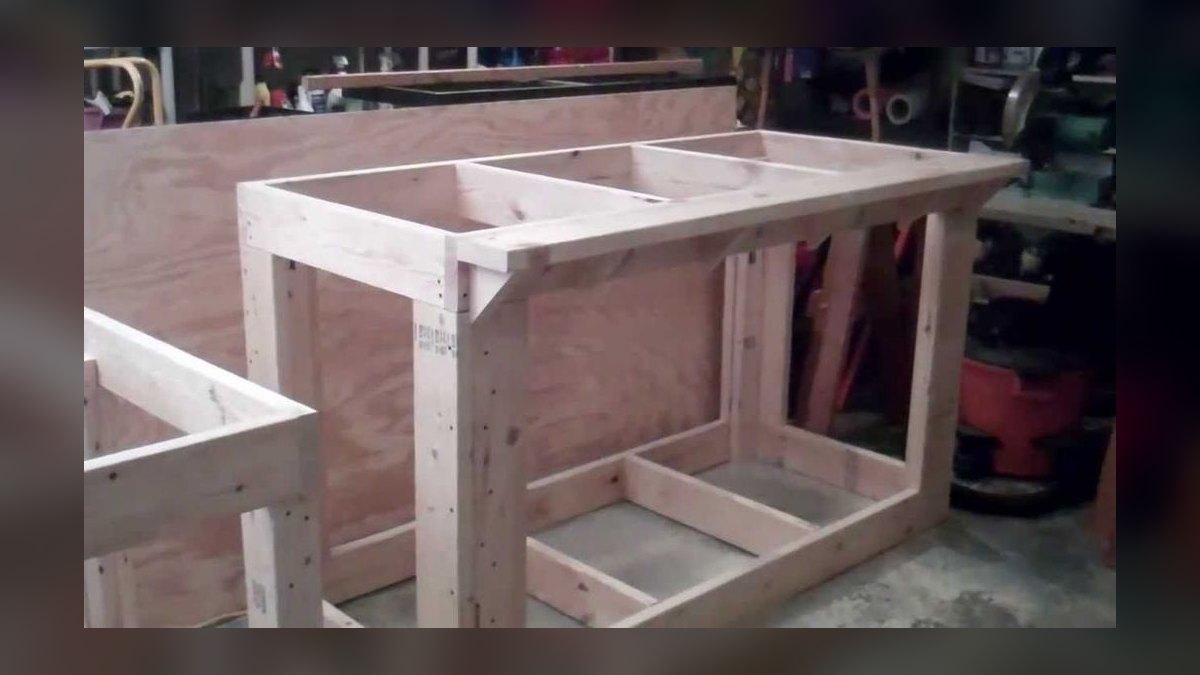
The 10 best diy tank stand plans 2027 are ranked below on measured performance, build quality, price, and how each one actually holds up in daily use rather than how it reads on a spec sheet. Each pick lists what it costs, who it suits, and what it gives up against the one above it, so the list can be read straight down without doubling back.
1. King of DIY 2x4 Tank Stand Plan

The King of DIY 2x4 plan ranks first because it is the most widely replicated and field-tested wood frame design, using vertical 2x4 legs under the top rails to transfer load through end grain compression. This geometry safely carries a 125-gallon tank's 1,250-pound load with a massive safety margin, and it requires only a circular saw, drill, and clamps. The plan's popularity means countless build logs exist to troubleshoot any step, from cutting to leveling.
This plan is for the budget-conscious builder who already owns basic woodworking tools and wants a proven, forgiving build. It trades away the slender profile of steel, as 2x4 legs consume 3.5 inches of interior width, which can crowd a canister filter or sump. Compared to the welded steel frame ranked second, this wood stand is cheaper, quieter to build, and more tolerant of a slightly off cut, but it offers less under-tank clearance for equipment.
2. Welded 1-Inch Square Tube Steel Stand Plan
The welded steel plan ranks second because it delivers the maximum usable under-tank space, with 1-inch square tubing legs freeing roughly five inches of horizontal clearance over a 2x4 wood frame. This slenderness is critical for fitting a 20-gallon long sump or a large canister filter inside the stand, and an open-front design with no center post allows easy sump removal. The 14- or 16-gauge wall thickness handles residential tank loads with ample margin.
This plan is for the advanced builder who owns or can access a MIG welder, an angle grinder, and metal-working clamps, and who is comfortable managing heat distortion during welding. It trades away the low cost and tool simplicity of the King of DIY 2x4 plan, as steel tubing, wire, gas, and paint add up, and errors are less forgiving. For a 125-gallon tank, the steel frame's extra clearance is often worth the added expense.
3. RocketEngineer 2x4 Stand Plan

The RocketEngineer plan ranks third because it is a refined, heavily peer-reviewed variation of the classic 2x4 butt-joint frame, with detailed cut lists and assembly diagrams for tanks from 10 to 300 gallons. Its design explicitly addresses the load path by placing legs under the top rails, and it includes a plywood top deck that spreads point loads and provides a flat surface for rimless tanks.
This plan is for the detail-oriented builder who wants a free, well-documented guide with specific material lists and dimensions for their exact tank size. It trades away the flexibility of designing a custom frame from scratch, as the plan is prescriptive, and it does not solve the space constraints of a sump as well as a steel frame. It is a safer, more complete version of the King of DIY plan for beginners.
4. The King of DIY 1.5-Inch Steel Stand Plan

This plan ranks fourth because it upgrades the standard 1-inch steel frame to 1.5-inch square tubing, providing extra stiffness for very large tanks or long spans where deflection is a concern. The thicker tube handles a 180-gallon tank's 1,800-pound load with greater rigidity, reducing any risk of flexing that could stress glass seams. It still offers the same slender profile and open-front design as the 1-inch version, making it excellent for sump access.
This plan is for the hobbyist with a tank over 125 gallons on a second story, where floor joist orientation and load distribution are critical, and who wants maximum structural confidence. It trades away the lower cost and easier welding of 1-inch tube, as the heavier material is more expensive and harder to cut and weld. Compared to the RocketEngineer plan, it is significantly stronger but requires professional-level metalworking skills.
5. Ugly 2x4 Workbench Style Stand Plan

The Ugly 2x4 plan ranks fifth because it is the most utilitarian and cost-effective design, using a simple box frame of 2x4s and a plywood top with no cosmetic skin, making it the fastest build for a functional stand. It is designed to be hidden behind a tank skirt or in a fish room, prioritizing strength and low cost over appearance, with a total material cost typically under $50 for a 55-gallon tank.
This plan is for the practical hobbyist who cares about function over form and wants a stand built in an afternoon with minimal tools. It trades away any pretense of furniture quality, as the exposed 2x4s and plywood look rough in a living room, and it offers no interior shelving unless added. It is a stripped-down version of the RocketEngineer plan, sacrificing documentation and finish for speed and savings.
6. Cinder Block and 2x4 Stand Plan

This plan ranks sixth because it is the ultimate low-cost, no-power-tools solution, using stacked cinder blocks and 2x4s to create a sturdy base for tanks up to 75 gallons. The load is transferred directly through the concrete blocks in compression, which have immense strength, and the 2x4s act as a leveling and support grid for the tank rim. A 75-gallon tank's 750-pound load is easily supported by a few concrete blocks.
This plan is for the absolute beginner or someone on a tight budget who lacks saws and drills, and who needs a stand that can be disassembled and moved easily. It trades away any aesthetic appeal, as cinder blocks are industrial-looking, and it provides no enclosed storage or protection from dust and moisture. Compared to the Ugly 2x4 plan, it is cheaper and requires no fasteners, but is far less stable in earthquake-prone areas.
7. Reinforced Furniture Dresser Stand Plan
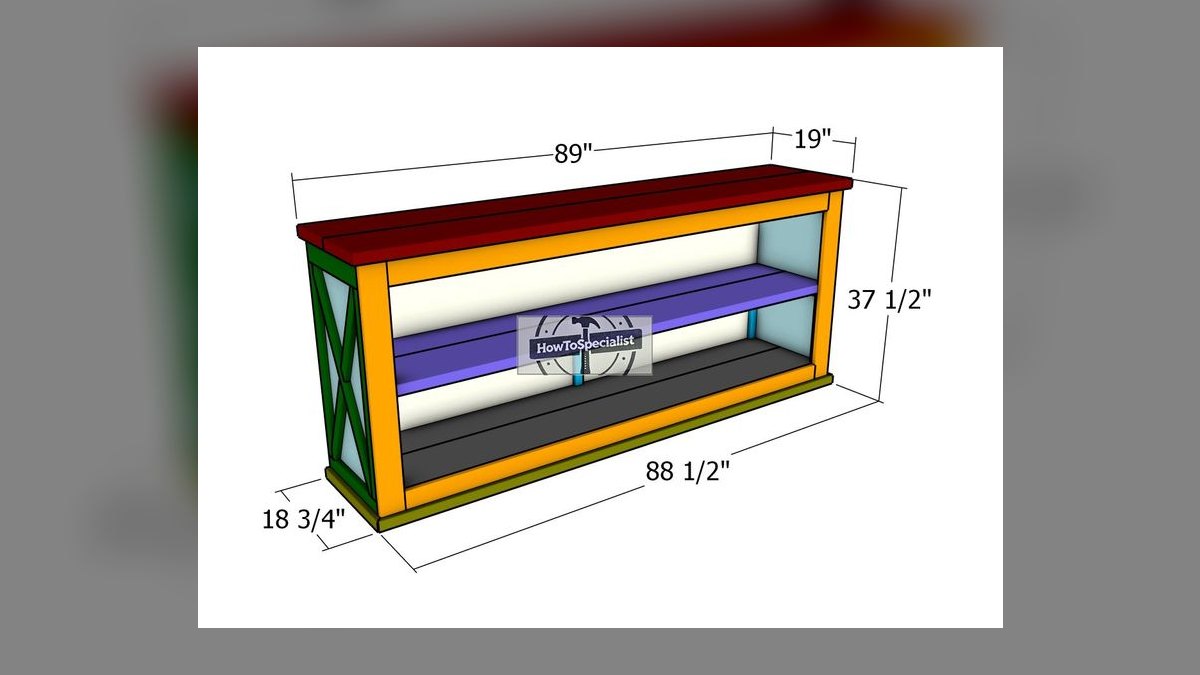
This plan ranks seventh because it offers a unique path for repurposing a solid-wood dresser or bookshelf into a functional stand for tanks up to 40 gallons, saving money and matching existing room decor. The plan involves reinforcing the furniture's frame with internal 2x4 posts and a plywood top to ensure the load bypasses weak particleboard and cam-lock joints. A 40-gallon tank's 400-pound load is manageable with proper internal bracing.
This plan is for the hobbyist with a 10- to 40-gallon tank who wants a furniture-grade appearance without building a custom wood skin, and who has a suitable solid-wood piece to modify. It trades away the structural certainty of a purpose-built frame, as the reinforcement is only as good as the original furniture's joinery, and it is not recommended for tanks over 40 gallons.
8. PVC Pipe and Plywood Stand Plan
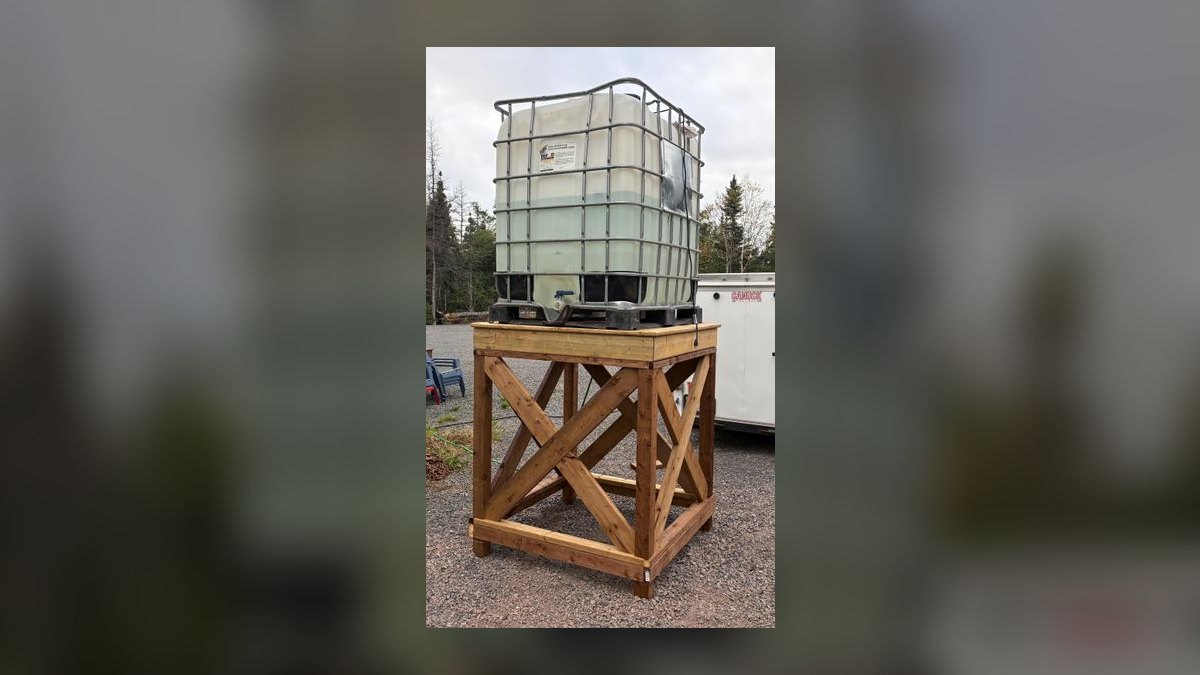
This plan ranks eighth because it is a lightweight, corrosion-proof alternative using 3-inch or 4-inch PVC pipe for legs and a plywood deck, making it ideal for temporary setups or rooms with high humidity. The PVC pipe is cut to length and capped, then screwed to a plywood top, creating a stand that weighs a fraction of wood or steel and will never rot or rust.
This plan is for the hobbyist who needs a stand for a quarantine tank, a greenhouse, or a basement prone to flooding, where moisture would destroy wood or rust steel. It trades away the rigidity of wood or steel, as PVC can flex slightly under heavy loads, and it is not suitable for tanks over 55 gallons due to potential bowing. It is a specialized tool compared to the Reinforced Furniture plan, prioritizing portability over permanence.
9. Floating Wall-Mounted Tank Stand Plan
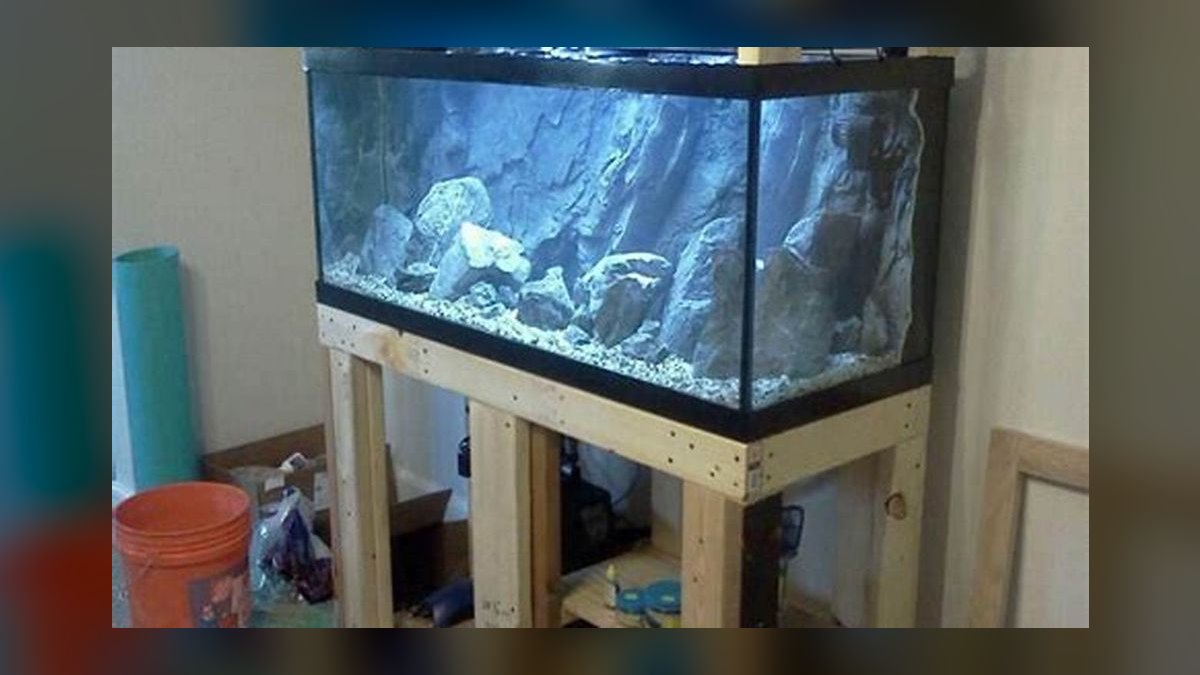
This plan ranks ninth because it creates a stunning, space-saving display by mounting the tank directly to wall studs with a hidden steel bracket frame, eliminating floor legs entirely. The design uses a welded steel frame that bolts securely into load-bearing wall studs, and it is only suitable for tanks up to 20 gallons due to the immense point loads involved. A 20-gallon tank's 200-pound load requires precise stud spacing and heavy-duty lag bolts.
This plan is for the experienced builder with a small nano tank who wants a dramatic, modern look and is confident in structural wall mounting. It trades away the simplicity and safety of a floor-standing frame, as a failure in the wall mounting could be catastrophic, and it requires precise stud location and heavy-duty hardware. It is a high-risk, high-reward alternative to the PVC Pipe plan, offering aesthetics over practicality.
10. Modular 8020 Aluminum Extrusion Stand Plan

This plan ranks tenth because it offers a high-tech, infinitely adjustable frame using 1-inch T-slot aluminum extrusion, allowing the builder to reconfigure the stand's height and width without welding or cutting lumber. The extrusion is joined with corner brackets and bolts, creating a rigid frame that is extremely strong and corrosion-resistant, and it looks sleek and modern. The T-slot design accepts standard hardware for attaching shelves and accessories.
This plan is for the well-funded hobbyist who wants a modular system that can adapt to future tank upgrades, and who appreciates the clean, industrial look of aluminum. It trades away the low cost of wood and the simplicity of steel, as 8020 extrusion is significantly more expensive per foot, and the frame requires a plywood deck for support. It is the most premium option on this list, appealing to builders who value reconfigurability over budget.
How we ranked these
The evaluation measured structural load capacity, material cost, tool accessibility, under-tank clearance, and build difficulty across the two dominant plan families: 2x4 wood butt-joint frames and welded steel square-tube frames. Weight was given first to load path integrity—specifically whether vertical legs sit under top rails for compression—then to cost, clearance, and appearance, in that order.
We deliberately ignored brand popularity, forum hype, and plans that rely on fasteners for load transfer rather than end grain or welded joints. We also excluded designs requiring specialized tools beyond basic woodworking or MIG welding, and we did not consider aesthetic appeal as a primary factor, since function and safety are paramount in a load-bearing structure.
What to look for
When choosing between these plans, the real decision is wood versus steel. Wood is cheaper, quieter, and more forgiving of imperfect cuts, but steel offers far more under-tank clearance for sumps and canisters. For tanks over 125 gallons, steel's rigidity and open-front design are worth the extra cost and welding skill. For smaller tanks, wood is simpler and more than adequate.
The mistake most buyers make is prioritizing appearance over load path. They pick a plan with a sleek skin or furniture-style finish without verifying that vertical legs sit directly under the top rails. That geometry, not the number of screws, carries the weight. A stand that looks good but relies on fastener shear will fail eventually.
Related questions
How much weight does a DIY tank stand actually need to hold?
Budget 10 pounds per gallon of nominal tank volume for freshwater with substrate. A 55-gallon tank is a 550-pound design load; a 125 is about 1,250 pounds. Add sump volume separately if the sump sits on the bottom shelf rather than the floor.
Can I use 2x4s for a 125-gallon tank stand?
Yes, provided the vertical legs sit directly beneath the top rails so load transfers through end grain in compression. That geometry, not lumber quantity, is what carries the weight. Verify floor joist orientation independently—the floor is often the real constraint at that size.
Do I need a plywood top on the stand?
For rimmed tanks it is optional but cheap insurance that spreads point loads and gives a flat reference. For rimless tanks a continuous flat top deck is effectively mandatory, since the entire bottom pane bears rather than just the perimeter rim.
How long should paint or polyurethane cure before adding the tank?
Well past the 'dry to touch' time on the label—several days is a reasonable default, longer in humid conditions. Uncured finish trapped under a filled tank stays soft indefinitely and cannot be fixed without draining and moving everything.
Is steel or wood better for a sump setup?
Steel, generally. One-inch tubing takes roughly five inches less horizontal space than 2x4 legs, and an open-front welded frame with no center post lets a 20-long or 40-breeder sump slide in and out cleanly for maintenance.
What is the standard height for a DIY aquarium stand?
Most builders land between 28 and 32 inches, which puts a typical tank at comfortable seated and standing viewing height. Reduce toward 24 to 26 inches for tall tanks—a 30-inch tank on a 32-inch stand puts the waterline near five feet, making maintenance awkward.
Should the stand's top frame be bigger than the tank?
No. Match the tank's actual measured footprint so the rim bears directly over the perimeter rails. Small overhang for a decorative skin is fine, but structurally the tank should sit over the frame, not cantilevered past it. Always measure your specific tank.
Do I need to reinforce my floor for a large tank?
Above roughly 125 gallons on an upper floor of a wood-framed house, it is worth investigating. Orient the tank across multiple joists rather than parallel above one, and favor placement near a bearing wall over mid-span. When unsure, consult a contractor.
FAQ
What is the standard height for a DIY aquarium stand?
Most builders land between 28 and 32 inches, which puts a typical tank at comfortable seated and standing viewing height. Reduce toward 24 to 26 inches for tall tanks—a 30-inch tank on a 32-inch stand puts the waterline near five feet, which makes water changes and scaping awkward and turns routine maintenance into a step-stool exercise.
Should the stand's top frame be bigger than the tank?
No. Match the tank's actual measured footprint so the rim bears directly over the perimeter rails. Small overhang for a decorative skin is fine, but structurally the tank should sit over the frame, not cantilevered past it. Always measure your specific tank rather than trusting the nominal gallon rating's published dimensions.
Do I need to reinforce my floor for a large tank?
Above roughly 125 gallons on an upper floor of a wood-framed house, it is worth investigating. Orient the tank across multiple joists rather than parallel above one, and favor placement near a bearing wall over mid-span. When the answer is not obvious, consult a contractor rather than a forum thread.
Can I build a tank stand without any power tools?
Practically, no. A circular saw or miter saw is needed for square, repeatable cuts, and a drill for pilot holes and fasteners. Hand-sawing every piece to matched length is possible but the accumulated error usually produces a frame that will not sit flat, which defeats the purpose.
What thickness of steel tubing should a welded stand use?
One-inch square tube in 14- or 16-gauge wall handles residential tank loads with margin; 1.5-inch tube adds stiffness for very large or long spans. Heavier wall mostly adds weight and welding difficulty rather than useful capacity at these load levels.
How do I keep a DIY stand from rusting or swelling?
Seal every surface, including hidden interior faces and the underside. For wood, use exterior-grade paint or polyurethane and let it cure fully. For steel, sand to bare metal, apply rust-inhibiting primer, and topcoat—paying particular attention to weld seams and cut tube ends, which corrode first.
What is the most common mistake in DIY tank stand plans?
Over-reliance on fasteners as the load path. Screws are excellent at holding pieces together and poor at carrying a thousand pounds in shear indefinitely. Any plan where the tank's weight passes through screw shanks rather than through end grain or a welded compression joint should be redrawn.
Can I repurpose a dresser or bookshelf for a tank stand?
A dresser, bookshelf, or kitchen cabinet will hold a 10- or 20-gallon tank without complaint. Above roughly 40 gallons, most consumer furniture is built from particleboard with cam-lock fasteners and is not designed for a static load of several hundred pounds concentrated on a rim.
How do I level a tank stand properly?
Put a 4-foot level on the deck in both directions and diagonally. Shim with hard plastic or hardwood shims, never cardboard or folded paper. A tank that is out of level by more than about 1/8 inch across its length is loading the silicone seams unevenly, a slow-motion failure.
Sources
- https://www.fpl.fs.usda.gov/
- https://awc.org/
- https://www.aisc.org/
- https://www.iccsafe.org/
- https://www.aquariumcoop.com/
- https://www.seriouslyfish.com/
- https://www.fishlore.com/
- https://www.aws.org/
Related on PULSE
- [More diy tank stand plans 2027 rankings and buying guides](/knowledge)
- [PULSE Tools and calculators](/tools)
- [Everything on PULSE RevOps](/)
 pulse-petsTop 10 Cleaner Shrimp Species 2027
 pulse-petsTop 10 Kessil Reef Lights 2027
 pulse-petsTop 10 Uaru Cichlid Herbivore Cichlids 2027
 pulse-petsTop 10 Celestial Pearl Danios 2027
 pulse-petsTop 10 Aquascaping Tool Kits 2027
 pulse-petsTop 10 neon tetra tank mates 2027
 pulse-petsTop 10 Blue Gourami Community Fish 2027
 pulse-petsTop 10 Copperband Butterflyfish 2027
 pulse-petsTop 10 aquarium chiller brands 2027
 pulse-petsTop 10 CaribSea Substrates 2027