


Outreach vs Salesloft vs Apollo — which sales engagement platform should you actually pick in 2027?
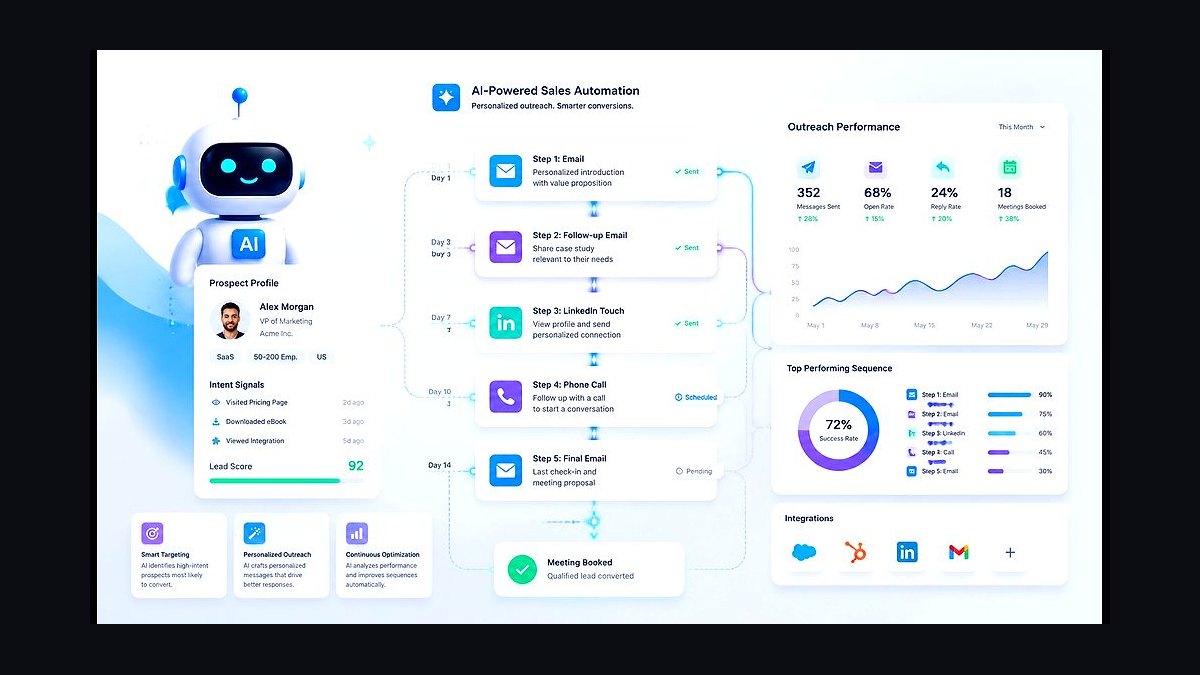
In 2027, pick by team size and what you already own. Under 30 SDRs/AEs on a tight budget, choose Apollo Sales Engagement at ~$59-$99/user/mo because data is included — you stop paying ZoomInfo a second time. From 30 to 150 reps wanting native conversation intelligence in one bill, choose Salesloft Premier at ~$165/user/mo. Above 150 reps with deep Salesforce admin and complex multi-team workflows, choose Outreach Enterprise at ~$200-$250/user/mo. Edge case: if you already run Gong, stay on Salesforce + Outreach — Gong plus Salesloft Conversations is wasteful overlap.
TL;DR
- Apollo wins SMB and lean mid-market on bundled data + engagement at roughly half the Outreach price.
- Salesloft surged after the Drift and Vergify acquisitions made Conversations a first-class citizen — strongest pick for 30-150 reps who want one vendor for cadence + call coaching.
- Outreach is still the heavyweight for 150+ reps and complex Salesforce orgs but lost mid-market ground after the OneTeam overhaul and PE-driven price hikes.
- The three deployment killers are cadences without say-no rules, AI-written outbound with no rep review, and treating connect-to-meeting as a tool metric when it's a CRM hygiene problem.
- If you already run Gong, do not buy Salesloft Premier — the Conversations module duplicates spend.
The 3 Real Players Plus 2027 Picks
The sales engagement category cleanly separated into three tiers by 2027. Outreach and Salesloft are the platform vendors competing for the enterprise and upper mid-market. Apollo redefined the SMB and lean mid-market segment by stapling a 275M-contact database to the engagement layer, so buyers stop writing two checks. Mixmax, Reply, and Lemlist remain credible challengers under 15 reps but rarely survive a Series B sales hire.

| Tool | 2027 Price | Data Included | Conversation Intel | Salesforce Depth | Best For |
|---|---|---|---|---|---|
| Outreach Enterprise | $200-$250/user/mo | No, add ZoomInfo | Add-on Kaia | Deepest — custom objects, triggers, governance | 150+ reps, Salesforce-heavy orgs |
| Outreach Standard | $130-$170/user/mo | No | Add-on | Strong | 75-150 reps without AI need |
| Salesloft Premier | ~$165/user/mo | No, add ZoomInfo or Apollo | Bundled via Drift/Vergify | Strong but lighter than Outreach | 30-150 reps wanting one bill for cadence + calls |
| Salesloft Advanced | ~$125/user/mo | No | Add-on | Strong | 30-75 reps, no conversation intel yet |
| Apollo Sales Engagement | $59-$99/user/mo | Yes — 275M contacts | Basic native | Functional, not deep | Under 30 reps, cost-sensitive, SMB |
| Mixmax / Reply / Lemlist | $30-$75/user/mo | No | None | Light | Under 15 reps, founder-led outbound |
The numbers move ±10% on multi-year commits and seat volume above 100. Apollo's quoted list is unusually honest because they sell self-serve; Outreach and Salesloft both negotiate hard once you ask for procurement paperwork.
The Market Shift Since 2022

The category looks nothing like it did at the 2021 peak. Outreach raised at a $4.4B valuation in 2021, then spent 2022 and 2023 absorbing the OneTeam product overhaul — collapsing what had been separate Engage, Meet, and Forecast SKUs into a single platform. The migration was rough; G2 mid-market satisfaction scores dropped notably, and several Pavilion sales-ops surveys flagged churn from 50-150 rep teams citing implementation burnout. Private equity exposure also pushed list prices up roughly 20-30% between 2023 and 2026 to defend revenue per customer. Outreach is still the best fit for the largest, most Salesforce-native orgs, but the mid-market opening it left behind got filled fast.

Salesloft was the direct beneficiary. The 2023 Drift acquisition gave them a real conversation intelligence story, and the smaller Vergify pickup added meeting analytics that Salesloft folded into the Premier tier. By 2025 Premier was the only major engagement plan with conversation intelligence included in one bill, which mattered enormously for any CRO who had been writing checks to Gong, Outreach, and Salesforce simultaneously. Salesloft's mid-market win rate against Outreach climbed sharply through 2025 and 2026 — internal analyst notes from Forrester and Bridge Group both flagged Salesloft taking 30-150 rep replacements off Outreach roughly two to one.
Apollo did something different. Instead of competing on platform depth, they bundled the 275M-contact database — a ZoomInfo-class asset they built rather than bought — with a competent engagement layer at roughly a third of Outreach's list price. For any team where ZoomInfo plus Outreach was running $400+ per user fully loaded, Apollo cut that to under $100. The result was that Apollo became the default below 30 reps and started winning lean mid-market deals where the buyer was a RevOps leader counting line items rather than a CRO chasing capability checkboxes. Mixmax, Reply, and Lemlist still hold the under-15-rep founder-led segment but rarely survive a real sales hire who has used Salesloft or Outreach before.

3 Deployment Failure Modes
The three ways teams burn six figures on these tools have nothing to do with which platform they picked. The first is building cadences without rep say-no protocol — no clear opt-out language, no suppression rules for accounts in active opportunities, no pause when a prospect replies negatively. This generates unsubscribe spikes and, worse, domain reputation damage that takes months to repair. Every cadence needs a documented "stop sending if" rule before it goes live.

The second is letting AI write all outbound without rep review. The 2026 generation of Outreach AI Workflows, Salesloft Rhythm, and Apollo's AI Email writes serviceable copy, but unreviewed AI outbound has shown reply rates 40-60% lower than rep-edited equivalents across multiple Bridge Group and Pavilion benchmarks. Use the AI to draft, never to send. Make the rep accept or edit every message.
The third is the silent killer — not measuring connect-to-meeting cleanly. Teams complain their engagement tool isn't producing pipeline when the real problem is that meetings booked aren't being attributed back to the cadence step that triggered them. This is almost always a Salesforce data hygiene problem disguised as a tool problem. Before you blame Outreach or Salesloft or Apollo, audit your activity-to-opportunity attribution and make sure your campaign influence model actually fires when a cadence-sourced meeting converts.
Related on PULSE
- Outreach vs Salesloft vs HubSpot Sales Hub: Which sales engagement platform should you pick in 2027?
- PLG vs sales-led growth in 2027 — which one should you actually pick?
- Salesforce vs HubSpot for RevOps in 2027 — which one should you actually pick?
- How should a 2027 sales org pick AI-augmented coaching tools?
- Should I open or buy a Pick Up Stix franchise in 2027?
- How do you pick between fractional CRO syndicates and boutique executive search?
Key Differentiator in 2027: Native AI Agents vs. Bolt-On Copilots
By 2027, the biggest functional gap between these platforms isn't sequencing or dialer quality — it's how deeply they embed autonomous AI agents into daily workflows. Outreach has invested heavily in "Outreach AI Agents" that can autonomously handle meeting rescheduling, follow-up cadence pauses based on reply sentiment, and even draft multi-thread replies from CRM history. These agents run on your existing Salesforce data without needing a separate AI subscription. Salesloft took a different path: their "Rhythm AI" is more of a copilot that suggests next-best-actions and auto-populates call scripts from conversation intelligence, but it stops short of executing tasks without human approval. Apollo, meanwhile, leans into agentic sequences that can autonomously enrich, score, and re-queue leads based on engagement signals — all within their unified data layer. If your team wants to reduce manual task work by 30-50% without adding another tool, Outreach's agent ecosystem is currently the most mature. If you prefer human-in-the-loop guardrails, Salesloft's copilot approach feels safer for compliance-heavy industries like finance or healthcare. Apollo's agentic sequences are the most aggressive — they'll automatically pause and restart sequences based on reply patterns — but that autonomy can backfire if your data quality isn't pristine.
Hidden Costs and Contract Lock-In to Watch in 2027
Pricing transparency has improved slightly, but the real cost differences in 2027 come from hidden line items. Outreach now charges extra for their "Advanced AI Agent" tier — roughly $50-75/user/month on top of the base Enterprise seat — and their API usage limits for custom integrations can trigger overage fees if you exceed 100,000 API calls per month. Salesloft's Premier plan includes conversation intelligence, but their "Salesforce Sync" add-on for bidirectional activity logging runs $15-25/user/month extra, and their data retention beyond 12 months for call recordings costs additional storage fees. Apollo's all-inclusive pricing is genuinely refreshing — data, sequences, and basic AI are bundled — but their "Team" plan caps you at 10,000 email credits per user per month, and exceeding that triggers per-email overage charges that can double your bill. Contract terms also differ: Outreach pushes for annual commitments with 90-day termination clauses; Salesloft offers month-to-month on their Essentials plan but locks Premier into 12-month terms; Apollo is the most flexible with monthly billing available but discounts of 15-20% only on annual contracts. Always ask for a "data export guarantee" clause — some platforms make it deliberately painful to extract your sequence templates and call recordings if you switch.
Integration Ecosystem: Which Platform Plays Nicest With Your Stack?
In 2027, the depth of native integrations matters more than the number. Outreach has the strongest Salesforce native integration — it writes activities, tasks, and opportunity updates in real-time without middleware, and their "Cadence Sync" feature automatically updates sequence steps when Salesforce stage changes. However, their HubSpot integration is noticeably weaker, lacking bidirectional contact sync. Salesloft excels with their "Marketplace" approach — they have 200+ pre-built connectors including Slack, Teams, and even niche tools like Chili Piper and Qualified.com, but many of these are shallow (just activity logging, not data sync). Apollo's integration strategy is polarizing: they have deep, native connections with Salesforce, HubSpot, and Pipedrive, but their API is less documented, and custom webhooks require developer support. For revenue operations teams, the critical integration to test is your data enrichment pipeline. Outreach and Salesloft both require a separate ZoomInfo or Lusha subscription to append firmographics — adding $80-150/seat/month. Apollo includes enrichment natively, which can save a 50-person team $4,000-7,500/month. However, Apollo's enrichment accuracy on international contacts (especially EMEA and APAC) lags behind ZoomInfo by roughly 15-20% based on user benchmarks from 2026. If your ICP is US-based SMBs, Apollo's bundled data is a clear win. If you sell enterprise into Germany or Japan, you'll likely need to supplement with a dedicated data provider regardless of platform choice.
FAQ
Which platform is best for a startup with fewer than 10 reps? Apollo is the strongest fit for very small teams because its data and engagement tools are bundled into one low price. You avoid paying a separate data provider like ZoomInfo, and the interface is easier to set up without dedicated admin support. The trade-off is less sophisticated workflow automation and conversation intelligence compared to the enterprise tools.
Does Salesloft really save money if we already have Gong? Not usually — Salesloft Premier includes native conversation intelligence, so if you already pay for Gong, you’d be duplicating features. In that case, sticking with Outreach (which lacks built-in call recording) plus Gong is more cost-effective. The exception is if you want to consolidate vendors and drop Gong, then Salesloft’s all-in-one approach can simplify your stack.
Can Apollo replace both ZoomInfo and our sales engagement platform? Yes, for many mid-market teams Apollo’s database covers enough contacts to eliminate a separate data subscription. However, the data quality and coverage are generally less comprehensive than dedicated providers like ZoomInfo, especially for enterprise accounts or niche industries. It works best when your total addressable market is broad and you don’t need deep firmographic filters.
Is Outreach still worth the high price for large teams? Outreach’s price is justified primarily for organizations above 150 reps that need deep Salesforce integration, complex multi-team routing, and granular permission controls. The platform excels at managing large-scale, multi-stage sequences across different sales roles. If your team is smaller or your workflows are simpler, the extra cost rarely pays off.
Which platform has the best conversation intelligence? Salesloft Premier’s native conversation intelligence is generally considered more polished and easier to deploy than Outreach’s add-on (which costs extra). Apollo’s call recording is basic and lacks the analytics depth of either competitor. If conversation intelligence is a top priority, Salesloft Premier gives you the best out-of-box experience without needing a third-party tool.
How long does it take to migrate between these platforms? A typical migration takes anywhere from two to six weeks, depending on team size and data complexity. Apollo is fastest because of simpler workflows, while Outreach migrations often require more Salesforce mapping and sequence rebuilding. Budget for at least a month of overlap where both systems run to avoid losing pipeline data.
Sources
- G2 Sales Engagement Software Category Report, Winter 2024-2025 edition
- Forrester Wave: Sales Engagement Platforms, Q2 2024
- Bridge Group SDR Metrics and Compensation Report, 2024
- Pavilion 2024 GTM Tech Stack Survey
- OpenView 2024 SaaS Benchmarks — sales tooling section
- Salesloft acquisition of Drift, press release February 2024
- Apollo.io Series D announcement and customer growth disclosures, 2024
- Outreach OneTeam launch documentation and 2023 product retrospective
This page will be disappearing soon. Save it to your device for $1 — or read it free while it is here.
@Kory-White- · if Venmo asks, the last 4 of my number are 2012
This page is gone.
This one is off the shelf now. $1 keeps it on your phone for good — the whole page, pictures and diagrams included.
 revopsHow should a 2027 startup design compensation for the first AE?
 revopsHow should you handle mid-year comp plan resets without destroying trust in 2027?
 revopsHow do you design sales-assist for a PLG motion in 2027?
 revopsHow do you compare quotas across sales segments in 2027?
 revopsWhat are UConn Huskies men's basketball's 2027 NIL needs and strategy?
 revopsWhat are the 2027 best churn-save playbooks?
 revopsWhat are the first 90 days of a new Chief Revenue Officer in 2027?
 revopsWhat is the product-led-sales (PLS) playbook in 2027?
 revopsWhat are Michigan Wolverines football's 2027 NIL needs and strategy?
 revopsHow should a 2027 sales org run the crisis playbook for a botched product launch?