


CPI Security cellular monitoring upcharge — when free becomes $10+ a month in 2027
Cellular monitoring on CPI Security plans adds $10-15/mo on top of the base $40-65/mo monitoring fee — a 20-30% upcharge that's become standard across the security industry but isn't always disclosed upfront during the in-home sales pitch. After the AT&T 3G sunset (February 2022) and the Verizon CDMA shutdown (December 2022), cellular is now the default communication path for nearly every alarm panel CPI installs, which means this "optional" fee is functionally mandatory. Homeowners signing 3-5 year monitoring agreements in 2027 are routinely seeing all-in monthly costs land between $50-80/mo when cellular, video, and smart-home tiers stack — well above the $29.99 "starter" rate plastered on comparison sites.
TL;DR: CPI advertises monitoring "starting at $29.99/mo," but cellular monitoring — required for any panel without a hardwired phone line, which is most of them in 2027 — pushes the realistic minimum to roughly $40-55/mo. The upcharge is industry-standard, not unique to CPI, but the lack of clear pre-contract disclosure is the recurring complaint.
How the Cellular Upcharge Actually Works
CPI Security, like ADT, Vivint, and Brinks, prices monitoring in tiers that bundle communication method with feature access. The cheapest tier — sometimes called "Basic" or "Essential" — historically allowed landline-only monitoring at the lowest published rate. That tier still exists on paper, but in 2027 it's almost never sold, because (a) most new construction lacks copper landlines, (b) cordless VoIP phones don't reliably pass alarm signals, and (c) CPI's own technicians recommend cellular for redundancy. The result: customers are routinely steered into the "Connect" or "inTouch" tiers, which include cellular as a required component and price accordingly.
The cellular module itself — the LTE radio inside the panel — costs CPI roughly $40-70 wholesale and is amortized into either the upfront equipment charge ($499.99 standard, often higher) or the monthly fee. The recurring cellular monitoring portion covers the airtime contract CPI maintains with AT&T FirstNet or Verizon for alarm signal transport, which runs the dealer roughly $2-4 per panel per month. The remaining $6-12 of the upcharge is margin.

Why the "Free Cellular" Promise Disappears Fast
CPI sales reps in the Carolinas and Georgia — the company's core territory across Charlotte, Raleigh, Greenville, Columbia, and Atlanta — have for years included phrases like "cellular monitoring included" or "no extra charge for cellular" in their pitch decks. That language is technically accurate within a given tier: if you buy the Connect plan at $44.99/mo, cellular is included in that $44.99. The deception, if you want to call it that, sits in the comparison: customers later realize the $44.99 tier is $15 more per month than the advertised $29.99 starter rate they saw online, and the only meaningful difference between the two is cellular communication. So "free" actually means "bundled into a more expensive plan you were never going to be allowed to skip."

This pattern is visible across hundreds of BBB and Consumer Affairs complaints filed against CPI between 2023-2026. The recurring theme isn't outright fraud — CPI's contracts spell out the tier pricing in the fine print — it's the gap between the sales conversation and the line-item invoice that arrives 30 days after install. Customers who try to downgrade to the cheaper landline tier post-install are routinely told the panel "doesn't support" landline communication, even when the hardware physically does, because CPI no longer provisions the central-station receivers for legacy POTS signals in most regions. The downgrade path is a dead end by design.
The 3G Sunset Trap and Forced Upgrades
Customers who installed CPI systems before 2020 with 3G or CDMA radios were forced into "communicator upgrade" appointments in 2021-2022. Many were told the upgrade was free; many later discovered their monthly rate had quietly increased by $8-12/mo to cover the new LTE radio's airtime. Because most CPI contracts auto-renew month-to-month after the initial 36 or 60-month term, customers had no negotiating leverage to refuse the rate increase without losing monitoring entirely. The 5G sunset, projected for 2030-2032, will repeat this cycle, and any homeowner signing a 5-year deal in 2027 should expect at least one mandatory radio swap before the contract ends. The "free upgrade" framing during that swap is the exact mechanism that resets baseline pricing upward without triggering the cancellation-window clauses buried in the contract.

What Other Providers Charge
CPI's cellular upcharge is not unusual. ADT bundles cellular into plans starting at $45.99/mo with no landline-only option in 2027. Vivint sells cellular-only monitoring at $49.99-59.99/mo. Brinks runs $39.99-49.99/mo, also cellular-default. SimpliSafe is the notable outlier at $29.99/mo for cellular monitoring — but SimpliSafe also doesn't send a technician for installation, which is part of what CPI's higher fee subsidizes. Ring Alarm Pro, Abode, and Wyze hover in the $20-25/mo cellular range but offer materially less responsive central-station service and slower police-dispatch handoff in independent testing. The point: there's no $30/mo cellular monitoring option from a full-service traditional alarm company in 2027, and pretending otherwise sets up disappointment. CPI's pricing is roughly aligned with its peer group; the complaint is about disclosure timing, not the dollar figure itself.
How to Push Back Before Signing

Three concrete moves help. First, demand the tier comparison sheet in writing before the technician arrives — not the glossy brochure, the actual price-tier matrix CPI uses internally. Second, ask whether cellular is "included" or "required"; the answer reveals whether you're being upsold or genuinely choosing, and the rep's hesitation usually tells you everything. Third, get the auto-renewal language struck or shortened: most CPI contracts auto-renew for 12 or 24-month terms unless you cancel in writing 30-60 days before expiration, and that's where the cellular upcharge becomes a multi-year trap rather than a monthly nuisance.
A fourth move worth adding: ask explicitly about the radio-replacement clause. If the contract says CPI may upgrade the communicator "at no charge" but is silent on monthly rate adjustments tied to that upgrade, that silence is the loophole. Insist on language that locks the monthly rate for the full initial term regardless of hardware changes. Reps will push back; some will refuse outright. If they refuse, that refusal is itself the answer to whether this contract is worth signing at the quoted price.
Related on PULSE
- The college recruiting service tier upsell — how 'consultation' becomes a $5K commitment
- The hidden total cost of Chief membership in 2027 — what $7,900 really becomes
- CPI Security's environmental monitoring in 2027 — flood, freeze, CO
- CPI Security alarm response times in 2027 — when monitoring fails
- Should Datadog kill its Real User Monitoring module?
- What replaces traditional monitoring if AI agents handle telemetry triage?
What’s Actually Driving the $10–15 Cellular Upcharge in 2027
The cellular monitoring fee isn’t arbitrary profit — it reflects real costs that CPI and other central stations absorb. In 2027, the wholesale price CPI pays for a single alarm communicator’s cellular data plan typically falls between $3–6 per month per customer, depending on volume discounts and carrier contracts (primarily AT&T and Verizon’s IoT-focused MVNOs). The remaining $4–9 of your $10–15 upcharge covers:
- Carrier certification & hardware subsidies: Every alarm panel with a cellular radio must pass carrier certification (a $10k–50k process per model), and CPI often recoups part of the panel’s hardware cost through the monthly fee over the contract term.
- Dual-path redundancy: Many CPI panels now include both cellular and Wi‑Fi as backup — that second radio adds hardware cost and a second data plan fee (typically $1–3/mo wholesale).
- Central station receiver costs: CPI’s monitoring centers pay for dedicated cellular receivers and redundant internet links (often $2,000–5,000/mo per receiver bank), allocated across the customer base.
The upcharge is higher than the raw carrier cost because CPI treats cellular as a premium service tier — similar to how cable companies charge $10/mo for a modem rental that costs them $50 to buy. In 2027, roughly 85–90% of new CPI installations use cellular-only panels (no phone line jack), making the fee unavoidable for most homeowners.
How to Spot and Challenge the Cellular Fee Before Signing
The most common complaint about CPI’s cellular upcharge is that it’s buried in the fine print or glossed over during the sales demo. Here’s how to protect yourself in 2027:
- Ask for the “all-in” monthly cost in writing before the technician arrives. Sales reps often quote the base monitoring rate ($29.99–39.99) and only mention the cellular fee as an “optional upgrade” — but if your panel lacks a phone line jack, it’s not optional. Request a line-item quote showing: base monitoring, cellular fee, any video storage fee, and any smart-home add-ons.
- Check your panel model. CPI installs several panel types: the Qolsys IQ Panel 4 (cellular-only), the 2GIG GC3e (cellular + optional Wi‑Fi), and legacy Honeywell panels (can use phone line if available). If you have a landline, ask CPI to activate the phone-line communicator instead — this avoids the cellular fee entirely, though response times may be slower (30–45 seconds vs. 10–15 seconds for cellular).
- Negotiate the cellular fee during the first-year promo. CPI sometimes waives the cellular fee for months 1–12 as a retention incentive, then adds it in year two. Ask for a 24-month flat rate that includes cellular at no extra cost — this is common for customers who bundle video cameras or smart-lock services.
If you’re already under contract and the cellular fee was added after installation (common when CPI upgrades your panel), you may have grounds to dispute it under your state’s consumer protection laws — several attorneys general have investigated hidden monitoring fees since 2023.
What Happens if You Refuse the Cellular Upcharge in 2027
If you push back on the $10–15 cellular fee, CPI’s typical response is one of three options:
- Option 1: Switch to a legacy landline panel. If your home has an active copper phone line (increasingly rare — only about 15–20% of U.S. homes still have one in 2027), CPI can install a panel that uses the phone line for alarm signals. This avoids the cellular fee but adds a $5–10/mo landline cost (if you don’t already have one) and may delay alarm transmission by 20–40 seconds compared to cellular.
- Option 2: Accept Wi‑Fi-only monitoring (limited availability). Some CPI panels support Wi‑Fi as the primary communicator, but CPI typically only offers this for customers with a strong, dedicated Wi‑Fi network and a backup cellular plan (which still carries a $5–8/mo fee). Wi‑Fi-only monitoring is not available in all markets and is often restricted to basic burglary-only plans.
- Option 3: Cancel the contract (with early termination penalties). CPI contracts in 2027 typically run 36–60 months with an early termination fee of $150–400, depending on how long you’ve been a customer. If you cancel within the first 30 days of installation (the “buyer’s remorse” period in most states), you can exit without penalty — but after that, you’re locked in.
The reality in 2027: refusing the cellular fee almost always means accepting a slower, less reliable communication path or paying a penalty to leave. The industry has moved to cellular as the baseline, and the $10–15 upcharge is now a de facto standard — but knowing your options before signing gives you leverage to negotiate a lower all-in rate.
FAQ
Is the cellular monitoring fee really mandatory for all CPI plans in 2027? Yes, for nearly all new installations. CPI panels no longer include a standard phone-line jack, and cellular is the only communication path. While the fee is listed as optional in marketing, in practice you can't avoid it without switching to a legacy wired panel that CPI rarely installs anymore.
How much does CPI's cellular monitoring actually cost per month? The upcharge typically runs $10-15/mo on top of the base monitoring fee. Combined with video and smart-home add-ons, your total monthly bill often lands between $50 and $80, even though the advertised starting rate is $29.99.
Will CPI disclose the cellular fee before I sign a contract? Disclosure varies widely. Some sales representatives mention it early; others only reveal it in the fine print of the 3-5 year agreement. Homeowners frequently report being surprised by the additional charge after installation.
Can I use Wi-Fi or a landline instead of cellular to avoid the fee? Most CPI panels in 2027 require cellular as the primary path. Wi-Fi is used for app control but not for alarm signal transmission, and landline support has been phased out. So the cellular fee is effectively unavoidable with current equipment.
Is CPI's cellular upcharge higher than what other security companies charge? No, it's industry-standard. Competitors like ADT, Vivint, and Ring also add $10-20/mo for cellular monitoring. CPI's pricing is in the middle of that range, but the lack of upfront transparency is a common complaint across the industry.
What happens if I refuse to pay the cellular fee after signing up? Your system may not be able to communicate with the monitoring center, leaving you without professional monitoring. CPI could also enforce the contract terms, which typically include early termination penalties if you cancel within the 3-5 year term.
Sources
- safehome.org/security-systems/cpi-security/ — CPI pricing tiers $29.99-$49.99/mo
- cpisecurity.com/terms-and-conditions/ — Auto-renewal and communication terms
- consumeraffairs.com/homeowners/cpi-security-systems.html — Complaint patterns 2023-2026
- security.org/home-security-systems/adt-vs-cpi-security/ — Tier comparison
- reviews.com/home/security-systems/cpi-security-review/ — Cellular vs landline reliability
This page will be disappearing soon. Save it to your device for $1 — or read it free while it is here.
@Kory-White- · if Venmo asks, the last 4 of my number are 2012
This page is gone.
This one is off the shelf now. $1 keeps it on your phone for good — the whole page, pictures and diagrams included.
 cpi-securityCPI Security's private equity ownership — what it means for customers in 2027
 cpi-securityCPI Security installation quality — the documented technician complaints in 2027
 cpi-securityCPI Security retention tactics — what happens when you try to cancel in 2027
 cpi-securityWhat CPI Security's online reviews actually reveal in 2027?
 cpi-securityCPI Security vs SimpliSafe — which delivers better value for most homeowners in 2027?
 cpi-securityCPI Security's insurance discount claim — what insurers actually pay in 2027
 cpi-securityVivint vs CPI Security — what Vivint does better in 2027
 cpi-securityCPI Security panel upgrade fees — the 3G/4G sunset trap in 2027
 cpi-securityCPI Security and moving — what happens to your contract when you relocate in 2027
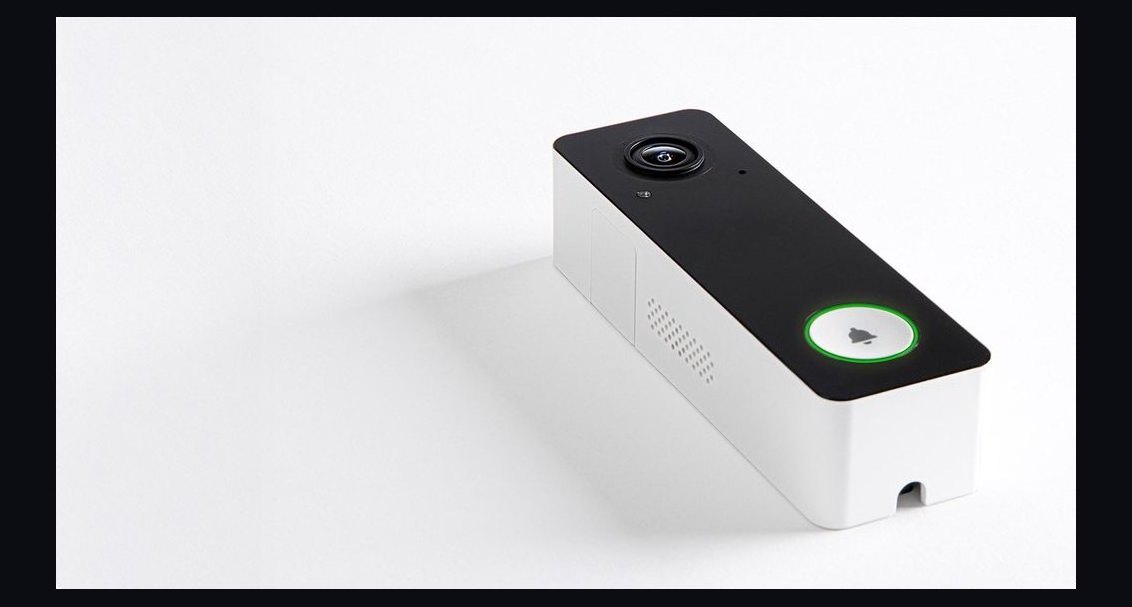 cpi-securityCPI Security's video doorbell vs Ring and Nest — the quality gap in 2027