


Vivint vs CPI Security — what Vivint does better in 2027
Quality
Certified

Vivint beats CPI Security on hardware velocity and smart-home depth: proprietary Sky panel, RADAR-based Smart Deter on the Outdoor Camera Pro Gen 3, the CVC-chip Indoor Camera Pro, and a wider native device roster with faster firmware cadence. CPI still wins on Carolinas-local service, install consistency, and regional monitoring. Contract lengths are comparable.
The outcome you should expect
Set expectations before you sign, because the two companies fail and succeed in almost opposite places. If you pick Vivint, the outcome you should expect is a system that feels like a consumer-electronics product: a 7-inch wall panel that updates itself over the air, an app that groups cameras, locks, thermostats, and garage control onto one tile grid, and a camera line that adds meaningful AI behavior — not just resolution bumps — on roughly an annual cycle. The day-one experience is polished. The month-eighteen experience is usually *better* than day one, because the panel and app have absorbed two or three feature drops in the meantime. That is genuinely unusual in residential security, an industry where most panels are functionally frozen the moment the technician drives away.
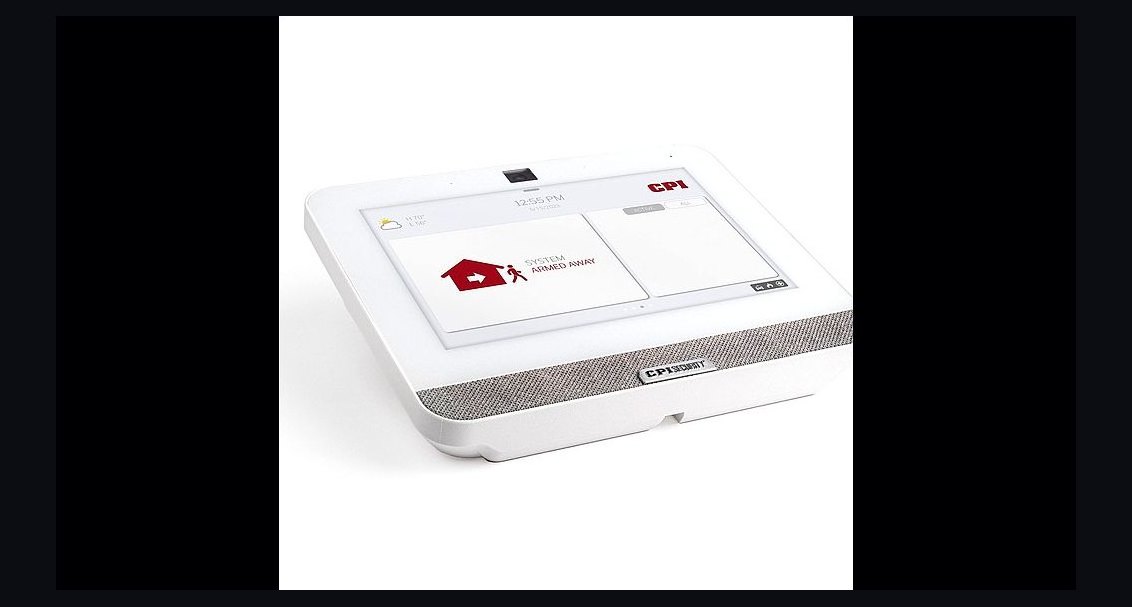
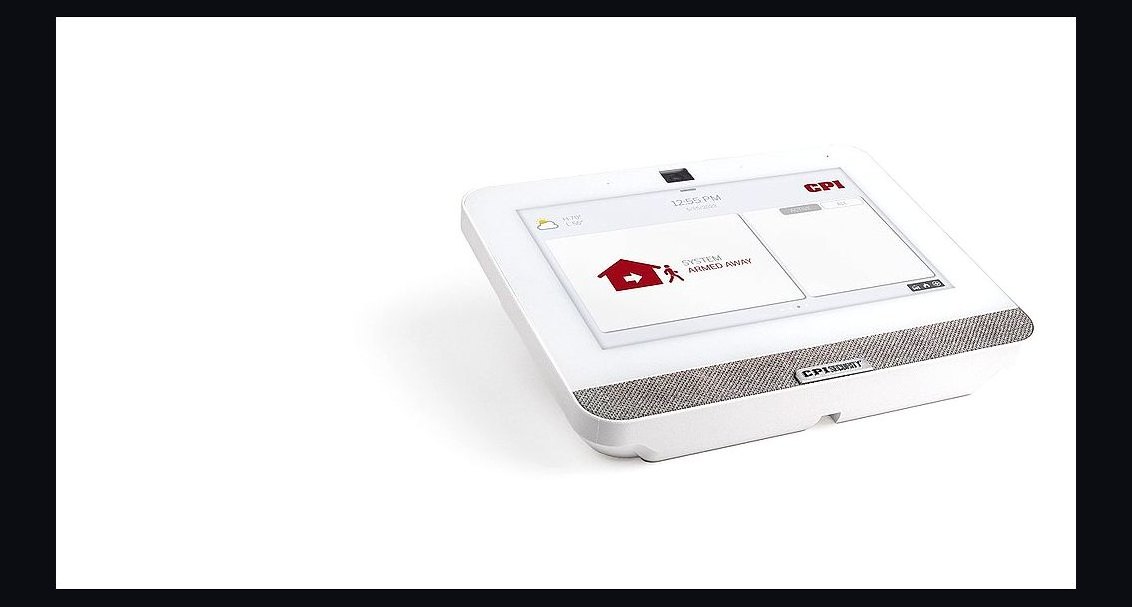
If you pick CPI, the outcome you should expect is different but not worse: a system that does the core job reliably, backed by a service organization with actual trucks in actual Carolinas ZIP codes and a monitoring center staffed by people who know the difference between Cary and Carrboro. The InTouch panel is a competent Qolsys-derived device. It arms, disarms, shows state clearly, and does not surprise you. What it does not do is evolve. You are buying a service relationship with hardware attached, rather than a hardware platform with a service contract attached — and that framing predicts nearly every downstream difference in the ownership experience.
The practical consequence is that "which is better" resolves entirely on which failure mode you can tolerate. Vivint's characteristic failure is a subcontracted installer who mounts an outdoor camera at the wrong height, misses that your driveway sits below grade, or cannot explain why your Z-Wave lock dropped off the mesh — and then the fix requires scheduling against a national dispatch queue rather than a local branch. CPI's characteristic failure is watching a competitor ship a feature you want and knowing it will take CPI a full procurement cycle, maybe longer, to source something comparable from a third-party vendor and wrap it in the InTouch brand.
Neither failure is fatal. Both are predictable. The buyers who end up unhappy are almost always the ones who bought on the wrong axis: the service-first homeowner who got seduced by a Sky panel demo, or the tech enthusiast who signed with CPI because the local rep was friendly and then spent three years reading about AI features they could not have. Diagnose your own priority honestly and the decision mostly makes itself.
One more outcome worth stating plainly: neither choice is a short-term commitment. Vivint's financed-equipment terms typically run 42–60 months; CPI's service agreements commonly run 36–60. Anyone hoping one of these is the month-to-month escape hatch from the other is going to be disappointed. If contract flexibility is your top constraint, the honest answer is that neither of these two is your vendor — that is a different shortlist entirely, usually self-install DIY brands, and you should be evaluating it on different criteria than the ones on this page.
What drives that outcome
The gap is structural, not accidental, and understanding why makes the comparison much easier to reason about — including for anyone doing vendor evaluation professionally, where the same logic applies to any build-versus-integrate decision in a RevOps or procurement context.

Vivint employs a large in-house engineering organization in Provo and treats the panel like a smartphone product line: annual hardware refreshes, frequent app releases, periodic AI model upgrades, and a roadmap that telegraphs the next generation before it lands. Because Vivint designs the panel, the cameras, the sensors, and the cloud AI, it can ship a feature that spans all four without negotiating with a supplier. Smart Deter is the clearest example. It is not a camera feature or a cloud feature — it is a coordinated behavior across the sensor, the on-device chip, the light, the speaker, and the detection model. A company that buys cameras from a third party structurally cannot ship that in one release.
CPI is, at its core, a service company. It buys the majority of its hardware from external manufacturers and bundles it under the InTouch brand. That is a legitimate and often smart business model — it keeps CPI's capital tied up in trucks, technicians, and a regional monitoring center rather than in silicon and firmware teams, and it is precisely why CPI's local service density is strong. But it imposes a hard ceiling on feature velocity. When a new camera capability appears in the market, CPI's path to offering it runs through vendor selection, integration testing, firmware certification, technician retraining, and inventory. Vivint's path runs through a sprint.
That difference compounds in the catalog. Vivint integrates natively with Alexa, Google Assistant, Philips Hue, Nest thermostats, Kwikset and Yale locks, and MyQ garage controllers, alongside its own Element thermostat, Smart Lighting Module, and Car Guard OBD vehicle tracker. CPI supports Alexa, Google, and a range of Z-Wave locks and thermostats, but the third-party roster is more modest and tends to trail on newer device categories. The lived difference is not "CPI can't control my lock" — it can. The difference is that adding a device to Vivint is usually a first-party, in-app operation, while adding one to CPI more often means Z-Wave pairing, occasional hub considerations, and a compatibility check.
Vivint's proprietary mesh, which uses a sub-GHz path for critical sensors rather than depending on household Wi-Fi, is another consequence of owning the stack. It means a Wi-Fi outage does not automatically mean a blind alarm path. Systems built primarily around Wi-Fi devices are more exposed to router reboots, ISP outages, and channel congestion in dense neighborhoods.

The walled garden is the price of admission. Because Vivint's AI features depend on Vivint hardware, a Ring doorbell or a competing camera does not inherit Smart Deter, person/vehicle classification, or unified clip history — it lives beside the system rather than inside it. Buyers who want to assemble a best-of-breed setup will find that constraining. Buyers who want one vendor, one app, and no configuration work will find it a feature. Both reactions are correct; they are just different people.
Benchmarks and realistic ranges
Numbers matter here more than adjectives, so anchor on the ranges that are actually knowable and treat everything else as quote-specific.
Monthly cost. Vivint's entry monitoring plan starts around $24.99/month, but that figure is misleading in isolation because it excludes equipment. Once financed hardware is layered in, a realistic all-in monthly for a typical single-family package lands meaningfully higher — often in the $50–90/month range depending on camera count, panel configuration, and how much of the equipment is financed versus paid upfront. CPI's bundled pricing for a comparable hardware load typically comes in lower, which is a real and frequently decisive advantage for budget-sensitive buyers. Always compare *all-in monthly across the full term*, never the advertised monitoring line item — that single discipline eliminates most of the confusion in this category.
Contract length. Vivint financed-equipment terms commonly run 42–60 months. CPI agreements commonly run 36–60 months. These overlap enough that contract length should almost never be the deciding factor between the two. What *should* matter is what happens inside the term: early-termination math, whether equipment is owned or financed, what a move to a new house costs, and whether the monitoring rate is fixed or subject to increases. Get all four in writing before signing either.

Camera specifications. Vivint's Outdoor Camera Pro Gen 3 combines a 4K sensor, 4x digital zoom, RADAR-assisted detection driving Smart Deter, and a hybrid wired/Wi-Fi connection option. That combination in a single SKU is the sharpest hardware differentiator in this comparison. The Indoor Camera Pro's CVC chip drives on-device person detection that materially reduces the classic false-positive sources — passing headlights, a raccoon on the deck, a cat crossing the room. CPI's camera lineup handles the fundamentals well and will siren when armed and tripped, but it does not pre-emptively profile loitering behavior, and driveway-facing installs in high-traffic areas tend to generate more nuisance alerts.
False alarms — the underrated line item. This is where the AI difference translates into money rather than bragging rights. Many municipalities charge escalating fees for repeat false-alarm police dispatches, and some require permits with penalties attached. A camera system that classifies a person versus a vehicle versus a swaying branch before escalating reduces the number of events that reach a dispatcher at all. Check your own city's false-alarm ordinance and fee schedule — the actual dollar figures vary widely by jurisdiction, and that local number, not a vendor claim, is what should inform how much you value smarter detection.
Response and service benchmarks. Both companies operate 24/7 professional monitoring through UL-listed central stations, so the baseline capability is comparable. The differences are geographic and operational. CPI's monitoring center is in the Carolinas; Vivint's is in Utah. For most alarm events that distinction is irrelevant — a dispatcher reads an address off a screen either way. Where it matters is in the long tail: local weather events, regional storm surges that spike alarm volume, and conversations where an agent recognizing a place name shortens the call. Service-visit turnaround is the clearer gap. A regional provider with local trucks generally schedules faster than a national subcontractor network, particularly outside major metros.
Install quality variance. Vivint installs run through a nationwide network of subcontracted Smart Home Pros. In dense metros like Charlotte and Raleigh, quality is generally fine. In rural counties, the assigned technician may be traveling in from out of state and may be less familiar with local permitting and code specifics. This variance is the single most common source of Vivint dissatisfaction, and it is worth mitigating deliberately: ask who is performing the install, confirm they are local, and hold the technician for a full walkthrough before signing the completion paperwork.
Risks, edge cases, and failure modes

The comparison changes shape in several scenarios that a generic review will not surface.
You plan to move within the term. This is the most underestimated risk in residential security. Financed equipment is tied to you, not the house, and moving mid-term triggers relocation fees, potential re-installation costs, and — critically — service-area questions. Vivint's national footprint means a move to Denver or Dallas keeps you in-network. CPI's regional footprint means a move outside its service area can be a genuine problem. If there is any meaningful chance you relocate out of the Carolinas during the term, that asymmetry favors Vivint regardless of how you weigh features.
Your internet is unreliable. Rural and semi-rural properties with flaky broadband punish Wi-Fi-dependent architectures. Vivint's sub-GHz sensor path and cellular backup mean core alarm signaling survives an ISP outage; camera streaming still degrades, because video needs bandwidth no matter whose logo is on it. Ask both vendors specifically what continues to function during a 48-hour internet outage, and get the answer about *sensors* separately from the answer about *cameras* — vendors habitually blur the two.
You already own smart-home gear. If you have invested in a Ring ecosystem, a HomeKit setup, or a specific lock brand, Vivint's walled garden becomes a cost rather than a convenience. Existing devices will not inherit Vivint's AI features and will remain in their own apps. CPI's Z-Wave-oriented approach is somewhat more accommodating of mixed hardware, though "more accommodating" is not the same as seamless. Buyers with real existing investment should price the replacement cost of what they would abandon and add it to the Vivint side of the ledger.

You are renting. Both companies' contract structures assume a homeowner. Drilling, permanent mounting, and multi-year terms are awkward in a lease that may not renew. Renters are usually better served by self-install systems with month-to-month monitoring, and any rep who glosses over that is selling rather than advising.
Aggressive sales tactics. Door-to-door and high-pressure sales practices are a known hazard across the residential security industry broadly — not unique to any one brand, but common enough that it is worth naming. Protect yourself with process rather than suspicion: never sign at the door on the first visit, read the actual contract rather than the summary sheet, confirm the total obligation across the full term in dollars, and verify the cancellation window in writing. Any legitimate provider will tolerate a 24-hour pause. Any provider that will not has told you something important.
Feature availability drift. Product lineups, firmware capabilities, and integration lists change. Anything specified here reflects the 2027 landscape as described in the sources below, and specific SKUs may be superseded. Before signing, confirm the exact model numbers on your quote and what firmware version delivers the features you are buying for — "Smart Deter" on a spec sheet and "Smart Deter on the model you are actually being quoted" are not automatically the same thing.
The dashboard trap. A polished app can mask a poorly designed system. Cameras aimed at the wrong angle, a motion sensor mounted where the HVAC vent triggers it, a door contact with too wide a gap — these produce a system that looks great in the app and works badly in reality. Feature velocity does not compensate for a bad install. This is exactly where Vivint's subcontractor variance and CPI's local service density collide, and it is the strongest argument for the service-first buyer to stay service-first.
A practical rollout plan

Treat this like any vendor evaluation: define the decision criteria before you take the demo, not after. The same discipline a RevOps team applies to a tooling decision works here — weight the criteria first, so a good demo cannot retroactively reweight them.
Step one — write down your weighting. Assign rough percentages across five factors: feature velocity and smart-home depth, local service responsiveness, all-in cost across the full term, contract flexibility and move risk, and install quality confidence. If service responsiveness carries the most weight, you have functionally chosen CPI and can stop shopping on features. If feature depth dominates, Vivint. Doing this *before* the demo is the whole point, because a Sky panel demo is genuinely impressive and will distort your weighting if you have not committed to it in advance.
Step two — get two quotes on identical hardware loads. Specify the same counts: number of door/window sensors, motion detectors, indoor cameras, outdoor cameras, doorbell camera, locks, thermostat. Force both vendors to price the same scope. Vendors default to quoting different packages, which makes comparison impossible and is not always accidental.
Step three — compute total cost of ownership across the full term. Multiply the all-in monthly by the contract months and add any upfront charges, activation fees, and installation costs. Then compute the same figure for the other vendor. The monthly-payment framing systematically understates differences; the total-obligation figure is the honest one and is often a several-thousand-dollar spread.
Step four — interrogate service, not features. Ask each vendor: what is your typical service-visit turnaround in my ZIP code? Is the installer an employee or a subcontractor, and are they local? What happens if a camera fails in month 30 — covered, or billed? What is the escalation path when a service ticket stalls? These answers predict your actual satisfaction far better than any spec comparison.

Step five — pilot the app before you commit. Download both apps. Even without an account you can gauge the interface quality, and reading recent user reviews for complaints about outages and notification reliability is more informative than reading marketing copy. Notification reliability in particular is a make-or-break daily-use factor that no spec sheet captures.
Step six — plan the install day. Walk the property beforehand and mark camera positions, noting sightlines, grade changes, and where sun glare will hit at different hours. Be present for the entire install. Test every sensor and every camera with the technician still on site, and do not sign the completion paperwork until you have personally verified each device in the app.
Step seven — schedule a 30-day review. Put a calendar reminder at day 30. Check false-alarm counts, notification accuracy, whether automations fire as expected, and whether any device has dropped off. Most contracts have limited windows for raising installation issues, and problems caught at day 30 are far easier to resolve than problems raised at day 300.
Related questions
Does Vivint's AI actually reduce false alarms in practice?
On-device person and vehicle classification does cut nuisance alerts from headlights, animals, and moving foliage compared with plain motion detection. The real-world magnitude depends heavily on camera placement and scene traffic. A badly aimed camera with excellent AI still underperforms a well-aimed camera with basic detection.
Can I use Vivint equipment without Vivint monitoring?
Vivint's model is built around monitored service with financed equipment, and the AI features depend on Vivint's cloud. Treat the hardware as tied to the service relationship rather than as standalone gear you own outright. Confirm the specifics of equipment ownership and post-contract functionality in writing before signing.
Is CPI available outside the Carolinas?

CPI is a regional provider concentrated in the Carolinas and nearby Southeast markets. Its local service density is exactly what makes it strong — and exactly what makes it a poor fit if you may relocate outside that footprint mid-contract. Verify current service-area coverage for your specific address before signing.
How much does install quality actually matter?
More than the spec sheet. Camera height, sightlines, sensor placement relative to HVAC vents, and door-contact gaps determine whether the system produces useful alerts or noise. A great platform installed poorly underperforms a modest platform installed well, which is the strongest structural argument for a service-first provider.
Should contract length decide between them?
Rarely. Vivint's 42–60 month financed terms and CPI's 36–60 month agreements overlap substantially. Focus instead on early-termination cost, move/relocation terms, whether the monitoring rate can rise mid-term, and what happens to the equipment when the contract ends.
FAQ
Does Vivint really have better AI features than CPI Security?
Yes, on feature density and release pace. Vivint's in-house models drive person, vehicle, and package classification plus the RADAR-based Smart Deter behavior on the Outdoor Camera Pro Gen 3, and they ship on a faster cadence because Vivint controls the whole stack. CPI's detection handles the core job competently but does not pre-emptively profile loitering behavior, and its feature additions are gated by third-party procurement cycles rather than internal sprints.
Is Vivint's equipment quality noticeably higher than CPI's?
For the panel and cameras, yes. The Sky panel's 7-inch touchscreen, ambient-light dimming, two-way voice, and over-the-air feature updates read as a modern consumer product, and the CVC chip in the Indoor Camera Pro sharpens on-device detection. CPI's InTouch panel is a reliable Qolsys-derived device with clear armed-state indication — solid, but it does not receive comparable ongoing feature drops, and the industrial design shows its generation.

How do the contract lengths compare?
They are close enough that it should not be your tiebreaker. Vivint financed-equipment terms typically run 42–60 months; CPI agreements typically run 36–60. What varies more meaningfully is the fine print: early-termination formulas, relocation terms, whether monitoring rates can increase mid-term, and equipment ownership at contract end. Get all of that in writing and compare the total-obligation dollar figure, not the monthly.
Which has better customer service in the Carolinas?
CPI, and it is not especially close within its footprint. It is a regional operator with local technicians and a Carolinas-based monitoring center, which translates into faster service-visit turnaround and agents with local familiarity. Vivint's nationwide subcontractor network produces more variable install quality and generally slower service scheduling, particularly outside major metros like Charlotte and Raleigh.
Can I integrate my existing smart-home devices with either system?
Partially, with an important caveat. Vivint offers a deeper native roster — Alexa, Google Assistant, Hue, Nest, Kwikset and Yale locks, MyQ, plus its own thermostat, lighting module, and Car Guard tracker — but third-party cameras do not inherit Vivint's AI features. CPI's Z-Wave-oriented approach accommodates mixed hardware somewhat more readily while offering fewer first-party options. Neither is truly open.
Is Vivint worth the higher all-in cost for a tech enthusiast?
If you value new AI features arriving on a fast cadence, a polished unified app, and a panel that improves after installation, the premium is defensible. If you value a technician at your door this week, predictable install quality, and lower all-in monthly cost, CPI is the better value — especially in North Carolina. Compare total cost across the full contract term before deciding either way.
Sources
- Vivint Home Security Review (Security.org)
- Vivint Home Security Review (SafeWise)
- Vivint Smart Home (Consumer Affairs)
- Vivint Smart Home official site
- CPI Security official site
- Home Security Systems Buying Guide (Consumer Reports)
- The Best Smart Home Security Systems (PCMag)
- Home Security Systems (Better Business Bureau)
- Buying a Home Security System (FTC Consumer Advice)
Related on PULSE
- CPI Security complaint volume in 2027 — how it stacks vs ADT, Vivint, SimpliSafe
- What is CPI Security and what makes the NC-based provider different from ADT or Vivint?
- CPI Security vs SimpliSafe in 2027 — which delivers better value for most homeowners?
- CPI Security's video doorbell vs Ring and Nest in 2027 — the quality gap
- CPI Security's lifetime warranty fine print in 2027 — what's not covered
- CPI Security's tiered support experience in 2027 — when 'all customers matter' actually means VIPs first
This page will be disappearing soon. Save it to your device for $1 — or read it free while it is here.
@Kory-White- · if Venmo asks, the last 4 of my number are 2012
This page is gone.
This one is off the shelf now. $1 keeps it on your phone for good — the whole page, pictures and diagrams included.
 cpi-securityWhy CPI Security's long-tenure customers feel like they're being squeezed in 2027?
 cpi-securityCPI Security equipment lock-in — can you switch providers in 2027?
 cpi-securityCPI Security billing issues — what customers complain about in 2027
 cpi-securityCPI Security's inTouch app reliability — what reviews show in 2027
 cpi-securityCPI Security's contract auto-renewal - what to know before signing in 2027
 cpi-securityCPI Security sales tactics — what to watch for at the door in 2027
 cpi-securityCPI Security complaint volume — how it stacks vs ADT, Vivint, SimpliSafe in 2027
 cpi-securityCPI Security's Alarm.com dependency — the third-party risk in 2027
 cpi-securityCPI Security alarm response times — when monitoring fails in 2027
 cpi-securityWhy ADT's Google Nest integration beats CPI's stack in 2027?