


How the transfer portal era squeezed HS recruiting service ROI in 2027?
Quality
Certified

The transfer portal squeezed HS recruiting service ROI in 2027 by shrinking the outcome pool those services sell against. Power-Four classes now sign roughly 14-16 high-schoolers instead of 25, coaches spend about half their evaluation hours on portal tape, and fees stayed flat — so cost per offer produced rose sharply while the pitch never changed.
The check a family writes in October of a junior year
Picture a family in a mid-sized town whose son is a 6-foot-1 junior linebacker with decent sophomore film, a 4.6-ish forty on hand timing, and no offers. A recruiting service quotes them a package: profile build, film cutups, a coach-outreach campaign to a target list, and monthly "exposure" reporting. The premium tiers in this market generally run in the low hundreds of dollars per month, and full-evaluation annual packages reach into four figures. The family says yes, because the alternative feels like doing nothing.
That decision is a purchase of expected value, and expected value has two terms: the probability the service moves the athlete into a scholarship conversation, and the size of the prize if it does. In 2019, both terms were larger. Every FBS roster spot had to be filled by a high-school signee or a rare JUCO/grad transfer, so the denominator of "available outcomes" was wide, and the marginal developmental scholarship — the twenty-second slot in a twenty-five-man class — was exactly the outcome a service could plausibly influence.
By 2027 both terms shrank at once. The prize got rarer because classes got smaller. The probability got worse because the person on the receiving end of the outreach email is triaging portal candidates with college starts on tape. Nothing about the service's product got worse; the market it sells into changed underneath it. That is the whole story, and everything below is the mechanics of it.

The useful reframe for a family — and this is a RevOps framing, borrowed from how a revenue team would audit any channel — is that a recruiting service is a demand-generation vendor. You are buying impressions into a buyer pool. When the buyer pool contracts and the buyers reallocate their attention, the vendor's conversion rate falls even if the vendor executes identically. A revenue operator who saw a channel's conversion rate halve while its price stayed flat would not renew without renegotiating. Families rarely run that audit, because nobody frames a scholarship pursuit as a pipeline.
Two other details matter in the scenario. First, the family usually signs a twelve-month term, which means the contract spans exactly one recruiting cycle and gives them a single at-bat with no ability to reprice on evidence. Second, the outreach list is typically vastly wider than the athlete's realistic range — 130-plus FBS programs plus a long FCS tail — which inflates the "we contacted X schools" metric while telling the family nothing about whether any of those contacts were live. Impressions into an unqualified list are the oldest vanity metric there is, in athletics or in B2B.
How the squeeze actually propagates through the market
The mechanism is a substitution effect that runs downhill from the coaching staff to the family's checkbook. A college staff filling a hole at linebacker has two supply sources: project a high-school player, or sign a transfer with college snaps on film. The transfer's downside is bounded — you can watch him fail or succeed against college competition. The high-schooler's downside is a scholarship absorbed for three seasons while he develops. When both sources are legal and open year-round, the risk-adjusted choice favors the transfer for any spot that needs production now.

Follow each arrow, because each one is a separate compounding loss. The class-size arrow is arithmetic: fewer signees means fewer offers extended, means fewer chances for any given subscriber. The attention arrow is behavioral: a recruiting coordinator whose calendar is consumed by portal calls, retention conversations with current players, and revenue-share allocation is a coordinator who opens fewer unsolicited profile links. Services have always relied on the coach actually watching the film. That assumption weakened.
There is a third arrow the diagram compresses: the calendar. The portal operates on defined windows but its gravitational effect is year-round, since staffs must constantly model who might leave. Retention work is now recruiting work. Every hour spent keeping a current sophomore from entering the portal is an hour not spent discovering an unknown high-school junior in a town nobody scouts. The traditional service value proposition — "we find the kid the map misses" — depends on staffs having slack time to be found. That slack got reallocated.
The downstream effect on athletes is not evenly distributed, and this is the part most marketing obscures. Top-ranked prospects were never the customers. They get evaluated regardless; the services follow them, not the other way around. The customers are the unranked and lightly-ranked athletes hoping to be discovered, and their target outcome — the developmental slot at the bottom of a class — is precisely the slot the portal absorbed first. Coaches did not stop taking high-school players; they stopped taking speculative ones. The bet-on-upside spot became the plug-a-hole-now spot.

Adjacent markets show the same pattern whenever an efficient secondary market opens next to a speculative primary one. In hiring, the rise of a fluid mid-career market pushes employers toward candidates with a track record and away from unproven junior hires, and the businesses that sold "get discovered" services to entry-level candidates felt it. The dynamic is not unique to athletics. It's what happens when a buyer gains access to a lower-variance supply at a comparable price.
Real numbers, ranges, and the arithmetic families should run
Start with the class-size number, because it is the load-bearing one. Reporting through the 2026-27 cycle described Power-Four football classes signing roughly 14-16 high-schoolers, against a traditional norm anchored to a 25-per-class cap. Take the conservative end of that shift — call it nine fewer high-school signees per program per cycle. Across 134 FBS programs, that is on the order of 1,000 to 1,200 high-school scholarship outcomes per year that no longer exist, redirected into portal signings. Even if you assume the real number is half that, it is a structural contraction of the exact prize a service sells access to.
Now run the subscriber math. Suppose a service historically produced one genuine scholarship offer per twenty paying subscribers — a generous assumption nobody publishes. Hold subscriber count constant and shrink the outcome pool by a third, and the ratio drifts toward one offer per thirty subscribers. Hold the price constant at, say, $1,800 for an annual package, and the implied cost per offer produced moves from roughly $36,000 in aggregate subscriber spend to roughly $54,000. Nobody pays $54,000 individually — but the market pays it collectively, and each individual family is buying a lottery ticket whose odds got longer while the price stayed the same.

The attention split matters just as much. Coaching staffs in 2027 are widely described as splitting recruiting hours roughly evenly between high-school work and a bundle of portal scouting, NIL/revenue-share operations, and retention. Compare that to a pre-portal allocation weighted heavily toward high-school film, camps, and visits. If cold-film consumption falls by half, an outreach campaign's open-and-watch rate falls roughly proportionally, independent of the class-size effect. Two independent multipliers, each shaving the same funnel, is how a channel goes from marginal to negative without any single dramatic event.
Layer in revenue sharing. The House settlement created a fixed annual pool per program — reported around $20.5 million in its first year — to distribute across all sports. A fixed pool means allocation is now a zero-sum internal negotiation. Dollars spent on a proven transfer quarterback are dollars not available for eight developmental high-school signees. Public comments from Power-Four personnel staff in the 2027 cycle pointed the same direction: high-school spending getting reined in. And critically, no recruiting service controls or can promise any part of that pool. The single most decisive currency in the modern market sits structurally outside the product.
Sport-by-sport, the squeeze varies. Football and men's basketball feel it hardest because portal volume is highest and roster turnover is fastest. Olympic and non-revenue sports feel a different version — roster-limit changes tied to the settlement reduced total spots across dozens of sports, which compresses the walk-on and partial-scholarship pathways that many service subscribers were realistically targeting anyway. A family whose daughter plays a non-revenue sport should ask specifically about spot counts in that sport, not accept a football-flavored pitch.

One more benchmark worth demanding: division mix. A service claiming a strong placement record should be able to break outcomes down by NCAA division. If ninety percent of its placements are Division III or NAIA — programs that award no athletic scholarships in D-III's case — the "scholarship" framing in the marketing is doing heavy lifting. That is not fraud; it is a mismatch between what is sold and what is implied.
Trade-offs: what still works, what to substitute, what to cut
The honest 2027 conclusion is not "recruiting services are worthless." It is that their defensible use cases narrowed to a specific set, and the marketing did not narrow with them. There are four alternatives a family can weigh against a paid service, and each has a different risk profile.
Targeted camps are the highest-signal option for an athlete with a realistic FBS or high-FCS profile. A staff seeing an athlete in person collects verified measurables and a live evaluation in a single afternoon — the exact thing a service cannot manufacture. The trade-off is reach: you can attend a handful of camps in a summer, so the target list must be honest. Attending eight camps at programs three tiers above your level is a more expensive mistake than any subscription.
Private training raises the underlying asset instead of marketing it. This is the option most likely to be undervalued, because it has no scoreboard until the film changes. If the constraint on an athlete is a tenth of a second or fifteen pounds of functional strength, no exposure platform solves it, and spending the same dollars on exposure is optimizing the wrong variable. In pipeline terms, it's fixing the product rather than buying more traffic.

Self-run outreach costs nothing but time and works better than most families expect, because film hosting is essentially free and coach contact information is public. The failure mode is volume-without-targeting — the same failure a paid service commits, just cheaper. A parent sending forty well-researched, position-specific emails to schools that actually need that position, with an honest transcript and verified measurables attached, is running a better campaign than a service blasting 130 programs generically.
Where a paid service still earns its fee: reaching evaluators an athlete genuinely cannot reach alone. That means FCS, Division II, Division III, NAIA, and JUCO staffs with tiny recruiting budgets and no ability to scout broadly; international prospects who need a U.S.-legible profile with converted measurables and eligibility documentation; and sophomores building a durable film library early. In those lanes, the discovery problem is real, the service's distribution is a genuine asset, and the outcome pool was not gutted by the portal the way the Power-Four developmental slot was.
The remaining trade-off is time horizon. If you're buying for a sophomore, you're purchasing two-plus cycles of optionality and the portal effect may partially settle. If you're buying for a rising senior with no offers, you're purchasing a single compressed cycle at the worst possible point in the squeeze, and the money almost certainly does more work as camp fees and travel.
Pitfalls, and how to run the vendor audit
The first pitfall is treating the pitch's implied level as the delivered level. Marketing imagery skews toward Power-Four stadiums and signing-day scenes; delivered outcomes skew toward the small-college tail. Fix: before signing, ask for a named list of athletes placed in the last two cycles, with school and division for each. Vague aggregate claims — "over 10,000 athletes placed" — are unfalsifiable and should be treated as decoration.

Second pitfall: mistaking activity metrics for outcome metrics. "We sent your profile to 130 programs" and "your profile was viewed 400 times" are impressions. Ask instead: how many subscribers at my son's position and division target received a verified offer last cycle, out of how many total subscribers in that segment? A service that tracks its own funnel can answer. A service that cannot is telling you something by the absence.
Third pitfall: ignoring the transfer dynamic in your own planning. The portal cuts both ways. An athlete who signs at a smaller program and produces has a genuine, now-normalized path upward — and that path is not sold by any high-school service. Families fixated on landing the biggest possible initial offer sometimes decline a real opportunity at a level where the athlete would play early and build the exact tape the market now rewards. Playing time compounds; a roster spot at a program that never plays you does not.
Fourth pitfall: the auto-renewing annual term. Sign for the shortest term that covers your actual window, and diarize a renewal-decision date before the charge posts. This is basic vendor hygiene and it is routinely skipped under emotional pressure. The same discipline any RevOps team applies to a SaaS renewal — usage data, outcome data, renegotiate or churn — applies here, and families should feel entitled to it.
Fifth pitfall: outsourcing judgment about level. The single most expensive error is a wrong self-assessment, because it misdirects every dollar that follows. Get an outside read from a high-school coach with placement history or a small-college assistant who has no financial stake in the answer. A vendor whose revenue depends on your optimism is not a neutral evaluator of your ceiling — a conflict any operator would recognize instantly in a sales context and somehow forgives in a recruiting one.

Sixth pitfall: assuming this is temporary. The forces compressing the high-school market — bounded-risk transfer supply, fixed revenue-share pools, roster limits, year-round retention work — are structural, not cyclical. Plan for the squeeze to persist through at least the 2028 cycle rather than betting on a snap-back. If it eases, you lose nothing by having planned conservatively; if it doesn't, you avoided a four-figure bet on a market that already repriced.
The meta-lesson generalizes past athletics. Any intermediary whose value comes from solving a discovery problem gets squeezed when the buyer finds a lower-variance supply elsewhere. The intermediary survives by moving to where discovery is still genuinely hard — smaller buyers, unseen markets, earlier stages — rather than by defending pricing on a shrinking premium lane. Some services are making that move. The families paying today should verify which kind of vendor they've hired.
Related questions
Do star ratings still matter to college coaches in 2027?
They matter for filtering, not deciding. Ratings help staffs prioritize whom to evaluate first, but roster construction now leans on portal tape and revenue-share fit. A high rating still opens doors; it no longer substitutes for production against college competition.
Is a recruiting service worth it for Division III athletes?
Often yes, relatively speaking. D-III and NAIA staffs have minimal scouting budgets and genuinely rely on inbound profiles, so distribution has real value. Just understand D-III awards no athletic scholarships — the outcome is admission and a roster spot, not money.
Should an athlete plan to use the transfer portal themselves?
Plan for it as an option, not a strategy. The realistic sequence is: sign where you'll play early, produce, then reassess. Tape against college competition is the currency the market now rewards, and you cannot generate it from the bench.
How has revenue sharing changed what a scholarship is worth?

It split the package. A scholarship covers cost of attendance; revenue-share and NIL money is negotiated separately from a fixed program pool. Two offers with identical scholarship terms can differ enormously in total value, so families must ask about both.
FAQ
Does paying for a recruiting service still increase the chance of an offer in 2027?
It can still increase exposure, but the link between exposure and offers is materially weaker than it was five years ago. Coaches fill a large share of roster needs through the portal, so unsolicited high-school film competes for attention against transfer tape with college production on it. The service can reliably deliver impressions; it cannot deliver the buyer's attention or the roster slot, and those are the parts that got scarce.
What should a family expect to spend, and what does that buy?
Premium tiers in this market generally run in the low hundreds of dollars per month, with full-evaluation annual packages reaching four figures. What that buys is a built profile, edited film, a target list, and an outreach campaign — real work, honestly delivered by most vendors. What it does not buy is a scholarship, a revenue-share allocation, or a guarantee that any given staff watches the film. Price the package as marketing spend with uncertain conversion, not as tuition.
Are the major ranking platforms still useful for getting noticed?

They remain the most visible surface in the sport and are still worth having an accurate profile on. Their role shifted, though: staffs increasingly use them to research and background-check players they already have reason to evaluate — including transfers — rather than as a primary discovery tool. A strong rating still helps. It is no longer the mechanism by which most rosters get built.
Do camps and combines still generate offers?
Camps at programs that realistically fit the athlete's level remain the highest-signal spend available, because they produce verified measurables and a live evaluation by the actual decision-makers. Large generic combines are closer to data-collection events than offer-generating machines. The practical rule: attend fewer camps, at schools whose roster has a genuine need at your position, and be honest about your competitive level when building that list.
When does hiring a service clearly make sense?
Three situations. International prospects who need a U.S.-legible profile with converted measurables and eligibility documentation. Athletes targeting FCS, Division II, Division III, NAIA, or JUCO, where staffs have small budgets and genuinely depend on inbound profiles. And sophomores building a film library early with two full cycles of runway ahead. Outside those lanes — especially a rising senior chasing Power-Four attention — the dollars generally do more work as camp fees and training.
How can I verify a service is being straight with me?
Ask three questions and weigh the answers by specificity. First: name athletes placed in the last two cycles, with school and division. Second: what share of subscribers at my position and target level received a verified offer last cycle? Third: how has the portal changed your placement rate since 2023? A vendor that engages honestly with the third question is one worth hiring; a vendor that deflects it is selling a 2019 product at 2019 prices into a market that repriced.
Sources
- NCAA — Transfer Portal information and rules
- NCAA — Division I recruiting rules and calendars
- ESPN — College football recruiting coverage
- Sports Illustrated — high school recruiting coverage
- The Athletic — college football
- NFHS — high school athletics participation surveys
- 247Sports — football recruiting rankings
- Mike Farrell Sports — how the transfer portal changed recruiting
Related on PULSE
- How does the college football transfer portal work as a free-agency market in 2027?
- How does NIL impact transfer portal decisions in 2027?
- How are college coaches contracts changing in the NIL era in 2027?
- Why CPI Security's long-tenure customers feel like they're being squeezed in 2027?
- Top 10 Ways to Reduce Churn in an Era of Price Sensitivity and Longer Cycles
This page will be disappearing soon. Save it to your device for $1 — or read it free while it is here.
@Kory-White- · if Venmo asks, the last 4 of my number are 2012
This page is gone.
This one is off the shelf now. $1 keeps it on your phone for good — the whole page, pictures and diagrams included.
 lance-os-recruiting-networkHow recruiting services calculate 'success rates' — and why those numbers don't mean what parents think in 2027
 lance-os-recruiting-networkLance O's Recruiting Network vs NCSA vs Hudl vs FieldLevel — which one serves HS football prospects best in 2027?
 lance-os-recruiting-networkThe brutal D1 football scholarship math — what recruiting services don't show you in 2027
 lance-os-recruiting-networkWhy a single well-crafted X DM to a college coach beats 1000 mass emails in 2027?
 lance-os-recruiting-networkThe college recruiting service tier upsell — how 'consultation' becomes a $5K commitment
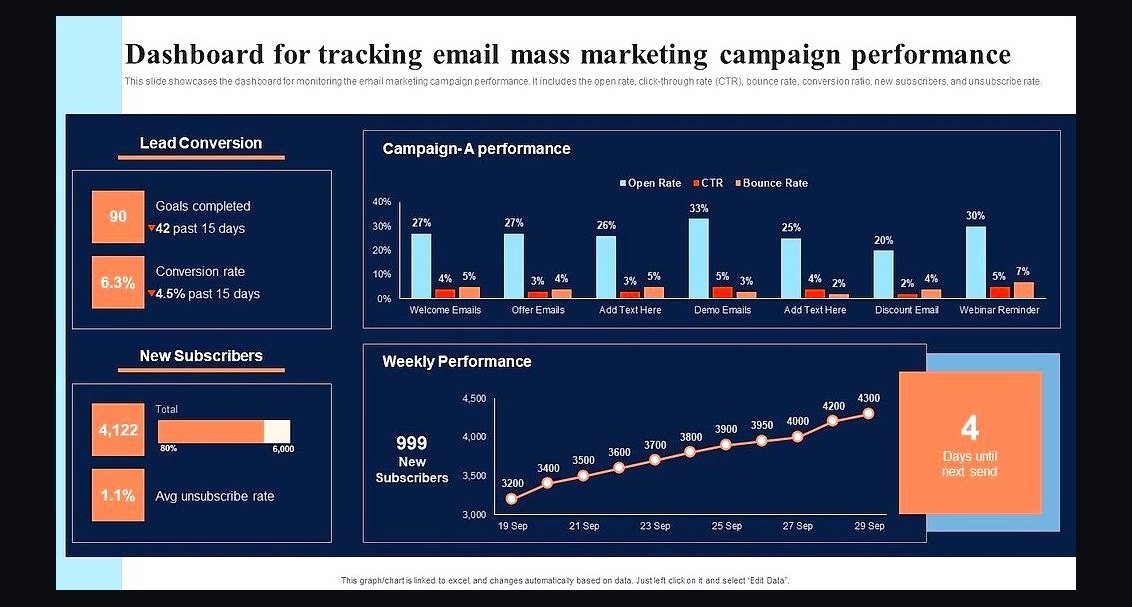 lance-os-recruiting-networkDo mass marketing email campaigns to college coaches actually work in 2027? The recruiting services tactic critique
 lance-os-recruiting-networkWhy your HS football coach's phone call beats any paid recruiting service in 2027?
 lance-os-recruiting-networkWhy showcase camps and 7-on-7 beat paid recruiting services for HS football recruits in 2027?
 lance-os-recruiting-network8 contract red flags every parent should check before signing a recruiting service in 2027
 lance-os-recruiting-networkAre college football recruiting services like Lance O's Recruiting Network worth it — the industry-wide reality in 2027