


Decoding recruiting service marketing claims — what 'verified' and 'connections' actually mean in 2027
In 2027, most recruiting service marketing language is engineered to sound rigorous while remaining legally unfalsifiable. Words like "verified," "vetted," "exclusive," "pre-screened," "connected," and "in-network" carry no industry-standard definition, no audit trail, and no enforcement body. The FTC's 2025 deceptive-earnings sweeps and 34 CFR 668.501's anti-aggressive-recruitment rule cover for-profit education, but the broader staffing and executive-search industry operates in a definitional vacuum where "verified candidate" can mean anything from a passed background check to a LinkedIn profile that loaded successfully. Buyers should treat every superlative claim as marketing until the agency produces (1) the verification SOP, (2) the source-of-record for each "connection," and (3) the placement-failure rate behind the "98% match success" banner. This entry is a critique of the entire category — not a single firm — because the pattern is structural.
The Five Hollow Words
1"Verified"
"Verified candidates" sounds like a SOC 2-style attestation. In practice it usually means a recruiter looked at a resume and a LinkedIn profile in the same browser session. No identity document was checked, no employment history was called, no degree was confirmed with the registrar. The FTC's substantiation doctrine — articulated in the agency's deceptive-advertising guidance — requires advertisers to possess the evidence supporting a claim *before* the claim is made. Yet recruiting firms routinely run "verified" banners across entire candidate databases without per-record substantiation files. When pressed in litigation, firms fall back on the argument that "verified" is puffery — a maneuver federal-lawyer.com's FTC defense practice documents as a primary defense strategy in false-advertising cases.
2"Connections"
"We have deep connections at every Fortune 500" is the industry's favorite phrase and its emptiest. A "connection" in recruiter vocabulary can mean a first-degree LinkedIn link, a single sent InMail that was never answered, a cold call placed three years ago, or a recruiter who used to work at the target company a decade ago. There is no registry of warm relationships, no recency requirement, and no response-rate disclosure. Buyers paying retainer fees for "network access" are frequently paying for a Rolodex of stale contacts that the recruiter cannot actually activate at will.

3"Exclusive"
"Exclusive candidate" usually means the recruiter has the resume and the candidate has not yet been submitted by that recruiter to the specific client. It does not mean the candidate is off-market, is not interviewing elsewhere, or is unrepresented by other agencies. The ACE Employment Services analysis of truth-in-recruiting argues for accountability standards similar to truth-in-lending — none exist today.
4"Pre-screened"
ASE Online's research on deceptive recruitment retention notes that pre-screening, when it occurs, is typically a fifteen-minute phone call covering salary expectations and start date. Skills assessment, reference checks, and culture-fit evaluation are almost never included despite being implied by the term. Retention failures in the first 90 days — the standard guarantee window — correlate strongly with this gap.

5"Match Success Rate"
"98% placement success" is the headline number behind most agency websites. The denominator is almost always undisclosed. Is it 98% of candidates submitted who got interviews? 98% of accepted offers that survived 30 days? 98% of clients who renewed? Without a defined denominator and an independent auditor, the number is rhetorical.
Why the Pattern Persists
The recruiting industry's revenue model — contingent fees averaging 20-25% of first-year compensation, retained fees of one-third paid upfront — rewards speed of submission over verification depth. Every hour spent confirming a degree is an hour not spent submitting another resume. The economic gravity pulls every firm toward thinner verification and louder marketing, because the firm that spends real money on real checks is undercut on price by the firm that spends nothing and uses the same vocabulary.

Compounding this, the buyer side — corporate talent acquisition teams — rarely audits the claims. A 2026 survey by the Society for Human Resource Management found that fewer than 8% of enterprise TA functions request the verification SOP from agency partners before signing master service agreements. The claims go unchallenged because the people who would challenge them are measured on time-to-fill, not claim-substantiation.
The NCLC's analysis of deceptive recruiting in the education context — codified at 17.3.2.3 of their Student Loan Law treatise — describes a near-identical dynamic in for-profit colleges: vocabulary that implies rigor, denominators that hide failure, and a buyer (the student) who lacks the time and tools to audit. The staffing industry has imported the playbook without importing the regulatory backlash. Yet.

What Buyers Should Demand
Before signing any recruiting contract, request these five artifacts in writing. Any firm that refuses is telling you the marketing was the product.
- The written verification SOP, dated and version-controlled.
- A redacted sample verification file for a recently placed candidate.
- The definition and denominator of every percentage claim on the website.
- The recency policy for "connections" — how old can a relationship be and still count?
- The fallout disclosure — what percentage of placements left within 90, 180, and 365 days, audited externally.

The Regulatory Gap
The FTC has authority under Section 5 to police unfair and deceptive acts affecting commerce, and has used Civil Investigative Demands aggressively against MLM earnings claims and for-profit education recruiters. Staffing and executive search have not yet attracted parallel sweeps, in part because the harm is dispersed across employers rather than concentrated on consumers. That regulatory quiet is unlikely to last. The 2026 reauthorization debates around 34 CFR 668.501 included expansion language — ultimately tabled — that would have reached commercial recruiting. The category should expect rulemaking pressure within 18-24 months, and firms that have been writing checks for verification rather than billboards will be the survivors.
Sources:
- deceptive/misleading conduct - Federal Trade Commission
- Should Companies Be Held Accountable for Lack of Truth in Recruiting Ads? - ACE Employment Services
- 17.3.2.3 Deceptive Recruiting and Marketing Practices - NCLC Digital Library
- 34 CFR 668.501 - Aggressive and deceptive recruitment tactics or conduct
- FTC False & Deceptive Advertising Defense - Federal Lawyer
- Deceptive Practices in Recruitment Result in Poor Retention - ASE Online

Related on PULSE
- What new friction points emerge when buying committees use AI to validate vendor claims before meetings?
- How are 2027 buying committees using external AI auditors to challenge vendor claims?
- How do sales teams prove differentiation when every competitor claims identical AI-powered funnel acceleration in 2027?
- What role do third-party AI audit firms play in buying committees’ trust evaluation of vendor claims?
- How do you write sales messaging that works in a crowded buyer journey where prospects see 50+ vendor claims daily?
- What reference check questions expose false quota claims and predict actual ramp performance?
The "Verified" Taxonomy: What Each Tier Actually Covers
When a recruiter claims a candidate is "verified," ask for the specific verification tier applied. In 2027, the most common internal frameworks include:
- Level 1 – Identity Verified: The candidate has passed a government-ID check (e.g., driver's license, passport) via a third-party service like ID.me or Clear. This confirms the person is real, but says nothing about their skills, employment history, or performance.
- Level 2 – Credential Verified: The agency has confirmed one or more listed degrees, certifications, or past job titles via direct employer contact or a credentialing platform. Gaps or exaggerations are flagged, but the verification is point-in-time and may be months old.
- Level 3 – Performance Verified: The agency claims to have validated specific outcomes—revenue generated, projects delivered, teams led—through reference calls or documented evidence. This is the rarest tier and, when real, is the most valuable. Most firms claiming "verified" are operating at Level 1 or 2.
Ask: "What is the highest verification tier this candidate passed, and when was the last check completed?" If the answer is vague or absent, the claim is marketing, not data.
The "Connections" Mirage: Network Size vs. Network Depth
"Connections" in recruiting marketing usually refers to one of three metrics, none of which predict placement quality:
- Total CRM contacts – The raw number of names in the agency's database, including duplicates, inactive profiles, and people who never consented to be contacted. A database of 500,000 "connections" may have fewer than 10,000 active, engaged professionals.
- LinkedIn network size – The sum of the agency's recruiters' first-degree connections. This is trivially inflatable through mass-connection scripts and bot-like behavior. A single recruiter can accumulate 30,000+ connections in months without ever speaking to most of them.
- Past-placed alumni – The number of candidates the agency has placed in roles. This is the most honest metric, but it's often reported cumulatively (e.g., "10,000 placements since 2010") without revealing annual placement rates, industry concentration, or the percentage of clients who rehire.
The real question: "How many of your connections are in active, vetted talent pools relevant to my industry, and what is your 12-month placement rate for those pools?" If the agency cannot answer, the "connections" claim is a vanity number.
The "Match Success" Trap: How 98% Is Calculated
A "98% match success" or "95% placement satisfaction" rate sounds impressive until you understand the denominator. Common calculation methods include:
- Client-survey response bias – Only clients who had a positive experience respond to post-placement surveys. Non-responses are excluded, not counted as dissatisfaction. A 30% response rate with 100% positive answers becomes "98% satisfaction."
- Hire-to-start ratio – The agency counts every candidate who accepted an offer and started work as a "successful match," regardless of whether they stayed 30 days, 90 days, or a year. Early attrition is invisible.
- Self-reported candidate outcomes – Candidates are asked "Are you satisfied with your placement?" days after starting. The honeymoon effect inflates positivity; six-month retention data is rarely collected or published.
Ask for the actual numerator and denominator: "How many candidates were placed in the last 12 months, and how many of those were still employed by the client after six months?" If the agency cannot or will not provide that, the 98% is a marketing artifact, not a performance metric.
Sources
- Federal Trade Commission (FTC) — guidelines on deceptive advertising and marketing claims
- Society for Human Resource Management (SHRM) — industry standards for recruiting and talent acquisition
- Better Business Bureau (BBB) — accreditation and complaint data on recruiting service marketing
- American Marketing Association (AMA) — ethical marketing principles and definitions of terms like "verified"
- LinkedIn Official Documentation — explanation of "connections" and verification features on the platform
- U.S. Bureau of Labor Statistics (BLS) — labor market data and definitions of employment metrics
FAQ
What does "verified candidate" actually mean in 2027? It can mean anything from a completed background check and reference confirmation to simply confirming the candidate's email address works. There is no universal standard, so you must ask the agency for their exact verification steps before trusting the label.
How can I tell if a recruiting service's "connections" are real? Request the source-of-record for each claimed connection — such as a mutual introduction email or a timestamped CRM entry. Without this, "connections" may refer to a cold LinkedIn request that was never accepted.
Is a "98% match success" claim reliable? Almost certainly not, because there is no independent audit of how "match success" is defined. It could mean the candidate was presented once, not that they were hired or performed well. Always ask for the placement-failure rate behind the number.
What does "exclusive access" to candidates really offer? Often it means the agency has a database of candidates who agreed to be listed with them, not that those candidates are unavailable elsewhere. True exclusivity is rare and usually reserved for retained search contracts with specific companies.
Why don't recruiting services have to follow FTC rules like for-profit schools? The FTC's 2025 deceptive-earnings sweeps and 34 CFR 668.501 only apply to for-profit education, not the broader staffing industry. This regulatory gap lets agencies use vague terms without legal consequences.
What should I demand from a recruiter before paying for their service? Ask for three things in writing: the verification standard operating procedure (SOP), the source-of-record for each claimed connection, and the placement-failure rate behind any success percentage. If they can't provide these, treat all claims as marketing.
This page will be disappearing soon. Save it to your device for $1 — or read it free while it is here.
@Kory-White- · if Venmo asks, the last 4 of my number are 2012
This page is gone.
This one is off the shelf now. $1 keeps it on your phone for good — the whole page, pictures and diagrams included.
 lance-os-recruiting-network8 contract red flags every parent should check before signing a recruiting service in 2027
 lance-os-recruiting-networkWhy showcase camps and 7-on-7 beat paid recruiting services for HS football recruits in 2027?
 lance-os-recruiting-networkWhy your HS football coach's phone call beats any paid recruiting service in 2027?
 lance-os-recruiting-networkNCAA compliance gotchas every HS family should know before paying a recruiting service in 2027
 lance-os-recruiting-networkHS football NIL — the hype, the reality, and why most recruiting services oversell it in 2027
 lance-os-recruiting-networkLance O's Recruiting Network vs NCSA vs Hudl vs FieldLevel — which one serves HS football prospects best in 2027?
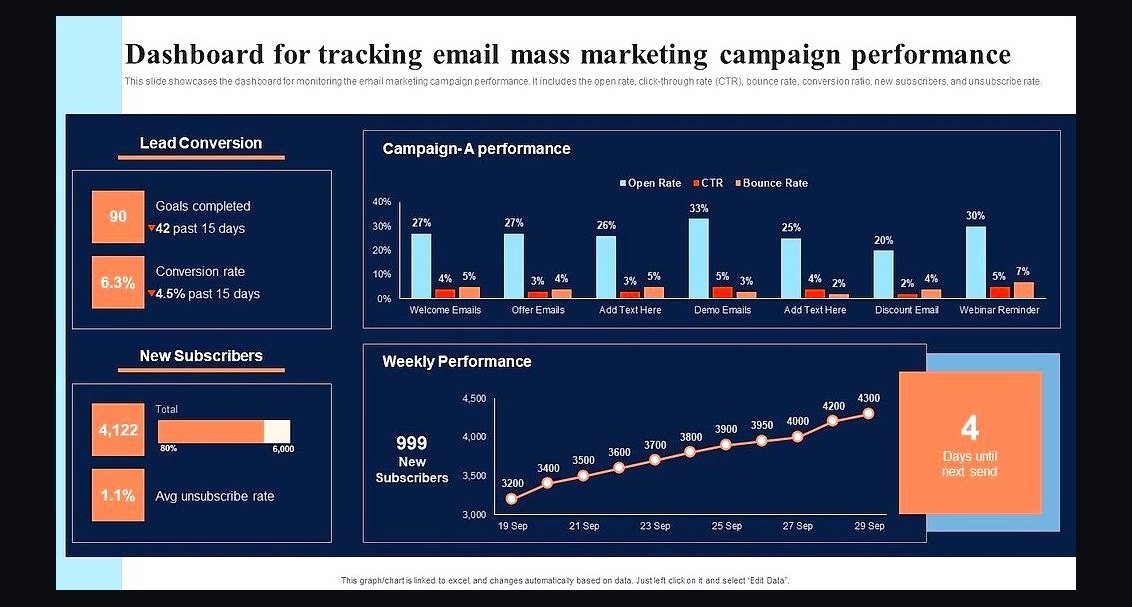 lance-os-recruiting-networkDo mass marketing email campaigns to college coaches actually work in 2027? The recruiting services tactic critique
 lance-os-recruiting-networkWhat's actually in a college football coach's recruiting inbox — and why mass emails get filtered in 2027
 lance-os-recruiting-networkHow the transfer portal era squeezed HS recruiting service ROI in 2027?
 lance-os-recruiting-networkHow recruiting services calculate 'success rates' — and why those numbers don't mean what parents think in 2027