


What's the best discovery call framework for complex B2B sales in 2027?
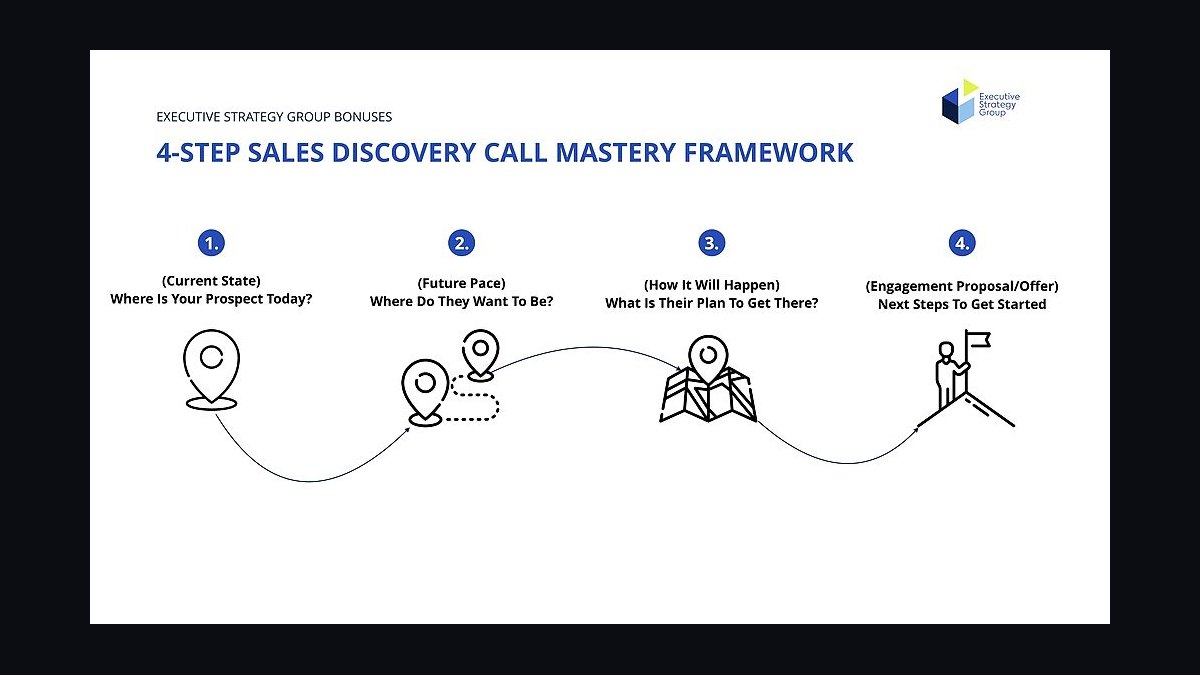
Use MEDDPICC as the qualification spine and layer SPIN-style questioning on top: open with an agenda, diagnose current-state pain, quantify the business impact, then map decision criteria, decision process, and the economic buyer before setting a mutual next step. In 2027, AI pre-call research from tools like Clay, Koala, and Gong means discovery shifts from gathering facts to delivering insight — reps walk in already knowing the org chart, the trigger event, and the likely pain, so the call has to earn its place by reframing the problem rather than re-asking what a buyer already published. Forrester puts roughly 70% of the buying journey ahead of first sales contact, which is why a modern discovery script blends Force Management's Command of the Message, the Challenger teach-tailor-take-control motion, and a GAP-selling current-to-future arc. The numbers that matter are consistent across Gong and Chorus data: top reps ask 11-14 questions, listen for 55-70% of the call, quantify pain explicitly, and lock a next step on 80%-plus of healthy discovery calls. Get those four things right and discovery-to-opportunity conversion lands in the 40-60% range.
1Why discovery is the highest-leverage call in complex B2B
In a multi-stakeholder enterprise deal, the discovery call sets the ceiling on every later stage. If you misdiagnose the pain, the demo is aimed at the wrong target, the business case quantifies the wrong number, and the deal stalls in legal because nobody mapped the paper process. Discovery is the only stage where the cost of a mistake compounds through every subsequent step, which is why Gong's deal-intelligence analysis repeatedly ties strong discovery to higher win rates.
The complexity has grown. A typical complex B2B purchase now involves six to ten stakeholders per Gartner's buying-group research, each with a different definition of value. A single discovery call with one champion cannot surface all of that, so the modern motion is multi-threaded: separate, persona-specific discovery sessions for the technical evaluator, the economic buyer, and the end users, stitched together into one coherent account view.
1.1 Discovery is diagnosis, not interrogation
The best framing comes from Sandler and from medical-sales analogies: a doctor who prescribes before diagnosing commits malpractice. The rep's job in discovery is to diagnose accurately enough that the recommended solution feels inevitable, not to run a checklist. That reframing changes the question design from "Do you have budget?" to "When this problem went unsolved last quarter, what did it cost you?"

2The major discovery frameworks compared
No single framework wins; the strongest reps combine a qualification framework with a questioning methodology. Here is how the major options divide the work.
MEDDPICC / MEDDICC is a qualification spine, not a question script. It tracks Metrics, Economic Buyer, Decision Criteria, Decision Process, Paper Process, Identify Pain, Champion, and Competition. Force Management popularized MEDDICC and pairs it with Command of the Message; it tells you what you still need to learn, but not how to ask.
SPIN Selling, from Neil Rackham's research at Huthwaite, is the questioning engine: Situation, Problem, Implication, and Need-payoff questions in sequence. Implication questions — the ones that make pain feel expensive — are where most reps underinvest.

The Challenger Sale, from CEB and now Challenger Inc., argues that the best reps teach the buyer something new about their business, tailor the message to the stakeholder, and take control of the buying process. It pairs naturally with insight-led discovery.
GAP selling, from Keenan, structures the whole conversation as current state to future state, with the gap between them as the deal size. Sandler's pain funnel drills from a surface complaint down to personal and quantified impact. Winning by Design frames discovery inside its broader bowtie revenue model and impact-based questioning. Corporate Visions and Richardson Sales Performance both publish discovery curricula that fold these motions into repeatable rep training.
2.1 How to combine them without overloading the call
Treat MEDDPICC as the backstage scorecard, SPIN as the on-stage script, and Challenger or GAP as the narrative spine. You never recite a framework to a buyer — you internalize the qualification model and let the questions feel like a conversation. A practical default: SPIN-style questioning to surface and quantify pain, then MEDDPICC fields filled in as the natural byproduct of a good diagnosis.

3The 2027 discovery call structure step by step
This eight-beat structure works for a 30-to-45-minute first call with a senior stakeholder.
- Pre-call: use AI research to map the account, stakeholders, and trigger events before the call so you open with a hypothesis, not a blank page.
- Open: state the agenda, get explicit permission for the time and the question set, and keep rapport brief and genuine.
- Current state: Situation and Problem questions to establish how things work today and where they break.
- Pain and implication: quantify the business impact and surface the cost of inaction — the implication step that separates good discovery from a survey.
- Future state and decision criteria: ask what success looks like in twelve months and what criteria the team will use to judge any solution.
- Decision process, economic buyer, and paper process: map who decides, in what sequence, and what procurement, security, and legal steps will be required.
- Champion test and next step: confirm your contact will advocate internally, then agree a mutual action plan with dates.
- Recap: play back what you heard, confirm the next meeting on the calendar, and assign owners.
3.1 Multi-threading the structure
For a true enterprise deal, run this arc more than once. The economic buyer gets a short, value-and-metrics-focused version; the technical evaluator gets a deeper current-state and criteria version. Each call feeds the same MEDDPICC scorecard, so the account view stays unified even as the conversations diverge.

4How AI changes pre-call prep and live coaching
Two shifts define 2027 discovery. First, pre-call research is automated. Clay and Koala assemble account and contact context from intent and enrichment data; Gong and general assistants summarize prior touches and likely pain. The rep arrives informed, so the call must add insight rather than collect background a buyer already shared publicly.
Second, the call itself is graded. Gong, Chorus from ZoomInfo, and Avoma record, transcribe, and score discovery quality — talk-to-listen ratio, number of questions, whether next steps were set, and whether pain was quantified. Conversation-intelligence scoring turns discovery from an art into a coachable, measurable rep behavior. Outreach and Salesloft push these signals into the workflow so managers coach on real calls, not anecdotes.
5Quantifying pain and the cost of inaction
The single biggest discovery upgrade is converting a vague complaint into a number. "Onboarding is slow" becomes "Each new hire takes 40 extra hours to ramp, across 200 hires a year, at a loaded cost of $75 an hour." Deals with quantified pain close at roughly twice the rate of deals where pain stayed qualitative, because the buyer can now build an internal business case without your help.

The mechanics are SPIN's implication and need-payoff questions plus Sandler's pain funnel. Push past the first answer: surface complaint, then operational impact, then financial impact, then personal stake for the stakeholder. The cost of inaction — what the buyer loses by doing nothing — is often a stronger motivator than the upside of your solution, and it directly fuels the Metrics field in MEDDPICC.
6Discovery metrics that predict deal outcomes
Treat these as your discovery scorecard, all observable in conversation-intelligence tools.
- Discovery-to-opportunity conversion: 40-60% is healthy; far above that suggests you are not disqualifying enough.
- Talk-to-listen ratio: top reps talk only 30-45% of the call. Gong's data consistently shows the best performers listen more than they speak.
- Questions asked: the best discovery calls carry 11-14 questions; too few signals a pitch, too many signals an interrogation.
- Next-step set rate: 80%-plus of strong discovery calls end with a scheduled, mutually owned next step.
- Pain quantified: a binary yes/no on whether a dollar figure was attached to the problem; the strongest single predictor of close.

7Common discovery mistakes
The recurring failures are predictable. Happy ears — hearing buying signals that are not there — inflate pipeline and crater forecast accuracy. Pitching during discovery, where the rep demos before diagnosing, wastes the highest-leverage call on the wrong content. Single-threading, relying on one champion who then goes quiet, leaves the deal blind to the economic buyer and the paper process.
Skipping implication questions keeps pain qualitative and unfundable. Forgetting to set a concrete next step lets momentum decay between calls. The fix for all five is the same: a disciplined structure, a quantified pain statement, and a mutual action plan, all captured against the MEDDPICC scorecard before the call ends.
Frequently Asked Questions
Is MEDDPICC a discovery framework or a qualification framework?

It is a qualification framework — a scorecard for what you must learn about a deal. You pair it with a questioning methodology like SPIN to actually run the conversation. Treat MEDDPICC as the backstage checklist and SPIN as the on-stage script.
How many questions should I ask on a discovery call?
Gong's analysis points to 11-14 questions in the strongest discovery calls. Fewer tends to mean you are pitching; many more tends to feel like an interrogation. Quality and sequencing matter more than raw count, especially the implication questions that quantify pain.

What is the ideal talk-to-listen ratio?
Top reps talk only 30-45% of the call and listen for the rest. Conversation-intelligence tools like Gong, Chorus, and Avoma measure this automatically, so it is one of the easiest discovery behaviors to coach.
How does AI change discovery in 2027?

AI handles pre-call research through tools like Clay, Koala, and Gong, so reps arrive already knowing the account and likely pain. That shifts discovery from gathering facts to delivering insight. AI also scores the call live, making discovery quality measurable and coachable rather than anecdotal.
Should I run one discovery call or several?
For complex multi-stakeholder deals, run several. Multi-thread persona-specific calls for the economic buyer, the technical evaluator, and end users, then unify everything into one MEDDPICC scorecard so the account view stays coherent.

Why does quantifying pain matter so much?
Deals with a dollar figure attached to the problem close at roughly twice the rate of deals where pain stayed vague. A quantified cost of inaction lets the buyer build an internal business case without you in the room, which accelerates the whole cycle.
Related on PULSE
- Top 10 Methods for Accelerating Complex B2B Sales Cycles in 2027
- How do self-serve AI demos affect the precision of B2B qualification criteria for complex deals?
- Why are 2027 AI chatbots failing to replace human BDRs in complex B2B funnels?
- Are 2027 AI chatbots effective at handling complex B2B pricing negotiations without human intervention?
- Why are 2027 AI forecasting tools underestimating deal velocity for complex enterprise sales?
- What's the right way to compensate sales engineers in a complex deal cycle — flat salary, deal-attached bonuses, or team commission?
Sources
- Gong Labs, discovery-call and talk-to-listen research on questions asked and next-step rates
- Forrester, B2B buyer behavior research on the share of the journey completed before sales contact
- Gartner, B2B buying-group research on stakeholder count in complex purchases
- Force Management, MEDDICC and Command of the Message methodology
- Neil Rackham, SPIN Selling (Huthwaite International) questioning model
- Challenger Inc. (formerly CEB), The Challenger Sale teach-tailor-take-control framework
- Keenan, GAP Selling current-state to future-state methodology
- Winning by Design, impact-based discovery and the revenue bowtie model
- Sandler Training, the pain funnel methodology
- Chorus by ZoomInfo and Avoma, conversation-intelligence discovery scoring
- Richardson Sales Performance and Corporate Visions, discovery and messaging curricula
This page will be disappearing soon. Save it to your device for $1 — or read it free while it is here.
@Kory-White- · if Venmo asks, the last 4 of my number are 2012
This page is gone.
This one is off the shelf now. $1 keeps it on your phone for good — the whole page, pictures and diagrams included.
 revopsHow do you migrate off Salesforce after the 2027 price increase?
 revopsWhat metrics matter most for renewal-driven SaaS sales in 2027?
 revopsWhat's the right ratio of SDRs to AEs in a 2027 outbound sales team?
 revopsHow do you negotiate enterprise SaaS contracts in 2027 without giving away margin?
 revopsHow does AI roleplay change sales training and rep ramp in 2027?
 revopsWhat's the right cadence and structure for sales 1-on-1s in a remote-first 2027 team?
 revopsWhat is allbound and how do you run an allbound GTM motion in 2027?
 revopsWhat's the optimal SDR-to-AE handoff process in 2027 B2B sales?
 revopsHow do you set sales quotas in 2027 when AI generates a large share of the pipeline?
 revopsHow do you measure sales rep productivity in 2027 when AI handles email, research, and call prep?