


How do you do effective territory management in 2027?
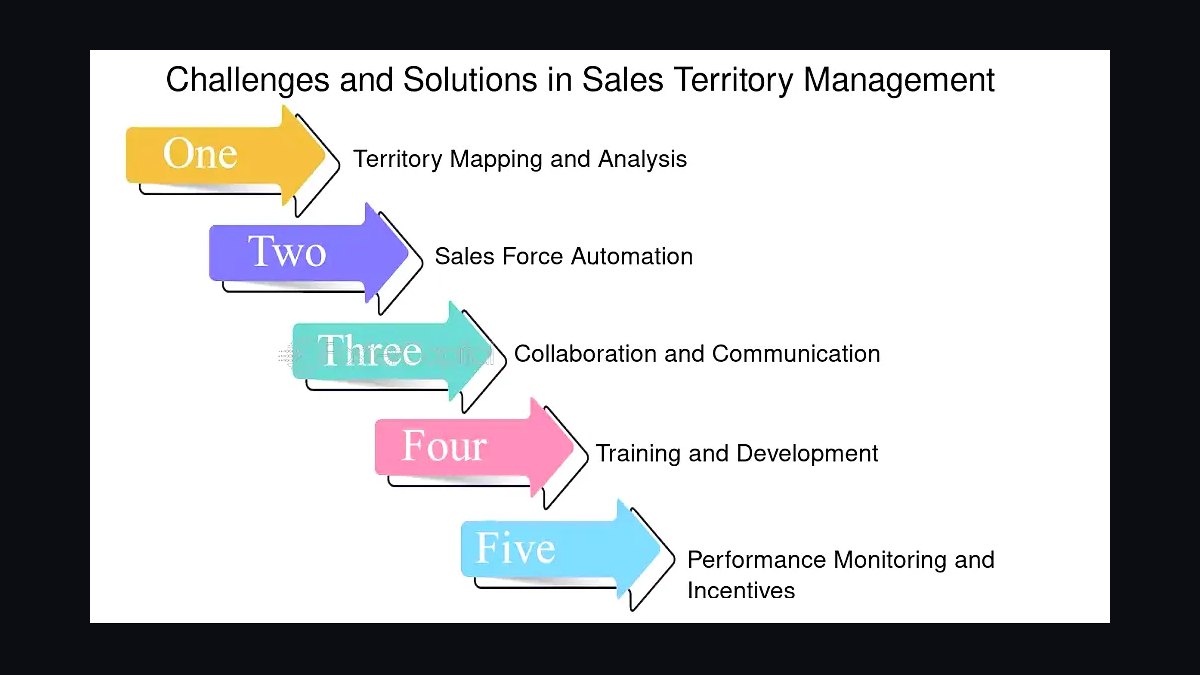
Effective territory management in 2027 is a living, weekly discipline — not an annual carve you set and forget. The modern RevOps team runs a named-accounts review every month, watches five mid-quarter re-balancing triggers (rep over-load, rep under-load, named-account M&A moves, rep attrition, mid-year segment shifts), and uses AI-augmented platforms like Fullcast, Anaplan PlanIQ, Varicent ICM, Salesforce Maps, and Xactly AlignStar to auto-flag mis-balanced books and propose moves before pipeline coverage breaks. The operating model is anchored by published Rules of Engagement (account ownership, splits, deal credit), a freeze + appeal change-control so reps cannot lobby for accounts mid-quarter, an open-territory rule that re-distributes a departing rep's book within 10 business days, and a deliberate choice between solo-AE coverage (volume motion, 80-150 accounts per rep) and pod design (1 AE + 1 SDR + 1 SE on 15-40 named accounts) based on ACV and motion. Per the Pavilion 2026 GTM Compensation Benchmarks, healthy quota-to-OTE ratios sit at 5x-9x, and the Sales Management Association ties top-quartile territory health to monthly cadence + AI scenario modeling, not annual cycles.
1Live Territory Management vs The Annual Carve
The annual territory carve sets the starting positions. Live territory management is everything you do for the other 50 weeks of the year — the cadence, the triggers, the tools, and the change-control that keeps reps in fair, winnable books without turning every quarter into a turf war.
1.1 What "Effective" Means In 2027
Effective is measured by three signals: (1) coverage equity — no rep's pipeline coverage drops below 3x while another sits at 7x; (2) win-rate stability — territory changes do not whiplash conversion by more than 5 points quarter-over-quarter; (3) attrition cost — when a rep leaves, accounts get reassigned within 10 business days and pipeline does not stall. OpenView's 2026 SaaS Benchmarks flag mis-balanced territories as the #2 cause of voluntary AE attrition, second only to broken comp plans.

1.2 The Rules Of Engagement (RoE) Document
Every mature RevOps function publishes a 2-3 page RoE document owned by the CRO and updated quarterly. It defines: account ownership (named-account list locked at quarter-start, with carve-out rules for M&A), split credit (when AE-A sources but AE-B's account closes — the GitLab handbook model uses a 70/30 source-vs-close split), conflict resolution (RevOps adjudicates within 5 business days), and handoff SLAs between SDR-to-AE and AE-to-CS.
2The Five Mid-Quarter Re-Balancing Triggers
2.1 Over-Loaded And Under-Loaded Books
A rep sitting at 7x pipeline coverage with 6 weeks left in quarter is hoarding; a rep at 1.8x is starving. Fullcast's territory agents scan books weekly, surface both, and propose specific account moves that close the gap without breaking quota math. Xactly AlignStar runs the same play with drag-and-drop scenario modeling.

2.2 Named-Account M&A Moves
When a named account gets acquired, the RoE dictates inheritance: if the acquirer is already a named account of another rep, the acquired entity transfers to that rep on the next monthly review; if the acquirer is net-new, the original rep keeps it and the acquirer becomes net-new in the parent rep's book.
2.3 Rep Attrition (The Open-Territory Rule)
When a rep leaves, the open-territory rule triggers automatically: active opportunities go to a named coverage AE within 48 hours, named accounts without active deals redistribute via a draft model (highest-attainment rep picks first) within 10 business days, and quota relief flows to the receiving reps proportionally per the Varicent ICM quota rebalancing module.

3Solo-AE vs Pod Design
The single biggest 2027 territory decision is structure. Bessemer's 2026 Cloud 100 cohort shows two stable patterns and almost nothing in between.
3.1 Solo-AE (Volume Motion)
Best for: ACV under $50K, sales cycles under 60 days, 80-150 accounts per AE. The rep owns prospect, close, and expansion. Tooling: Salesforce Maps for geography, Outreach or Apollo for cadence, Gong for call review. Quota-to-OTE typically lands at 6x.

3.2 Pod Design (Named-Account Motion)
Best for: ACV over $100K, sales cycles over 90 days, 15-40 named accounts per pod. Standard pod = 1 AE + 1 SDR + 1 SE, sometimes + 1 CSM at the enterprise end. The Pavilion 2026 Comp Survey shows pod-based enterprise AEs carry quota-to-OTE of 4.5x-5.5x (lower because of higher complexity per account), and pod attainment runs 8-12 points higher than solo-AE coverage of the same accounts. GitLab, Snowflake, and Databricks all run pure pod models in their enterprise segments.
4The Monthly Named-Accounts Review (NAR)
The NAR is the single most important live-territory ritual. It runs monthly, lasts 75-90 minutes, and includes the CRO, segment VPs, RevOps lead, and enablement.

4.1 The Agenda (90 Minutes)
Block 1 (20 min) — coverage health: every rep's pipeline coverage, win-rate trend, and stage velocity reviewed against the 3x-5x band. Block 2 (30 min) — named-account movement: M&A inheritance, contested accounts, requested swaps (handled via freeze + appeal). Block 3 (25 min) — AI-proposed re-balances: the Fullcast or Anaplan output gets accepted, rejected, or modified, and decisions push to Salesforce within 24 hours. Block 4 (15 min) — forward-look: which reps are on track for quota relief or stretch quota next month.
4.2 The Freeze + Appeal Change-Control
Between NARs, the named-account list is frozen. A rep who wants an account moved files an appeal through RevOps; the appeal is time-boxed to 5 business days, requires written justification, and resolves at the next NAR. This stops mid-quarter lobbying, which Sales Management Association research flags as the single largest driver of RoE breakdowns.

5The 2027 Tool Stack
5.1 Fullcast (RevOps-First, AI-Native)
Fullcast sits closest to the live-management problem. Its territory agents scan Salesforce nightly, auto-flag over/under-loaded books, and propose specific account moves. Strong for teams under 500 reps who want continuous re-balancing without rebuilding plans in spreadsheets.
5.2 Anaplan, Varicent, Xactly (Enterprise SPM)
Anaplan PlanIQ wins when territory has to connect to finance + capacity + quota in one model — usual customer is 1,000+ reps across geos. Varicent ICM dominates mid-quarter quota relief for departing-rep accounts. Xactly AlignStar is the scenario-modeling workhorse for what-if cuts before committing.

5.3 Salesforce Maps (Geography-Native)
Salesforce Maps wins when geographic coverage matters (field sales, distributor routes). Inside Salesforce, near-zero implementation lift.
6Bottom Line
Treat territory management as a weekly operating discipline, not a yearly project. Publish Rules of Engagement, run the monthly Named-Accounts Review, enforce freeze + appeal between NARs, automate the open-territory rule for departing reps, and let AI agents (Fullcast, Anaplan PlanIQ) flag mis-balanced books before pipeline coverage breaks. Pick solo-AE for volume and pods for named accounts — almost nothing works in the middle. The teams that get this right protect win-rate stability, cut voluntary AE attrition, and walk into every quarter with 3x-5x coverage across every book.

AI-Driven Dynamic Territory Modeling
In 2027, effective territory management relies on AI-driven dynamic modeling that continuously simulates "what-if" scenarios. Platforms like Fullcast and Anaplan PlanIQ ingest real-time data—pipeline velocity, win rates, account engagement scores, and market signals—to predict territory performance under different alignments. RevOps teams run weekly simulations to test splits, re-balance workload, and optimize coverage before gaps emerge. For instance, if a rep’s pipeline drops below a 3x coverage ratio, the AI flags the territory for review and suggests adjacent accounts or vertical shifts. This moves territory management from reactive fixes to proactive optimization, reducing coverage gaps by an estimated 20-40% in early-adopter organizations.
Data-Driven Quota Setting and Fairness
Modern territory management ties directly to data-driven quota setting using machine learning models that analyze historical performance, market potential, and account-level data. Tools like Xactly AlignStar and Varicent ICM now incorporate external datasets—industry growth rates, competitor moves, economic indicators—to set quotas that reflect true opportunity, not just past revenue. This reduces the common friction of "unfair" territories, as reps see transparent, AI-backed rationale for their targets. The Sales Management Association notes that organizations using AI for quota setting report 15-25% higher rep satisfaction with territory assignments, as the process feels objective and tied to measurable potential rather than manager bias.

2The Three Data Layers That Power Territory Decisions
Modern territory management in 2027 relies on three distinct data layers, each serving a different decision horizon. Layer one is firmographic + technographic — company size, industry, tech stack, growth rate — sourced from platforms like ZoomInfo, 6sense, and Dun & Bradstreet. This layer drives the initial annual carve and quarterly re-balancing. Layer two is engagement + intent — website visits, content downloads, product usage signals, and buying committee activity — fed from your CRM, CDP, and ABM tools. This layer reveals which accounts are actually in-market, allowing you to shift coverage toward live opportunities rather than static lists. Layer three is capacity + velocity — each rep's historical win rates, average deal size, sales cycle length, and current pipeline coverage ratios. Without this layer, you risk assigning high-potential accounts to reps who lack the capacity or skill to close them. The best teams sync these layers weekly using a lightweight dashboard (e.g., Tableau, Power BI, or a CRM-native view) so that territory moves are grounded in real-time signals, not gut feel.
3The Three Common Territory Design Patterns
Not all territories should be built the same way. In 2027, three design patterns dominate, each matched to a specific go-to-market motion. Pattern A: Geographic pods — used when travel or local presence matters (e.g., enterprise field sales, construction, or healthcare). Each pod covers a metro or region, with 1 AE + 1 SE + 1 SDR handling 20-40 named accounts. This pattern works best when ACV exceeds $75K and face-to-face meetings drive conversion. Pattern B: Industry verticals — used when domain expertise is a competitive advantage (e.g., fintech, manufacturing, or life sciences). Reps own a specific vertical segment (e.g., "mid-market banks" or "biotech R&D") regardless of geography. This pattern requires strong ICP definition and typically caps accounts at 50-80 per rep. Pattern C: Account tier + behavior — the most dynamic pattern, where accounts are grouped by tier (Tier 1 = high-fit + high-intent, Tier 2 = high-fit + cold, Tier 3 = low-fit) and re-assigned monthly based on engagement shifts. This pattern demands the most automation but yields the highest coverage equity. Choose one pattern and commit for at least two quarters before iterating.

FAQ
What’s the biggest mistake teams make with territory management in 2027? Treating it as a once-a-year exercise. The most common pitfall is setting territories in Q1 and ignoring them until Q4, which leads to uneven pipeline coverage and rep burnout. Instead, top teams run monthly named-account reviews and use AI alerts to catch imbalances early.
How many accounts should a rep typically cover? It depends on your motion. For volume sales (lower ACV), solo AEs handle 80–150 accounts. For enterprise or strategic deals (higher ACV), pod designs with 1 AE, 1 SDR, and 1 SE cover 15–40 named accounts. The right range balances pipeline generation with relationship depth.
What triggers a mid-quarter territory re-balance? Five common triggers: a rep becoming over-loaded or under-loaded, a named account going through an M&A event, rep attrition, or a mid-year segment shift. AI platforms like Fullcast or Anaplain PlanIQ can auto-flag these and propose adjustments before pipeline coverage breaks.
How do you handle account ownership disputes? With published Rules of Engagement that define account ownership, splits, and deal credit. There’s a freeze-and-appeal change-control process so reps can’t lobby for accounts mid-quarter. This keeps the system fair and reduces internal conflict.
What happens when a rep leaves mid-quarter? The open-territory rule kicks in: the departing rep’s book is re-distributed within 10 business days. This prevents orphaned accounts and keeps pipeline momentum. The re-assignment uses AI scenario modeling to balance workload and coverage across the remaining team.
Do you need AI tools for effective territory management? Not strictly, but they help a lot. AI-augmented platforms like Varicent ICM, Salesforce Maps, or Xactly AlignStar can auto-flag mis-balanced books and propose moves. Teams without them rely on manual reviews, which are slower and more prone to error. The Sales Management Association ties top-quartile health to monthly cadence plus AI modeling.
Bottom Line
Territory management is a continuous-improvement loop, not an annual carve. Inspect monthly, re-balance only when the math justifies it, freeze + appeal everything else, and let Fullcast or Anaplan agents flag drift before reps escalate it.
Related on PULSE
- What data sources are most effective for training AI models to predict next best action in complex enterprise deals?
- Are 2027 AI chatbots effective at handling complex B2B pricing negotiations without human intervention?
- What is the most effective 2027 close plan for a deal stalled by a committee’s AI risk simulator?
- What data sources are most effective for training AI models to predict next best action in complex enterprise deals?
- What coaching question helps a salesperson identify their most effective closing technique for different buyer types?
- What is the most effective question to determine if a rep is relying too heavily on discounts to close deals?
Sources
- Pavilion — 2026 GTM Compensation Benchmarks Report
- OpenView Partners — 2026 SaaS Benchmarks Report
- Bessemer Venture Partners — 2026 Cloud 100 State of the Cloud
- Sales Management Association — Territory Design and Operating Cadence Research
- Fullcast — Territory Operations and AI Agents Documentation
- Anaplan — PlanIQ Territory Planning and Mapping Use Case
- Varicent — ICM Territory and Quota Module
- Xactly — AlignStar Sales Territory Alignment Software
- Salesforce — Salesforce Maps Territory Planning
- GitLab Handbook — Go-To-Market Rules of Engagement
This page will be disappearing soon. Save it to your device for $1 — or read it free while it is here.
@Kory-White- · if Venmo asks, the last 4 of my number are 2012
This page is gone.
This one is off the shelf now. $1 keeps it on your phone for good — the whole page, pictures and diagrams included.
 revopsHow do you set up territory carving in 2027?
 revopsHow do you do effective deal coaching in 2027?
 revopsHow do you run a weekly forecast call in 2027?
 revopsHow do you structure a quarterly business review (QBR) in 2027?
 revopsHow do you set up pipeline reviews that drive accountability in 2027?
 revopsHow do you do strategic account planning in 2027?
 revopsHow do you measure agentic-AI ROI in RevOps in 2027?
 revopsHow do you do effective sales talent assessment in 2027?
 revopsHow do you build a sales enablement program in 2027?
 revopsHow do you set up effective sales technology training in 2027?