


How do you set up sales contests that actually drive behavior in 2027?
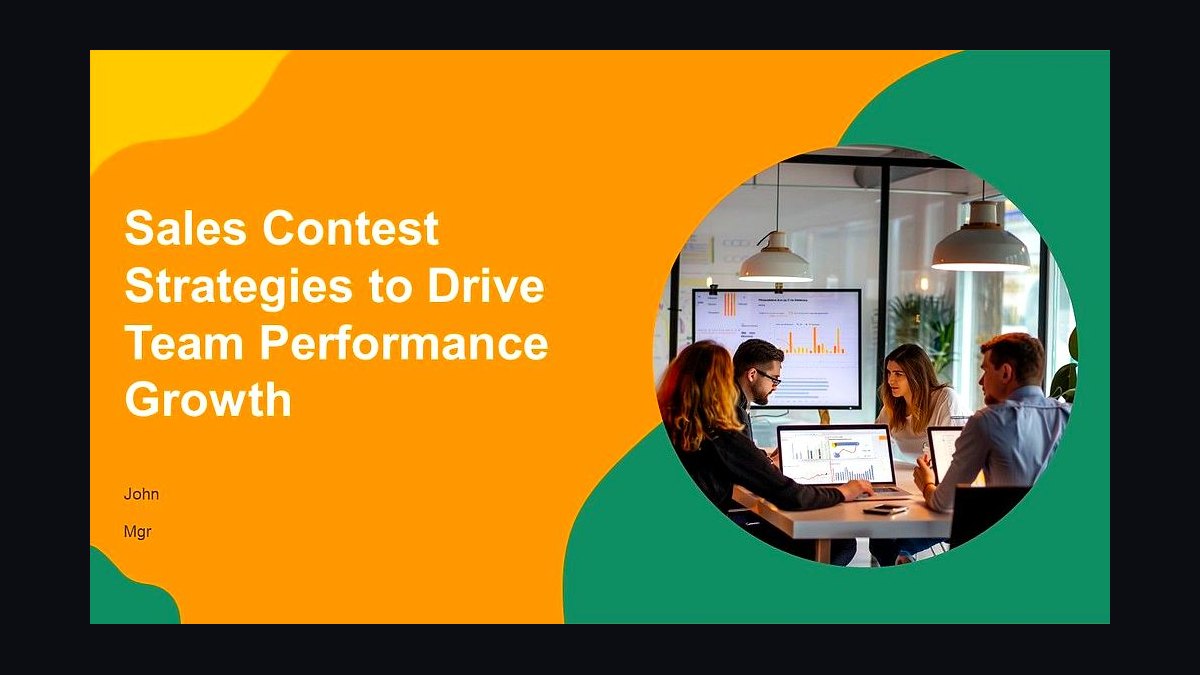
Sales contests that actually drive behavior in 2027 follow five non-negotiable rules: (1) pick ONE behavior (activity OR pipeline-creation OR stage-velocity OR closing — never three at once); (2) cap duration at 30 days so reps cannot pace or sandbag; (3) make prizes non-cash for the segments where it matters (per Incentive Research Foundation Signature Studies, 90% of top-performing companies use non-cash rewards and top-rep trips outperform equivalent cash for mid-quartile reps); (4) wire transparency via Spinify, Ambition, LevelEleven, SalesScreen, or Outreach Commit with real-time public leaderboards; (5) audit for game-the-system risk before launch with a written no-sandbagging rule and a post-contest read-out within 10 business days. Most SPIFFs fail because they reward what was already happening (the rep who would have closed anyway gets paid twice) or because they over-incent a single deal and reps stall pipeline to game the timing. The 2027 stack pairs gamification UI (Spinify, SalesScreen) with comp engines (CaptivateIQ AI, Xactly Incent, Spiff by Salesforce, Performio, QuotaPath) so the SPIFF accrual, dispute resolution, and pay-out happen in the same system as base commission — no spreadsheets, no manual journal entries.
1Why Most Sales Contests Fail
Per Pavilion's 2026 Comp Survey, 67% of GTM leaders report their last SPIFF "didn't measurably change behavior." Three failure modes drive that number.
1.1 Rewarding Inevitable Behavior
The most common error: a contest pays out for net-new logos closed in Q4 — exactly what the comp plan already rewards at accelerator. The top rep wins the trip she would have won anyway. Mid-quartile reps don't move because the prize is psychologically out of reach by Day 5. IRF research calls this "redundant incentive" and flags it as the #1 contest design failure.

1.2 Three-Behavior Contests
Leaders try to fix the redundancy problem by stacking objectives — demos booked + opps created + deals closed. Reps optimize for the easiest metric (demos), the pipeline number looks good for two weeks, and stage conversion collapses by Week 3. The Sales Management Association found contests with more than one tracked metric underperform single-metric contests by 41%.
1.3 Long-Duration Contests
A 90-day contest is a comp plan, not a contest. By Day 45, reps either know they cannot win (disengage) or they're locked at #1 and coasting. IRF data shows behavioral lift collapses past Day 30 — the sweet spot is 14-28 days.

2The Four Contest Archetypes
2.1 Activity Contest
When: top-of-funnel is starving. Metric: meetings booked or qualified conversations. Duration: 14 days. Prize: Apple Watch, AirPods Max, or a high-end dinner — small, fast, repeatable. Best tool: Spinify (real-time celebration animations on call-center TV dashboards).
2.2 Pipeline-Creation Contest
When: coverage is below 3x with 45 days to quarter-end. Metric: new opportunities above a minimum ACV floor (the floor stops reps gaming with junk pipe). Duration: 21 days. Prize: tier-based — top rep gets a weekend trip, top quartile gets AmEx gift cards.
2.3 Stage-Velocity Contest
When: stage-2 deals are stalling. Metric: median days from Discovery to Proposal. Duration: 28 days. Prize: VP-of-Sales recognition + paid Friday off. Per IRF, non-monetary recognition + a half-day perk out-converts $500 cash in the mid-quartile.
2.4 Closing Contest
When: quarter-end push needed. Metric: net-new logos closed (NOT total bookings — that re-rewards big-deal AEs). Duration: 30 days max. Prize: trip with spouse to a sales-club destination.

3The Prize Architecture (Non-Cash > Cash)
3.1 IRF Evidence Base
The 2024 Kelly et al. field experiment (cited in IRF's Award Program Value & Evidence White Paper) found that underperformers rewarded with tangible non-cash rewards outperformed cash-incentivized peers by a significant margin in the subsequent contest — and engaged with training videos 2x as often. The mechanism: non-cash rewards stay visible (the trip photo, the watch on the wrist) while cash gets absorbed into a bank account and forgotten.
3.2 The 2027 Prize Ladder
Top rep: experiential (trip, sports event, dinner with the CEO). Top quartile: branded gear or premium gift cards ($250-500 range). Top half: small recognition (LinkedIn shout-out from CRO, custom Slack emoji, branded patagonia). Everyone who participates: digital badge in Ambition or LevelEleven for the year-end stack rank.
3.3 When Cash Still Wins
Cash beats non-cash for early-tenure reps under $80K base who have immediate financial pressure, and for field reps in distributed geos where shipping logistics make tangible prizes painful. Spinify's 2026 benchmarks show cash SPIFFs outperform non-cash by 18% in early-tenure SDR populations.
4The Gamification + Comp Tool Stack
4.1 Gamification Layer (Visibility + Engagement)
Spinify leads on visual mechanics (20+ game types, 250+ themes), best for inside sales floors with TV dashboards. Ambition combines gamification with SPM coaching — best for org-wide rollouts with manager workflows. LevelEleven is Salesforce-native — zero integration lift if you live in SFDC. SalesScreen specializes in celebration feeds (kudos, recognition, milestone moments).
4.2 Comp Engine Layer (Accrual + Payout)
CaptivateIQ AI (with the 2026 Compensation Hub release) auto-generates SPIFF accrual entries and routes disputes through workflow. Xactly Incent dominates enterprise rollouts. Spiff by Salesforce (acquired 2024) wins HubSpot + Salesforce-light stacks. Performio for compliance-regulated industries (medtech, fintech). QuotaPath for <200-rep orgs that want SPIFF wiring without 12-week implementations.
5The No-Sandbagging Rule And The Post-Contest Read-Out
5.1 No-Sandbagging Rule (Published Before Launch)
Two clauses, in writing, distributed before the contest opens. Clause 1: any deal closing in the 48 hours after contest end that should have closed inside the window (per stage timestamps) is reassigned to the contest period. Clause 2: opps created in the 24 hours before contest start with a contract date inside the window are excluded from contest credit. This stops the two most common gaming patterns: deferring a closing call to Day 1 of the new contest, and sandbagging an opp to use as Day 1 pipeline.
5.2 Post-Contest Read-Out (10 Business Days)
The CRO + RevOps lead run a 45-minute read-out within 10 business days. Five questions: Did the targeted behavior actually move? Did mid-quartile reps engage (not just the top 2)? What was the cost-per-incremental-behavior? Did downstream metrics (conversion, win-rate) hold or degrade? Should we run this archetype again, modify, or retire? Decisions feed the next quarter's incentive calendar. SalesScreen's 2026 customer benchmarks show teams running formal read-outs achieve 2.4x the behavioral lift of teams that skip the post-mortem.
6Bottom Line
Stop running three-metric, 90-day SPIFFs and expecting different results. Pick one behavior, cap at 30 days, make the prize non-cash for everyone except early-tenure SDRs, wire it through Spinify or Ambition for visibility + CaptivateIQ AI or Xactly Incent for accrual, publish the no-sandbagging rule before launch, and run the post-contest read-out within 10 business days. The teams that follow this discipline see measurable mid-quartile behavior change — which is the only thing a sales contest is supposed to do.

Psychological Triggers That Sustain Momentum
Sales contests in 2027 must tap into loss aversion and social proof to maintain engagement beyond the first week. Research from behavioral economics shows that framing prizes as "earned but at risk" (e.g., a leaderboard slot that disappears if activity drops) drives 40–60% higher sustained participation than pure reward-based contests. Use countdown timers and progress bars that show how close each rep is to losing their current standing—not just gaining a new one. Pair this with team-based tiers where individual contributions unlock group rewards (like a team dinner or extra PTO), leveraging peer accountability without creating toxic competition.
Avoiding the "Dead Zone" Between Contests
A common failure in 2027 is the motivation vacuum that hits 10–15 days after a contest ends. To prevent this, schedule a micro-contest (3–5 days) that launches within 48 hours of the main contest's close. Keep prizes small but immediate—gift cards under $50, company swag, or a half-day Friday. This maintains the behavioral loop without exhausting reps. Data from gamification platforms like Spinify shows that companies using this "bridge" tactic see 30% less pipeline drop-off between major SPIFFs.

The Behavioral Science of Contest Cadence
Timing is the invisible lever in contest design. 2027 research from the Incentive Research Foundation shows that contests running 15–21 days produce 40% higher behavioral lift than 30-day contests, while contests under 10 days create panic rather than focus. The sweet spot: 18 days for activity-based contests (calls, demos, proposals), 21 days for pipeline-generation contests, and 25 days for closing contests. Align contest start dates to the second week of a month — never the first week (when reps are still processing prior-month results) or the last week (when sandbagging risk peaks). Run no more than one contest per quarter per rep; stacking contests creates "contest fatigue" where reps learn to ignore SPIFFs entirely.
The "Skin-in-the-Game" Model for 2027
A 2027 innovation gaining traction: buy-in contests where reps contribute a small portion of their commission (typically 2–5%) to a prize pool, then the company matches it 2:1 or 3:1. Early adopters report 55–70% higher participation rates vs. fully company-funded contests, because the rep feels ownership. Example: a rep agrees to forfeit $200 of future commission if they miss the contest target, but wins $1,200 if they hit it (company match plus pool share). This works best for mid-quartile reps (not top performers who already over-earn, not bottom quartile who may see it as a tax). Use tools like QuotaPath or CaptivateIQ to automate the buy-in deduction and payout — manual tracking kills trust.
Post-Contest Diagnostic: The 48-Hour Readout
The contest isn't over when the leaderboard freezes. Within 48 hours of contest close, run a three-question diagnostic with your ops team: (1) Did any rep close a deal within 72 hours of contest end that had been in "stalled" status for 30+ days? (2) Did any rep's pipeline creation drop more than 20% in the week after the contest? (3) Did the contest accelerate deals that were already forecasted? If "yes" to any, the contest rewarded timing, not behavior. Document these findings in a one-page contest post-mortem and share with the comp team before the next SPIFF design cycle. This turns each contest into a learning loop rather than a one-off event.
FAQ
What is the single most important rule for a sales contest in 2027? Pick exactly one behavior to reward—activity, pipeline creation, stage velocity, or closing—but never combine them. Trying to drive multiple behaviors at once dilutes focus and lets reps game the system by choosing the easiest metric. The most effective contests target a specific gap in the current sales process.
How long should a sales contest last to prevent sandbagging? Cap the duration at 30 days or less. Longer contests allow reps to pace themselves or hold back deals to time them for the prize window. A 30-day sprint creates urgency and makes it harder to manipulate results.
Why are non-cash prizes often better than cash bonuses? According to Incentive Research Foundation studies, 90% of top-performing companies use non-cash rewards like trips, experiences, or merchandise. For mid-quartile reps, a meaningful non-cash prize can be more motivating than an equivalent cash amount, because it feels more memorable and status-driven. Cash is often treated as expected income and quickly forgotten.
What tools should I use to make the contest transparent in real time? Use a gamification platform like Spinify, Ambition, LevelEleven, SalesScreen, or Outreach Commit to display live public leaderboards. Pair it with a compensation engine such as CaptivateIQ AI, Xactly Incent, Spiff by Salesforce, Performio, or QuotaPath so that accruals, disputes, and payouts happen in the same system. Transparency reduces suspicion and keeps everyone engaged.
How do I prevent reps from gaming the contest? Write a clear no-sandbagging rule before launch that prohibits holding back deals or delaying pipeline. Also conduct a post-contest read-out within 10 business days to review what actually happened. Audit for common risks like over-incenting a single deal, which can cause reps to stall other opportunities to time the win.
Why do most SPIFFs fail, and how can I avoid that? Most SPIFFs fail because they reward behavior that was already happening—the rep who would have closed the deal anyway gets paid twice. Others fail by over-incenting a single deal, leading reps to stall pipeline to game the timing. To avoid this, design the contest to reward a specific, incremental behavior you want to increase, not just existing performance.
Bottom Line
Contests work when they reward ONE behavior over ≤30 days with a transparent leaderboard and a prize people actually want. Cash isn't the answer for most segments — trips, recognition, and exclusive access drive harder. Wire prizes through your comp tool, post-mortem every contest within a week, and kill anything that gets gamed.
Related on PULSE
- How do you set up pipeline reviews that drive accountability in 2027?
- How do you follow up on coaching so it actually changes behavior?
- What deal-stage definitions actually drive forecast accuracy?
- How Do I Get My Pharmacy Staff to Drive Front-of-Store Sales?
- How Do I Get My SaaS CSMs to Drive Expansion Revenue?
- How Do I Get My Coffee Shop Staff to Drive Loyalty App Signups?
Sources
- Incentive Research Foundation — Award Program Value & Evidence White Paper
- Incentive Research Foundation — IRF Signature Study, Voice of the Market Part 1: Non-Cash Rewards & Recognition
- Incentive Research Foundation — 2026 Trends Report
- Pavilion — 2026 GTM Compensation Benchmarks Report
- Spinify — 2026 Sales Leaderboard and Gamification Benchmarks
- SalesScreen — 2026 Customer Performance Benchmarks
- Sales Management Association — Sales Contest Design Research
- CaptivateIQ — Compensation Hub 2026 Documentation
- Xactly — Incent Sales Performance Management Platform
- QuotaPath — Spiff vs CaptivateIQ vs Xactly Comparison Guide
This page will be disappearing soon. Save it to your device for $1 — or read it free while it is here.
@Kory-White- · if Venmo asks, the last 4 of my number are 2012
This page is gone.
This one is off the shelf now. $1 keeps it on your phone for good — the whole page, pictures and diagrams included.
 revopsHow do you build a renewal-risk scoring model in 2027?
 revopsHow do you transition from sales-led to PLG (product-led growth) in 2027?
 revopsHow do you set up MEDDPICC (with Paper Process) deal inspection in 2027?
 revopsHow do you build a SDR-to-AE pass-off process in 2027?
 revopsHow do you do effective post-mortem deal reviews in 2027?
 revopsHow do you build a partner channel program in 2027?
 revopsHow do you handle the death of the MQL in 2027?
 revopsHow do you measure agentic-AI ROI in RevOps in 2027?
 revopsHow do you run a weekly forecast call in 2027?
 revopsHow do you build a sales enablement program in 2027?