


How do brands choose which college athletes to sign for NIL in 2027?
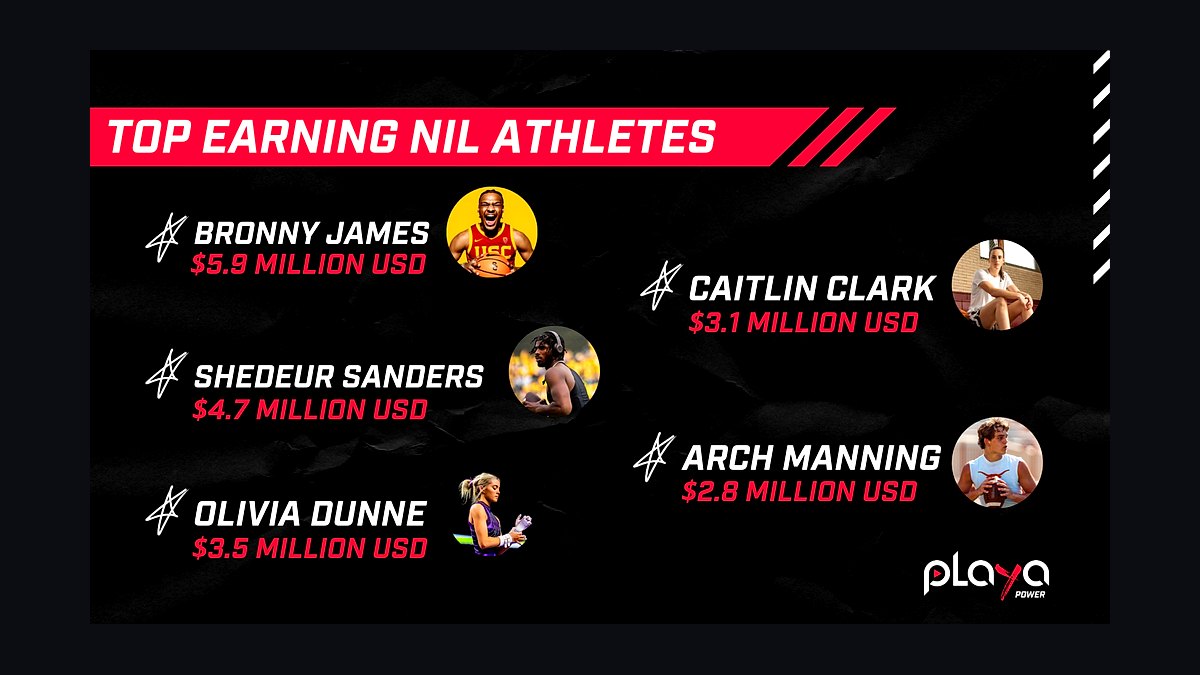
Brands choose college athletes for NIL in 2027 by stacking five filters in this order: (1) audience fit — does the athlete's follower demographic match the brand's target buyer, (2) engagement rate — 3%+ floor with NIL Club's roster averaging 8.4% versus 1.9% for traditional influencers, (3) on-field visibility — quarterbacks at Power Four programs command roughly two-thirds of the top 25 valuation spots because they touch every offensive snap, (4) brand-safety and authenticity — disciplinary record, voice, and personal-brand alignment, and (5) NIL Go clearance — Deloitte's algorithmic vetting on any deal over $600 from a brand with school ties. The cheapest, highest-ROI deals are still micro-influencer athletes with 1,000-10,000 followers because their conversion rates beat star QBs on a cost-per-acquisition basis; the biggest checks still flow to the Arch Mannings ($5.4M On3 valuation), Sam Leavitts ($4M at LSU), and Julian Sayins ($2.4M at Ohio State) because national reach is its own product.
1The Five-Filter Brand Selection Funnel In 2027
Brand marketers running NIL programs in 2027 do not pick athletes the way they picked celebrity endorsers in 2015. The market matured fast — $2.3B in 2024-25 per OC&C Strategy Consultants, growing roughly 9% annually through 2029 — and the buying playbook now looks like programmatic media buying with a compliance layer bolted on top.
1.1 Filter 1 — Audience Fit Before Anything Else
The first cut is always audience demographics, not follower count. A regional QSR chain selling $8 chicken sandwiches in the SEC footprint does not want a Cal-Berkeley swimmer with a global following — it wants a backup linebacker at Auburn or Ole Miss whose 18,000 Instagram followers are 78% in-state and 64% aged 18-34. The platforms now expose this: Opendorse, INFLCR, MarketPryce, and NIL Club all surface follower geo, age, and gender breakdowns inside the brand dashboard before the brand ever sends an offer.

1.2 Filter 2 — Engagement Rate Over Follower Count
The single biggest brand-side shift since 2022 is the move from vanity follower counts to measurable engagement rate. College athletes average 5.6% engagement versus 1.9% for traditional influencers (per eMarketer's 2026 NIL report) — a 3.7x premium that brands now demand to see proven before signing. The benchmark inside NIL Club's marketplace is 8.4%, and nano-influencer athletes with 1,000-5,000 followers routinely post the highest engagement rates of any tier.
1.3 Filter 3 — On-Field Visibility And Position Premium
Quarterbacks at Power Four programs dominate top-of-market NIL spend for a structural reason: the position touches every offensive snap, carries the most media obligations, and functions as the literal face of a program. As of the 2026 cycle, quarterbacks hold roughly two-thirds of the top 25 On3 NIL valuation spots. Arch Manning sits at $5.4M, Sam Leavitt at $4M at LSU, Julian Sayin at $2.4M at Ohio State, and Darian Mensah at Miami after the landmark Duke-to-Miami transfer dispute that tested NIL contract enforceability in court.

1.4 Filter 4 — Authenticity And Brand Safety
Brands now run disciplinary and social-history screens before signing, the same way agencies vet adult celebrity endorsers. Off-field arrests, racially insensitive old tweets, gambling-adjacent content, and partisan political posts all kill deals before contract. Reese's Peanut Butter Cups ran the most-publicized authenticity play of 2025: instead of one star, they signed a dozen athletes from Texas to Delaware whose only shared trait was the surname "Reese" — a campaign that scored higher unaided recall than any single-athlete NIL deal that year.
1.5 Filter 5 — NIL Go Clearinghouse Clearance
Since the House v. NCAA settlement took effect, every deal over $600 from a brand with school association must clear NIL Go, the Deloitte-built algorithmic clearinghouse that scores deals on a 12-point fair-market-value test. Deloitte's own pre-launch data showed 70% of historical collective deals would have been denied by the algorithm, while 90% of historical public-company brand deals would have been approved — meaning legitimate national brands sail through, but booster-fronted deals get rejected. Brands now structure offers to clear NIL Go on the first pass: real deliverables, commensurate compensation against comparable athletes, and a documented commercial purpose.

2How Brand Tiers Actually Buy Athletes In 2027
National enterprise brands, regional mid-market brands, and local DTC startups all use the same five filters but weight them completely differently — and they shop on different platforms.
2.1 National Enterprise Brands
Nike, Adidas, Gatorade, Bose, EA Sports, Dr Pepper, and Raising Cane's account for roughly 60% of compensating parties in commercial NIL and deliver about 81% of the total commercial NIL dollars. They buy star QBs, Heisman contenders, and top transfer-portal names for $500K-$5M+ packages, run them through their existing sports-marketing agencies (CAA, Wasserman, Klutch), and treat the spend as a national brand-awareness line item alongside Super Bowl ads.

2.2 Regional Mid-Market Brands
Regional banks, car dealerships, restaurant chains, and home-services brands buy the next 200-500 athletes per state. These are typically $1,500-$15,000 annual deals sourced through Opendorse (charging brands a 30% transaction fee, working with 120+ universities), INFLCR, or MarketPryce. The brief is usually two Instagram posts + one TikTok + one in-store appearance per quarter.
2.3 Local DTC And Micro-Brands
A local nutrition supplement startup or a Shopify-native apparel brand buys walk-on athletes, women's lacrosse players, and gymnasts with 5K-25K hyper-engaged followers. Deals run $100-$1,500 per post or free product + 10% affiliate commission. The ROI math: athletes here drive 74% lower customer acquisition cost than paid social, per performance-based NIL platform data from early 2026.

3The Real Decision Criteria — A Vendor-Level Look At The Stack
3.1 The Discovery Layer
Opendorse ($30%-take rate, deal-management focus), INFLCR (compliance-heavy, narrower deal flow), NIL Club (8.4% avg engagement, brand-discovery dashboard), MarketPryce (self-serve marketplace), and MOGL (AI-driven athlete matching) all compete to be the brand's discovery surface. The biggest brands use all five in parallel because no single platform has every athlete.
3.2 The Valuation Layer
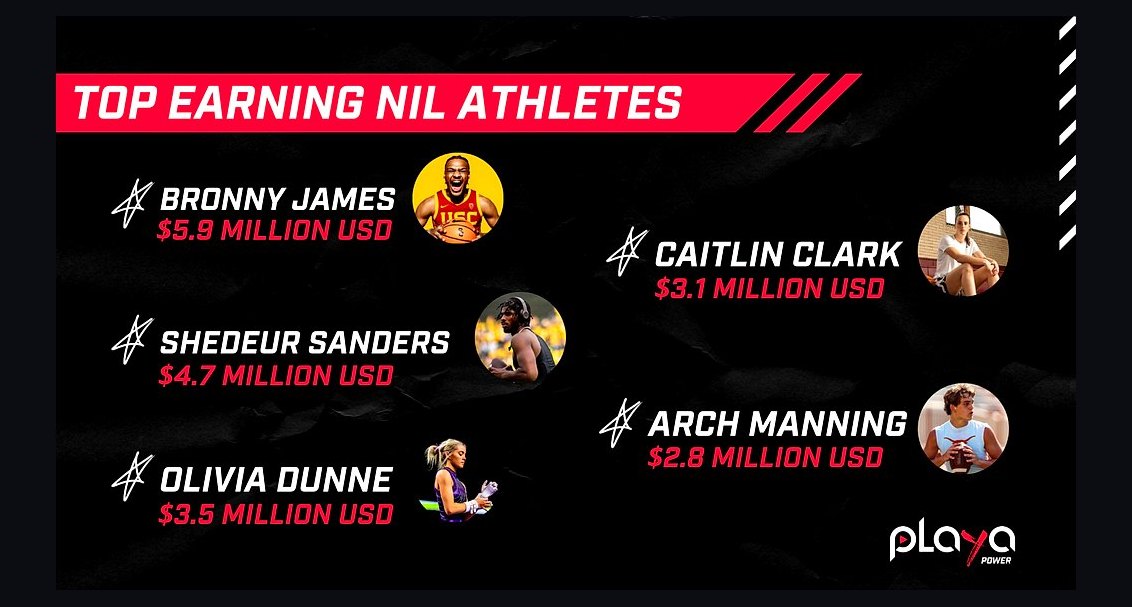
On3 NIL Valuation is the de facto reference price. It blends performance, social reach, search interest, and deal-comp data into a single dollar number — Arch Manning's $5.4M figure is the public benchmark, and brands negotiate down from that anchor. 247Sports and ESPN publish secondary rankings; Sportico publishes deal-flow analytics; Front Office Sports covers the deal-news cycle daily.

3.3 The Activation And Compliance Layer
Once a deal is signed, INFLCR handles content scheduling and approval workflows, Opendorse routes payment, and NIL Go (Deloitte) sits above the whole stack as the regulatory gate for any deal over $600 from school-associated brands. Bryan Seeley, the College Sports Commission CEO (former MLB VP of Investigations), runs enforcement on top of the algorithm.
3.4 The Measurement Layer
Brands measure NIL the same way they measure paid influencer media: CPM, CPE (cost per engagement), CPA (cost per acquisition), brand-lift surveys, and promo-code redemptions. The athletes who get re-signed for year two are the ones whose unique promo codes actually drove trackable revenue, not the ones with the biggest follower count.

4What Brands Pay For Each Tier In 2027
4.1 The Top 50 (Star QBs, Heisman Contenders, Top Transfers)
$250,000 to $5,400,000 per year, multi-deliverable packages, often with equity components (see Shedeur Sanders' Beats by Dre equity play that set the template). Reserved for Nike, Adidas, EA Sports, Gatorade, Bose, Beats, Uber (Arch Manning's Uber deal is the prototype), and similar national accounts.
4.2 The Next 500 (Power Four Starters, Top G5 Stars)
$15,000 to $250,000 per year, typically regional bank, regional restaurant chain, regional car dealer money. Deals are sourced through Opendorse or INFLCR and structured as quarterly content deliverables + 1-2 in-person appearances.

4.3 The Long Tail (Walk-Ons, Olympic Sport Athletes, Niche Communities)
$100 to $15,000 per year, mostly DTC product seeding, affiliate commissions, micro-sponsorships. These deals never touch NIL Go because they sit under the $600 threshold per transaction or come from brands with no school association.
4.4 The Equity And Long-Tail Royalty Tier
A growing category: brand equity grants instead of cash. Startups in fintech, sports betting (where legal), nutrition, and apparel offer athletes 0.1%-1.0% equity in exchange for a 12-24 month commitment. The valuation math works for the brand because cash conserves runway and the athlete becomes a founding-team-style ambassador.

5The Three Most Common Brand Mistakes In 2027
5.1 Buying On Follower Count Alone
Brands still over-index on the 100K+ Instagram threshold. The smarter play is buying engagement rate at any follower tier — a 6,000-follower softball player at 14% engagement out-converts a 400,000-follower football backup at 1.2% almost every time on a CPA basis.
5.2 Skipping The NIL Go Pre-Model
Brands that don't run their offer through a NIL Go pre-clearance model (most major platforms now offer a built-in simulator) get rejected deals, wasted negotiation cycles, and frustrated athletes. Pre-modeling adds two days; rework adds two weeks.

5.3 Treating NIL Like A One-Off Stunt
The brands posting the strongest measured ROI — Raising Cane's, Reese's, Dr Pepper, Bose, Beats — all run multi-athlete, multi-quarter campaigns with consistent creative briefs. One-off stunts generate one news cycle and zero downstream revenue.
FAQ
How do brands decide which athlete's audience is the right fit? Brands look at the athlete's follower demographics—age, location, interests—and compare them to their own target buyer profile. A regional car dealership might prefer a local college quarterback with 5,000 followers who are mostly in-state, while a national sportswear brand wants a gymnast with a broad, young, female-skewing audience.
What engagement rate do brands actually consider "good" for NIL deals? Most brands set a floor around 3% engagement rate, but top-performing athlete rosters average much higher—some NIL collectives report averages above 8%. For context, traditional influencers often hover near 2%, so college athletes with authentic, niche followings can be very attractive on a per-dollar basis.
Why do quarterbacks get such a huge share of NIL money? Quarterbacks at Power Four programs touch every offensive snap and have the highest game-day visibility, which translates to consistent media exposure and fan attention. Roughly two-thirds of the top 25 NIL valuations are quarterbacks, simply because their on-field role generates the most national reach and brand recall.
How do brands check an athlete's background before signing a deal? Brands review disciplinary records, social media history, and any past controversies to ensure the athlete's personal brand aligns with theirs. Many also use automated vetting platforms—like Deloitte's NIL Go—that flag risk factors for any deal over $600 involving a school-tied brand.
Do smaller athletes with fewer followers ever get signed? Yes, frequently. Micro-influencer athletes with 1,000 to 10,000 followers often have conversion rates that beat star quarterbacks on a cost-per-acquisition basis. Brands use them for targeted local campaigns or niche product launches where high engagement matters more than raw reach.
How much do the top NIL athletes actually earn in 2027? Top earners like Arch Manning have valuations around $5.4 million, Sam Leavitt near $4 million, and Julian Sayin around $2.4 million. But these are On3 valuations, not guaranteed cash—actual earnings depend on deal structures, performance bonuses, and how many contracts they sign.
Bottom Line
Brands choose college athletes in 2027 with a five-filter funnel — audience fit, engagement rate, on-field visibility, brand safety, and NIL Go clearance — run through a mature platform stack (Opendorse, INFLCR, NIL Club, MarketPryce, MOGL) anchored on On3's $5.4M-down valuation benchmark. National brands buy star QBs for seven figures; regional brands buy Power Four starters for five figures; DTC startups buy engagement-rate nano-athletes for $100-$1,500 a post. The deals that get re-signed in year two are the ones with measured CPA, CPE, and promo-code lift, not the ones with the biggest follower count on the press-release day.
Related on PULSE
- What data sources are most effective for training AI models to predict next best action in complex enterprise deals?
- How does the expanding size of B2B buying committees increase the risk of vendor consolidation paralysis?
- Which vendor consolidation strategies are failing most often when integrating AI sales tools into existing stacks?
- Why are longer sales cycles now correlating with a shift from pipeline velocity to deal value predictability?
- What specific metrics are B2B RevOps teams using to measure AI's impact on lead quality in the top-of-funnel?
Sources
- On3 NIL Valuations and Deal Database
- ESPN — What is NIL in college sports? How do athlete deals work?
- ESPN — Sifting legitimate NIL deals from the darker world of pay-to-play
- Front Office Sports — There's a New NIL Enforcement Entity in College Sports
- Sportico — NIL Market Sizing And Deal Flow Analytics
- The Athletic — College Sports NIL Coverage
- Opendorse — NIL Deals Platform For Athletes, Fans, and Brands
- INFLCR Compliance And Content Scheduling Platform
- eMarketer — NIL's marketing success proves the value of athletes as creators
- 247Sports — College Football NIL Rankings
This page will be disappearing soon. Save it to your device for $1 — or read it free while it is here.
@Kory-White- · if Venmo asks, the last 4 of my number are 2012
This page is gone.
This one is off the shelf now. $1 keeps it on your phone for good — the whole page, pictures and diagrams included.
 nilWhat is the typical NIL agent commission in 2027?
 nilWhat is the role of On3 Sports and 247Sports in NIL valuations in 2027?
 nilHow has House v. NCAA changed college athlete revenue sharing in 2027?
 nilHow does the College Football Playoff format change NIL economics in 2027?
 nilWhat are the biggest NIL brand deals of 2027 so far?
 nilHow are athletic departments structuring NIL collective relationships in 2027?
 nilHow do college athletes choose their NIL agents in 2027?
 nilWhat role does social media play in college athlete NIL value in 2027?
 nilWhat are the tax implications of NIL income for college athletes in 2027?
 nilHow are NCAA scholarship limits changing post-House settlement in 2027?