


What is the Caitlin Clark effect on women's sports NIL in 2027?
Quality
Certified
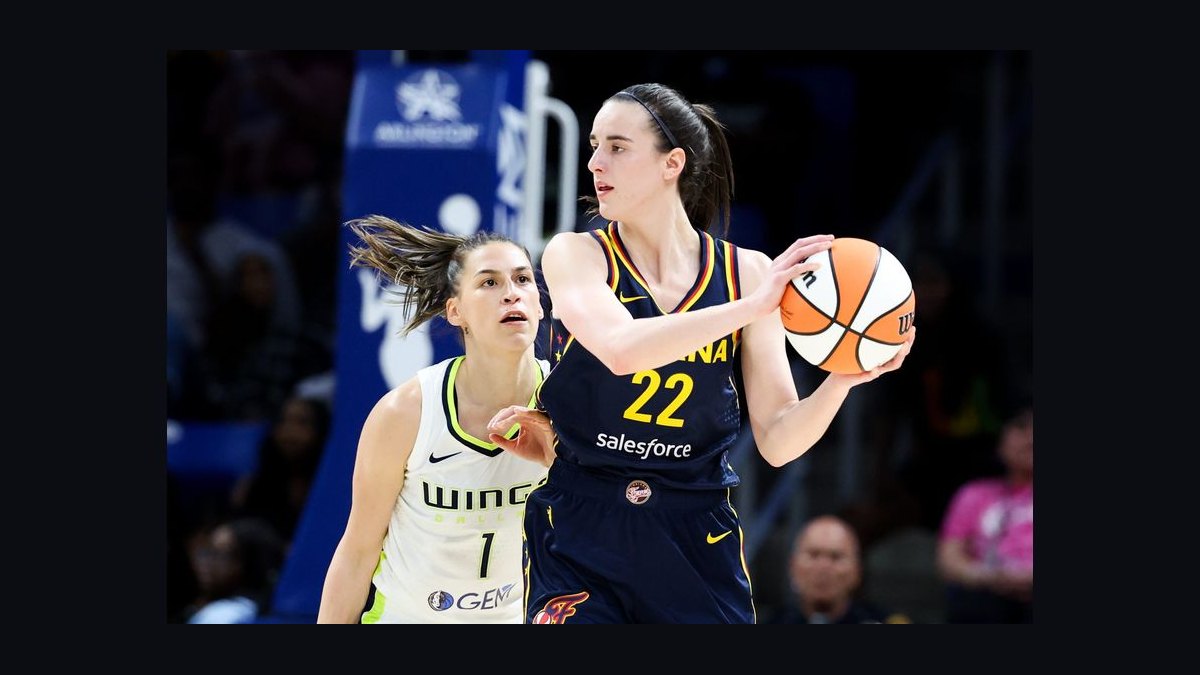
The Caitlin Clark effect on women's sports NIL in 2027 is a structural repricing, not a popularity spike. Clark's Iowa run and Fever rookie season reset attendance, ratings, and media-rights value, which flowed into a far larger WNBA salary cap, revenue sharing, and women's basketball collective budgets that now clear seven figures at top programs.
The outcome you should expect
If you are budgeting, negotiating, or modeling women's sports revenue in 2027, expect every input to price differently than it did in 2023. That is the practical shape of the Caitlin Clark effect: it did not just make women's basketball more visible, it moved four separate markets at once — college NIL, professional salaries, media rights, and endorsement category mix — and each of those moves is now baked into contracts that run for years.
The clearest single datapoint anyone can anchor on is the 2024 NCAA women's championship game, which drew roughly 18.9 million viewers and beat the men's final for the first time in the history of the tournament. That is not a marketing anecdote. That is a number a media buyer uses to reprice inventory, and a number a players' association uses as leverage at the bargaining table. Everything downstream of 2024 traces back to audience proof of that kind — proof that the ceiling for women's basketball viewership was structurally higher than anyone had budgeted against.
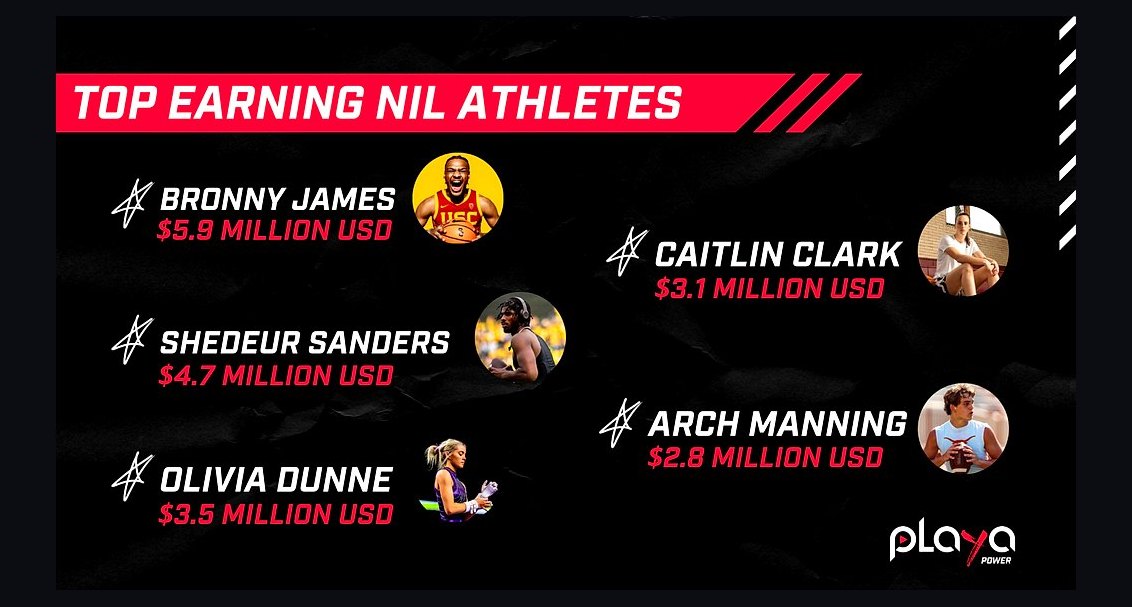
At Iowa, the supporting numbers were equally concrete. Clark's teams set an exhibition attendance record of 55,646 at Kinnick Stadium, an outdoor football venue filled for a women's basketball game. The program generated roughly $3.26 million in single-season ticket revenue, the highest figure recorded in women's college basketball. Her On3 NIL valuation peaked near $3.4 million, the highest in women's college basketball and among the highest of any college athlete regardless of sport. Her named college partners included Nike, Gatorade, State Farm, Hy-Vee, Bose, Buick, Goldman Sachs, H&R Block, Shoot-A-Way, Wilson, and Topps.

The professional side compounded it. In her rookie WNBA season the Indiana Fever set a single-season home attendance record of 340,715, and opposing teams moved a substantial number of Fever road games into larger NBA arenas to meet demand — a scheduling scramble the league had never previously needed to run. League viewership roughly doubled year over year on the back of that first season.
So what should you expect operationally in 2027? Three things. First, that the WNBA salary structure you are modeling against is the post-2025 collective bargaining agreement, not the old fixed-cap system — the team cap moved from roughly $1.5 million to a multiple of that, and maximum individual salaries moved into seven figures. Second, that women's basketball collectives at top-20 programs are operating with budgets that would have been unthinkable in 2022, and that top roster NIL packages are competitive with entry-level professional compensation. Third, that endorsement demand now comes from categories — financial services, insurance, telecom, trading cards — that largely skipped the sport before 2024.
The important framing for anyone doing RevOps-style modeling on this: the Clark effect is a step-function change in the baseline, followed by an open question about the growth rate on top of that baseline. The step function is locked in by contracts. The growth rate is not.
What drives that outcome
The causal chain matters more than any single number, because the chain is what tells you which parts of the effect are durable and which parts depend on one player continuing to play.

It starts with audience. Clark's college career produced sustained, repeatable audience records — not one viral game but three seasons of escalating attendance and ratings, culminating in the 2023 Iowa–LSU title game and the 2024 final that outdrew the men. Sustained audience is what converts into rights value, because rights buyers pay for predictable delivery, not for spikes.
Audience then converted into leverage. The WNBA players' association opted out of the prior collective bargaining agreement in October 2024, in the immediate aftermath of Clark's rookie year and the attendance and ratings records that came with it. The timing was not coincidental. A players' association opts out when it believes the revenue picture has changed faster than the contract reflects — and the Fever's attendance record plus the league-wide viewership lift was the evidence that made that case winnable.
Leverage then converted into two separate financial outcomes. The first was the league's media rights package, an eleven-year agreement reported around $2.2 billion in total value across Disney, NBC, and Amazon — averaging roughly $200 million per year against a prior baseline in the neighborhood of $50 million per year. That is roughly a fourfold increase in the single largest line item on the league's revenue statement, and negotiators publicly credited the audience growth Clark drove as a material factor.
The second outcome was the new collective bargaining agreement itself, which raised the team salary cap several-fold, introduced a meaningful revenue-sharing mechanism giving players a defined share of league revenue, and created a provision that allows exceptional rookies to reach maximum-eligible pay far earlier than the old rookie scale permitted. The old CBA was effectively a fixed-cap system with no real upside participation. The new one indexes player compensation to league growth, which means the media deal's cash flow mechanically lifts the cap over the life of the agreement.
Meanwhile, a parallel chain ran through college. Clark's valuation established a new ceiling, and ceilings are contagious in NIL markets because collectives and brands price by comparison. Angel Reese, Paige Bueckers, JuJu Watkins, Flau'Jae Johnson, Hailey Van Lith, and the rest of the top tier all repriced upward — not because any one of them replicated Clark's specific reach, but because the market discovered that women's basketball audiences monetize.
Read that diagram as a durability map. The nodes on the left depend on Clark specifically. The nodes on the right — the CBA, the media deal, the collective budgets — are contractual and survive her absence for the length of their terms. That distinction is the whole analysis.
Benchmarks and realistic ranges

Here is what a practitioner can actually plan against, with the caveat that public reporting on private collective budgets is uneven and you should treat any single figure as a range rather than a point estimate.
Clark's own compensation stack. Her Nike agreement, signed in April 2024, was reported at roughly $28 million over eight years and includes a signature shoe — making her one of a very small number of women ever to receive a Nike signature line, a group that includes Sheryl Swoopes, Sue Bird, Sabrina Ionescu, and A'ja Wilson. That averages to roughly $3.5 million per year before performance components. Sportico reported her 2025 endorsement income near $16.1 million across a portfolio including Nike, State Farm, Gatorade, Wilson, Hy-Vee, Xfinity, Gainbridge, Lilly, and Panini. Her WNBA base salary under the old rookie scale was under $100,000 — the gap between $16 million in endorsements and a five-figure salary is precisely the distortion the new CBA was negotiated to fix.
WNBA salary structure. The team cap moved from roughly $1.5 million under the old agreement to several times that figure under the new one, with maximum individual salaries reaching into seven figures and scheduled to escalate across the life of the deal. The revenue-sharing provision gives players a defined percentage of league revenue, which is the structural change that matters most: it means the cap is no longer a negotiated constant but a function of league performance. If the media deal delivers, the cap rises automatically.

College collective budgets for women's basketball. Before 2024, a competitive women's basketball collective at a Power conference program typically operated in the low-to-mid six figures annually, with individual player packages rarely clearing $150,000. By 2027, leading programs — South Carolina, UConn, LSU, USC, and Texas among them — are operating budgets in the low millions, with top-of-roster packages for elite recruits reaching several hundred thousand dollars and, at the very top, approaching or exceeding seven figures. Use a planning range of roughly $1.5–3 million for a top-20 program's women's basketball collective and $500,000–$1.2 million for a top-of-roster package, and expect wide variance by market and donor base.
Deal volume. Opendorse and similar platforms have reported women's basketball NIL deal volume growing by a multiple — roughly threefold — between the 2022-23 and 2025-26 cycles. Women's basketball has moved from a mid-tier pillar to the second-fastest-growing category behind football on collective dashboards. That is a volume story as much as a price story: more athletes are getting deals, not just the top five.
Category mix. The endorsement mix has broadened materially. Pre-2024, women's basketball endorsement spend concentrated in athletic apparel and consumer beverages. The 2027 mix includes financial services, insurance, telecom, trading cards, and automotive — Clark's own roster of partners is the clearest illustration, and comparable players have followed into the same categories. For a collective operator, a workable planning split is roughly 40% local/regional sponsors and 60% national brands at a top program, inverted at a mid-major.
Offseason equity. Unrivaled, the 3-on-3 offseason league, added a compensation channel that did not exist for Clark's draft class. Its debut season generated meaningful revenue and it has raised at a valuation in the hundreds of millions, with equity participation offered to signing players. Paige Bueckers signed a multi-year Unrivaled agreement that includes an equity component. For a top-tier player entering the league now, that equity stake is a real line item in a career earnings model — and it is upside Clark's 2024 entry did not have access to on the same terms.
The Bueckers benchmark. Bueckers is the cleanest measurement of the effect, because she is the first number-one pick to negotiate entirely inside the post-Clark economy. Her college NIL earnings in her final seasons ran into seven figures — more than the entire value of Clark's four-year rookie contract under the old scale. Public net-worth projections for Bueckers by 2027 cluster in the low-to-mid single-digit millions. Whatever you think of net-worth estimates as a genre, the directional point holds: the second player through the door earned dramatically more, dramatically earlier, than the player who broke it open.
Risks, edge cases, and failure modes

Anyone modeling this in 2027 should hold four risks explicitly, because the consensus view understates all of them.
The concentration risk — the "Clark cliff." The single largest open question is whether demand survives a full season without Clark on the floor, whether through retirement, injury, or an international move. The encouraging evidence is that non-Clark WNBA games have sustained audiences well above the 2023 baseline, which suggests the effect generalized to the league rather than remaining attached to one player. The honest counterpoint is that the league has not yet been stress-tested by a full Clark-absent season with the new economics in place. Partial generalization is not the same as full generalization. If you are building a downside case, model a scenario where league-wide audience settles meaningfully below the Clark-era peak while the salary cap and media obligations stay fixed at their contracted levels — that is a margin-compression scenario, not a revenue-growth scenario.
The college-versus-pro inversion. A genuine structural oddity persists in 2027: top women's college players can out-earn most WNBA veterans on total compensation once NIL is included. Bueckers' college earnings exceeding her rookie-scale professional pay is the canonical example, and players like JuJu Watkins and Hannah Hidalgo have tracked similarly. The new CBA raises the ceiling substantially for maximum-salary players, but it does not close the gap for the middle and back of a roster. The practical failure mode: a talented player with a strong collective package has a rational financial reason to exhaust every year of college eligibility rather than turn professional early, which compresses the pipeline and ages up rosters at the college level.

Revenue-sharing dilution from House v. NCAA. The House settlement introduced direct school-to-athlete revenue sharing with a per-school cap in the low $20 millions, effective from the 2025-26 academic year. At most power-conference programs, the overwhelming majority of that pool flows to football and men's basketball, with women's basketball typically receiving a single-digit-to-low-teens percentage share. This is the most underrated risk in the whole picture: schools now have a large, capped, internally allocated pool that competes for the same donor dollars collectives depend on. If donors treat revenue-share contributions as a substitute for collective giving rather than an addition to it, women's basketball collectives — which still carry most of the load for their sport — can see budgets flatten even as the sport's audience grows. Watch the collective-versus-revenue-share split at your program specifically; the aggregate national numbers hide enormous variance.
Outside-option pressure on the WNBA. Unrivaled's economics and rising pay in European women's leagues create a real alternative for top talent. That is healthy competitive pressure in the short run — it is part of why the CBA improved — but it becomes a failure mode if the WNBA's revenue share lags the offshore and offseason market. A scenario worth modeling for 2028-2029: top players prioritize equity-bearing offseason commitments and international contracts, WNBA availability declines, and the audience growth that justified the media deal erodes. The league's protection against this is the revenue-sharing mechanism itself — if it delivers, the outside option stays complementary rather than competitive.
Two smaller edge cases worth naming. First, valuation-figure quality: public NIL "valuations" from ranking platforms are estimates of earning potential, not audited earnings, and net-worth projections in the press are softer still. Do not build a budget on a headline valuation you cannot trace to a disclosed contract. Second, spillover overstatement: the effect on non-basketball women's sports — volleyball, softball, soccer, gymnastics — is real but far smaller in absolute dollars than the basketball numbers, and it is easy to overextrapolate a basketball-specific repricing into sports with different audience economics.
A practical rollout plan

If you are a collective operator, a front office, a brand-side sponsorship lead, or an athlete's representation team, here is a sequence that turns the above into decisions rather than commentary.
Step one: establish your own baseline before you use anyone else's. Pull three years of your own data — attendance, local broadcast or streaming numbers, merchandise, ticket yield, sponsorship renewals. The mistake practitioners make is importing national Clark-era multiples into a local P&L that never experienced them. A mid-major women's basketball program did not see its audience double. Know your actual delta before you price against the national one.
Step two: segment your athlete roster by market tier. In practice there are three tiers, and they price differently. The national tier — players with genuine cross-sport recognition — commands national brand deals and is the only tier where Clark-comparable numbers apply. The conference tier commands regional sponsorship and strong collective support. The roster tier is where volume growth actually shows up: modest deals, many athletes, driven by platform-mediated deal flow rather than negotiation. Budget separately for each; blending them produces a number that is wrong for everyone.
Step three: rebuild your category prospect list around the post-2024 mix. If your sponsorship prospecting deck still assumes apparel and beverage, it is three years stale. Add financial services, insurance, telecom, trading cards and collectibles, and automotive. Clark's own partner roster is the best publicly available map of which categories have proven they will spend in this sport. Prospect against proven categories rather than plausible ones.
Step four: model the House revenue-share interaction explicitly. Build two scenarios: donors treating revenue-share contributions as additive to collective giving, and donors treating them as substitutive. The difference in a women's basketball collective's three-year budget between those two scenarios is frequently larger than any growth assumption you would otherwise argue about. Then go find out empirically which behavior your donor base is exhibiting — survey the top twenty givers if you have to.

Step five: write the concentration risk into the plan, not the footnotes. Whatever your revenue projection, produce a companion projection that assumes the single largest audience driver in your market is unavailable for a season. If your plan only works with that driver present, you do not have a plan, you have a bet. This is the discipline the WNBA itself is being forced into, and it applies at every level below the league.
Step six: instrument and review quarterly. Track four metrics on a fixed cadence: deal volume by athlete tier, average deal value by tier, category mix as a percentage of dollars, and renewal rate. Renewal rate is the one most operators skip and the one that best predicts whether growth is structural or a one-time discovery. A market that reprices upward but does not renew is a bubble; a market that renews at the new price is a new baseline.
The sequencing matters. Steps one and two are diagnostic and cost nothing but time. Step three is where most of the near-term revenue upside sits. Step four is where most of the near-term risk sits. Steps five and six are what keep you from repeating the mistake the sport made in the other direction for two decades — assuming the current level is the permanent level.
Related questions
Did the Clark effect raise NIL value outside basketball?
Modestly and unevenly. Volleyball, softball, soccer, and gymnastics have all seen improved NIL activity since 2023, but the absolute dollars remain far below basketball. The broader benefit is attention and buyer willingness to allocate to women's sports at all, rather than direct valuation transfer.
Why did the WNBA salary cap rise so sharply?
Because the media rights package repriced roughly fourfold and the players' association opted out of the prior agreement at the moment of maximum leverage. The cap increase is downstream of the rights deal, and the new revenue-sharing mechanism ties future cap growth directly to league revenue rather than negotiation cycles.
Is Paige Bueckers the proof the effect replicates?
She is the strongest available evidence. Bueckers is the first number-one pick to negotiate entirely in the post-Clark market, and her college earnings, professional terms, and Unrivaled equity together exceed what the same profile would have commanded in 2023 — without requiring Clark's specific individual reach.
How does House v. NCAA change the NIL picture for women's basketball?

It adds a school-funded revenue-sharing pool with a per-school cap in the low $20 millions, but most of that flows to football and men's basketball. Women's basketball typically receives a small share, so collectives still carry most of the funding load for the sport.
What would signal the effect is fading?
Falling renewal rates on sponsorship agreements, non-Clark game audiences drifting back toward pre-2024 levels, and collective budgets flattening at top programs. Watch renewals first — they turn before headline valuations do.
FAQ
Is the Caitlin Clark effect only about basketball?
Primarily, yes. The measurable dollar movement is concentrated in women's basketball — college NIL, WNBA salaries, and league media rights. Other women's sports have benefited from increased buyer attention and a general willingness among brands to allocate budget to women's athletes, but the absolute numbers in volleyball, softball, and soccer remain far smaller. Treat spillover as a real but secondary effect, and be skeptical of anyone extrapolating basketball multiples onto sports with different audience economics.
How much have women's college basketball NIL packages actually grown?
Top-of-roster packages at leading programs have moved from roughly $150,000 or less in 2022-23 to figures ranging into the high six figures and, at the very top, approaching seven figures by 2027. Collective budgets at top-20 programs have moved from the low-to-mid six figures into the low millions. Deal volume across the sport has grown by roughly a multiple of three between the 2022-23 and 2025-26 cycles, which means the growth is broad, not confined to a handful of stars.
Did Clark's popularity directly cause the salary cap increase?

Indirectly but materially. The chain runs through audience: record attendance and roughly doubled viewership in her rookie season strengthened the league's position in media rights negotiations, that package repriced to roughly $200 million per year against a prior baseline near $50 million, and the resulting revenue picture supported a substantially higher cap plus a revenue-sharing mechanism in the new CBA. Negotiators publicly credited the audience growth, and the players' association opted out at precisely the moment that evidence was strongest.
Will the effect survive Clark's retirement?
The contractual portion will, because the media deal and the CBA run for years and do not depend on any individual playing. The growth rate on top of that baseline is the open question. The most encouraging evidence is that non-Clark games have sustained audiences well above the 2023 baseline, suggesting the effect generalized to the league. The honest caveat is that no full Clark-absent season has yet tested it under the new economics.
Why do some college players out-earn WNBA veterans?
Because college NIL is an open market with no salary cap, while professional pay sits inside a negotiated cap structure. A top college player can stack collective funding with national endorsements, while a mid-roster professional is bounded by the CBA's scale. The new agreement raised the ceiling considerably for maximum-salary players, but the inversion persists for players outside that top tier — and it gives elite college players a rational reason to use every year of eligibility.
What should a collective operator do differently in 2027 because of this?
Three concrete things. Rebuild your sponsorship prospect list around the categories that have proven they will spend in this sport — financial services, insurance, telecom, collectibles, automotive — rather than the apparel-and-beverage list that predates 2024. Model whether your donors treat House revenue-share contributions as additive to or substitutive for collective giving, because that single variable often swings a three-year budget more than any growth assumption. And track renewal rate quarterly, since renewals reveal whether a new price level is a baseline or a spike well before valuations do.
Sources
- Caitlin Clark effect — aggregated attendance, viewership, and media rights data: https://en.wikipedia.org/wiki/Caitlin_Clark_effect
- On3 NIL valuations, women's college basketball: https://www.on3.com/nil/
- CBS Sports — Clark's Nike endorsement including signature shoe: https://www.cbssports.com/wnba/news/caitlin-clark-reportedly-signing-a-28-million-endorsement-deal-with-nike-includes-signature-shoe/
- ESPN — Clark NIL deal coverage: https://www.espn.com/womens-college-basketball/story/_/id/39096683/iowa-star-player-caitlin-clark-signs-nil-deal-gatorade
- Sportico — athlete endorsement income reporting: https://www.sportico.com/
- Front Office Sports — WNBA media rights and CBA coverage: https://frontofficesports.com/
- Opendorse — NIL deal volume and category reporting: https://opendorse.com/
- Associated Press — WNBA collective bargaining and league business coverage: https://apnews.com/hub/wnba
- NCAA — House settlement and revenue sharing implementation: https://www.ncaa.org/
- Reuters — WNBA labor and media rights coverage: https://www.reuters.com/sports/basketball/
Related on PULSE
- How big is the women's sports NIL market in 2027?
- How big is women's sports and NIL revenue in 2027?
- How are NIL and revenue sharing affecting Olympic and non-revenue college sports in 2027?
- How does NIL work in high school sports in 2027?
- Why is EA Sports reviving its college basketball game and what does NIL have to do with it in 2027?
- What is the MLS-Apple deal and how did the Messi effect reshape it in 2027?
This page will be disappearing soon. Save it to your device for $1 — or read it free while it is here.
@Kory-White- · if Venmo asks, the last 4 of my number are 2012
This page is gone.
This one is off the shelf now. $1 keeps it on your phone for good — the whole page, pictures and diagrams included.
 nilHow does Title IX apply to NIL revenue sharing in 2027?
 nilHow big is the women's sports NIL market in 2027?
 nilHow are college baseball and softball programs adapting to NIL in 2027?
 nilHow does the College Football Playoff format change NIL economics in 2027?
 nilWhat is the typical NIL agent commission in 2027?
 nilWhat is the typical college quarterback NIL package at a top program in 2027?
 nilWhat is the typical NIL endorsement structure for a Heisman candidate in 2027?
 nilWhat are the biggest NIL brand deals of 2027 so far?
 nilWhat is the role of On3 Sports and 247Sports in NIL valuations in 2027?
 nilHow do college athletes choose their NIL agents in 2027?