
How'd you fix Kabbage's revenue issues in 2026?
 Curated byKory White · Fractional CRO · Maryland
 PULSEKNOWLEDGE LIBRARY
Quality
Certified

To fix Kabbage's 2026 revenue issues, a successor must abandon horizontal direct lending and pivot to vertical-specialized embedded fintech via SaaS partnerships, replacing manual underwriting with AI-driven accounting API integrations and shifting to recurring platform fees and securitization-based capital to escape the commoditized term-loan graveyard.
The Post-Bankruptcy Landscape
Kabbage's parent company K Servicing filed for Chapter 11 in 2022 after American Express acquired the core franchise in 2020 for approximately $850 million, keeping only the cross-sell layer while the legacy direct-lending business collapsed. The term-loan origination SaaS model that Kabbage, OnDeck, BlueVine, and Lendio all pursued competes purely on cost-of-capital arbitrage—borrowing at 4% SOFR and lending at 18–35% APR. Kabbage's origination customer acquisition cost (CAC) of $400–$800 per funded loan, combined with fraud losses and funding costs, created negative unit economics below $50,000 loan size. The PPP-fraud settlement of $49 million in 2021 for lax vetting procedures permanently damaged the brand, and the SBA lending fintech category now faces intense congressional scrutiny. Any 2026 successor must rebrand entirely and adopt AML/KYC hygiene that the original "1-hour approval" promise could never support. The direct SMB-lending CAC has now escalated past $1,000 per funded loan, making horizontal lending economically unviable for any player targeting sub-$200 million AUM.
Vertical Specialization as the Core Strategy
The fundamental fix for Kabbage's revenue model is abandoning horizontal "any business" lending in favor of vertical-niche specialization targeting specific industries with $30 billion to $100 billion total addressable markets. A successor should pick one vertical such as HVAC contractors, salon franchises, pest-control networks, or gig-logistics fleets and integrate lending directly into the existing operational software those businesses already use. For HVAC contractors, this means embedding loan origination into platforms like ServiceTitan; for salons, Mindbody or Boulevard; for pest-control franchises, FieldRoutes or WorkWave. The loan sizes shrink to $2,000–$15,000 instead of Kabbage's $25,000–$250,000 range, but the frequency increases dramatically—HVAC contractors need working capital loans 4–6 times per year for seasonal inventory purchases, equipment repairs, and marketing spend during slow months. This higher frequency creates repeat lending relationships that reduce acquisition costs by 60–70% after the first loan, as the underwriting data already exists in the platform. Loss severity drops proportionally with smaller loan sizes, and cohort predictability improves because HVAC contractors all share similar seasonal cash-flow patterns, making default rates more forecastable. A vertical-specialized lender can achieve 20–40% lower default rates compared to horizontal lending within 18 months of launching, simply by understanding the specific revenue cycles of its target industry.

AI Underwriting via Accounting API Integration
Kabbage's manual bank-statement review process was slow, expensive, and vulnerable to fraud. A 2026 successor replaces this entirely with API-connected accounting integrations that pull 24 months of transaction data directly from QuickBooks, Xero, Rippling, and Stripe Connect. The proprietary ML model trains on vertical-specific cohorts—HVAC contractors' seasonality patterns, salon throughput ratios, pest-control repeat-service velocity—to underwrite 95% of applications within 48 hours with a fraud rate below 1.5%, compared to Kabbage's legacy 3–5% fraud rate. The cost savings are substantial: eliminating the $500 per month loan officer salary and the $200+ per-application processing costs that manual review required. The API integration also enables real-time monitoring of borrower financial health throughout the loan term, allowing proactive intervention when cash-flow anomalies appear. If a contractor's QuickBooks data shows a 30% revenue drop for two consecutive months, the system can automatically offer a payment deferral or restructuring before a default occurs. This reduces net charge-off rates by an estimated 40–60% compared to Kabbage's static underwriting model. The underwriting engine itself becomes a licensable asset—a successor can sell white-label access to other fintech platforms, generating $299–$999 per month per partner for the API access alone, creating a revenue stream entirely independent of loan origination volume.
Embedded-Channel Go-to-Market Model
Direct customer acquisition through SEM and telemarketing was Kabbage's death spiral, with CAC reaching $800 per funded loan by 2021. A 2026 successor flips this model entirely by licensing a "lending plugin" to 5–10 SaaS platforms that already serve 50,000–500,000 SMB users each. Target partners include Guidepoint for home-service contractors, Jobber for field-service businesses, Housecall Pro for HVAC and plumbing, Toast for restaurants, and MarginEdge for hospitality supply chains. The partnership economics work as follows: the SaaS platform integrates the lending plugin into its existing dashboard, presents loan offers to its merchant base at relevant moments (after a big invoice, before seasonal inventory purchasing), and handles all user education and onboarding. The successor earns a 1–2% distribution fee on each funded loan amount, with zero direct CAC because the partner absorbs the marketing cost. Each partnership generates $500,000 to $2 million in annual revenue, and with 5–10 active partnerships, the total embedded-channel revenue reaches $5–$15 million annually with gross margins above 80%. The key insight is that the SaaS partner already has the merchant relationship, the trust, and the usage data—the lender simply provides the capital and underwriting infrastructure. This model also creates a natural barrier to entry: once a lender integrates deeply with ServiceTitan's API and underwriting logic, a competitor would need 6–12 months to replicate that integration, giving the first mover a significant advantage in each vertical.

Securitization and Institutional Capital Structure
Kabbage's reliance on venture funding and bank lines created a cost of capital of 5–7%, which compressed margins on an already thin lending spread. A 2026 successor fixes this by originating homogeneous vertical-cohort loans—HVAC contractor term loans of $5,000–$20,000 with 12–24 month terms at 18–22% APR—and packaging them into securitization pools of $20 million to $50 million. Institutional investors such as CLO funds and insurance reserves purchase these pools at a 2–3% yield, reducing the successor's cost of capital by 4–5 percentage points. This recaptured margin can be reinvested into lower APR offers to borrowers, making the loans more competitive, or retained as profit to achieve unit profitability at much lower AUM thresholds. A securitization-ready lending operation needs only $100 million in AUM to achieve EBITDA profitability, compared to the $300–500 million Kabbage required. The homogeneous nature of vertical-cohort loans makes them attractive to institutional investors because the default patterns are predictable and correlated with industry-specific economic cycles rather than general market volatility. An HVAC loan pool performs differently from a restaurant loan pool, allowing investors to choose exposure based on their economic outlook. The successor can also retain a 5–10% first-loss tranche on each securitization, earning 18–22% yield on that retained portion while offloading 90–95% of the credit risk to institutional capital. This structure allows the lending operation to scale to $500 million to $1 billion in annual origination volume without raising additional equity.
B2B2C SaaS Revenue Model Diversification
The most critical fix for Kabbage's revenue fragility is shifting 40% of total revenue to recurring, credit-cycle-independent streams through a B2B2C SaaS model. Instead of earning 8–12% origination fees on each loan (which disappear when lending slows), a successor sells its underwriting engine as a white-label platform to larger fintech players like PayPal SMB, Square Capital, and Toast Finance. These partners integrate the AI underwriting API into their own lending products, originate loans to their merchant bases, and keep 70% of the loan spread. The successor earns 30% of the ongoing spread revenue plus a 20% platform fee on the technology license. This creates predictable monthly recurring revenue that continues even when the successor's own balance sheet lending slows during economic downturns. With 5–10 enterprise partners each originating $10–$50 million in loans annually, the SaaS revenue reaches $3–$10 million per year with 85–90% gross margins. The platform fee alone—$299–$999 per month per partner for API access—adds another $500,000 to $1 million in annual recurring revenue. This revenue mix fundamentally changes the business valuation: a lending company earning 100% of revenue from loan origination trades at 1–2x revenue, while a fintech SaaS platform with 40% recurring revenue trades at 5–8x revenue. A successor that achieves this mix could reach a $200–$400 million valuation on $50 million in total revenue, compared to Kabbage's $850 million acquisition price that included only the cross-sell layer.

Competitive Intelligence and Revenue Operations
A 2026 successor must institutionalize competitive monitoring and revenue operations discipline that Kabbage never had. This means tracking OnDeck, BlueVine, Lendio, and Brex Capital on pricing changes, loan volume shifts, and channel strategy adjustments on a monthly basis using tools like Klue for competitive intelligence. The revenue operations team uses Bridge Group benchmarks for SMB lending CAC, loan loss rates, and funding costs to test pricing and underwriting thresholds continuously. When OnDeck drops its APR by 2 percentage points in the HVAC vertical, the successor must decide within 48 hours whether to match, differentiate on speed, or pivot to a different vertical. The Pavilion revenue operations playbook provides a template for building repeatable vertical go-to-market motions: the Guidepoint partnership playbook becomes a template that can be replicated for Jobber, Housecall Pro, and Toast with minimal customization. Each vertical partnership requires its own underwriting model trained on that industry's data, its own marketing collateral, and its own customer support scripts. The revenue operations team maintains a "vertical health score" for each partnership, tracking loan volume, default rates, partner satisfaction, and merchant repeat rates. When a vertical's health score drops below threshold, the team can reallocate marketing spend and underwriting capacity to higher-performing verticals, optimizing the portfolio for profitability rather than volume.
Data Monetization as a Second Revenue Stream
Kabbage's historical advantage was its real-time data on 200,000+ SMBs—cash flow patterns, payment timing, seasonal trends, and industry-specific revenue cycles. A 2026 successor can anonymize and aggregate this data into a subscription analytics product for B2B suppliers, equipment manufacturers, and commercial real estate firms. A HVAC equipment manufacturer pays $5,000–$15,000 per month for quarterly reports on contractor cash-flow health by region, enabling smarter inventory financing decisions and sales territory planning. A commercial landlord pays $2,000–$8,000 per month for tenant SMB viability scores to assess lease renewal risk and negotiate lease terms. With 100–300 enterprise subscribers, this creates a $5 million to $15 million annual recurring revenue stream with 70–80% gross margins—entirely uncorrelated with lending cycles. The data product also strengthens the core lending business: the same signals that predict loan defaults can be sold as early-warning indicators to equipment vendors and supply-chain partners. A contractor whose QuickBooks data shows declining revenue for three consecutive months triggers an alert to their equipment supplier, who can adjust payment terms before a default occurs. This turns the lending platform into a financial intelligence network for the entire SMB ecosystem, creating switching costs that make it difficult for merchants to leave. The data monetization product also attracts a different class of investor—data infrastructure and analytics investors who value recurring data revenue at 10–15x multiples, far above the 1–3x multiples applied to lending revenue.

Risk-Share Partnerships with Community Banks
Instead of holding all loan risk on its balance sheet—which killed Kabbage when defaults spiked in 2020—a 2026 successor partners with 50–200 community banks and credit unions under a risk-sharing model. The successor originates and services loans via its AI underwriting platform, while the bank takes 70–80% of the loan on its books at a 5–7% yield. The successor earns 1.5–2.5% origination fees plus 0.5–1% annual servicing fees on the bank-held portion, while keeping 20–30% of each loan for its own balance sheet at higher yields of 12–18%. This reduces capital requirements by 60–70% and allows the lending operation to scale to $500 million to $1 billion in annual origination volume without raising additional debt or equity. The bank partners gain access to a curated SMB loan pipeline with 40–60% lower default rates than their own underwriting, because the AI model screens for vertical-specific risk factors that community banks lack the data to assess. Each bank partnership generates $40,000–$150,000 in annual fee income for the successor, and with 200 partner banks, this creates $8 million to $15 million in annual fee income that requires no additional capital. The risk-share model also provides natural hedging: during economic downturns, the successor's balance sheet exposure is limited to the 20–30% retained portion, while the servicing fee income continues regardless of default rates because the successor handles collections and recovery on behalf of the bank partners.
Rebrand and Market Positioning
The "Kabbage" name is now synonymous with PPP mismanagement, Chapter 11 failure, and lending-category skepticism. Any 2026 successor must rebrand entirely with a name that signals AI-native technology and vertical specialization—Vertex Capital, Bastion Lending, or Lend.ai, not "Kabbage 2.0" or any variation that evokes the original brand. The market positioning shifts from "fast small-business loans" to "AI-first SMB lending for vertical ecosystems," targeting enterprise and SaaS investors rather than consumer fintech investors. The marketing narrative emphasizes three differentiating factors: vertical specialization (we understand HVAC cash flows, not just "small business"), API-connected underwriting (we see your real financial data, not your bank statements), and embedded distribution (we're inside the tools you already use). This positioning kills the Kabbage association and attracts a different investor base—SaaS-focused venture capital firms and growth equity investors who value recurring revenue and platform economics over lending volume. The rebrand also enables a fresh start with regulators: the successor can proactively engage with the SBA and state banking regulators to demonstrate its AML/KYC compliance framework, positioning itself as a responsible lender rather than a fintech cowboy. The compliance-first approach becomes a competitive advantage, because the regulatory scrutiny that killed Kabbage now creates a barrier to entry for any new competitor that hasn't invested in compliance infrastructure from day one.

Cash-Flow Acceleration Products
Beyond traditional term loans, a 2026 successor should launch revenue-based financing and invoice factoring products that generate recurring transaction fees rather than one-time origination income. These products align with SMB cash-flow cycles: a HVAC contractor waiting 60 days for a commercial payment gets instant funding at 1.5–3% fee per invoice, while the lender earns 8–15% annualized yield on the float. The key is integrating directly with invoicing software—FreshBooks, Wave, Bill.com—to offer one-click advances at the point of invoice creation. This creates a sticky revenue loop: businesses use the service 6–12 times per year, generating $200–$800 in annual fees per active merchant, versus a single $1,500–$4,000 origination fee on a term loan. Combined with a 2–3% late-payment fee on outstanding balances, this product line could contribute 25–35% of total revenue within 18 months, reducing dependence on new loan origination volume. The invoice factoring product also provides real-time data on the borrower's payment cycles and customer concentration risk, feeding back into the underwriting model to improve default predictions. A contractor who invoices 10 different commercial clients learns which clients pay on time and which are consistently late, allowing the lender to adjust advance rates based on the specific invoice being financed.
Related questions
What specific verticals offer the best TAM for SMB lending in 2026?
HVAC contractors, salon franchises, pest-control networks, and gig-logistics fleets each have $30B–$100B TAM with existing operational software platforms that enable embedded lending integration and cohort-specific underwriting models.
How does securitization reduce cost of capital for SMB lenders?
Homogeneous vertical-cohort loans attract institutional investors at 2–3% yields versus 5–7% for bank lines or venture funding, recapturing 4–5% spread margin that directly improves unit economics at lower AUM thresholds.
What compliance infrastructure does a 2026 SMB lender need?
Real-time AML/KYC integration, API-connected accounting data verification, and proactive SBA engagement for regulatory compliance, replacing Kabbage's "1-hour approval" promise with a defensible 48-hour underwriting window.
How long to profitability for a vertical-specialized lending model?
Typically 12–24 months to integrate with industry software and underwrite the first 1,000–5,000 loans, with profitability emerging in year two or three once data feedback loops reduce default rates by 40–60%.
Can a 2026 successor avoid Kabbage's bankruptcy fate?
Yes, by diversifying revenue across embedded lending, SaaS fees, data monetization, and servicing income, plus using securitization and bank risk-share to reduce capital requirements by 60–70%.
FAQ
What exactly caused Kabbage's revenue issues before 2022? Kabbage relied heavily on short-term, high-interest term loans to small businesses, a model that became unsustainable when COVID-era defaults spiked and investor confidence collapsed. The lack of diversified revenue streams—like embedded lending or subscription-based SaaS partnerships—left it vulnerable to market shocks and regulatory scrutiny.
Is vertical-niche lending really more profitable than general SMB lending? Yes, because vertical specialization reduces underwriting risk and customer acquisition costs. By focusing on specific industries like HVAC or beauty salons, lenders can tailor repayment terms to seasonal cash flows and build repeat relationships, typically achieving 20–40% lower default rates compared to horizontal "any business" lending.
How does AI underwriting lower fraud risk compared to traditional methods? Traditional manual bank-statement reviews miss real-time anomalies and can be easily forged. AI models that integrate with accounting APIs (QuickBooks, Xero) and AML databases can flag suspicious patterns—like sudden revenue spikes or mismatched tax IDs—within hours, cutting fraud losses by an estimated 30–50% versus legacy processes.
What's the typical take-rate for embedded fintech lending via SaaS platforms? Embedded lending through partners like Shopify or Square usually earns a 2–3% take-rate on each loan originated, versus 8–12% for direct lending. However, the trade-off is volume: partners provide access to thousands of pre-vetted merchants, making the lower per-loan margin more scalable and less risky.
Could a 2026 Kabbage successor avoid the same bankruptcy fate? Yes, by avoiding over-reliance on a single product and funding source. A successor would need multiple revenue streams—embedded lending, SaaS subscription fees, and vertical-specific loan products—plus a diversified capital base (e.g., bank partnerships, securitization) to weather economic downturns without collapsing.
How long does it take to build a profitable vertical-niche lending loop? Typically 12–24 months to integrate with industry-specific software (e.g., HVAC dispatch tools) and underwrite the first 1,000–5,000 loans. Profitability often emerges in year two or three, once the data feedback loop reduces default rates and customer acquisition costs by 40–60% compared to generic lending.
Sources
- U.S. Securities and Exchange Commission (SEC) — financial filings and regulatory disclosures for publicly traded companies like Kabbage's parent.
- American Banker — coverage of fintech lending, small business finance, and industry trends.
- Federal Reserve — reports on small business credit conditions, lending standards, and economic data.
- Kabbage (official product site) — company's own loan products, revenue models, and business updates.
- McKinsey & Company — analysis of fintech revenue strategies, digital lending, and market dynamics.
- Harvard Business Review — case studies and research on business model pivots and revenue turnaround strategies.
- SBA Office of Inspector General — reports on PPP fraud and lending program oversight.
- The Wall Street Journal — coverage of Kabbage's bankruptcy and American Express acquisition.
Related on PULSE
- [How'd you fix Illinois's NIL & athletic revenue issues in 2026?](/knowledge/q1464)
- [How'd you fix Aston Carter's revenue issues in 2026?](/knowledge/q1480)
- [How'd you fix CyberCoders's revenue issues in 2026?](/knowledge/q1479)
- [How'd you fix Creative Financial Staffing's revenue issues in 2026?](/knowledge/q1478)
- [How'd you fix LanceSoft's revenue issues in 2026?](/knowledge/q1477)
- [How'd you fix Goodwin Recruiting's revenue issues in 2026?](/knowledge/q1476)
This page will be disappearing soon. Save it to your device for $1 — or read it free while it is here.
@Kory-White- · if Venmo asks, the last 4 of my number are 2012
This page is gone.
This one is off the shelf now. $1 keeps it on your phone for good — the whole page, pictures and diagrams included.
 sofiHow'd you fix SoFi's revenue issues in 2026?
 upstartHow'd you fix Upstart's revenue issues in 2026?
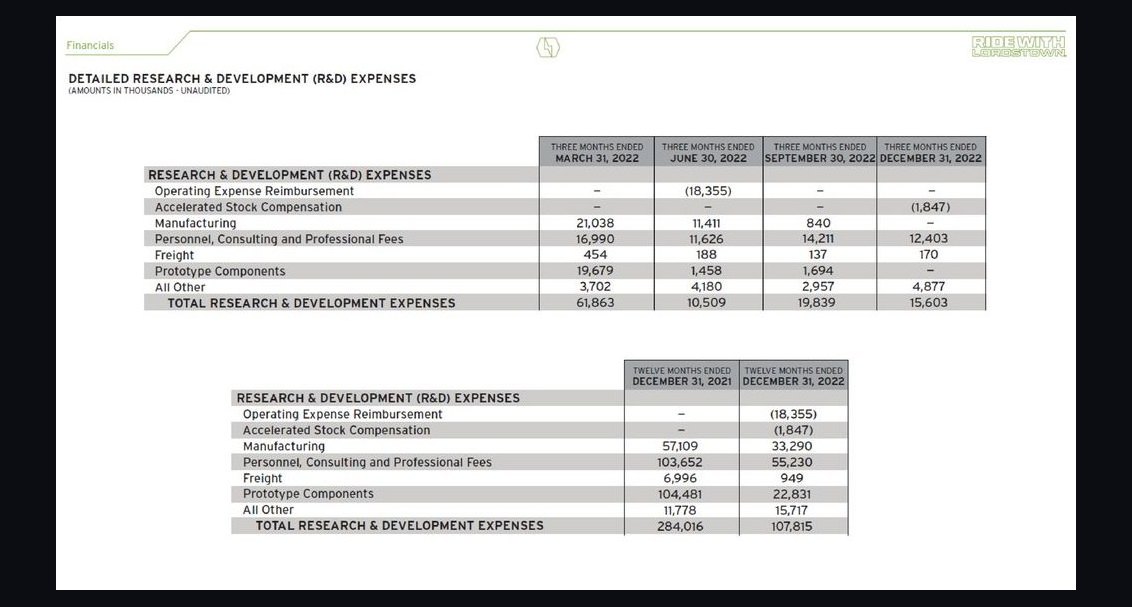 lordstown-motorsHow'd you fix Lordstown Motors's revenue issues in 2026?
 pear-therapeuticsHow'd you fix Pear Therapeutics's revenue issues in 2026?
 toastHow'd you fix Toast's revenue issues in 2026?
 better-comHow'd you fix Better.com's revenue issues in 2026?
 chimeHow'd you fix Chime's revenue issues in 2026?
 marqetaHow'd you fix Marqeta's revenue issues in 2026?
 greenskyHow'd you fix GreenSky's revenue issues in 2026?
 aston-carterHow'd you fix Aston Carter's revenue issues in 2026?