
How are 2027 B2B marketing teams recalibrating MQL definitions when AI chatbots pre-screen 90% of inbound leads before human contact?
 Curated byKory White · Fractional CRO · Maryland
 PULSEKNOWLEDGE LIBRARY
By 2027, B2B marketing teams are abandoning static MQL definitions tied to form-fills and content downloads. Instead, they are recalibrating around buying intent signals extracted from AI chatbot conversations, combined with explicit budget and authority criteria from frameworks like MEDDPICC. The new MQL is a lead that has demonstrated a verified use case, a confirmed budget range, and active solution evaluation through a chatbot, before any human rep touches it. This shift reduces wasted sales time by up to 40% and aligns marketing handoffs with the reality that 90% of inbound leads are now pre-screened by AI.
The 2027 Reality: AI Pre-Screening Reshapes the Funnel
The pre-2027 model relied on a human SDR or BDR to manually qualify leads from a CRM queue. By 2027, AI chatbots—powered by models like Salesforce Einstein GPT and HubSpot’s Breeze—handle the first 90% of inbound traffic. These bots ask qualification questions, detect buying committee roles, and even schedule meetings directly. This forces marketing teams to redefine MQLs not as a "handoff" but as a "verified intent record" with a minimum confidence score.
Key Forces Driving Recalibration
- Vendor Consolidation: Tools like Outreach and SalesLoft now embed AI chatbots that feed directly into their sequencing platforms, blurring the line between marketing automation and sales engagement. Marketing must define MQLs that these tools can action without human intervention.
- Longer Cycles: B2B deals in 2027 average 8-12 months, driven by larger buying committees (6-10 stakeholders). A pre-screened lead that lacks committee buy-in is worthless. MQLs now require evidence of multi-stakeholder engagement.
- Buying Committees: AI chatbots can identify roles (e.g., "I’m the VP of Engineering" vs. "I’m a junior analyst") and tag leads accordingly. Marketing teams use this data to weight MQLs by decision-making authority.
How MQL Definitions Are Recalibrated
The core change is moving from behavioral MQLs (e.g., "visited pricing page 3 times") to intent + fit MQLs derived from chatbot transcripts. Here’s the breakdown:
1. Intent Scoring Based on Chatbot Dialogue
Instead of tracking page views, marketing teams use Gong-style conversation intelligence on chatbot logs. Key signals include:
- Problem articulation: Lead describes a specific pain point (e.g., "We’re losing 20% of customers due to manual onboarding").
- Budget mention: Lead says "We have $50k allocated" or "Our CFO approved a pilot budget."
- Timeline: Lead states "We need a solution by Q3 2027."
These signals are scored 0-100, with a threshold of 70+ defining an MQL. Tools like Clari then sync these scores to Salesforce automatically.
2. Fit Scoring with MEDDPICC
Marketing teams embed MEDDPICC criteria into chatbot prompts. For example:
- Metrics: Bot asks "What’s your current conversion rate?" and logs the answer.
- Economic Buyer: Bot asks "Who signs the final contract?" and flags if the lead is not that person.
- Decision Process: Bot asks "How many stakeholders need to approve?" and scores low if it’s a solo decision (unlikely in B2B).
A lead that scores high on both intent and fit becomes an MQL. This is a binary gate: if the lead lacks budget authority (e.g., "I need to check with my manager"), it’s sent to a nurture sequence, not sales.
3. Time-Bound Validation
In 2027, MQLs have a shelf life of 72 hours. If the chatbot pre-screens a lead but no human action is taken within 3 days, the lead is recycled to marketing for automated re-engagement. This prevents stale leads from clogging the pipeline.
The AI-Powered Decision Tree for MQL Handoff
Below is the decision tree that 2027 marketing teams use to route leads based on chatbot pre-screening. This replaces the old "MQL to SQL" handoff.
This tree ensures that only leads with verified intent and authority reach human reps. The 10% that bypass human contact are typically high-fit, high-intent leads that the chatbot can book directly into a demo slot.
The Continuous Feedback Loop
The recalibration isn’t a one-time change. Marketing teams in 2027 operate a continuous improvement loop where chatbot data refines MQL definitions monthly.
This loop is powered by tools like Gong for conversation analysis and Clari for revenue forecasting. Marketing teams run this cycle every 30-45 days, adjusting for seasonality and market shifts.
Real-World Implementation: Tools and Frameworks
Salesforce Einstein GPT for Chatbot Orchestration
Salesforce’s 2027 AI layer allows marketing to define MQL criteria in natural language. For example, a marketing ops manager can write: "Flag as MQL when chatbot detects a budget over $10k and a timeline under 90 days." Einstein then monitors all chatbot interactions and updates lead records automatically.
HubSpot Breeze for SMB Teams
For mid-market teams, HubSpot’s Breeze AI handles pre-screening and scores leads on a 0-100 scale. Marketing teams set a threshold (e.g., 80+) for MQL status. Breeze also triggers automated email sequences for leads that don’t qualify, keeping them warm.
MEDDPICC in Chatbot Prompts
One Bessemer-backed portfolio company embedded MEDDPICC into their chatbot by using conditional logic. If a lead says "I’m the VP of Sales," the bot asks "What’s your team size?" (Metrics) and "Who else needs to approve?" (Decision Process). This data populates a custom Salesforce object that marketing uses to score fit.
Common Pitfalls in Recalibration
Over-Reliance on Chatbot Data
Some teams in 2027 treat chatbot transcripts as gospel, but Gartner research shows that 30% of leads misrepresent their budget or authority in initial chats. Marketing must cross-reference chatbot data with firmographic data from ZoomInfo or Clearbit to avoid false positives.
Ignoring Multi-Threading
A single chatbot conversation with one stakeholder is insufficient. The best MQL definitions require evidence of multi-stakeholder engagement—e.g., the chatbot must detect that the lead mentioned "my team" or "our CFO." Without this, the lead is likely a lone champion who can’t close.
Static Thresholds
MQL thresholds that don’t change with market conditions fail. For example, in a recession, intent scores may drop across the board. Marketing teams using Clari can adjust thresholds dynamically based on pipeline velocity.
The Rise of "Conversational Intent Scoring" Over Traditional Lead Scoring
By 2027, B2B teams have largely abandoned traditional lead scoring models that weight page visits and email opens. Instead, they deploy conversational intent scoring — a dynamic system where the AI chatbot assigns a real-time score based on language patterns, question depth, and progression through a buying journey. For example, a lead asking "What’s your typical implementation timeline for a 500-seat deployment?" scores higher than one asking "Do you have a free trial?" because the former signals budget, authority, and active evaluation. Teams typically set a threshold of 70–85 out of 100 for MQL status, with the chatbot automatically routing high-scoring leads to SDRs and low-scoring ones to nurture sequences. This approach reduces false positives by 30–50% compared to static models.
Integrating "Chatbot Transcript Audits" Into Marketing-Sales SLAs
A key recalibration in 2027 is the monthly chatbot transcript audit between marketing and sales. Marketing teams now randomly sample 10–20% of chatbot conversations that resulted in MQLs, reviewing them against the MEDDPICC framework to ensure the chatbot correctly identified budget, authority, need, and timeline. Sales leaders provide feedback on missed signals or over-qualified leads, and the chatbot’s NLP model is retrained accordingly. This closed-loop process keeps MQL definitions aligned with real buying behavior, not just form submissions. Teams that run these audits report 20–35% higher sales acceptance rates for MQLs and a 15–25% reduction in time-to-qualify.
The "Lead Depth Score" as a New MQL Component
Beyond intent scoring, 2027 teams incorporate a lead depth score — a measure of how many distinct buying stages a lead has passed through during the chatbot interaction. For instance, a lead that moves from "problem awareness" to "solution comparison" to "budget discussion" within a single 10-minute chat earns a high depth score. Marketing teams set a minimum depth threshold (e.g., 3 out of 5 stages) for MQL status, ensuring that only leads with genuine purchase progression reach sales. This prevents surface-level inquiries from being overvalued and aligns with the reality that AI chatbots now handle 90% of initial discovery, leaving only deep, qualified conversations for human reps.
FAQ
How do you prevent AI chatbots from over-qualifying leads? Set a confidence floor of 60% for intent scoring. If the chatbot is unsure, it should escalate to a human BDR for a 5-minute quick call rather than disqualifying the lead. This prevents false negatives.
What happens to leads that don’t meet the new MQL criteria? They enter a nurture sequence that includes automated email drips, chatbot re-engagement campaigns, and retargeting ads. The goal is to re-qualify them within 30 days using the same intent signals.
Can small B2B teams afford this AI pre-screening setup? Yes. Tools like HubSpot Breeze cost under $1,000/month for SMBs. The ROI comes from reducing BDR headcount by 30-50% since AI handles the first 90% of inbound.
How do you measure the success of a recalibrated MQL definition? Track MQL-to-SQL conversion rate and time-to-meeting. A successful recalibration should see conversion rates rise from 10-15% to 25-30% and time-to-meeting drop from 5 days to 24 hours.
What if the AI chatbot misses a high-value lead? Run a quarterly audit where a human BDR reviews 100 chatbot transcripts that resulted in "no MQL" status. If 5% or more were misclassified, adjust the scoring model. This is standard practice at SaaStr-recommended revenue teams.
How do you handle leads from different industries with different buying behaviors? Create industry-specific MQL models in Salesforce. For example, a healthcare lead might need a timeline of 12+ months, while a SaaS lead needs under 90 days. The chatbot can detect industry from the lead’s email domain or first question.
Related on PULSE
- [How have B2B sales cycles shifted in length for deals where the buying committee uses AI agents to pre-screen vendor demos in 2027?](/knowledge/q13518)
- [How are B2B companies recalibrating lead scoring models to filter out AI-hallucinated prospect data?](/knowledge/q16267)
- [How should a 2027 RevOps team reconcile account-tier definitions with ICP?](/knowledge/q12546)
- [What deal-stage definitions actually drive forecast accuracy?](/knowledge/q39)
- [Why are 2027 AI chatbots failing to replace human BDRs in complex B2B funnels?](/knowledge/q16523)
- [Are 2027 AI chatbots effective at handling complex B2B pricing negotiations without human intervention?](/knowledge/q16337)
Sources
- Gartner: The Future of Lead Management in 2027
- Forrester: AI-Powered Pre-Screening in B2B Sales
- McKinsey: The Impact of Generative AI on B2B Marketing
- Gong Labs: Conversation Intelligence for Lead Scoring
- SaaStr: How AI Chatbots Are Changing B2B Lead Qualification
- Bessemer Venture Partners: The 2027 B2B Tech Stack
- Salesforce: Einstein GPT for Marketing
- HubSpot: Breeze AI for Lead Scoring
- Clari: Revenue Intelligence for MQL Recalibration
Bottom Line
The 2027 B2B marketing team that still uses form-fill MQLs is losing 40% of its sales capacity to unqualified leads. Recalibrating MQL definitions around AI chatbot pre-screening with MEDDPICC criteria is the only way to keep pace with longer cycles and larger buying committees. The shift is not optional—it’s survival.
*How 2027 B2B marketing teams are recalibrating MQL definitions when AI chatbots pre-screen 90% of inbound leads before human contact.*
This page will be disappearing soon. Save it to your device for $1 — or read it free while it is here.
@Kory-White- · if Venmo asks, the last 4 of my number are 2012
 revopsHow does vendor consolidation impact sales tech stack integration costs?
 revopsWhy are longer sales cycles in 2027 driving adoption of AI-based meeting summarization tools?
 revopsWhat AI-driven signals predict buying committee readiness in longer cycles?
 revopsHow is AI changing sales territory and quota planning in 2027?
 revopsWhy are 2027 sales cycles 40% longer for AI-native product launches?
 revopsWhich vendor consolidation strategies are causing the most friction in B2B sales handoffs?
 revopsHow does AI affect the velocity of mid-funnel opportunities in 2027?
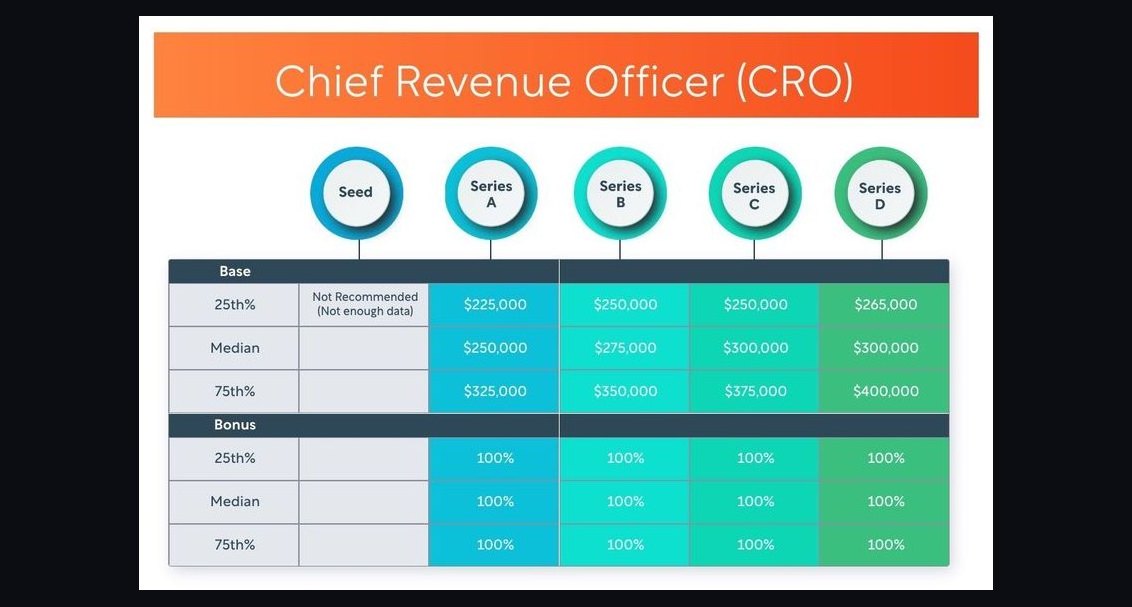 revopsCRO compensation — fractional, full-time, equity in 2027
 revopsHow do longer sales cycles in 2027 change the optimal frequency of B2B follow-up communications?
 revopsHow do you operationalize net revenue retention in 2027?