

How do you design a discount governance policy that protects margin in 2027?
 Curated byKory White · Fractional CRO · Maryland
Quality
Certified

A discount governance policy protects margin when it gates on deal-level gross margin floors rather than percent-off-list, routes exceptions through tiered approvals with mandatory written justification, and enforces both inside the CPQ tool so out-of-policy quotes cannot be sent. Policy without system enforcement fails; enforcement without exception paths kills velocity.
Two ways to govern discounts: percent-off-list versus margin-floor
Nearly every discount policy in production today is one of two designs, and the choice determines what the policy can actually protect.
The percent-off-list model sets thresholds against the published price. A rep can grant 0–10% alone, 10–20% needs a manager, 20–30% needs a VP, above 30% needs the CRO or CFO. It is the default because it is trivially easy to build: the quoting tool already knows list price and quoted price, so the threshold logic is one subtraction. Everybody in the org understands it in thirty seconds. It fits neatly into a one-page PDF, which is why it survives so long in sales handbooks.
Its weakness is that percent-off-list is a proxy for margin, not margin itself. Two deals at the same discount can carry wildly different profitability. A pure-software deal discounted 30% may still clear a 75% gross margin because the incremental cost of serving that customer is a rounding error. A deal at 12% off that bundles 400 hours of implementation services, a dedicated technical account manager, and a third-party data feed you resell at a thin markup can land below 40% — and the percent-off policy waves it through without a second look. The policy is optimized to catch the loud violation and blind to the quiet one.
The margin-floor model inverts the gate. Instead of asking "how far off list is this?", it asks "what gross margin does this deal produce after all attributable cost of delivery?" Approval tiers are set against margin bands rather than discount bands: above the standard floor, the rep proceeds; a defined band below it, a first-line manager approves; deeper, a VP; below an absolute floor, nobody approves without finance. Because it prices in resold components, services delivery cost, support tier, payment terms, and any partner referral fee, it catches the low-discount/low-margin deal the percent model misses, and it stops punishing the high-discount/high-margin deal that was never actually a problem.

Its weaknesses are real and worth naming. It requires a defensible cost-of-delivery model per SKU, which many companies simply do not have — and a margin floor built on a bad cost model is worse than no floor, because it manufactures false confidence. It is harder to explain to a rep in a hallway conversation. And it can be gamed from the cost side: if services hours are estimated by the same person whose deal is being gated, the estimate drifts optimistic.
The hybrid is what most mature RevOps teams land on, and it is what we generally recommend. Keep the percent-off-list ladder as the fast, legible front gate for the 80–90% of deals that are single-product and standard-configuration — reps get an instant answer and no approval friction. Layer a hard margin floor underneath it as a backstop that fires regardless of discount depth: any quote projecting margin below the floor escalates even if it is at 5% off list. You get the simplicity of the percent model for routine business and the protection of the margin model exactly where it matters. The design choice is not "which one" but "where does each one bind."
A fourth option deserves mention only to be dismissed: no formal policy, discounting by manager judgment. It works at fifteen reps and collapses somewhere between thirty and fifty, when the variance between managers becomes visible to reps and the most permissive approver becomes the de facto policy. If you are approaching that size, build the policy before the shadow policy builds itself.
How to decide between them
The choice is driven by four inputs: whether you have trustworthy unit-cost data, how much cost variance exists between deals, how large your sales org is, and how much approval latency your deal cycle can absorb.

Start with cost data. If you cannot produce a defensible gross margin per SKU that finance will stand behind, you cannot run a margin-floor policy — you will run a fictional-margin-floor policy, which is strictly worse than a percent ladder because people will comply with a number that is wrong. Run the percent model, and in parallel start the cost-modeling work with finance. Give that project a real owner and a deadline; it is typically four to eight weeks of work for a company with a handful of SKUs.
Then look at cost variance across deals. Compute realized gross margin for every closed-won deal in the last four quarters and look at the spread within each discount band. If deals discounted 10–20% all land within a few points of each other, percent-off is a decent proxy and the ladder is defensible on its own. If that same band spans thirty points of margin, your percent policy is not governing anything — it is theater, and the margin floor is not optional.
Org size sets the enforcement bar. Under roughly twenty-five reps, a documented ladder plus a weekly approval review usually holds. Past fifty, informal enforcement decays: reps learn which approver says yes fastest, and deals route to that person. That is the point where the policy must live in the CPQ system as a blocking rule rather than in a document.
Finally, weigh latency. Every approval tier you add costs cycle time. Measure your actual approval turnaround before adding a tier — if VP approvals currently take three days, adding a CFO tier on top means week-long waits at quarter end, and reps will respond by structuring around it (splitting orders, shifting value into free services, promising verbal side terms). A policy that reps route around is more dangerous than a loose policy, because the concessions become invisible.
Concrete numbers behind each design
Policy design is a numbers exercise, and the numbers should come from your own closed-won history rather than from a benchmark deck. Here is how to derive each one.

Setting the standard discount band. Pull every closed-won deal from the trailing four quarters with its discount depth. Find the median and the 75th percentile. The rep-authority band — the discount a rep can grant with no approval at all — should sit at roughly the median of historically approved discounts. If half your won deals close at 8% off and you set rep authority at 5%, you have just routed half of all deals into an approval queue and manufactured a bottleneck that adds days to every cycle. If you set it at 20% when the median is 8%, you have quietly repriced your book downward, because reps will use the full authority they are given. Rep authority is a floor-setting decision disguised as a convenience decision.
Setting the margin floor. Compute realized gross margin on closed-won deals, fully loaded: license cost or hosting cost, resold third-party components at your actual cost, services delivery at loaded hourly cost rather than billing rate, and any partner or referral fee. Plot the distribution. The absolute floor — the line nobody crosses without finance — typically sits near the 10th percentile of that distribution. The escalation floor, where a VP must sign, sits near the 25th. Anything at or above the median proceeds untouched. Anchoring on your own distribution means the policy is achievable on day one; a floor imported from someone else's business model will be either toothless or unmeetable.
Sizing the tiers. Three approval tiers is the practical sweet spot for most mid-market and enterprise orgs: rep, manager, executive. Two tiers under-govern at scale; four or more create latency that reps engineer around. Set the band widths so each tier handles a workload it can actually process. A useful design target: the executive tier should see no more than a handful of deals per week. If your CRO is approving twenty deals a week, the tier is set wrong and approval has degenerated into rubber-stamping — the worst outcome, because it produces an audit trail of approvals that means nothing.
Approval SLAs. Publish a turnaround commitment per tier and instrument it. Manager approvals inside one business day, executive approvals inside two, is a reasonable starting commitment. Then measure actual turnaround weekly. When the SLA slips at quarter end — and it will — that is the signal to add approver capacity or delegate authority temporarily, not to let the queue back up while reps start improvising.

Deal-size interaction. Absolute margin dollars matter, not just percentage. A small deal at a thin margin is a rounding error; a very large deal at the same margin sets a precedent that will resurface at renewal and in every competitive bake-off where that customer is a reference. Many policies apply a stricter margin floor above a deal-size threshold — commonly set where deals become individually material to the quarter — precisely because the precedent cost exceeds the immediate margin cost. Set that threshold from your own ACV distribution: somewhere around the 90th percentile of deal size is a common landing spot.
Non-price concessions. Discount percentage captures only part of the giveaway. Extended payment terms carry a real cost of capital. Free services hours have a hard loaded cost. Uncapped liability, unlimited user growth at fixed price, opt-out renewal clauses, and unusual SLA credits all carry expected cost that never shows up in the discount field. Assign each a standard cost equivalent and fold it into the margin calculation, or reps will migrate concessions from the governed field into the ungoverned ones. This is the single most common failure mode of a well-designed percent policy: discount percentage looks flat quarter over quarter while realized margin declines, because the concessions moved.
Measuring whether it works. Track four numbers monthly: median realized gross margin on closed-won, the percentage of deals requiring any approval, average approval turnaround by tier, and the exception rate — deals that closed below the floor with a documented override. A healthy steady state has the exception rate low but nonzero. Zero exceptions means the floor is set too loose to bind on anything. A rising exception rate means the floor no longer matches market reality, and the answer is to revisit the floor deliberately rather than let it erode one override at a time.
Implementation details and sequencing
Design is the easy half. Most discount governance efforts fail in rollout, and they fail in predictable ways.
Build the cost model before the policy. Everything downstream depends on a gross margin number that finance will defend. Get agreement on what counts as cost of delivery: hosting, support allocation, resold components, services at loaded cost, partner fees. Document the allocation method. Get the CFO's sign-off in writing. Skipping this step means every escalated deal turns into an argument about whether the margin number is real, and the policy loses authority the first time sales wins that argument.

Instrument before you enforce. Run the proposed thresholds in shadow mode for a full quarter — compute what would have been flagged, but do not block anything. This tells you the real approval volume before you inflict it on the org, and it almost always surprises people. If shadow mode says 45% of deals would need approval, the thresholds are wrong and you have learned it at zero cost instead of during a quarter-end crunch.
Make the system the enforcement point. A policy that lives in a document is a suggestion. A quote that cannot be generated below the floor without an approval record is a control. Configure your CPQ so out-of-policy quotes are blocked, approval requests route automatically to the right approver by rule, and every approval writes an immutable record of who approved, when, and why. If your quoting stack cannot block, the interim control is a required margin field on the opportunity plus a stage gate that prevents advancing to contracting without approval attached — weaker, but auditable.
Require written justification, and make it structured. Free-text justification degrades to "competitive pressure" within a month. Use a required reason code from a short fixed list — competitive displacement, volume commitment, multi-year term, strategic reference value, budget-cycle timing — plus one or two required specifics: which competitor, what term length, what commitment was received in exchange. Structured reasons are analyzable; free text is not. After two quarters you will be able to say which reason codes correlate with retained margin and which are cover stories, and that analysis is what lets you tighten the policy with evidence instead of assertion.
Always trade something for the discount. The strongest single design element in any discount governance policy is the rule that no concession is unilateral. Deeper discount is available in exchange for a longer term, annual prepay, a public reference or case study commitment, an expanded product footprint, or a reduced-scope services engagement. Codify the exchange rates explicitly so reps can self-serve the trade instead of negotiating the policy with their manager. This converts discount pressure into contract value rather than pure margin loss.

Align compensation with the policy. If reps are paid on bookings alone, the policy fights the comp plan and the comp plan wins every time. The cleanest alignment is a margin or discount modifier on commission rate: deals at or above the standard floor earn full rate, deals in the escalation band earn a reduced rate. This makes discounting cost the rep something real without forbidding it, which preserves their judgment on the deals where a discount genuinely wins business.
Handle renewals as a separate regime. Renewal discounting is a different problem with different economics — acquisition cost is already sunk, so the margin math is not the same as new business. Give renewals their own floor and their own approval path, usually tighter on percentage, and require a documented retention risk before any renewal discount is granted. Otherwise renewal discounting becomes the path of least resistance and your installed base repricing downward becomes structural.
Govern automated and assisted quoting explicitly. As more quoting flows through automated configuration and AI-assisted proposal tools, define what those systems are permitted to concede without a human. Cap automated discount authority at or below rep authority, require the same reason code, and log every automated concession into the same audit trail. Review that log on the same cadence as human approvals. A system that quietly grants small concessions at high volume erodes margin faster than any individual rep can.
Roll out on a schedule that respects the quarter. Never turn on new blocking rules in the final weeks of a quarter. Ship at the start of a quarter, communicate two weeks ahead with the actual thresholds and the reasoning, train managers first so approvers are ready before reps hit the gate, and run a weekly exception review for the first six weeks to catch bad threshold calls fast. Publish the change log every time a threshold moves.
Review on a fixed cadence. Quarterly, revisit realized margin, exception rate, and approval latency together. Annually, revisit the cost model itself, because hosting costs, support ratios, and services delivery efficiency all drift. A discount governance policy that has not been revised in two years is not stable — it is unmaintained, and the market has moved out from under it.
Related questions
Should the margin floor be a hard block or a warning?
Hard block for the absolute floor, warning plus routing for the escalation band. A pure-warning design produces a well-documented record of everyone ignoring the warning. A pure-block design with no exception path produces deals structured around the system, which is worse because the concessions become invisible.
Who should own discount governance — sales, finance, or RevOps?
Finance owns the margin definition and the floors. Sales leadership owns approval authority and turnaround. RevOps owns the system enforcement, the audit trail, and the measurement. Splitting it this way prevents the party being governed from setting its own limits.
How often should thresholds be revisited?
Review the operating metrics quarterly and the underlying cost model annually. Move thresholds only with evidence from the exception log and realized margin data, and publish a change log every time. Frequent unexplained changes teach reps the policy is negotiable.
What about deals where losing on price loses the account entirely?
That is what the executive tier exists for. Require the strategic case in writing — the specific competitive threat, the expected follow-on, the reference commitment secured — and log it as an exception rather than bending the floor. Exceptions you can count; erosion you cannot.
Does a discount policy slow down deal cycles?
Only if approval latency is unmanaged. A well-tuned policy routes 80–90% of deals through with no approval at all. Measure turnaround per tier weekly; when it slips, add approver capacity rather than letting the queue absorb the delay silently.
FAQ
What is the single most common failure in discount governance policy design?
Governing discount percentage while leaving every other concession ungoverned. Reps respond rationally: extended payment terms, free services hours, uncapped growth clauses, and out-of-cycle renewal credits all move value to the customer without touching the discount field. Discount percentage looks flat while realized margin declines. Assign a standard cost equivalent to each non-price concession and include it in the margin calculation, or the policy governs one lever while value leaks through five others.
How do we set floors without any historical margin data?
Start with a percent-off-list ladder anchored on your own approved-discount history, which you do have even if cost data is missing. Simultaneously commission the cost model with finance and set a deadline. Run the ladder for a quarter or two while the margin data accumulates, then layer the floor underneath. Do not invent a margin floor from a benchmark — a floor built on a fictional cost model produces confident enforcement of the wrong number.
Should the policy be published to reps in full?
Yes. A policy reps cannot read is a policy they will test empirically, one escalation at a time, and the fastest-approving manager becomes the real policy. Publish the thresholds, the approval tiers, the reason codes, the exchange rates for term and prepay, and the turnaround SLAs. The only thing worth withholding is the exact cost model per SKU, which is genuinely sensitive and which reps do not need to comply.
How do we stop reps from splitting orders to stay under thresholds?
Aggregate at the account level, not the order level. Configure the quoting system to sum all quotes to the same account within a rolling window and apply thresholds against that total. Add an explicit anti-circumvention clause to the policy and enforce it as a comp issue, not just a process issue. Order splitting is a reliable early signal that a threshold is set at the wrong level — investigate the threshold at the same time you address the behavior.
Does this apply to partner and channel deals?
Partner deals need their own regime because partner margin is a real cost that stacks on top of any end-customer discount. Compute margin after partner compensation, not before, and set a separate floor accounting for the partner's take. Otherwise a deal that clears the direct floor comfortably lands well under it once the channel margin is paid, and the leak is systematic rather than occasional.
How does discount governance interact with published price increases?
Any list-price increase makes existing discount percentages mechanically deeper in dollar terms while looking identical on paper. Recompute the margin implications of every standing threshold whenever list price moves, and expect a spike in escalations during the transition as reps quote against the old expectations. Communicate the new thresholds with the price change, not after it, and grandfather in-flight deals explicitly so the rule is clear rather than improvised deal by deal.
Sources
- Harvard Business Review — The Value of Pricing Discipline
- McKinsey — Pricing: Distributor's most powerful value-creation lever
- Bain & Company — Insights on pricing and commercial excellence
- Salesforce CPQ documentation — discount schedules and approvals
- HubSpot Sales Blog — sales discounting strategy
- Gong Labs — research on discounting and negotiation
- OpenView Partners — SaaS pricing and packaging research
- Profitwell / Paddle — pricing and monetization research
- SaaS Capital — SaaS metrics and benchmarking research
Related on PULSE
- How do you design a discount approval framework that protects margin without killing deal velocity?
- How do you build discount governance that actually sticks — what combination of policy, tooling, and incentive alignment prevents reps from circumventing rules through bundling tricks?
- How Do I Design a Sales Commission Clawback and Draw Policy in 2027?
- How Do I Build a Quota-Relief and Ramp Policy for New Reps in 2027?
- How should a 2027 founder hand off key customers with a script that protects trust?
- How do RevOps leaders measure pipeline health when AI agents automatically disqualify leads based on hidden vendor policy shifts in 2027?
This page will be disappearing soon. Save it to your device for $1 — or read it free while it is here.
@Kory-White- · if Venmo asks, the last 4 of my number are 2012
This page is gone.
This one is off the shelf now. $1 keeps it on your phone for good — the whole page, pictures and diagrams included.
 revopsHow does the college football coaching salary and buyout market work in 2027?
 revopsHow is AI changing sales territory and quota planning in 2027?
 revopsHow do you operationalize net revenue retention in 2027?
 revopsHow do longer sales cycles in 2027 change the optimal frequency of B2B follow-up communications?
 revopsHow are college athletic departments balancing budgets under the revenue-sharing cap in 2027?
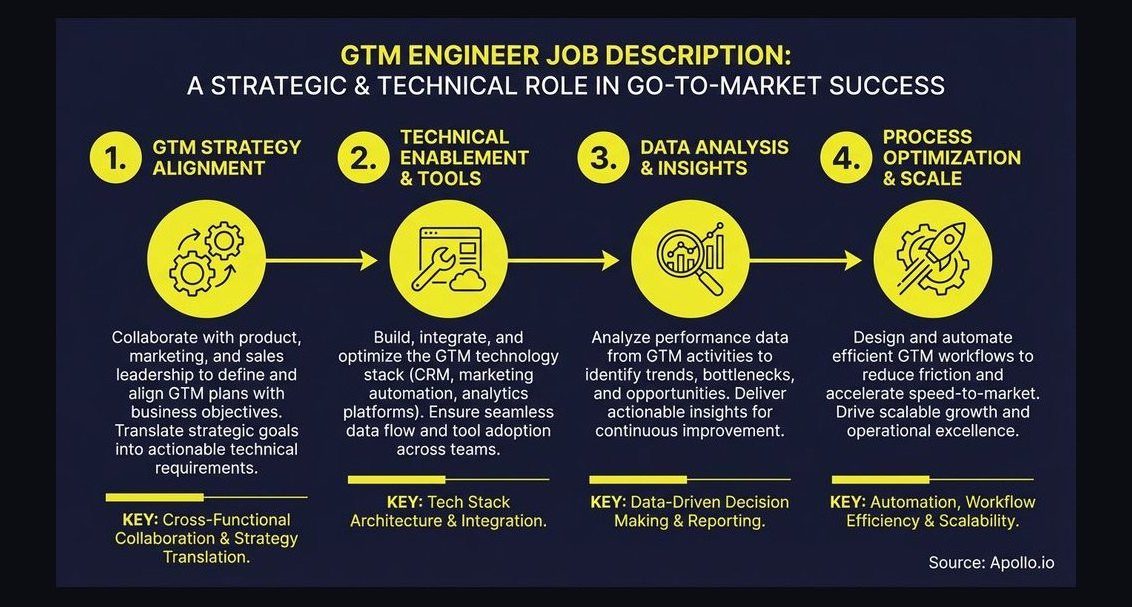 revopsWhat is a GTM engineer and why is the role exploding in 2027?
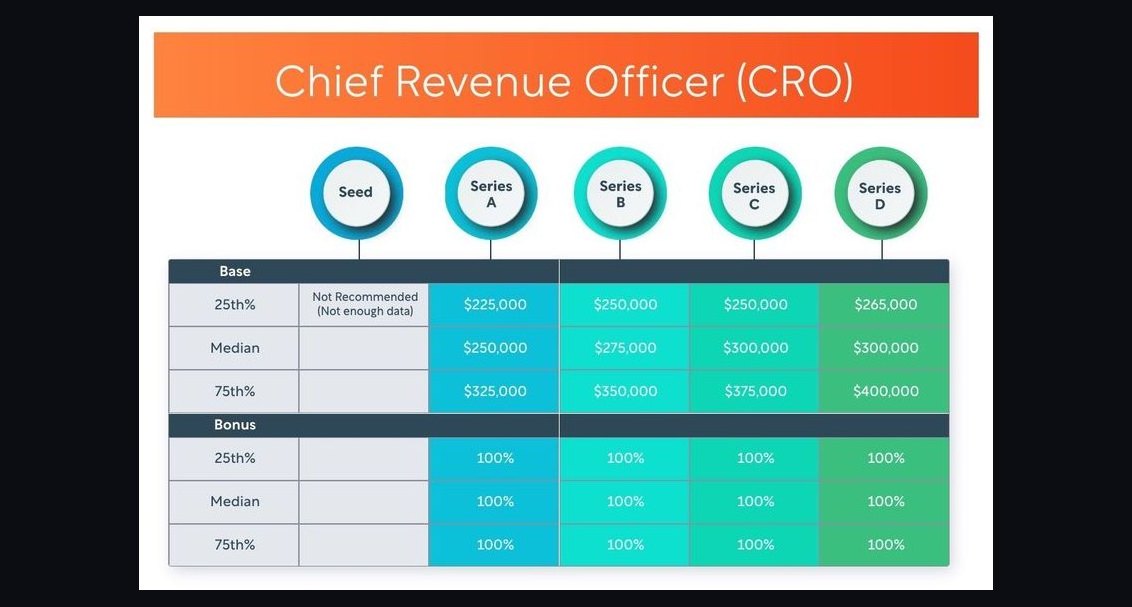 revopsCRO compensation — fractional, full-time, equity in 2027
 revopsHow is vendor consolidation affecting the negotiation leverage of mid-market buyers in 2027?
 revopsWhy are 40% of B2B deals stalling in the legal review phase despite AI contract analysis tools in 2027?
 revopsHow Do I Reconcile Competing Sales Forecasting Methods in 2027?