
How Do I Budget a Micro-Cinema or Screening-Room Buildout?
 Curated byKory White · Fractional CRO · Maryland
 PULSEKNOWLEDGE LIBRARY
<svg xmlns="https://www.w3.org/2000/svg" viewBox="0 0 1200 340" role="img" aria-label="How Do I Budget a Micro-Cinema or Screening-Room Buildout? — PULSE Buildouts"><rect width="1200" height="340" fill="#EBE9DE"/><rect width="14" height="340" fill="#C0531F"/><text x="58" y="116" font-family="Arial,Helvetica,sans-serif" font-size="32" font-weight="800" letter-spacing="3" fill="#C0531F">PULSE BUILDOUTS · COMMERCIAL REAL ESTATE</text><text x="56" y="198" font-family="Arial,Helvetica,sans-serif" font-size="60" font-weight="800" fill="#2b2b2b">Save money. Don’t get screwed.</text><text x="58" y="258" font-family="Arial,Helvetica,sans-serif" font-size="30" font-weight="600" fill="#6b5b4d">Leases, TI, NNN & buildouts — negotiated in your favor</text><g transform="translate(1010,86)" fill="none" stroke="#C0531F" stroke-width="9" stroke-linejoin="round"><rect x="20" y="40" width="150" height="130"/><line x1="20" y1="40" x2="95" y2="6"/><line x1="170" y1="40" x2="95" y2="6"/><rect x="50" y="80" width="36" height="36"/><rect x="104" y="80" width="36" height="36"/><rect x="74" y="128" width="42" height="42"/></g></svg>
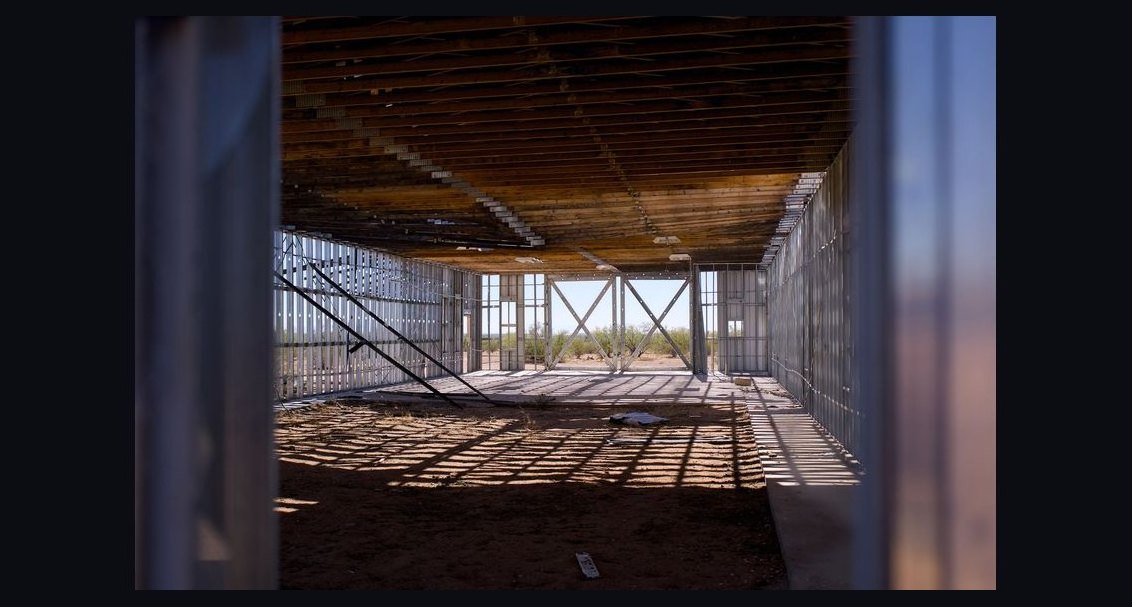
Budget a micro-cinema or private screening-room buildout at $180 to $400 per square foot for a finished room, with the all-in number landing between $250,000 and $1.2 million for a 1,500-to-4,000 sq ft space depending on seat count, sound system, and projection. The single move that saves the most money is putting the landlord on the hook for the shell: demand a turnkey or warm-shell delivery plus a tenant improvement (TI) allowance of $40 to $90 per square foot, and never sign a lease that delivers a "cold dark shell" unless the free rent and TI dollars cover the $60-to-$120 per sq ft it costs to bring in HVAC, electrical service, and a code-compliant ceiling.
The expensive part of a micro-cinema is not the screen. It is the acoustic isolation (you are building a box inside a box) and the HVAC, because a dark room full of bodies and a 4K laser projector throwing 2,000 to 5,000 lumens generates serious heat. Budget $25 to $55 per sq ft for acoustic treatment and isolation and oversize your cooling to roughly 400 to 600 sq ft per ton instead of the usual 500-to-700, which is the difference between a $14,000 rooftop unit and a $22,000 one. Get those two line items right and the rest of the project behaves.
The Real Cost Stack, Line by Line
Here is where the money actually goes on a 2,500 sq ft, 40-seat micro-cinema:
- Acoustic isolation and treatment: $60,000–$140,000. Resilient channel, double 5/8" drywall, mass-loaded vinyl (roughly $2.50–$4 per sq ft of wall), decoupled stud walls, and a floating floor if you share a demising wall with a noisy neighbor. An STC 60+ wall assembly is the target if you want to run reference-level sound past 10 p.m. without a noise complaint.
- Projection and screen: $30,000–$120,000. A 4K laser projector runs $8,000–$45,000; an acoustically transparent screen runs $3,000–$15,000; the booth, lens, and mount add the rest.
- Sound system: $35,000–$150,000. A proper Dolby Atmos 7.1.4 or 9.1.6 layout needs 12-to-18 speakers, dual subs, and a cinema processor. The amps and DSP are where integrators pad bids.
- Seating: $25,000–$120,000. Recliners run $800–$3,500 a seat; fixed theater seating runs $300–$900 a seat. Riser platforms add $8,000–$25,000.
- HVAC: $40,000–$90,000. Oversized cooling, quiet diffusers, and sound-attenuated ductwork so the air handler does not bleed into your quiet scenes.
- Lighting, electrical, and controls: $30,000–$70,000. Dimmable 2700K LED, dedicated circuits for AV, and a Crestron or Lutron control layer.
That is $220,000 to $690,000 before soft costs. Add 8–12% for architect/engineer fees, 5–10% contingency, and 2–4% for permits.
How to Not Get Screwed by the Landlord or Contractor
This is where most first-time operators lose $50,000 to $150,000 they never had to spend.
Make the TI allowance real, not theatrical. Landlords love quoting a big TI number and then burying "allowance disbursed upon completion, single draw, against paid invoices" in the work letter. That means you front the entire buildout and wait 60-to-90 days for reimbursement. Negotiate for progressive draws (monthly, against AIA G702/G703 forms) so the landlord's money flows alongside yours. Also confirm the allowance covers soft costs (architect, permits, low-voltage), not just "hard construction" — that exclusion alone can swallow $30,000–$60,000.
Kill the "landlord's contractor" markup. Many leases require you to use the landlord's general contractor or pay a construction management fee of 3–5% of hard costs to "supervise." On a $500,000 buildout that fee is $15,000–$25,000 for someone who reads your invoices. Push to use your own licensed GC and cap any landlord oversight fee at $5,000 or 1%, whichever is less.
Get acoustic and HVAC in writing as performance specs, not products. A cheap contractor will install the speakers you spec and then deliver a room that leaks bass into the suite next door. Write the contract to a measurable outcome — "STC 60 demising walls, NC-25 background noise, ≤ 35 dBA HVAC at any seat" — and hold 10% retainage until a third-party acoustician verifies it.
Demand a fixed-price (lump-sum or GMP) contract, not cost-plus. On a specialized room with custom risers and isolation, cost-plus with no guaranteed maximum is a blank check. A guaranteed maximum price (GMP) with shared savings keeps the GC honest.
Watch the change-order trap. Specialized AV buildouts average 8–15% in change orders. Require that any change over $2,500 needs your written sign-off before work proceeds, and that the GC's change-order markup is capped at 10–15%, not the 20–25% they'll try for.
Lease Terms That Protect a Single-Use Room
A screening room is a special-purpose space — if you fail, the next tenant can't reuse your isolated box easily, which gives the landlord leverage and gives you a reason to push back.
- Get 4–8 months of free rent to cover the build period; you cannot pay rent on a room you can't open.
- Negotiate a TI amortization option: if the landlord won't write a check, have them fund the buildout and amortize it into rent at 7–9% interest — often cheaper than a construction loan at 11–13%.
- Cap CAM increases at 3–5% annually and audit rights on the operating-expense pass-throughs.
- Secure a personal-guaranty burn-off — full guaranty year one, dropping to 6 months' rent by year three, zero by year five.
- Lock an early-termination / co-tenancy clause if you're in a mixed-use or retail center anchored by a tenant that could leave.
Operating Math: What the Room Has to Earn
Before you over-build, run the back-of-envelope. A 40-seat micro-cinema at $22 a ticket, 65% occupancy, 14 shows a week grosses roughly $8,000 a week, or $416,000 a year on tickets alone. Food and beverage typically adds 30–45% of ticket revenue at 75–80% gross margin, which is where the actual profit lives — so spend on a real concessions/bar buildout ($40,000–$120,000) before you spend on the eighteenth Atmos speaker. If your buildout is $600,000 and you finance $400,000 at 12%, debt service is roughly $53,000 a year; the room has to clear that plus rent of $4,000–$12,000 a month before you take a dollar.
Related on PULSE
- [How Do I Budget a Funeral Home Buildout?](/knowledge/q13826)
- [How Do I Budget an Ambulatory Surgery Center Buildout?](/knowledge/q13825)
- [How Do I Budget an Imaging Center (MRI/CT) Buildout?](/knowledge/q13824)
- [How Do I Budget a Dialysis or Infusion Center Buildout?](/knowledge/q13823)
- [How Do I Budget a Physical Therapy Clinic Buildout?](/knowledge/q13822)
- [How Do I Budget a Chiropractic Clinic Buildout?](/knowledge/q13821)
FAQ
What is the typical cost per square foot for a micro-cinema buildout? Expect a finished micro-cinema or screening room to cost between $180 and $400 per square foot. This range covers basic to high-end finishes, including seating, acoustics, and projection equipment.
How much should I budget for a 1,500-square-foot screening room? For a 1,500 sq ft space, the total budget typically falls between $270,000 and $600,000. The lower end assumes modest seating and standard audio, while the higher end includes premium soundproofing and luxury seats.
What is the largest cost driver in a micro-cinema buildout? The sound system and acoustic treatment often account for 30% to 50% of the total budget. High-end Dolby Atmos setups and custom wall panels can quickly escalate costs, especially in rooms requiring significant noise isolation.
Can I save money by using existing building infrastructure? Yes, using an existing shell with basic electrical and HVAC can reduce costs by 15% to 25%. However, older buildings may need upgrades for power capacity or cooling, which can offset some savings.
How many seats should I plan for in a micro-cinema? Most micro-cinemas range from 20 to 80 seats. A 20-seat room might cost $250,000 to $400,000, while an 80-seat setup can reach $800,000 to $1.2 million, depending on seat quality and layout.
What is the timeline for a typical micro-cinema buildout? Expect 4 to 8 months from design to completion. Permitting and custom millwork are common bottlenecks, so budgeting extra time for these phases is wise.
Sources
- CBRE, *U.S. Construction Cost Trends* (annual report on TI and base-building cost-per-sq-ft benchmarks)
- JLL, *Office and Specialty Fit-Out Cost Guide* (TI allowance and construction-management-fee benchmarks)
- Cushman & Wakefield, *Tenant Improvement Cost Guide* (warm-shell vs. cold-shell delivery and TI amortization norms)
- RSMeans (Gordian), *Building Construction Cost Data* (acoustic assembly, HVAC tonnage, and electrical unit costs)
- NAIOP (Commercial Real Estate Development Association), *TI Allowance and Work Letter Best Practices*
- BOMA International, *Operating Expense and CAM Pass-Through Standards*
- Dolby Laboratories, *Dolby Atmos Cinema Design and Speaker Layout Specifications*
- THX, *Certified Cinema Acoustic and Calibration Guidelines*
This page will be disappearing soon. Save it to your device for $1 — or read it free while it is here.
@Kory-White- · if Venmo asks, the last 4 of my number are 2012
This page is gone.
This one is off the shelf now. $1 keeps it on your phone for good — the whole page, pictures and diagrams included.
 pulse-qHow Many Agents Do I Need to Recruit for My Real Estate Brokerage to Grow Production?
 pulse-qShould I open or buy an Aroma Joe's Coffee franchise in 2027?
 pulse-qShould I open or buy a Buca di Beppo franchise in 2027?
 pulse-qShould I open or buy a Bojangles franchise in 2027?
 pulse-qShould I open or buy a 7 Brew Coffee franchise in 2027?
 pulse-qShould I open or buy a Snap Fitness franchise in 2027?
 pulse-qAs-Is vs Warm Shell vs Turnkey: Which Delivery Saves Me the Most?
 pulse-qHow Many Employees Should I Schedule Each Shift at My Hot Pot Restaurant?
 pulse-qShould I open a yoga teaching business in 2027?
 pulse-qShould I open or buy a Body20 franchise in 2027?