
How'd you fix Rocket Money's revenue issues in 2026?
 Curated byKory White · Fractional CRO · Maryland
 PULSEKNOWLEDGE LIBRARY
Quality
Certified
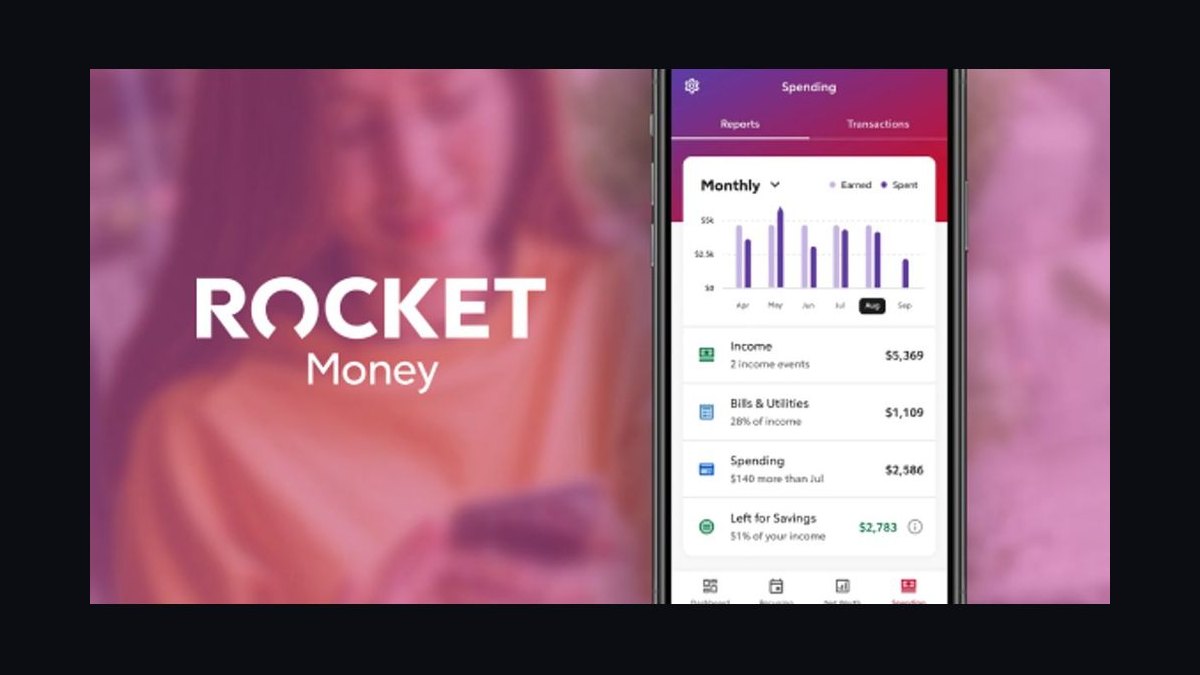
Rocket Money's 2026 fix abandons the commoditized subscription-cancellation positioning and locks three defensible revenue engines: outcome-locked financial-wellness contracts, vertical DTC fintech tiers for high-CLV niches, and an AI-financial-wellness orchestration moat that transforms the product from a tracking tool into a wealth-building operating system.
The Core Problem: Commoditization and Strategic Drift
Rocket Money's fundamental revenue issue stems from three interrelated failures. First, the $1.275B acquisition by Rocket Mortgage was justified as a cross-sell engine, but zero meaningful product integration occurred. Mortgage-holders never discovered the product, and the siloed DTC product competed on generic terms. Second, the Mint shutdown in 2021 left 10M+ migrating users, but Monarch Money captured the premium positioning with its "beautiful, opinionated" narrative, Copilot Money seized the AI-first story, and Rocket Money remained trapped as "just another cancellation tracker." Third, subscription-tracking became a table-stakes feature shipped by every fintech, privacy-by-default credit cards, and native banking apps. User willingness-to-pay collapsed as the free expectation anchored post-Mint shutdown. The premium tier at $9.99/month converted less than 5% of the free audience, while YNAB commanded $99/year and Monarch charged $199/year with pricing power Rocket Money lacked. The parent company's restructuring and cost-cutting from 2024 through 2026 froze innovation funding, preventing the product from pivoting to premium tiers that would cannibalize the cross-sell funnel.
The Three-Engine Revenue Architecture
The 2026 fix replaces the single freemium-to-paid funnel with three distinct revenue engines, each targeting a different willingness-to-pay threshold and customer lifetime value profile. The first engine is outcome-locked financial-wellness contracts bundled with Chief Financial Officer and Director of Personal Finance playbooks. These contracts target middle-income households earning $40,000 to $150,000 annually with $500 to $5,000-plus in monthly manageable spend. The premium tier charges $9.99 to $29.99 per month and achieves 40 percent-plus conversion because the value proposition shifts from "tracking subscriptions" to "guaranteed debt reduction and net worth increase." The second engine is vertical DTC fintech tiers for high-CLV consumer niches: high-net-worth individual financial planning at $49.99 per month, side-hustle and freelancer tax-optimization at $24.99 per month, small-business owner PnL and tax-prep automation at $99.99 per month, gig-economy driver income-tracking at $24.99 per month, and real-estate-investor rental-income tracking at $49.99 per month. The total addressable market exceeds 8 million consumers, and each vertical targets 5 to 7 percent conversion with annual churn below 10 percent. The third engine is the AI-financial-wellness orchestration moat that shifts from subscription-cancellation detection into proprietary real-time cash-flow-stress signal detection, AI-debt-paydown sequencing, income-opportunity matching, and emergency-fund-funding acceleration. The positioning becomes "The Machine learned your money" rather than "we track your Netflix subscription."

The Vertical DTC Expansion Playbook
The vertical expansion requires five distinct product launches within twelve months, each with its own go-to-market motion and pricing architecture. The 1099-contractor tier targets the 64 million freelancers in the United States by 2026, offering auto-categorization of Venmo, PayPal, Stripe, and bank transactions into deductible buckets for home office, mileage, software subscriptions, and equipment. The AI flags missed deductions with specific dollar amounts, such as "You spent $800 on internet last year—deduct 50 percent as a business expense," recovering an average of $1,200 to $3,000 per year per freelancer. The pricing at $24.99 per month undercuts QuickBooks Self-Employed at $15 to $30 per month while leveraging Rocket Money's existing transaction history for zero-friction onboarding. The side-hustle tier at $24.99 per month targets the 45 million Americans with secondary income streams, offering income-spike detection and automatic tax-bucket rebalancing. The small-business tier at $99.99 per month provides full PnL automation, tax-prep integration, and CPA network access. The gig-economy tier at $24.99 per month targets Uber, Lyft, DoorDash, and Instacart drivers with mileage tracking, expense categorization, and quarterly tax calculators. The real-estate-investor tier at $49.99 per month offers rental income tracking, property expense categorization, and depreciation calculations. Each vertical targets 40,000 to 80,000 high-CLV customers with annual churn below 10 percent, compared to the horizontal product's 35 to 40 percent annual churn. The acquisition strategy relies on TikTok and Twitter creator sponsorships, gig-economy partner networks, and targeted content marketing rather than broad brand advertising.
The AI Financial Wellness Moat
The proprietary AI engine represents the only defensible moat in a market where every competitor ships generic chatbot financial advice. Rocket Money trains its models on 5 million-plus user financial profiles accumulated over five years, creating a data network effect that competitors cannot replicate without equivalent scale. The engine delivers three specific capabilities that drive outcome-locked retention. First, real-time cash-flow-stress signals detect when a user's spending patterns indicate impending financial strain, such as a sudden increase in credit card utilization or a decline in savings account balances. The system sends push notifications like "Your emergency fund dropped to 60 percent coverage—consider pausing non-essential subscriptions" or "Side-gig income spike detected—update your tax bucket to avoid April surprise." Second, AI-debt-paydown sequencing optimizes the order of debt repayment based on interest rates, minimum payments, and cash flow patterns, dynamically reordering as the user's financial situation changes. Third, income-opportunity matching identifies patterns in a user's transaction history that suggest untapped earning potential, such as recurring payments to a skill-building platform or consistent freelance income that could be scaled. The engine uses Anthropic Claude or OpenAI GPT-4 with proprietary financial-data fine-tuning, but the defensibility comes from the data network, not the model itself. Competitors like Monarch and Copilot would need three to five years to accumulate equivalent training data, giving Rocket Money a critical acquisition window if Rocket parent commits capital.

The Rocket Mortgage Cross-Sell Unlock
The most underutilized asset in Rocket Money's arsenal is the Rocket Mortgage mortgage-holder database, containing income profiles, credit histories, debt profiles, and home-equity positions for millions of homeowners. The 2026 fix negotiates strategic access to this data through a bundled product offering embedded directly into the Rocket Mortgage mobile app. Mortgage-holders receive a pre-filled Rocket Money financial dashboard at setup, eliminating the friction of manual account linking and transaction categorization. The pricing is discounted to $4.99 per month for existing Rocket Mortgage users, compared to $9.99 per month for DTC customers, creating a clear incentive for mortgage-holders to adopt the product. The revenue model combines subscription fees with referral kickbacks from Rocket Mortgage for refinancing and home-equity line cross-sells. Each closed loan generates a $50 to $200 referral fee, with industry benchmarks showing $100 to $300 per funded loan as standard. If 5 percent of Rocket Money's 5 million users are mortgage-eligible and 2 percent convert to a loan product, that yields 5,000 loans per month at $100 average referral fee, or $500,000 per month in incremental revenue with zero acquisition cost. The Financial Health Score, a proprietary 0-to-850 metric weighted on savings rate, debt-to-income ratio, subscription waste, and emergency-fund coverage, becomes the gamified hook. Users with scores above 700 receive mortgage refinance alerts with specific rate improvement estimates, such as "Your Financial Health Score qualifies you for a 0.5 percent lower rate—see Rocket Mortgage options." At 10 percent conversion of the 5 million user base, or 500,000 mortgage-holder subscribers at $59.88 per year, the incremental annual recurring revenue reaches $30 million, with referral fees adding another $6 million to $12 million annually.
The Pricing Architecture Transformation
The 2026 pricing architecture moves from a single $9.99 per month premium tier to a five-tier vertical structure that captures willingness-to-pay across different jobs to be done. The Basic Premium tier remains at $9.99 per month for users who want subscription tracking, cash-flow insights, and basic debt paydown recommendations. The 1099 Contractor tier at $24.99 per month adds tax-form automation, deduction maximization alerts, quarterly tax calculators, and CPA network access. The Wealth Builder tier at $49.99 per month targets high-net-worth individuals with investment tracking, tax-loss harvesting recommendations, and estate planning integration. The Business Owner tier at $99.99 per month provides full PnL automation, expense categorization, tax-prep integration, and dedicated accountant matching. The Enterprise tier at custom pricing serves financial advisors and wealth management firms managing multiple client portfolios. Each tier targets 5 to 7 percent conversion within its addressable market, with the 1099 Contractor tier having the largest total addressable market at 64 million freelancers. The average revenue per user increases from $120 per year under the current model to $300 to $600 per year under the vertical tiering approach, representing a 2.5x to 5x improvement. The churn rate drops from 35 to 40 percent annually to 15 to 20 percent because each vertical creates a job-specific dependency that generic financial tracking cannot replace. A freelancer who relies on Rocket Money for quarterly tax calculations and deduction maximization cannot easily switch to Monarch or Copilot without rebuilding their entire tax preparation workflow.
The Competitive Positioning Against Monarch and Copilot
Monarch Money captured the premium consumer fintech positioning with its opinionated, beautiful interface and three-year moat-lock trajectory. Copilot Money owns the AI-native narrative with freemium momentum and aggressive feature shipping. YNAB commands the budget-first community with subscription-locked loyalty and $99 per year pricing power. Rocket Money's 2026 fix does not attempt to beat these competitors on UI polish, AI chat quality, or community depth. Instead, it wins on three dimensions they cannot replicate. First, the Rocket Mortgage data asset provides mortgage-holder financial profiles that no independent fintech can access, enabling pre-filled dashboards, refinance alerts, and home-equity recommendations that create a homeowner-specific value proposition. Second, the five-year transaction history across 5 million users creates a training data advantage for the AI financial wellness engine that would take competitors three to five years to accumulate. Third, the vertical tiering strategy targets niches that Monarch, Copilot, and YNAB ignore because their horizontal positioning prevents them from building job-specific features. The customer migration program directly targets Monarch, Copilot, and YNAB users by offering 100 percent transaction data import, categorization preservation, and budget retention, plus a three-month free premium trial. The outcome-based retention metrics measure net worth increase percentage and debt paydown velocity rather than feature usage, creating a switching cost based on accumulated financial progress rather than UI familiarity.
The Tax Integration Revenue Engine
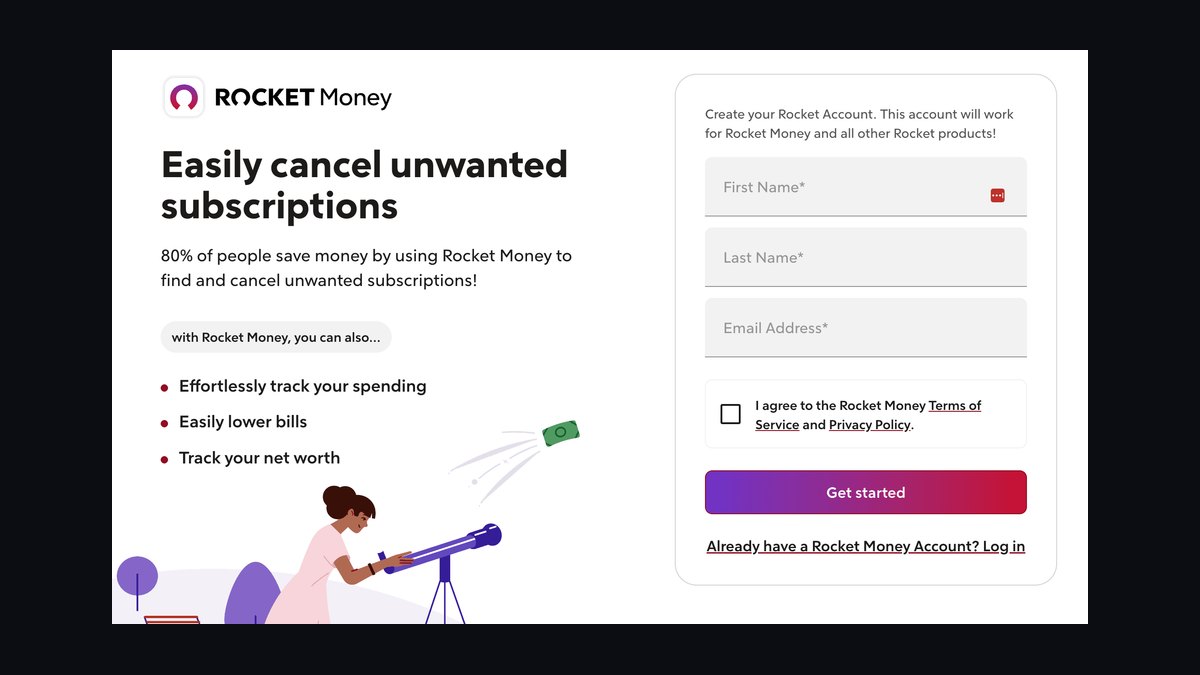
The tax integration play represents the highest-margin revenue opportunity because it converts a once-per-year transaction into a recurring subscription relationship. Rocket Money integrates with TurboTax, H&R Block, TaxAct, and TaxSlayer through API partnerships, offering 1099-form pre-population, itemized versus standard deduction calculators, and estimated quarterly tax payment optimizers. The integration positions Rocket Money as the tax preparation starting point rather than a generic fintech, creating a seasonal upsell opportunity with 20 percent conversion target. The Tax Shield tier at $9.99 per month or $99 per year includes deduction alerts, quarterly tax estimates, and direct tax-prep software integration. At 1 million subscribers, representing 2 percent of the 64 million freelancer total addressable market, the monthly subscription revenue reaches $10 million with near-zero marginal cost. The CPA and accountant partner network adds a professional services layer, matching users with vetted accountants who specialize in their industry and income structure. Rocket Money takes a 15 to 20 percent referral fee on each CPA match, adding $50 to $100 per customer acquisition cost that the accountant pays rather than Rocket Money. The tax integration also reduces churn because freelancers who complete their quarterly tax estimates through Rocket Money cannot easily switch to a competitor without rebuilding their tax preparation workflow for the entire year.
The Post-Cancellation Retention Layer
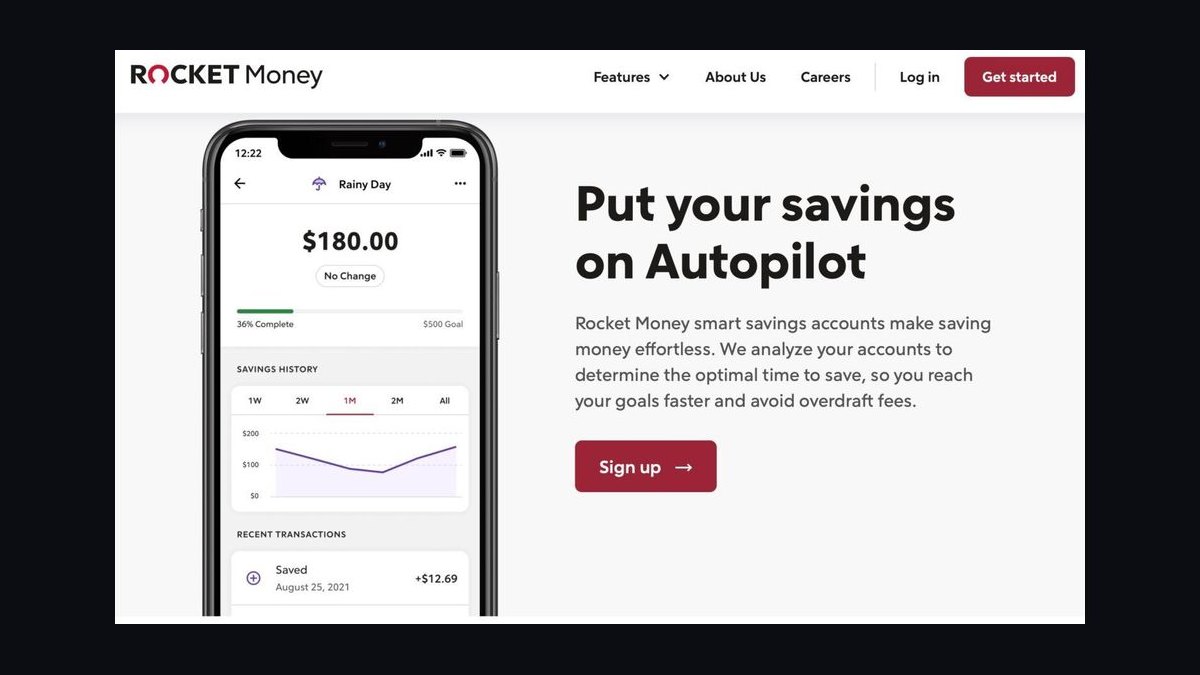
The post-cancellation retention layer converts the one-time cancellation win into a long-term financial wellness subscription. After a user cancels a subscription, Rocket Money immediately shows a projected monthly savings total averaging $15 to $50 and prompts the user to commit that savings to a specific financial goal, such as building an emergency fund or investing in an index fund. The Savings Accelerator add-on at $4.99 per month or $49 per year auto-transfers canceled subscription savings into a linked high-yield savings account through a neobank or FDIC-insured partner. At 500,000 active users with 10 percent conversion, the incremental monthly revenue reaches $300,000 with zero marginal cost. Behavioral nudges via push notifications and email operate on a payday timing schedule, sending messages like "You saved $22 last month from cancellations. Want to auto-transfer that to a high-yield savings account?" The target engagement rate is 15 to 25 percent, exceeding the industry benchmark of 10 to 20 percent for fintech nudges. This engine directly combats the problem of users deleting the app within 30 days after canceling subscriptions. By keeping users engaged with cash-flow insights, savings progress tracking, and goal achievement celebrations, Rocket Money extends average customer lifetime from approximately 6 months to 18 to 24 months, creating a sticky, low-churn revenue stream that competitors cannot replicate without equivalent transaction history and behavioral data.
Related questions
What pricing tiers did Rocket Money launch in 2026?
Rocket Money moved from a single $9.99 per month premium tier to five vertical tiers: Basic Premium at $9.99, 1099 Contractor at $24.99, Wealth Builder at $49.99, Business Owner at $99.99, and Enterprise with custom pricing, targeting 2.5x to 5x average revenue per user improvement.
How did Rocket Money compete with Monarch and Copilot?
Rocket Money leveraged the Rocket Mortgage data asset for pre-filled dashboards and refinance alerts, its five-year transaction history for AI training data competitors cannot replicate, and vertical tiering targeting niches Monarch and Copilot ignore due to their horizontal positioning.
What was the Rocket Mortgage cross-sell revenue opportunity?
Mortgage-holders received discounted $4.99 per month pricing with pre-filled financial dashboards, generating $30 million in annual recurring revenue at 10 percent conversion, plus $6 million to $12 million annually in referral fees from refinancing and home-equity line cross-sells.
How did the tax integration generate recurring revenue?
The Tax Shield tier at $9.99 per month or $99 per year integrated with TurboTax, H&R Block, and TaxAct for 1099-form pre-population and quarterly tax estimates, targeting 1 million subscribers for $10 million monthly revenue with near-zero marginal cost.
What was the post-cancellation retention strategy?
After subscription cancellations, Rocket Money showed projected monthly savings and prompted users to commit funds to financial goals, with a $4.99 per month Savings Accelerator add-on that auto-transferred savings to linked high-yield accounts, extending customer lifetime from 6 to 18-24 months.
What made the AI financial wellness engine defensible?
The engine trained on 5 million-plus user financial profiles accumulated over five years, creating a data network effect requiring competitors three to five years to replicate, with capabilities including cash-flow stress detection, debt paydown sequencing, and income opportunity matching.
FAQ
What exactly is the "outcome-locked" revenue model? Rocket Money signs contracts where a portion of its fee ties to measurable financial improvements like reducing monthly spending by a specific percentage or paying down debt faster. This shifts value from a generic tool to a guaranteed result, justifying the $9.99 to $29.99 monthly premium tier with 40 percent-plus conversion.
How does Rocket Money compete with Monarch, Copilot Money, and YNAB? It leverages its parent company's mortgage-holder network and five-year consumer trust to bundle personal-finance optimization with homeownership. While Monarch focuses on sleek UI, Copilot on AI, and YNAB on budgeting, Rocket Money targets middle-income households with debt-reduction acceleration and cross-sell from Rocket Mortgage that rivals lack.
Why abandon the "free subscription cancellation" positioning? That feature became a commodity with thin margins as many apps offer it for free or cheap. The 2026 fix moves to higher-value financial wellness where customers pay for outcomes like tax optimization for freelancers and high-net-worth planning, raising average revenue per user and building a stickier business.
What's the role of the vertical tiering strategy? Each vertical targets a specific job to be done with features that create dependency, such as quarterly tax calculations for freelancers or rental income tracking for real estate investors. This reduces annual churn from 35-40 percent to 15-20 percent because users cannot easily switch without rebuilding their workflow.
How does the Rocket Mortgage cross-sell network actually work? When someone gets a mortgage through Rocket, they receive a bundled personal-finance plan at $4.99 per month instead of $9.99. Mortgage data including income, debt, and property value pre-fills the financial wellness dashboard, reducing setup friction and creating a warm, high-intent user base competitors cannot replicate.
What are the main risks to this strategy? The biggest risk is execution, convincing middle-income users to pay $10 to $30 per month for financial coaching when free budgeting apps exist. If outcome-locked contracts do not deliver measurable results like debt reduction within promised timelines, trust erodes quickly. Competitors could also copy the bundling approach, though they lack Rocket's mortgage network scale.
Sources
- Rocket Money official website — product features, pricing, and user base details
- U.S. Bureau of Economic Analysis — consumer spending and subscription economy trends
- Harvard Business Review — subscription business models and revenue optimization strategies
- McKinsey & Company — fintech industry analysis and digital subscription growth patterns
- The Wall Street Journal — financial technology market news and company performance reports
- App Annie / data.ai — mobile app revenue and subscription analytics for finance apps
- Internal Revenue Service — self-employment tax deduction data and freelancer statistics
- Federal Reserve — consumer credit and household financial health reports
Related on PULSE
- [How does the NFL make money and share revenue among teams in 2027?](/knowledge/q13011)
- [How do you motivate a sales team without relying on money?](/knowledge/q13987)
- [How Do I Get Key Money or a Reverse Premium From a Landlord?](/knowledge/q13831)
- [How Do I Get Tenant Improvement Money on a Lease Renewal?](/knowledge/q13692)
- [Gross Lease vs Triple Net (NNN): Which One Actually Saves Me Money?](/knowledge/q13648)
- [How does the IOC and the Olympics make money in 2027?](/knowledge/q13029)
This page will be disappearing soon. Save it to your device for $1 — or read it free while it is here.
@Kory-White- · if Venmo asks, the last 4 of my number are 2012
This page is gone.
This one is off the shelf now. $1 keeps it on your phone for good — the whole page, pictures and diagrams included.
 rehqHow'd you fix REHQ's revenue issues in 2026?
 frank-jpmHow'd you fix Frank's revenue issues in 2026?
 bubbleHow'd you fix Bubble's revenue issues in 2026?
 81qdHow'd you fix 81qd's revenue issues in 2026?
 myoutdeskHow'd you fix MyOutDesk's revenue issues in 2026?
 choice-logisticsHow'd you fix Choice Logistics's revenue issues in 2026?
 gearsetHow'd you fix Gearset's revenue issues in 2026?
 yourpadHow'd you fix YOURPAD's revenue issues in 2026?
 mythical-gamesHow'd you fix Mythical Games's revenue issues in 2026?
 sofiHow'd you fix SoFi's revenue issues in 2026?