
Should I open or buy a Duck Donuts franchise in 2027?
 Curated byKory White · Fractional CRO · Maryland
 PULSEKNOWLEDGE LIBRARY
Quality
Certified
Probably not — unless you already own a high-traffic beach, tourist, or family-destination retail box, have $250K-$350K in liquid cash sitting next to a $500K SBA loan, and accept that Duck Donuts is a shrinking system in 2027 (about 140 US units, down from a 2022 peak near 130 net-positive openings now flipping negative). The Item 7 range is $514,650 - $736,800 with a $40,000 franchise fee, 6% royalty, and 4% brand/marketing fee. AUV runs roughly $499K-$570K, EBITDA margins for the median operator land at 8-12%, payback typically 5-7 years. Year-1 owner cash flow conservatively projects $45K-$75K, not the six-figure number brokers quote. Buy an existing profitable unit at 2.5-3.5x SDE instead of building new.
The Real Numbers
Duck Donuts is a made-to-order warm cake-donut concept founded in 2007 in Duck, NC. The 2025 FDD (the document governing 2027 openings) discloses the numbers below. Treat broker pitch decks at 1.5x these figures with extreme skepticism — the median is what 50% of franchisees fall below, and Duck Donuts' system has 18+ documented closures in 2024 and another dozen-plus through 2025.
| Line Item | 2027 Reality (FDD 2025) | Notes |
|---|---|---|
| Initial franchise fee | $40,000 (Item 5) | Single unit; $30K for additional |
| Total initial investment (Item 7) | $514,650 - $736,800 | Includes 3 months working capital |
| Build-out / leasehold improvements | $215,000 - $340,000 | 1,200-1,800 sq ft endcap |
| Equipment package (fryers, mixers, POS) | $130,000 - $175,000 | Proprietary donut robot included |
| Initial inventory | $8,500 - $15,000 | Mix, oils, toppings, packaging |
| Grand opening marketing | $10,000 - $15,000 | Brand-mandated |
| 3 months working capital | $60,000 - $90,000 | Light — most operators carry 6 mo |
| Royalty | 6% of gross sales | Weekly draft |
| Brand fund | 4% of gross sales | National + regional pool |
| Local marketing minimum | 2% of gross sales | Operator-spent |
| Average Unit Volume (AUV, Item 19) | ~$499,779 - $569,701 | 2024 disclosed; flat-to-down YoY |
| Top-quartile AUV | ~$725,000 - $850,000 | Beach + tourist boxes only |
| Bottom-quartile AUV | $310,000 - $410,000 | Suburban inline strip — danger zone |
| EBITDA margin (median) | 8-12% | After royalty, rent, labor |
| Owner SDE (operator-run) | $55,000 - $95,000 | Add back salary if absent |
| Payback period | 5-7 years | Assumes median AUV |
| Term | 10 years, two 5-yr renewals | Standard QSR |
Independent donut shops, per IBISWorld's 2025 Donut Stores in the US report, average $420,000 AUV at 14-18% SDE margins — meaning a well-run independent in the same trade area often out-cash-flows a Duck Donuts because no 12% off-the-top to corporate. The royalty + brand + local marketing stack is 12% of gross, which on a $500K store is $60,000/year evaporating before you pay rent.
Who Wins With This Business
The Duck Donuts operators clearing $150K+ in owner cash share five traits and look almost nothing like the brochure prospect:
- Tourist-corridor real estate. The Outer Banks (Duck, Corolla, Kitty Hawk), Myrtle Beach, Destin, Gulf Shores, Williamsburg, Pigeon Forge, Lake of the Ozarks — these are the AUV-$750K+ stores. Foot traffic spikes 8-12x seasonally and the warm-donut-bar experience is a vacation purchase, not a commute purchase.
- Multi-unit operators with existing back-office. Three-pack or five-pack owners amortize a regional manager, a marketing coordinator, and an HR function across stores. Single-unit Duck Donuts operators are buying themselves a $500K, 70-hour-a-week job.
- Real estate already owned. Operators who own the building through a separate LLC charging market rent to the franchise LLC capture the real estate appreciation and turn a 9% EBITDA operating business into a 22% blended IRR over 10 years.
- Hands-on owner-operators in years 1-3. Absentee ownership at this AUV is a near-guaranteed money loser — labor runs 32-36% and unsupervised it drifts to 40%+. Owners who work the open shift personally for the first 18 months protect margin.
- Existing F&B operators acquiring an underperforming resale. The best deal in the system today is buying a struggling unit at 2.5x SDE ($150K-$250K all-in plus $40K transfer fee), bringing operator focus, and dragging AUV back to system median.
Who Loses With This Business
The Duck Donuts complaint pile and 2024-2025 closure list tell a consistent story. Avoid this brand if you are any of the following:
- First-time food-service buyer using SBA-7(a) for 90% of the build. A $650K build at prime + 2.75% over 10 years = ~$8,200/month debt service. At median AUV of $500K and 10% EBITDA, you generate ~$50K/yr — debt service eats it whole. You will close in year 3.
- Suburban-strip-mall hopefuls. A Duck Donuts at a Target-anchored Tuesday-traffic suburban strip runs $350K-$425K AUV and bleeds. The morning Dunkin'/Starbucks drive-thru wins the commuter; you have no drive-thru and your daypart ends at 2pm.
- Absentee/semi-absentee investors. Marketed as "semi-absentee friendly" — it is not. The made-to-order donut robot + dozen toppings + customer-facing build requires intense floor management.
- Cold-climate, no-tourism markets (Buffalo, Cleveland, Detroit interior, Spokane inland). Q1 sales drop 40-50% vs. summer; without a tourism summer to fund the winter, the unit drowns.
- Operators expecting Dunkin'-level brand pull. Duck Donuts has ~140 US units vs. Dunkin's 9,500+. Outside the Mid-Atlantic and Southeast tourist belt, brand recognition is near zero — you are paying 12% royalty + brand fees for what amounts to a regional brand.
2027 Market Conditions
North America donut category is ~$5.7B in 2025, growing at 3.8% CAGR through 2030 per Allied Market Research and Fortune Business Insights. That headline masks a brutal bifurcation:
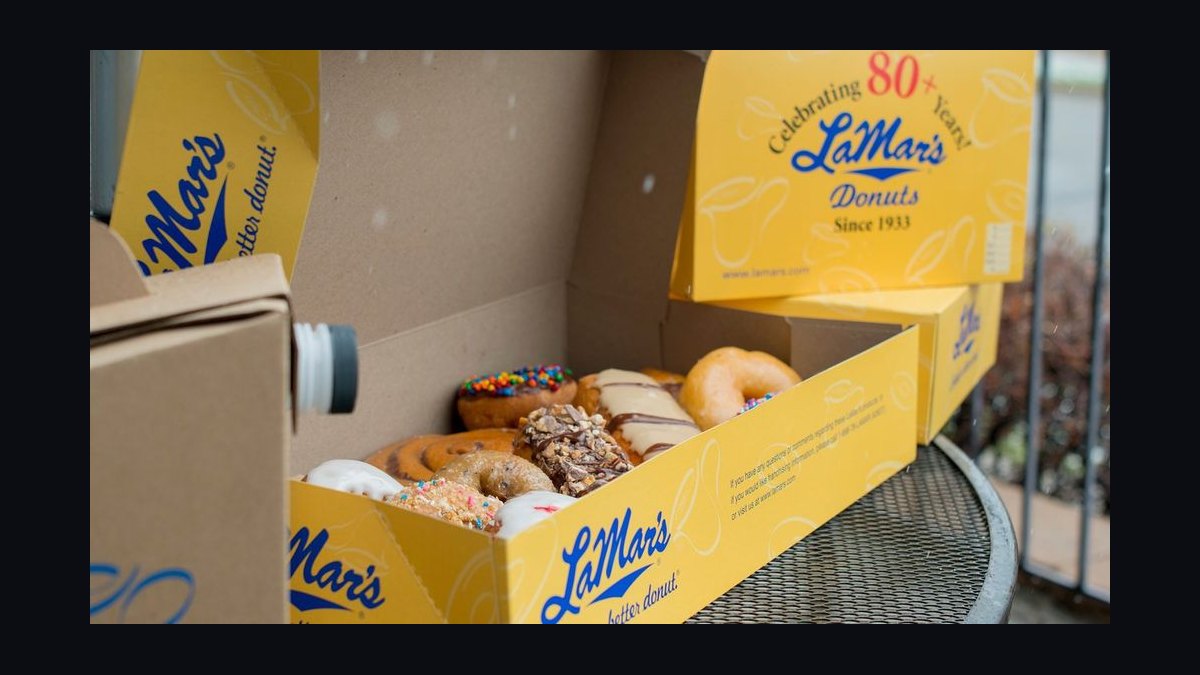
- Dunkin' (9,500+ US units) dominates the commuter daypart with drive-thru, coffee, and breakfast sandwiches — Duck Donuts has none of these.
- Krispy Kreme is pivoting to a hub-and-spoke retail-grocery distribution model (Kroger, Walmart, Target) — bypassing the specialty-shop format Duck Donuts depends on.
- Crumbl Cookies has cannibalized the made-to-order specialty sweet treat category that Duck Donuts pioneered, growing to 1,000+ units since 2018.
- GLP-1 drug adoption (Ozempic, Wegovy, Mounjaro — projected 15-18% of US adults by 2027 per Goldman Sachs) is the single largest unhedged risk to the donut category for the next 5 years.
Duck Donuts itself is mid-restructuring under a new CEO as of 2025, with the brand publicly working on cost reductions, menu rationalization, and a fresh franchisee-support model. The 2027 buyer is buying into a recovery story, not a growth story. The 18+ closures in 2024 and dozen-plus 2025 closures are public record. Net unit growth is now negative in the system. The brand is adding international (Egypt, Pakistan, Thailand) while contracting domestically — a pattern that should worry US prospects.
Labor, per BLS Q1 2026 data, runs $15-$18/hr base in tourist markets with 22-26% turnover annualized at QSR. Build-out costs are up 18-22% vs. the 2022 FDD thanks to ongoing construction-material inflation. Commercial rents on tourist corridors are up 14% YoY. None of this is in the brochure.
The 90-Day Decision Tree
- Days 1-10: Pull the actual 2025 FDD from fddexchange.com ($150) or request directly from Duck Donuts franchise development. Read Item 19 line by line — the AUV distribution table, not the average, is what matters. Look at the bottom-quartile number and assume that is you.
- Days 11-20: Call 25 existing franchisees — list is in Item 20. Ask: "What is your prime cost (food + labor)? What is your rent percentage? What was your first 90-day cash burn? Would you do it again?" Skip the 3 names corporate hands you — call random ones.
- Days 21-30: Validate the trade area. Pull Placer.ai or SafeGraph mobility data on your proposed site. Tourist seasonality must show 6x+ peak-to-trough to justify the model. Suburban consistency = wrong concept.
- Days 31-45: Build a real P&L. Assume $425K AUV (bottom-half realistic), 32% COGS, 34% labor, 10% rent, 12% royalty+brand+local marketing. If that doesn't clear $50K SDE, the site is wrong or the brand is wrong.
- Days 46-60: Compare resale vs. new build. Email franchisee Item 20 list asking about resales. Resales at 2.5-3.5x SDE with $40K transfer fee beat new builds 8 times out of 10.
- Days 61-75: SBA pre-qualification. Pinnacle Bank, Live Oak Bank, Celtic Bank, Huntington are the active QSR-franchise lenders. Get two competing term sheets. Anything under $250K liquid + $500K net worth does not pencil.
- Days 76-85: Attorney + CPA review. Franchise attorney $3K-$5K flat (Garner Schwartz, Lewitt Hackman, Cheng Cohen). CPA modeling $2K. Both are non-optional.
- Days 86-90: Decision. If anything above flashed yellow twice, walk. The $40K franchise fee plus $30K-$50K in pre-opening soft costs is recoverable until the moment you sign the lease.
Alternative Plays
If Duck Donuts is the right category but the wrong brand or risk profile, consider:
- Buy an existing Duck Donuts at 2.5-3x SDE. Half the system's resales transact under $300K all-in with the box already built. Best risk-adjusted play in the brand.
- Crumbl Cookies — ~1,000 units, similar AUV ($1.2M-$2.4M reported), higher initial investment ($380K-$680K), stronger younger-demo brand. Royalty 8%.
- Kolache Factory or Shipley Do-Nuts — stronger commuter daypart, regional Texas/Southeast scale, drive-thru-friendly footprints, AUVs $700K-$1.1M.
- Independent specialty donut concept — $180K-$280K all-in, no royalty, full menu control. Margins 16-22% SDE if location is right.
- Multi-unit Dunkin' acquisition — 5+ unit existing portfolio resale in secondary markets trades $450K-$650K per door, AUV $1.1M-$1.4M, drive-thru, 5.9% royalty. Higher capital, lower volatility.
- Skip donuts entirely — if the appeal is specialty-treat impulse, look at Jeremiah's Italian Ice, Kona Ice (mobile, $200K all-in), or Nothing Bundt Cakes which has demonstrably better unit economics.
FAQ
What is the total investment range to open a new Duck Donuts franchise? The total initial investment typically falls between $515,000 and $737,000. That includes the $40,000 franchise fee, plus costs for equipment, build-out, inventory, and working capital. Actual spending depends on location size, leasehold improvements, and local construction rates.
How much can I expect to earn in my first year as a new franchise owner? Year-1 owner cash flow after expenses and debt service often lands in the $45,000 to $75,000 range. This is modest because new locations take time to build traffic and hit operational efficiency. Many brokers quote higher figures, but realistic projections are conservative.
What are the ongoing royalty and marketing fees? You pay a 6% royalty on gross sales and a 4% brand/marketing fee, for a total of 10% of revenue. These are standard for the quick-service industry and fund national advertising, product development, and support staff.
Is it better to buy an existing Duck Donuts location instead of building new? Yes, if you can find a profitable unit. Existing stores with proven sales often sell for 2.5 to 3.5 times their seller’s discretionary earnings (SDE). Buying an operating store reduces startup risk and typically offers faster cash flow than a new build.
How long does it take to recoup my initial investment? The typical payback period for a new Duck Donuts franchise is 5 to 7 years. This assumes average unit volumes near $500,000 to $570,000 and EBITDA margins of 8–12%. Faster payback is possible in exceptionally high-traffic beach or tourist locations.
Is the Duck Donuts system growing or shrinking in 2027? The system appears to be shrinking, with roughly 140 US units in 2027, down from a peak of around 150–160 a few years ago. Net unit openings have turned negative, meaning more stores close than open. This trend makes new franchise investment riskier than in prior years.
Bottom Line
Duck Donuts in 2027 is a niche tourist-corridor concept dressed up as a national brand. Buy it when you have destination real estate, $250K+ liquid, multi-unit experience, and the appetite to operator-run for 18 months. Buy a distressed resale at 2.5x SDE before considering a new build. Walk away if you're a first-time food-service buyer using maximum SBA leverage in a suburban strip — that exact profile populates 80% of the 2024-2025 closure list. The made-to-order warm donut experience is genuinely differentiated and works beautifully in beach towns; it does not work as a commuter coffee shop. Price the deal against the bottom-half AUV, not the broker's median, and require the unit to clear $50K SDE in your model before signing anything. If the math only works at top-quartile AUV, the deal is wrong.
Related on PULSE
- [Should I open or buy a Peace Love and Little Donuts franchise in 2027?](/knowledge/q15418)
- [Should I open or buy a LaMar's Donuts franchise in 2027?](/knowledge/q14853)
- [Should I open or buy an Oxi Fresh Carpet Cleaning franchise in 2027?](/knowledge/q15521)
- [Should I open or buy an Oil Can Henry’s franchise in 2027?](/knowledge/q15520)
- [Should I open or buy a KidStrong franchise in 2027?](/knowledge/q15519)
- [Should I open or buy a Premier Garage franchise in 2027?](/knowledge/q15518)
Sources
- Duck Donuts 2025 FDD - FDD Exchange
- Duck Donuts FDD 2024 (Restaurant Finance archive)
- Duck Donuts Franchise Cost & Opportunities 2026 - Franchise Help
- Duck Donuts Franchise FDD, Profit & Costs - Sharpsheets
- Duck Donuts Works to Revitalize Brand Under New CEO - Franchise Times
- IBISWorld Donut Stores in the US Industry Report 2025
- Allied Market Research Doughnuts Market Report 2024-2033
- Fortune Business Insights Doughnuts Market 2034 Forecast
- BLS Occupational Employment Statistics - Food Preparation 2026
- International Franchise Association 2026 Franchising Economic Outlook
- Entrepreneur Magazine Duck Donuts Franchise Directory 2026
- 1851 Franchise Deep Dive - Duck Donuts
This page will be disappearing soon. Save it to your device for $1 — or read it free while it is here.
@Kory-White- · if Venmo asks, the last 4 of my number are 2012
This page is gone.
This one is off the shelf now. $1 keeps it on your phone for good — the whole page, pictures and diagrams included.
 pulse-qShould I Sign a Personal Guarantee on a Commercial Lease?
 pulse-qShould I open or buy a Krispy Kreme franchise in 2027?
 pulse-qShould I open or buy a Whataburger franchise in 2027?
 pulse-qHow Many Sales Reps Do I Need to Hire for My Equipment Rental Company?
 pulse-qHow do you rebuild a sales team's trust in the forecast after a mid-year CRM migration corrupts historical pipeline data in 2027?
 pulse-qShould I open or buy a Celebree School franchise in 2027?
 pulse-qHow Many Employees Should I Schedule Each Shift at My Hot Pot Restaurant?
 pulse-qHow Do I Score My CSMs on Retention and Expansion?
 pulse-qHow do you handle a rep who sandbags their pipeline to avoid quota increases in 2027?
 pulse-qShould I Buy My Commercial Building Through a Separate LLC?