


Should I open or buy a Smashburger franchise in 2027?
Quality
Certified

Only if you are an experienced multi-unit QSR operator with roughly $1.5M–$2M liquid, a proven high-traffic site, and patience for a payback measured in low double-digit years. Buying an existing unit usually beats building new in 2027. First-time food-service owners should pass on this brand entirely.
Building new versus buying an existing unit
The 2027 decision is not really "Smashburger: yes or no." It is "new build or resale," because those two paths have almost nothing in common except the logo on the sign. Treat them as separate businesses with separate risk profiles, separate capital stacks, and separate lender conversations.
The new build. You sign a Franchise Agreement, pay a franchise fee in the neighborhood of $40,000, then spend most of a year on site control, permits, build-out, equipment, hiring, and training before you serve your first check. The Item 7 estimate in the Franchise Disclosure Document spans roughly $1.24M to $2.26M for a traditional restaurant, and that band is wide for a real reason: an inline end-cap in an existing shell with a usable grease interceptor and adequate power is a fundamentally cheaper project than a freestanding pad with a drive-thru, a new utility service, and a landlord who is contributing nothing. The spread between those two is not a rounding error — it is close to a million dollars, and it is the single biggest lever you control before you ever sell a burger.
What you get for that money is a clean slate. No inherited reputation, no worn equipment, no staff who learned bad habits from a previous owner, no trade area that has already decided the restaurant is mediocre. You choose the site, you choose the layout, you set the culture from day one. What you also get is 9–14 months of pre-opening burn with zero revenue, a construction schedule that will slip, and a ramp period where your first-quarter volumes tell you very little about your steady-state volumes because the opening bump is artificial.
The resale. You buy an operating unit from an existing franchisee (or occasionally from the franchisor's own portfolio) at a negotiated price, get approved by the franchisor as a transferee, pay a transfer fee rather than a full franchise fee in most systems, and inherit the lease, the equipment, the staff, and the sales history. Distressed and underperforming units in better-burger systems routinely trade at a substantial discount to replacement cost — that is the entire structural argument for the path. You are buying a $1.5M asset for a fraction of that because the seller is tired, undercapitalized, or has a P&L they cannot fix.
The cost of that discount is that you inherit the problem. If the unit is doing $700K when the system median is north of $900K, you need a specific, testable thesis for why that gap closes under you. "I'll manage it better" is not a thesis. "The previous owner was absentee, ran a 42% food cost, had no third-party delivery presence, and let the store go dark on weekend dinner" is a thesis, because each of those is a line item you can quantify and attack in the first 120 days.
The third path most buyers ignore: buying a small multi-unit package from a retiring franchisee. Two or three units in one metro amortize a general manager bench, a bookkeeper, a maintenance relationship, and a distributor account across more revenue. Smashburger's royalty and marketing structure — a 5.5% royalty plus a marketing contribution currently in the low-2% range with contractual room to rise toward 4% — is materially easier to absorb when your G&A is spread across three P&Ls instead of one. Single-unit operators in this system carry full overhead against a single, thin margin, and that is where most of the pain in the category comes from.
What actually separates the two paths

The compared options diverge on five axes. Work through them in order rather than arguing about the purchase price first, because price is downstream of all five.
Time to cash. A resale generates revenue in week one. A new build generates revenue after site control, permitting, construction, and hiring — call it three to four quarters if nothing goes wrong, and something always goes wrong. That timing difference is not merely inconvenient; it changes your working-capital requirement by hundreds of thousands of dollars. The FDD's working-capital line for a new build exists precisely to cover the period when payroll and rent are running against no sales. On a resale you are funding a much shorter, shallower hole.
Information quality. A resale comes with real, auditable numbers: POS exports, bank statements, tax returns, invoices from the distributor, labor reports by daypart. A new build comes with a projection you built from Item 19 averages and a broker's traffic study. One of those is evidence and the other is a hypothesis. Buyers systematically overweight the clean-slate appeal of a new build and underweight how much they are paying for the privilege of guessing.
Ceiling. The new build has a higher ceiling. You picked the site, so the site is as good as your discipline allowed. A resale's ceiling is capped by a location someone else chose, in a trade area that may have shifted since they chose it. If the anchor tenant that generated the lunch traffic left in 2024, no amount of operational excellence brings that traffic back.
Lease exposure. On a new build you negotiate the lease fresh, which means you can push for tenant improvement allowance, free rent during construction, a rent structure tied to a percentage of sales, and personal-guarantee burn-off after a few years of performance. On a resale you assume whatever the prior tenant signed, often with the landlord using consent to assignment as leverage to extract a longer term or a fresh full-strength guarantee. Read the assignment clause before you read anything else in a resale package.

Franchisor relationship. A franchisor expanding a system wants new units and will trade for them — development schedule flexibility, territory protection, occasionally fee concessions on multi-unit commitments. That leverage exists on the new-build path and largely does not exist on a resale, where the franchisor's main interest is approving a qualified transferee and keeping the unit open.
How to decide between them
Run the gates in sequence and stop at the first failure. The single most common way people lose money in this category is treating the gates as a scorecard where a strong answer on one compensates for a failure on another. It does not. A brilliant operator on a bad site loses. A great site with insufficient working capital loses. These are hurdles, not weights.
Gate one is capital, and it is binary. If your liquid capital — cash and marketable securities, not home equity you are hoping to tap, not a projected bonus — does not clear the low seven figures for a new build, the new-build path is closed to you regardless of enthusiasm. Do not solve this by cutting the working-capital line. The working-capital reserve is the most commonly raided item in a franchise capital plan and the most commonly fatal one to raid, because it is the only thing standing between a slow first quarter and a lease default.
Gate two is operating experience. Have you personally run a restaurant with a scratch-cook line, six-to-eight people on a shift, ticket times under a few minutes, and food cost in the mid-thirties on a fresh, non-frozen protein that cannot be inventory-engineered? If not, you are not buying a franchise, you are buying a job you have never done at a price that assumes you are already good at it. This is not a passive investment. Owner-operated units in this segment consistently outperform absentee-owned units by a meaningful margin, and the gap is largest in the first two years.
Gate three is the site. Better-burger economics depend on transaction count, not ticket. A trade area needs real daytime population, real household income, and real drive-time accessibility — measured by isochrone, not by drawing a three-mile circle on a map, because a highway or a river makes half that circle irrelevant. College-adjacent, dense suburban, and captive-audience locations (airports, hospital campuses, large office parks) are the profiles that work. A secondary market with thin daytime population is the profile that has historically produced closures across this system.
Gate four is the lease. Rent-to-sales at your projected volume is the number that decides whether you have a business. If occupancy cost lands near or above ten percent of projected sales, the deal is dead no matter how much you like the corner. Run that math at your realistic volume, not at the top-quartile volume you hope to hit.
Gate five is the exit. Who buys this from you in seven years, and on what multiple? A single unit with a short remaining lease term and a franchise agreement approaching renewal is a hard sell. Structure for the exit at entry: long lease term with options, franchise agreement term that outlasts your intended hold, and clean books from month one.
The numbers behind each option
Work these in the same order every time: revenue assumption, cost structure, capital requirement, debt service, then owner cash. Most people run it backward — they start with the owner draw they want and reverse-engineer a revenue number to justify it. That is how you end up owning a store that does $780K in a pro forma built for $1.1M.
Revenue. The system's Item 19 disclosure reports average unit volume in the low $900Ks. Averages are the most dangerous number in any FDD, so make the franchisor show you the distribution. The bottom quartile in systems like this typically runs several hundred thousand dollars below the median, and a unit in that quartile does not service acquisition debt. When you read Item 19, read the full text and the footnotes: how many units are in the reported set, are non-traditional locations (airports, stadiums, campuses) included, how many units were excluded, and does the figure represent units open the full measurement period. A median that quietly excludes the weakest third of the system is not a median.

Underwrite your own store below the system median unless you have specific reason to go above it. If the FDD median is roughly $940K, a new build in an unproven site should be modeled at $850K or lower for year one, with the ramp toward median in years two and three. If the deal only works at median-or-better on day one, the deal does not work.
Cost structure. A workable better-burger P&L at that volume looks roughly like this: cost of goods in the mid-thirties as a percentage of sales, labor in the high twenties, occupancy in the high single digits, royalty at 5.5%, marketing in the low-2% range with contractual headroom toward 4%, and other operating expense — utilities, repairs, insurance, supplies, credit card fees, third-party delivery commissions — in the low teens. Add those up and the margin left for the owner is thin, in the single digits to low double digits, before any debt service.
Two lines deserve special attention. Food cost is unforgiving because fresh, never-frozen beef cannot be bought forward or stretched. New operators routinely run several points above target for the first six months, and on a margin this thin, a five-point food-cost miss consumes the entire operating profit. Third-party delivery is the other one: commissions in the double digits on a $10 ticket can turn incremental volume into negative-contribution volume if you price the delivery menu the same as the in-store menu. Price the delivery channel separately or watch it eat you.
Capital. New build: the FDD's $1.24M–$2.26M band, plus the working-capital reserve inside it, plus your own contingency on top — construction on a restaurant is not a fixed-price exercise and 10% contingency above the FDD high end is prudent, not paranoid. Resale: negotiated purchase price, plus transfer fee, plus the deferred maintenance the seller has been avoiding, plus a remodel reserve if the franchisor requires an image upgrade on transfer. That last item is the classic resale ambush. Ask the franchisor in writing, before you sign anything, whether a transfer triggers a remodel obligation and what the current image package costs.
Debt. SBA 7(a) is the standard vehicle for both paths and comfortably covers deals in this size range. Expect meaningful equity injection, a full personal guarantee, a lien on business assets, and often a lien on your home if you have equity in it. Amortization on a ten-year note against a seven-figure loan produces annual debt service well into six figures. Put that number next to your projected operating profit before you get emotionally committed. In year one at a below-median volume, the honest answer is frequently that the owner takes little or nothing beyond a manager's salary — which is fine if you planned for it and catastrophic if you did not.
The comparison that matters. Divide expected steady-state operating profit by total capital deployed. On a new build at system-median volume, that unlevered yield lands in the mid-to-high single digits, which implies a payback well over a decade. On a resale bought at a real discount to replacement cost, the same operating profit against a much smaller basis produces a materially shorter payback — that arithmetic, not brand affection, is why the resale path deserves the first look. And before committing to either, price the alternative: several chicken-forward franchise systems currently report substantially higher average unit volumes against comparable build costs, which is a different payback profile entirely. Pull those FDDs too. The discipline of comparing across brands is the same discipline any RevOps analyst applies to a pipeline — you do not evaluate a single opportunity in isolation, you rank it against the alternative uses of the same capital.
Diligence, financing, and sequencing
Run a disciplined 90-day process. The purpose of a fixed timeline is to prevent the two failure modes that dominate this decision: rushing because a broker created artificial urgency, and drifting for eighteen months while you sink money into consultants without ever reaching a decision.

Weeks one and two — the document. Request the current FDD from franchise development. Federal rules require you to receive it at least fourteen calendar days before you sign anything or pay any money, and that clock is your friend — use the whole thing. Read Item 7 (estimated initial investment), Item 19 (financial performance representations), Item 20 (outlet counts and, critically, the franchisee contact lists including former franchisees), and Item 21 (franchisor financial statements). Then read Items 11, 12, and 17: what the franchisor must actually do for you, how territory is defined, and what happens at renewal, transfer, and termination. Have a franchise attorney — one who does this specifically, not your general business lawyer — review it. That review costs a few thousand dollars and is the highest-ROI money in the entire process.
Weeks three and four — the calls. Item 20 gives you current franchisees and, in a separate list, franchisees who left the system in the prior year. Call both lists. The departures are more informative than the incumbents and almost nobody calls them. Ask every operator the same four questions: what did you actually earn last year after debt service, would you do it again, what did the franchisor get wrong about your market, and what surprised you in your first year. Ten calls is the minimum. If you cannot get six credible operators to say they would do it again, that is your answer.
Weeks five and six — the site. Engage a broker who specializes in restaurant real estate rather than general retail; the difference shows up in whether they understand grease, venting, power service, and drive-thru stacking. Pull mobility data on competitor locations within a couple of miles to see actual visit counts and dayparts rather than relying on demographic estimates. Build the trade area by drive-time isochrone. Then walk the site at lunch on a Tuesday and at dinner on a Friday and count cars yourself. Data tools are directional; your own eyes at peak are confirmatory.
Weeks seven and eight — the money. Pre-qualify with lenders who actively write QSR franchise paper; the specialists underwrite faster and price better than a generalist community bank that has never seen a franchise deal. Get a term sheet with the actual rate, term, amortization, equity injection, and guarantee structure in writing. Model debt service against your below-median revenue case, not your base case. If the deal only clears debt service at the base case, you are one soft quarter from trouble.

Weeks nine through eleven — the negotiation. Two things are genuinely negotiable, and buyers routinely fail to ask for either. First, the lease: tenant improvement allowance, free rent during build-out, personal-guarantee burn-off tied to performance, exclusivity against a competing burger concept in the same center, and a co-tenancy clause if you are relying on an anchor. Second, on a multi-unit commitment, the development schedule and territory definition — a franchisor with growth targets has reason to trade schedule flexibility for a signed commitment. On a resale, the negotiable items are different: price allocation between assets and goodwill for tax purposes, a holdback in escrow against undisclosed liabilities, a non-compete from the seller, and an explicit written statement from the franchisor on whether transfer triggers a remodel.
Week twelve — sign or walk. If every gate cleared, sign. If any gate failed, walk, and mean it. The sunk cost of legal review and travel is trivial against the cost of a seven-figure mistake. Distressed inventory in this category tends to increase, not decrease, which means walking away today rarely means losing your last chance.
After signing. For a new build, the critical path is site control, then permits, then construction, then equipment delivery, then hiring, then the six-week training certification, then a soft open before the grand open. Permits are the schedule risk in almost every jurisdiction — start them the day you have site control, not the day construction bids come in. For a resale, the critical path is franchisor transferee approval, landlord consent to assignment, POS and payroll cutover, and a staff retention plan executed before the closing announcement, because the fastest way to destroy an acquired restaurant is to let the entire kitchen crew quit in week one.
Related questions
Is a Smashburger resale always cheaper than a new build?
Usually on purchase price, not always on total cost. A discounted resale that triggers a required image remodel, needs equipment replacement, and carries deferred maintenance can approach new-build cost. Price the remodel obligation in writing before you agree to anything.
Can I own a Smashburger franchise as an absentee investor?

Realistically, no. Margins in this segment are thin enough that the difference between owner-operated and absentee-managed units routinely decides whether the store is profitable. If you want passive yield, net-lease real estate is the honest alternative.
How much of the investment can I finance?
SBA 7(a) commonly covers the majority of the project, but expect a substantial equity injection, a full personal guarantee, and liens on business and often personal assets. Model your returns on the equity you actually inject, not the total project cost.
What happens if my location underperforms the system average?
Below roughly the system median, operating profit compresses fast and debt service stops clearing. That is why you underwrite below median. A unit stuck in the bottom quartile is typically a site problem, and site problems do not respond to better operations.
Should I compare Smashburger against other franchise categories?
Yes, always. Compare average unit volume against total investment across several systems — chicken-forward concepts in particular have shown stronger volume-to-investment ratios. Ranking capital uses against each other is basic discipline, not disloyalty to a brand.
FAQ
What does it cost to open a Smashburger franchise?
The Franchise Disclosure Document's Item 7 estimates a total initial investment roughly between $1.24M and $2.26M for a traditional restaurant, including a franchise fee around $40,000. The band is wide because build-out varies enormously between an inline end-cap and a freestanding pad with a drive-thru. Always request the current-year FDD directly rather than relying on third-party summaries.

What are the ongoing fees?
A royalty of 5.5% of gross sales plus a marketing fund contribution currently in the low-2% range, with contractual room to increase toward 4%. Assume the marketing fee rises to its cap in your model. Combined, those fees plus occupancy consume a large share of a thin margin, which is why single-unit ownership is harder than multi-unit.
Who owns Smashburger?
Jollibee Foods Corporation, a Philippine restaurant group listed on the Philippine Stock Exchange under the ticker JFC. Its public filings and earnings commentary are a useful, independent read on how the brand is actually performing — more useful than franchise-broker marketing material, because a public company's disclosures carry legal weight.
How long until I get my money back?
At system-median volume on a new build, payback runs well over a decade unlevered — modest compared with several other franchise categories. A resale bought at a genuine discount to replacement cost shortens that materially because the same operating profit sits on a smaller basis. Run the math on your specific deal.
Is 2027 a good time to enter the brand?
It is a more defensible entry than the prior few years: the brand's sales trend improved through 2026, and moderating wage and beef inflation help margins mechanically. But improving comparisons get harder to lap, and none of that rescues a bad site or an undercapitalized buyer. Timing is the smallest variable in this decision.
What is the single biggest mistake buyers make?
Cutting the working-capital reserve to make the capital stack fit. It is the only line protecting you through a slow opening quarter or a competitor opening nearby, and operators who skip it are disproportionately the ones who close inside the first two years. The second biggest mistake is never calling the former franchisees listed in Item 20.
Sources
- FTC Franchise Rule compliance guide
- FTC: A Consumer's Guide to Buying a Franchise
- SBA 7(a) loan program
- Jollibee Foods Corporation investor relations
- Philippine Stock Exchange
- Nation's Restaurant News
- Restaurant Dive
- National Restaurant Association research
- Bureau of Labor Statistics: food services and drinking places
- USDA Economic Research Service: food price outlook
Related on PULSE
- Should I open or buy an Oxi Fresh Carpet Cleaning franchise in 2027?
- Should I open or buy an Oil Can Henry's franchise in 2027?
- Should I open or buy a KidStrong franchise in 2027?
- Should I open or buy a Premier Garage franchise in 2027?
- Should I open or buy a Jazzercise franchise in 2027?
- Should I open or buy a Nekter Juice Bar franchise in 2027?
This page will be disappearing soon. Save it to your device for $1 — or read it free while it is here.
@Kory-White- · if Venmo asks, the last 4 of my number are 2012
This page is gone.
This one is off the shelf now. $1 keeps it on your phone for good — the whole page, pictures and diagrams included.
 pulse-qWhat specific questions can I ask during a one-on-one to uncover a sales rep's biggest skill gap in 2026?
 pulse-qWhich single question helps a rep map their talk track directly to the buyer's pain points in 2026?
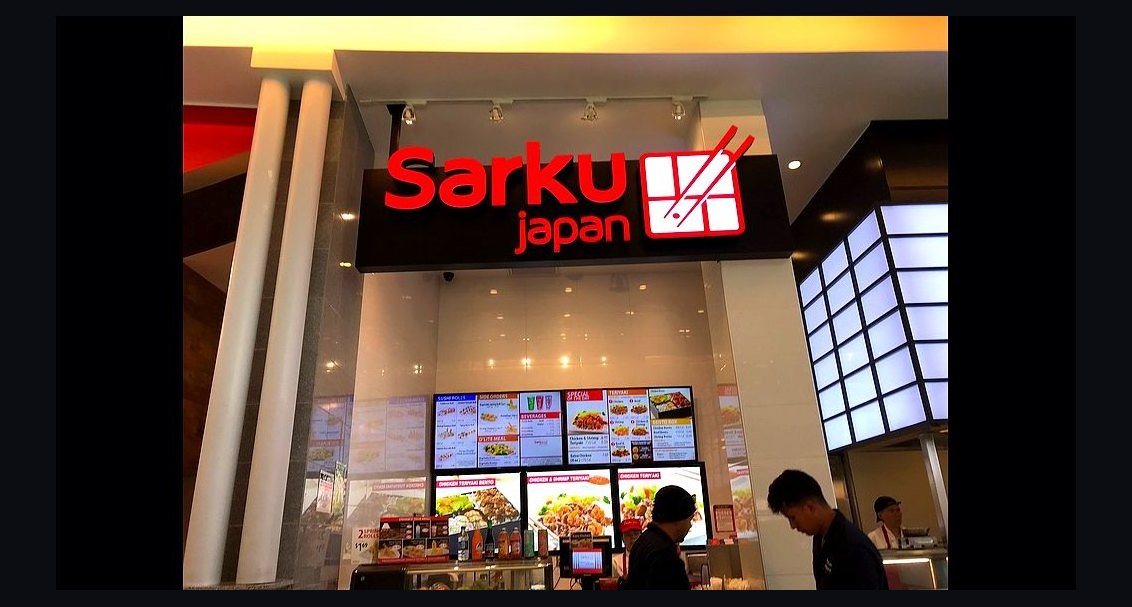 pulse-qShould I open or buy a Sarku Japan franchise in 2027?
 pulse-qHow do you coach a rep who over-relies on one big deal in 2026?
 pulse-qHow Do I Budget a Med Spa Buildout in 2026?
 pulse-qHow do you coach a rep who keeps missing quota in 2026?
 pulse-qShould I open or buy Pizza Hut franchise or open an independent sandwich shop in 2027?
 pulse-qShould I open or buy an OpenWorks franchise in 2027?
 pulse-qShould I open or buy a Rhino Linings franchise in 2027?
 pulse-qHow Do I Protect Myself If My Landlord Goes Bankrupt in 2026?