


Should I open or buy a Spray-Net franchise in 2027?
Yes for an operator who wants a differentiated exterior-renovation franchise using proprietary spray-applied coatings — Spray-Net offers a tech-driven alternative to replacement for siding, brick, windows, and doors. Spray-Net, founded in 2010 in Canada, franchises exterior surface renovation using proprietary, weather-engineered spray coatings that refinish (rather than replace) siding, brick, stucco, windows, and doors — a lower-cost, faster alternative to full replacement. The 2026 FDD lists a franchise fee around $50,000, total Item 7 investment of roughly $150,000 to $350,000, a royalty near 6%, and a marketing fee. Mature territories gross $600,000-$1,500,000, with owners clearing $90,000-$250,000. Its edge is a differentiated proprietary product, project-based high tickets, and home-based low overhead; the challenge is building project flow and managing application crews/quality.
The Real Numbers
Spray-Net is home/office-based with no retail buildout — the operator markets and sells exterior coating projects and manages application crews using the proprietary, lab-engineered coatings. The differentiated product commands premium project tickets.
| Line Item | Low | High | Notes |
|---|---|---|---|
| Franchise fee | $50,000 | $50,000 | Per 2026 FDD |
| Equipment & supplies | $15,000 | $50,000 | Spray equipment, coatings |
| Vehicle (lease/wrap) | $5,000 | $25,000 | Work vehicle |
| Technology & software | $5,000 | $15,000 | CRM, estimating |
| Initial marketing | $25,000 | $70,000 | Project lead generation |
| Insurance & licensing | $5,000 | $18,000 | GL + contractor |
| Training & travel | $8,000 | $22,000 | Owner + crew training |
| Working capital | $30,000 | $80,000 | First 3-6 months |
| Total Item 7 | ~$150,000 | ~$350,000 | Per 2026 FDD — home-based |
| Royalty | ~6% of gross | ||
| Marketing fee | ~2% of gross |

Revenue reality: mature territories gross $600K-$1.5M on high-ticket exterior coating projects. With crew labor and coating materials as the main costs but low overhead (no retail), owner margins run 14%-25%, or $90K-$250K. The proprietary product differentiation (refinish vs replace, weather-engineered) commands premium pricing and strong project tickets, and the home-based model keeps overhead low. The challenge is generating consistent project leads and managing application quality.
Who Wins With This Business
- Capital required: $150K-$350K, with $70,000-$130,000 liquid.
- Time commitment: business-hours, project-based.
- Skills: lead generation/sales, project management, and crew/quality oversight.
- Geographic fit: suburban homeowner markets with renovation demand.
- Lifestyle fit: home-based, project-driven.
The winners are sales-and-project-management-minded operators who generate leads and ensure application quality.
Who Loses With This Business
- Operators who can't generate consistent project leads.
- Owners who mismanage application crews/quality.
- Those uncomfortable with a newer, differentiated product (validate results).
- Markets with low homeowner-renovation demand.
- Under-capitalized buyers.
2027 Market Conditions
- Demand: home exterior renovation is strong, and refinish-vs-replace appeals to cost-conscious homeowners.
- Differentiation: proprietary weather-engineered coatings distinguish Spray-Net from painters and replacement.
- Project tickets: high-value exterior projects drive revenue.
- Low capital/no real estate: home-based model is capital-efficient.
- Competition: painters, replacement contractors, and exterior-renovation firms.
The 90-Day Decision Tree
- Day 1-15: Read the 2026 FDD and validate the proprietary-coating model and results.
- Day 16-30: Interview 8+ owners; ask about lead flow, project tickets, application quality, and take-home.
- Day 31-45: Validate a suburban homeowner-renovation market.
- Day 46-60: Set up and train application crews.
- Day 61-80: Generate project leads through marketing.
- Day 81-90: Launch with quality-focused application.
- Ongoing: scale project flow and ensure application quality.
Alternative Plays
- Five Star Painting / CertaPro — painting franchises (in the Pulse library).
- N-Hance — wood-refinishing franchise.
- Miracle Method — surface-refinishing franchise.
- Window/door replacement franchises — adjacent exterior models.
- Independent exterior-coating business — full control, but no proprietary product.
- Other home-renovation service franchises — adjacent models.
Territory Availability and Market Saturation in 2027
Spray-Net operates on a single-unit and multi-unit development model, with territories typically defined by population density, household income thresholds, and housing stock age. As of 2026, the brand has approximately 150-200 units across the US and Canada, with strongest concentration in Ontario, British Columbia, Florida, Texas, and the Carolinas. For a 2027 entry, you should evaluate:
- Open territories — Spray-Net still has available markets in the Midwest, Mountain West, and select Northeast corridor states. However, major metro areas (Toronto, Vancouver, Miami, Dallas, Charlotte) are largely spoken for or under development.
- Resale opportunities — The 2026 FDD indicates 10-15% of franchisees exit annually (retirement, relocation, underperformance). A resale unit typically costs $100,000-$250,000 (including equipment, customer lists, and existing crew), which can be cheaper and faster than a startup.
- Buying a territory vs. opening — Buying an existing territory gives you a proven revenue stream, trained crew, and installed base but may come with legacy pricing, equipment age, or brand reputation issues. Opening new gives you clean start, modern equipment, and ability to set pricing but requires 12-18 months to break even on marketing and crew training.
Key 2027 consideration: The exterior renovation market is growing 4-6% annually (driven by aging housing stock and rising replacement costs), but Spray-Net's proprietary coating faces competition from local painters using industrial-grade sprayers and from low-cost vinyl siding installers. In oversaturated markets (e.g., suburban Toronto, South Florida), you may see 15-20% margin compression from price competition. Underpenetrated markets (e.g., Ohio, Indiana, Arizona) offer higher margins but slower initial adoption as homeowners learn about the product.
Operational Reality: Crew Management and Quality Control
Spray-Net's model is crew-dependent — your gross margin of 40-50% relies on consistent application quality, job completion speed, and minimal rework. The 2027 operational landscape includes:
- Labor market — Skilled exterior spray applicators command $25-$40/hour in most markets, with experienced leads earning $50-$70/hour. The 2025-2026 labor shortage for construction trades persists, meaning you'll need to offer $2-$4/hour above market to attract and retain crews. Turnover averages 20-30% annually among applicators, requiring constant recruiting and training.
- Training pipeline — Spray-Net provides 2-3 weeks of initial training at headquarters, plus field support for first 10-15 jobs. However, ongoing quality control is your responsibility. Successful franchisees budget 5-8% of revenue for continuous training, certification, and rework.
- Equipment maintenance — The proprietary spray equipment costs $15,000-$25,000 per rig and requires annual recalibration and part replacement ($2,000-$4,000 per rig). Downtime from equipment failure can cost $500-$1,500 per day in lost revenue. Having a backup rig (or a service contract with a local industrial spray supplier) is strongly recommended.
- Job size and cycle — Average residential job is $4,000-$12,000 (full house siding and trim) and takes 2-5 days with a 2-person crew. Commercial jobs (apartment buildings, retail centers) run $15,000-$50,000 but require 3-5 person crews and 5-14 days. Booking 3-4 jobs per week per crew is typical for a mature operation.
2027 warning: The proprietary coating has a 10-year warranty (against peeling, fading, chalking). Warranty claims (typically 1-3% of jobs) can cost $500-$2,000 per claim in materials and labor. Poor application quality (runs, sags, overspray) is the #1 cause of franchisee termination in the FDD — invest in a dedicated quality inspector (or do it yourself for the first 50 jobs).
Financial Projections and Exit Strategy for 2027 Buyers
Beyond the initial investment, a 2027 buyer should model these realistic scenarios:
- Year 1-2 (ramp-up) — $200,000-$400,000 in revenue with $30,000-$80,000 net profit (after franchise fees, equipment, and owner salary). 60-70% of new franchisees report cash-flow positive by month 12-18.
- Year 3-5 (steady state) — $600,000-$1,200,000 revenue with $100,000-$220,000 net profit. Top 20% of franchisees (multi-unit, commercial focus) hit $1.5M-$2.5M with $250,000-$400,000 profit.
- Year 6-10 (mature) — Revenue plateau at $800,000-$1.5M (single unit) or $2M-$4M (multi-unit, 2-3 crews). Profit margins compress to 12-18% as you hire a general manager and step back from operations.
Exit options in 2027:
- Sell to a new franchisee — Spray-Net approves buyer transfers (typically $10,000-$15,000 fee). Resale value is 1.5-2.5x net profit (e.g., a $150,000 profit business sells for $225,000-$375,000). Multi-unit territories command 2.5-3.5x.
- Sell to an existing franchisee — 30-40% of Spray-Net sales go to existing franchisees expanding — they pay premium for adjacency (2-3x profit). Build a clean operation (low warranty claims, trained crew, 3+ years of financials) to maximize this.
- Liquidate — Equipment resale value is $30,000-$60,000 (spray rigs, vehicles, ladders). Customer lists and contracts may fetch $20,000-$50,000 from a competitor.
2027 unique factor: Interest rates (expected 5-7% for SBA loans) mean financing costs $7,500-$17,500 annually on a $150,000-$250,000 loan. Lease equipment (rather than buy) to reduce upfront capital — monthly lease payments of $800-$1,500 for spray rigs and vehicles.
FAQ
What is the typical total investment for a Spray-Net franchise in 2027? The total investment range in the 2026 FDD is roughly $150,000 to $350,000, including the franchise fee around $50,000. Actual costs depend on territory size, vehicle, and equipment needs, so expect to budget at the higher end for a full build-out.
How much can I expect to earn as a Spray-Net franchise owner? Mature territories typically gross between $600,000 and $1,500,000 annually, with owner net income ranging from $90,000 to $250,000. Earnings vary widely based on market, crew efficiency, and how quickly you build project flow.
What is the royalty fee and ongoing costs? The royalty is approximately 6% of gross sales, plus a marketing fee. You’ll also cover your own vehicle, equipment maintenance, and crew wages, but the home-based model keeps overhead lower than many brick-and-mortar franchises.
How long does it take to break even or see profit? Many owners report reaching profitability within 12 to 24 months, depending on territory development and sales ramp. The first year often focuses on building a client base and refining operations, so initial cash reserves for 6–12 months of expenses are recommended.
Do I need prior painting or construction experience? No, but you should have strong sales and management skills. Spray-Net provides training on the proprietary spray application process, but success relies on your ability to generate leads, manage crews, and ensure quality control on job sites.
Is Spray-Net a good fit for someone wanting a semi-absentee or part-time franchise? Not typically—most owners are hands-on, especially early on. While the home-based setup offers flexibility, you’ll need to oversee crews and handle customer relationships, which usually requires full-time commitment to build and sustain the business.
Bottom Line
Open a Spray-Net if you want a differentiated, home-based exterior-renovation franchise using proprietary refinish-vs-replace coatings, with high project tickets and low overhead, and you'll generate leads and manage application quality. Its proprietary product and capital efficiency are genuine strengths. Skip it if you can't generate project leads, manage crew quality, or are in a low-renovation-demand market. For sales-and-project-management-minded operators, Spray-Net offers a differentiated, capital-efficient exterior-renovation franchise — validate the product's results first.
Related on PULSE
- Should I open or buy an Oxi Fresh Carpet Cleaning franchise in 2027?
- Should I open or buy an Oil Can Henry’s franchise in 2027?
- Should I open or buy a KidStrong franchise in 2027?
- Should I open or buy a Premier Garage franchise in 2027?
- Should I open or buy a Jazzercise franchise in 2027?
- Should I open or buy a Nekter Juice Bar franchise in 2027?
Sources
- Spray-Net Franchise Disclosure Document (2026 filing) — Items 5, 6, 7, 19, 20
- Spray-Net official franchise site — investment range and proprietary-coating model
- Entrepreneur Franchise listings — Spray-Net
- Franchise Business Review — home-services franchise satisfaction data
- IBISWorld — Exterior Home Renovation & Painting in the US, 2026 industry report
- Statista — US home-renovation and exterior-services market, 2025-2026
- International Franchise Association (IFA) — 2027 Franchise Economic Outlook
- Joint Center for Housing Studies — home-improvement market data 2026
- Grand View Research — Home Improvement / Coatings market 2026
- US Census — homeowner and renovation demographic data, 2025-2026
This page will be disappearing soon. Save it to your device for $1 — or read it free while it is here.
@Kory-White- · if Venmo asks, the last 4 of my number are 2012
This page is gone.
This one is off the shelf now. $1 keeps it on your phone for good — the whole page, pictures and diagrams included.
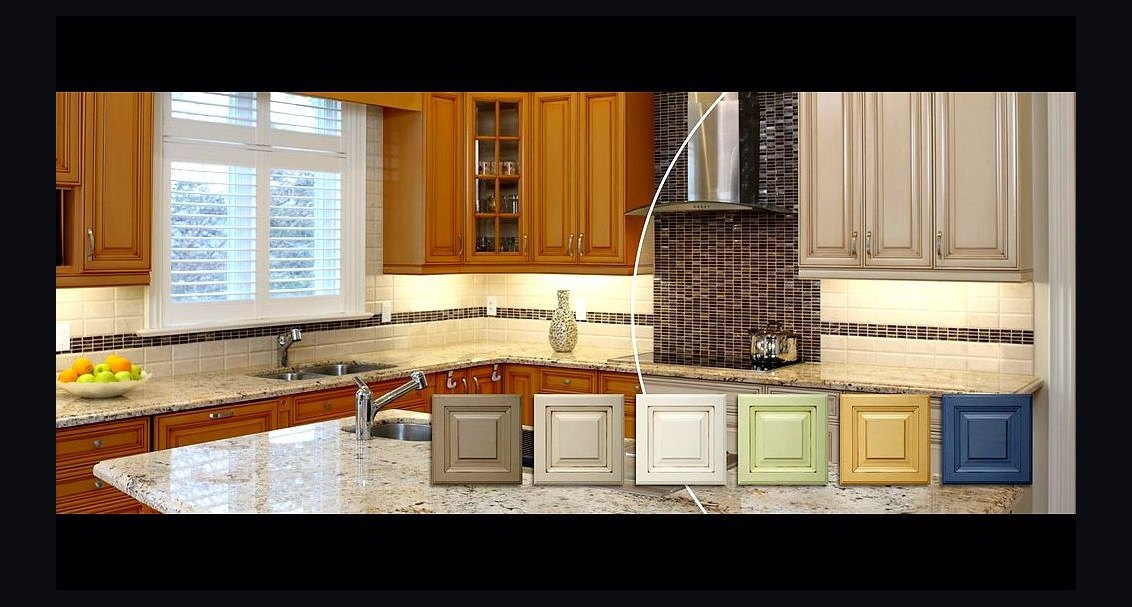 pulse-qShould I open or buy an N-Hance Wood Refinishing franchise in 2027?
 pulse-qShould I open or buy a The Learning Experience franchise in 2027?
 pulse-qHow do you certify sales skills before reps face real buyers in 2026?
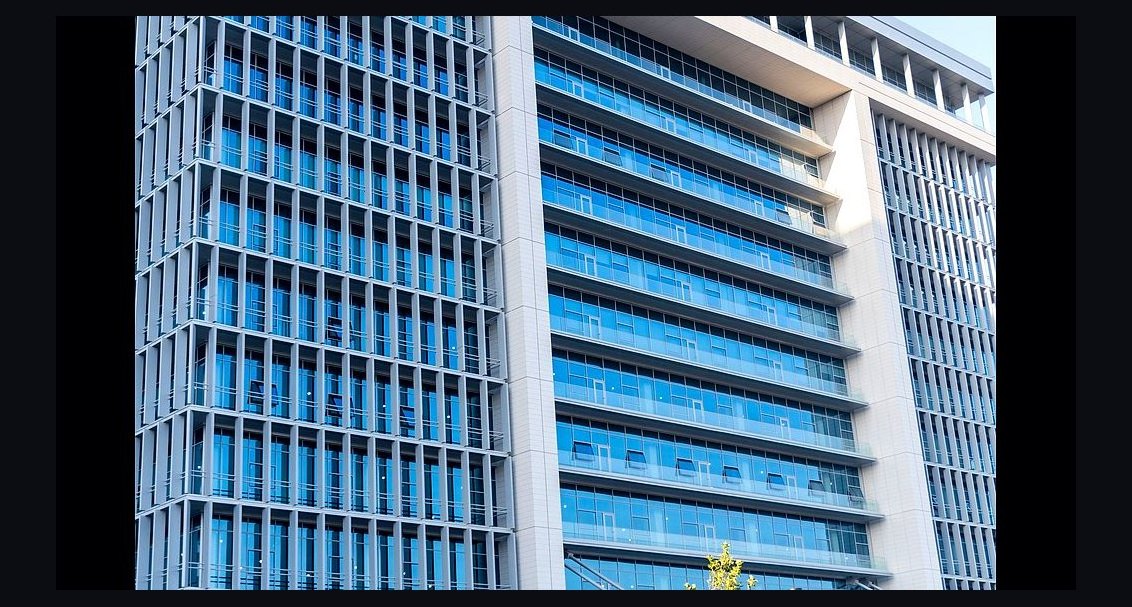 pulse-qWhat Is Gross-Up in a Lease and How Does It Cost Me in 2026?
 pulse-qHow do you ask a question that helps a rep identify the moment they lost control of the sales conversation in 2026?
 pulse-qShould I open or buy a Conserva Irrigation franchise in 2027?
 pulse-qShould I open or buy a Rhino Linings franchise in 2027?
 pulse-qHow do you coach a rep who over-relies on one big deal in 2026?
 pulse-qShould I open or buy a Window Hero franchise in 2027?
 pulse-qShould I open or buy a Pei Wei franchise in 2027?