
Will Snowflake maintain 25%+ growth into 2027?
 Curated byKory White · Fractional CRO · Maryland
 PULSEKNOWLEDGE LIBRARY
Quality
Certified

Snowflake will likely maintain 25%+ growth into 2027 only if Cortex AI inference reaches production scale with over 40% attach rate in large accounts, Iceberg cannibalization stays under 15% of net-new workloads, and the company retains over 95% of its top-100 accounts while expanding international regions.
The Current Growth Trajectory and Its Structural Challenges
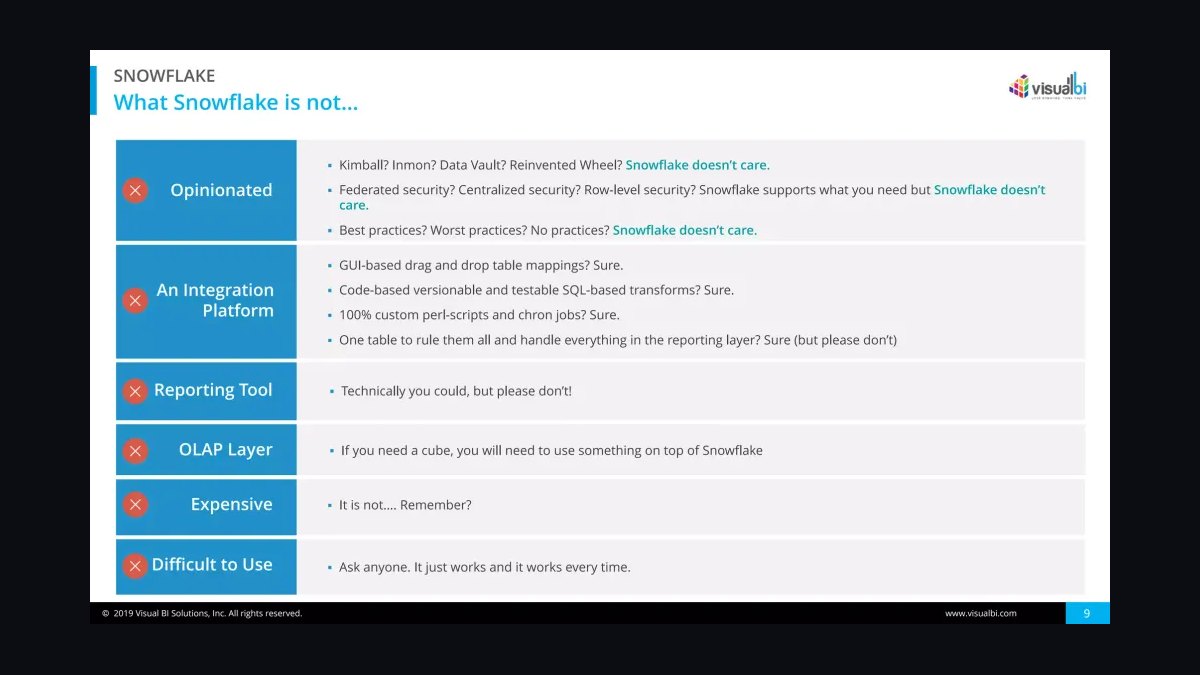
Snowflake's revenue growth has decelerated predictably as the company scales. In fiscal year 2024, product revenue grew approximately 38%, followed by 30% in fiscal year 2025, with management guiding toward 28% in fiscal year 2026. Analyst consensus projects fiscal year 2027 growth in the 25-28% range. This deceleration reflects the law of large numbers—Snowflake's revenue base surpassed $3 billion in fiscal year 2024, making each percentage point of growth require significantly more absolute dollars than in prior years.
The core SQL warehouse business, which historically contributed over 68% of total revenue, now faces commoditization pressure. Cloud-native query engines from AWS (Redshift Spectrum), Microsoft (Fabric), and Google (BigQuery) offer comparable performance at lower per-query costs. Snowflake has maintained a premium of roughly 3x on compute pricing against Redshift, but this margin is under pressure as enterprises optimize cloud spend. The net revenue retention (NRR) rate has declined from 158% in 2021 to approximately 135% in 2024, indicating that existing customers are expanding spend at a slower rate. For Snowflake to sustain 25%+ growth, NRR must stabilize above 130%, meaning existing customers must increase consumption by at least 30% annually net of churn.
The shift from storage-heavy to compute-heavy revenue composition introduces additional volatility. Storage historically accounted for 15-20% of total revenue and provided a stable base, as customers rarely delete stored data. However, the adoption of open table formats like Apache Iceberg allows customers to decouple storage from compute, reducing Snowflake's storage revenue and increasing the proportion of consumption-based compute revenue. During economic downturns, customers cut compute usage faster than they reduce stored data, making Snowflake more sensitive to macroeconomic cycles. The 2023 optimization wave demonstrated this vulnerability, as enterprises slashed idle compute workloads and compressed Snowflake's growth rate by approximately 8 percentage points.

The Cortex AI Imperative
Snowflake's most significant growth lever for 2027 is the Cortex AI suite, which includes Cortex Search, Cortex Analyst, Cortex Fine-Tuning, and Snowpark Container Services. As of late 2024, AI-related workloads contributed less than 5% of total compute consumption and an even smaller percentage of new customer bookings. For Snowflake to achieve 25%+ growth, AI-attributed consumption must reach 15-20% of new ARR by fiscal year 2026 and 20-30% by fiscal year 2027.
The critical metric is Cortex AI attach rate in accounts exceeding $500,000 in annual contract value (ACV). Currently, Cortex adoption in these accounts is below 5%, primarily in pilot or proof-of-concept stages. To drive meaningful revenue contribution, Snowflake must achieve a 40%+ attach rate in this cohort by the end of fiscal year 2027. This requires Cortex to move beyond experimental use cases into production deployments—specifically, real-time fraud detection, personalized recommendation engines, natural language querying, and anomaly detection in operational data streams.
Snowflake's partnership with NVIDIA, announced at Snowflake Summit 2024, provides a technical pathway for GPU-accelerated inference directly within the Snowflake platform. This integration reduces the need for customers to maintain separate AI infrastructure, potentially increasing Snowflake's share of AI workload spending. However, pricing power for AI compute remains uncertain. Snowflake charges approximately $2-$4 per credit for AI workloads, comparable to SQL compute rates. If customers optimize by moving inference to cheaper GPU instances or open-source models, the revenue uplift may be modest. A realistic scenario sees AI adding 3-5 percentage points to overall growth by 2027, not the 10+ points some analysts project.
Snowpark Container Services represents another AI-related growth vector. This service allows customers to run containerized applications—including custom ML models, real-time streaming pipelines, and data engineering workloads—directly within Snowflake's infrastructure. As of 2024, Snowpark Container Services adoption is below 5% of the customer base, concentrated in the top 50 accounts. For this to contribute 8% of total revenue by fiscal year 2027, at least 25% of new accounts must adopt Container Services as a standard workload pattern, moving it from an optional innovation track to a deal-size multiplier.
The Iceberg Open-Format Dilemma
Apache Iceberg adoption represents both a threat and an opportunity for Snowflake's growth trajectory. Iceberg is an open table format that allows data to be stored independently of any specific query engine, enabling customers to use Snowflake, Databricks, Trino, or other engines interchangeably on the same data. This reduces switching costs and weakens Snowflake's proprietary lock-in, which has historically been a key driver of customer retention and expansion.
Early adoption signals suggest that 8-12% of net-new greenfield workloads in fiscal year 2026 are being directed to open-stack vendors (primarily Databricks' Delta Lake and Trino-based query engines) rather than Snowflake's proprietary storage format. If Iceberg adoption reaches 25% of net-new greenfield workloads by fiscal year 2027—a scenario some analysts consider plausible—Snowflake's growth could fall to 22-24%, missing the 25% floor.
Snowflake's strategic response has been to position itself as the governance and performance layer for Iceberg tables, rather than fighting the open-format trend. The company appointed an Iceberg director role in 2024 and announced a roadmap for Iceberg-native query optimization. This approach aims to retain customers who want open formats while maintaining Snowflake's value proposition in performance, security, and governance. The success of this strategy depends on Snowflake's ability to deliver materially better query performance on Iceberg tables than competitors—a technically challenging goal given that Iceberg's open design limits the optimizations available to any single vendor.
The financial impact of Iceberg adoption extends beyond direct revenue cannibalization. As customers adopt Iceberg, Snowflake's storage revenue—which carries higher margins than compute revenue—will decline as a percentage of total revenue. Storage revenue currently contributes 15-20% of total revenue with gross margins above 70%, compared to compute revenue margins of approximately 60-65%. A shift toward compute-heavy revenue composition will compress overall gross margins by 2-4 percentage points, reducing operating leverage and potentially limiting Snowflake's ability to invest in growth initiatives.
Competitive Dynamics in the Multi-Cloud Data Platform Market
Snowflake's competitive landscape has shifted from "best-of-breed vs. cloud-native" to "multi-cloud data fabric vs. walled garden." The primary competitors—Databricks, Microsoft Fabric, Amazon Redshift, and Google BigQuery—are no longer competing solely on SQL workload performance but on the entire data platform stack, including governance, AI, streaming, and data sharing.
Databricks represents the most direct threat to Snowflake's growth rate. Databricks' revenue grew approximately 50% year-over-year in 2024, outpacing Snowflake's 30% product revenue growth. The key battleground is the enterprise data lakehouse, where Databricks' open-source Delta Lake and Unity Catalog appeal to organizations seeking to avoid vendor lock-in. Databricks' $13 billion valuation and 55%+ YoY growth trajectory suggest it is capturing a disproportionate share of new enterprise data platform deals, particularly in accounts exceeding $1 million in annual spend. If Databricks captures more than 25% of new enterprise data platform deals by 2026, Snowflake's growth could dip below 25% as early as fiscal year 2026.
Microsoft Fabric represents a slower-burning but potentially larger risk due to Microsoft's enterprise distribution advantage. Fabric integrates Azure Data Factory, Synapse, Power BI, and OneLake into a single SaaS experience, with pricing that undercuts Snowflake by 20-40% when bundled with existing Microsoft enterprise agreements. Fabric reached approximately $500 million in annualized revenue in 2024 and is on track to exceed $2 billion by 2026. If Fabric achieves this scale, Snowflake could lose 10-15% of its mid-market funnel—accounts spending $100,000-$500,000 annually—where Microsoft's bundling advantage is strongest.
Snowflake's competitive moat lies in cross-cloud portability. No competitor offers true multi-cloud data warehousing at Snowflake's scale, with the platform running on AWS, Azure, and GCP with consistent performance and pricing. This is particularly valuable for enterprises with multi-cloud strategies, which represent approximately 60% of Fortune 500 companies. Snowflake's partner ecosystem of 1,500+ ISVs and system integrators also provides a distribution advantage that competitors cannot easily replicate. However, this moat is narrowing as Databricks expands its cloud partnerships and Microsoft Fabric deepens Azure integration.
International Expansion and Vertical Industry Clouds
International markets represent a significant but time-consuming growth opportunity for Snowflake. As of late 2024, Snowflake operates in 11 cloud regions outside North America, with plans to expand to 18-20 regions by the end of fiscal year 2027. The primary targets are Asia-Pacific (India, South Korea, Japan) and Europe (Germany, France, Italy), where data residency requirements create demand for local cloud infrastructure.
International revenue currently contributes approximately 12% of total revenue, with the majority coming from Europe. For Snowflake to maintain 25%+ growth, international markets must contribute at least 6 percentage points of growth by fiscal year 2027, requiring a doubling of international revenue to approximately $800 million. This is achievable if Snowflake can establish local sales teams, partner ecosystems, and compliance certifications in target markets. However, international expansion typically takes 3-5 years to reach meaningful scale, and Snowflake's international growth rate has been roughly in line with domestic growth, suggesting limited incremental contribution.
Vertical Industry Clouds—Healthcare Cloud, FSI Cloud, and Retail Cloud—represent a higher-growth but higher-risk expansion strategy. These industry-specific offerings include pre-built data models, compliance frameworks, and integration templates tailored to sector-specific use cases. As of 2024, combined revenue from Industry Clouds is below $50 million, with growth rates slower than the core business. For these to contribute 12% of total revenue by fiscal year 2027—requiring approximately $700 million in combined revenue—each vertical must achieve $50-100 million in independent ARR. This requires Snowflake to build domain expertise and sales specialization that it currently lacks, competing against established industry-specific vendors like Cerner (healthcare), FIS (financial services), and Blue Yonder (retail).
The Top-100 Account Retention Calculus
Snowflake's growth sustainability depends disproportionately on its top 100 accounts, which contribute over 40% of total revenue. These accounts have an average ACV exceeding $1 million and represent the highest-margin, lowest-churn segment of Snowflake's customer base. Losing even 1-2 mega-accounts to Databricks or Microsoft Fabric in a single fiscal year would crater 15-20% of bookings momentum, making 25%+ growth mathematically impossible without extraordinary new customer acquisition.

The retention calculus for top-100 accounts hinges on three factors: workload expansion, pricing stability, and competitive displacement risk. Workload expansion requires Snowflake to increase the number of use cases per account, moving beyond SQL analytics into AI/ML, data engineering, and real-time streaming. The average top-100 account currently uses Snowflake for 2-3 distinct workloads; expanding to 4-5 workloads would increase ARPC from approximately $1.5 million to $2.5 million, providing the 30% annual expansion needed to sustain NRR above 130%.
Pricing stability is equally critical. Snowflake's per-credit pricing has remained relatively stable since 2020, but competitive pressure from Redshift Spectrum and Fabric is forcing discounts in competitive deals. If Snowflake's compute premium over Redshift compresses from 3x to 2x or below, CFOs will have a strong financial incentive to migrate workloads. Snowflake must maintain at least a 2.5x premium through continued performance innovation—specifically, faster query execution, better concurrency scaling, and lower latency for AI workloads.
Competitive displacement risk is highest in accounts where Snowflake is the sole data platform. Accounts that have diversified across Snowflake, Databricks, and a cloud-native warehouse are less likely to churn entirely, as the switching costs of migrating all workloads outweigh the savings from consolidating on a single platform. Snowflake's retention strategy should therefore focus on becoming the "governance and performance layer" for multi-platform accounts, rather than demanding exclusive use.
Financial Model Sensitivity: What Changes the Outcome
Snowflake's ability to maintain 25%+ growth into 2027 is highly sensitive to a narrow set of variables. The most critical is Cortex AI attach rate in premium accounts. If Cortex achieves 60%+ attach in accounts over $500K ACV by fiscal year 2027, Snowflake could hit 30%+ growth, representing the bull case. If attach rate remains below 20%, AI contributes less than 2 percentage points to growth, and Snowflake struggles to reach 25%.
Iceberg adoption velocity is the second most sensitive variable. If Iceberg captures less than 15% of net-new greenfield workloads, Snowflake's core SQL warehouse business can sustain 25-28% growth through pricing and performance advantages. If Iceberg reaches 25%+ of net-new workloads, Snowflake faces 22-24% growth, missing the 25% floor. The inflection point occurs when Iceberg adoption exceeds 20%, at which point the compounding effect of lost storage revenue and compressed compute margins becomes material.
Databricks' growth trajectory represents the third variable. If Databricks maintains 50%+ YoY growth through fiscal year 2027, it will capture a disproportionate share of new enterprise data platform deals, particularly in accounts exceeding $500K ACV. Snowflake would need to compensate by winning a higher share of mid-market deals ($100K-$500K ACV), where Databricks has less presence. However, mid-market deals have lower ACV and higher churn, making them less efficient growth drivers.
Macroeconomic conditions introduce downside risk. If enterprise data budgets contract 15-20% in fiscal year 2027 due to recession or cost optimization cycles, even 25% growth is jeopardized. During the 2023 optimization wave, Snowflake's growth rate compressed by approximately 8 percentage points as customers reduced idle compute and consolidated vendors. A similar compression in fiscal year 2027 would push growth below 20%, regardless of product execution.
Revenue Composition Shift and Margin Implications
Snowflake's revenue composition is shifting from a dual-engine model (compute + storage) to a compute-only model, with significant margin implications. Storage revenue, which carries gross margins above 70%, is declining as a percentage of total revenue due to Iceberg adoption and customer cost optimization. Compute revenue, with gross margins of 60-65%, is growing as a percentage of total revenue but faces pricing pressure from competitors.

The net effect is a compression of overall gross margins from approximately 68% in fiscal year 2024 to an estimated 64-66% by fiscal year 2027. This 2-4 percentage point compression reduces operating leverage, meaning Snowflake must generate more revenue to achieve the same level of profitability. For a company targeting 25%+ growth, this margin compression requires either higher revenue growth to offset the margin decline or significant operating expense discipline.
The shift also changes Snowflake's revenue quality from a recurring subscription-like model (storage) to a consumption-based model (compute). Storage revenue is predictable and grows with data volume, while compute revenue is variable and sensitive to customer usage patterns. This makes revenue forecasting more difficult and increases quarterly volatility, potentially affecting Snowflake's valuation multiple.
To offset margin compression, Snowflake must increase compute utilization rates and reduce infrastructure costs. The company's partnership with NVIDIA for GPU-accelerated inference could reduce per-query compute costs by 30-50% for AI workloads, improving margins on the fastest-growing revenue segment. Additionally, Snowflake's transition to its own cloud infrastructure (rather than relying solely on AWS/Azure/GCP) could reduce cost of goods sold by 10-15% over time, though this transition requires significant capital investment.
Related questions
What is Snowflake's current revenue growth rate?
Snowflake's product revenue growth has decelerated from 38% in fiscal year 2024 to approximately 30% in fiscal year 2025, with management guiding toward 28% in fiscal year 2026.
How does Databricks competition affect Snowflake's growth?
Databricks grew approximately 50% year-over-year in 2024, outpacing Snowflake. If Databricks captures over 25% of new enterprise data platform deals, Snowflake's growth could fall below 25%.
What role does Cortex AI play in Snowflake's growth?
Cortex AI must achieve 40%+ attach rate in accounts over $500K ACV by 2027 to add 5-8 percentage points to growth. Currently, AI workloads contribute less than 5% of compute consumption.
How does Apache Iceberg adoption impact Snowflake revenue?
Iceberg allows customers to use multiple query engines on the same data, reducing Snowflake's lock-in. If Iceberg captures over 15% of net-new workloads, Snowflake's growth could drop to 22-24%.
What is Snowflake's net revenue retention rate?
Snowflake's NRR declined from 158% in 2021 to approximately 135% in 2024. Maintaining NRR above 130% is critical for 25%+ growth, requiring 30% annual spend expansion from existing customers.
FAQ
What is Snowflake's current growth rate? Snowflake's product revenue growth has decelerated from over 100% in 2020 to roughly 30-35% in recent quarters. The company's fiscal year 2025 growth was approximately 30%, with management guiding toward 28% in fiscal year 2026.
What are the main risks to Snowflake maintaining 25%+ growth? Key risks include competition from Databricks and Microsoft Fabric, Iceberg open-format cannibalization, macroeconomic pressure on enterprise cloud budgets, and failure to scale Cortex AI beyond pilot stages. Loss of even 1-2 top-100 accounts could crater 15-20% of bookings momentum.
How important is Cortex AI to Snowflake's growth outlook? Cortex AI is critical for maintaining higher growth, potentially adding 5-8 percentage points to overall growth by 2027 if attach rates reach 40%+ in large accounts. If Cortex stalls below 20% attach, AI contributes less than 2 percentage points.
Will international expansion help offset slowing growth in North America? International markets represent a significant opportunity, with Snowflake planning expansion to 18-20 cloud regions by 2027. However, international expansion typically takes 3-5 years to reach meaningful scale and may not fully offset domestic deceleration.
How does the shift to Iceberg tables impact Snowflake's revenue? Iceberg tables reduce switching costs and weaken Snowflake's proprietary lock-in. If Iceberg cannibalization exceeds 15% of net-new SQL workloads, Snowflake's growth could fall below 25%. Storage revenue—carrying higher margins—will also decline as a percentage of total revenue.
What growth rate should investors realistically expect by 2027? Analyst consensus and historical deceleration patterns suggest Snowflake's growth could settle in the 15-25% range by 2027. Achieving 25%+ requires strong execution across AI, international expansion, and vertical industry clouds while avoiding significant competitive losses.
Sources
- https://www.snowflake.com/investor-relations/
- https://databricks.com/blog
- https://aws.amazon.com/redshift/
- https://learn.microsoft.com/en-us/fabric/
- https://iceberg.apache.org/
- https://www.gartner.com/en/documents/3994040
- https://www.wsj.com/tech/snowflake-earnings
- https://www.forbes.com/sites/snowflake-growth-strategy/
Related on PULSE
- Will Salesforce maintain 9% growth into 2027?
- How do you maintain pricing parity between channel and direct sales in 2027?
- How many residential lawn-care accounts can a one-truck two-man crew realistically maintain in a 5-day week, and what's the route density that makes it work?
- How should SE comp align with AE OTE to maintain role clarity?
- How do you maintain win rate while doubling rep count?
- Why did Snowflake growth slow in 2024-25?
This page will be disappearing soon. Save it to your device for $1 — or read it free while it is here.
@Kory-White- · if Venmo asks, the last 4 of my number are 2012
This page is gone.
This one is off the shelf now. $1 keeps it on your phone for good — the whole page, pictures and diagrams included.
 snowflakeCan Snowflake compete with Databricks in 2027?
 snowflakeSnowflake vs Databricks — which should you buy?
 snowflakeHow does Snowflake compute pricing compare to BigQuery and Redshift in 2027?
 snowflakeWill Snowflake survive the AWS Redshift + Microsoft Fabric squeeze through 2027?
 snowflakeHow does Snowflake onboarding compare to Databricks in 2027?
 snowflakeHow does Snowflake compete against AI-native data platforms in 2027?
 snowflakeWhat is Snowflake AI strategy in 2027?
 salesforceWhat is Salesforce data-center strategy through 2027?
 snowflakeHow should Snowflake think about Salesforce Data Cloud partnership in 2027?
 snowflakeHow does Snowflake hit its 2027 revenue target?