

How Many Sales Reps Do I Need to Hire for My Wholesale Electrical Distribution Company in 2026?
 Curated byKory White · Fractional CRO · Maryland
Quality
Certified

Back into headcount from the gap: divide the net-new revenue your existing accounts won't reorder by what one fully ramped rep produces — commonly $4M to $6M in electrical wholesale — then add backfills for attrition and inflate for ramp. Most distributors closing a $3M gap land on two to three sellers, not one.
What rep-count math actually measures in a distribution business
The question "how many sales reps do I need" sounds like a staffing question and gets answered like a hiring question, which is why so many wholesale electrical distributors end up either bloated with underproducing outside reps or starved of coverage right when bid season hits. It is a capacity question. You are not asking how many people you can afford. You are asking how many rep-years of selling capacity it takes to close the distance between the revenue your book produces on autopilot and the revenue you told the bank, your ownership group, or yourself you would hit.
Start by separating two very different revenue streams, because conflating them is the single most common modeling error in distribution. The first stream is reorder revenue: the contractor who buys the same MC cable, the same 3/4" EMT, the same panel schedules every month because you stock them, your will-call is fast, and your credit terms work. That revenue does not require a hunter. It requires a counter that answers the phone, a delivery truck that shows up, and an inside seller who catches the reorder before the competitor down the road does. The second stream is net-new: a contractor who has never bought from you, a project bid you were not on last year, a manufacturer line you just picked up and now have to sell through, a switchgear package that was going to a competing house.
Your account-retention rate is what converts one into the other. Run the numbers concretely. A $40M distributor holding 92% retention on its contractor and industrial base starts next year at roughly $36.8M before anyone sells anything new. If organic growth inside those retained accounts — a contractor with more crews, more jobs, more square footage — adds another 10 points on the retained base, you are near $40.5M passively. Say the goal is $50M. That leaves roughly $9.5M of net-new. At a ramped outside rep carrying a $4M territory book, you are looking at about 2.4 rep-years of pure new-business capacity — and that is before you discount for ramp or replace anyone who quits.
Flip the retention number and watch the hiring plan move. At 87% retention instead of 92%, that same $40M base only reorders to $34.8M, and the net-new gap balloons past $13M — more than three additional ramped reps' worth of production. Five points of retention on a mid-sized electrical wholesaler is worth roughly one full outside seller, permanently, every single year. That is why any serious RevOps treatment of this question puts stocking depth, will-call speed, fill rate, and credit terms in the same conversation as the recruiting plan. You can hire your way to the number or you can retain your way to it, and retention is almost always cheaper.

The second thing this math measures is honesty about what a rep produces. There is a difference between the quota you assign and the territory production a person actually delivers. Paper quotas are aspirational; territory production is historical. Pull the last three years of sales by rep out of your ERP — Epicor Eclipse, Infor CloudSuite Distribution, DDI System Inform, whatever runs your branches — and look at the median, not the top performer. If your best rep does $7M and your median does $4.2M, you plan with $4.2M, because the next person you hire is far more likely to be median than exceptional. Planning off your star is how distributors chronically under-hire and then wonder why the number came in light three years running.
Margin matters as much as volume here, and it is where electrical wholesale diverges from other distribution verticals. A rep who writes $5M of commodity wire at 12 points contributes less gross-margin dollars than a rep who writes $3.5M of gear, lighting controls, and automation at 24 points. If your compensation plan and your capacity model both run on top-line revenue, you will systematically over-value the commodity mover and under-value the specification seller. Many distributors run the whole capacity model on gross-margin dollars instead of revenue for exactly this reason: gap in GM dollars, divided by GM dollars per ramped rep. Same arithmetic, better signal.
Finally, the model measures coverage, not just production. Two territories that each need $2M of net-new are not the same as one territory needing $4M, because a single rep cannot be in two market areas at once. Geography, drive time, branch footprint, and the density of licensed electrical contractors in each ZIP all constrain how much capacity one body can actually deploy. A rep covering a dense metro with 400 contractor accounts inside 25 miles can genuinely carry $6M. The same rep covering three rural counties with 90 accounts and two hours of windshield time per day cannot, no matter how good they are. Capacity math tells you the count; coverage math tells you where they sit.

Running the model step by step
Here is the sequence, in order, with the arithmetic exposed. Do it on paper or in the PULSE Recruiting Calculator — the inputs are identical, and the calculator exists so you do not have to maintain a fragile spreadsheet.
Step one: fix your current and goal revenue. Use trailing twelve months, not last fiscal year, and use net sales after returns and rebates. If you are budgeting on a number that includes a one-time $2M substation project that will not repeat, strip it out first. Phantom base revenue is the fastest way to under-hire.
Step two: apply your account retention rate. Pull actual account-level reorder behavior from your ERP: what percentage of last year's revenue came from customers who also bought the year before. That is your real retention, and it is usually lower than owners guess. Multiply the base by it. Then add whatever organic same-account growth your market genuinely supports — construction backlog, contractor headcount growth, copper pricing if you want to be honest about inflation-driven top line. Now you have your passive number.
Step three: subtract to get net-new. Goal revenue minus passive number equals the net-new revenue your sellers must generate. This is the only number that requires selling capacity. Everything else is operational execution.

Step four: divide by real per-rep productive capacity. Median territory production of a fully ramped rep, ideally in gross-margin dollars. $9.5M net-new divided by $4M per ramped rep equals 2.4 rep-years of capacity.
Step five: inflate for ramp. A rep hired today is not a ramped rep. In wholesale electrical distribution, ramp commonly runs six to twelve months, sometimes longer, because the learning curve is genuinely steep: thousands of SKUs across gear, wire, fittings, lighting, controls, and datacom; manufacturer line cards and who to call for a special price authorization; the bid cycle and which GCs release plans when; and — the slow part — the trust of contractors who have bought from a competitor's rep for nine years. During ramp, expect 30% to 60% of eventual annual production. If you need 2.4 rep-years of capacity delivered *this* year and your hires only contribute 45% in year one, you need materially more than 2.4 bodies, or you need them started far earlier.
Step six: add backfills for attrition. Outside sales attrition commonly runs 10% to 20% annually. On a six-rep outside team at 15%, you lose roughly one seller a year. That hire is not growth capacity — it is standing still. Add it separately so you never confuse the two.
Step seven: convert count into start dates. This is the step almost everyone skips. If your bid season peaks in spring and ramp is nine months, a rep who starts in February is not useful for that season. Work backward from when you need production, not forward from when you got approval.

Worked example, small distributor: $12M single-branch electrical wholesale house, 90% retention, goal of $15M. Passive base is $10.8M plus, say, 4% same-account growth, call it $11.2M. Net-new gap is $3.8M. Median ramped rep produces $4M. That is 0.95 rep-years — under one rep of pure new-business capacity. But a first-year hire delivers maybe half that, so one hire closes roughly $2M of the $3.8M gap in year one. The honest answer is either two hires with the understanding that year two is when the plan actually lands, or one outside hunter plus an inside seller who mines the existing base harder while the hunter ramps. Both are defensible. What is not defensible is hiring one person and budgeting as though they will produce a full book by month four.
Worked example, multi-branch: $85M across five branches, 91% retention, goal of $100M. Passive base lands near $80M with organic growth. Net-new gap is roughly $20M. At $4.5M median ramped production, that is 4.4 rep-years. Attrition on an 18-rep outside team at 15% adds nearly three backfills. Ramp discounting pushes the year-one hire count higher still. You are realistically looking at seven to nine hires staggered across two to three quarters, weighted toward the branches with the thinnest coverage relative to contractor density — not five hires split evenly because you have five branches.
Costs, timelines, and the ranges you should plan against
The count is only half the decision. The other half is what the count costs and when it pays back, because an outside rep in wholesale electrical distribution is a real capital commitment before they generate a dollar of contribution.
Fully loaded cost. Base salary, commission or bonus, vehicle or mileage, phone, laptop, ERP and CRM seats, samples and manufacturer training travel, health benefits, payroll tax. Rather than quote a number that varies enormously by market — a Houston or Chicago rep is not a rural-Midwest rep — model it as a multiple: fully loaded cost commonly runs meaningfully above base, often in the neighborhood of 1.3× to 1.6× base once vehicle and benefits are included. Build your own figure from your actual payroll and fleet data. That is the number that has to be earned back in gross-margin dollars, not revenue.

Breakeven math. If a rep's fully loaded annual cost is X, and your blended gross margin is 22%, that rep must generate roughly X ÷ 0.22 in incremental revenue just to pay for themselves — before any contribution to overhead or profit. Run that number before you run the headcount number. It tells you the minimum book a hire must reach to be worth making, and it is often sobering in a thin-margin vertical. A rep who plateaus at $1.8M of commodity-heavy revenue may never clear their own cost.
Ramp timeline, month by month. Months one through three are catalog, systems, line card, and riding along; expect near-zero independent production and a real drag on whoever is training them. Months four through six they are running their own calls, quoting small jobs, and picking up counter-adjacent accounts; production is real but thin. Months seven through twelve is when relationship-driven revenue starts landing, because the contractor who politely took a card in month two is now calling them for a takeoff. Full production typically arrives somewhere between month twelve and month eighteen for a rep new to the market, faster for a rep who brings an existing contractor following from a competing house.
The follower premium. Hiring a rep who brings a book is a fundamentally different economic transaction than hiring a rep you will develop. A seller who brings $2M of portable contractor relationships ramps in a quarter instead of a year, and that speed is worth paying for. It also carries risk: portable revenue is portable in both directions, non-competes vary in enforceability by state, and a rep whose entire value is their relationships is a rep whose departure takes the revenue with them. Distributors that build durable books tie accounts to the house — stocking programs, EDI integration, vendor-managed inventory, consigned jobsite trailers, dedicated credit lines — precisely so that revenue survives a rep change.

Inside versus outside cost ratio. An inside seller or counter pro typically costs meaningfully less fully loaded than an outside rep and can defend and grow a large number of transactional accounts. A common structure is one inside seller supporting two to three outside reps, though the ratio depends heavily on order volume, line-item complexity, and whether you run a real quoting desk. If your net-new gap is small but your retention is slipping, the correct hire is often inside, not outside — you do not have a hunting problem, you have a coverage-and-service problem.
Recruiting timeline. Sourcing a qualified electrical distribution outside rep — someone who knows the product, the contractors, and the bid cycle — commonly takes one to three months in a tight market, longer for specialized gear or automation roles. Add notice periods. Add the possibility that your first hire washes out in ninety days. When you compute start dates, pad the front end for search time or your carefully modeled ramp schedule slips by a full quarter before anyone sets foot in a branch.
Tooling costs, briefly. The capacity model itself does not require expensive software. A free calculator or a well-built spreadsheet handles a single-branch plan. CRMs like HubSpot Sales Hub or Salesforce start in the tens of dollars per seat per month and give you attainment and pipeline actuals; distribution ERPs like Eclipse, Infor, and DDI hold the order and margin history that makes your per-rep capacity input honest; dedicated planning platforms like Anaplan, Pigment, or Cube become worth their cost once you are planning headcount continuously across many branches. Match the tool to the stage. A single-branch wholesale electrical company does not need enterprise planning software to divide a gap by a book size.
Where distributors get this wrong
Planning off the top performer. Covered above, but it is the most expensive error, so it is worth repeating: if you divide your gap by your best rep's book, you will under-hire by 30% to 40% and then blame the hires.

Ignoring ramp entirely. The naive calculation — gap divided by quota — assumes a hire is productive on day one. In a vertical where product knowledge alone takes a quarter to build, that assumption is not conservative, it is wrong by a factor of two in year one. Every plan should show year-one and year-two production separately.
Confusing backfills with growth hires. A distributor with 15% attrition on ten reps who "hires three people" and expects three reps' worth of new revenue has actually added roughly 1.5 reps of net capacity. Track replacement and expansion hires as separate lines in the plan. They have different justifications, different urgency, and different success criteria.
Hiring hunters when the problem is retention. If your reorder rate dropped four points, your gap grew — but adding outside hunters to backfill leaked revenue is like bailing a boat faster instead of patching it. Diagnose the leak first: is it fill rate, is it a competitor's new branch, is it credit holds killing orders, is it a service failure at the counter? Fixing a retention leak is usually faster and cheaper than acquiring an equivalent amount of new business, because winning a contractor away from an incumbent distributor takes quarters.
No territory design behind the number. Hiring three reps and telling them to "go find business" without defined geography or account assignment produces overlap, contractor confusion, and internal fights over who owns the account that called the counter. Design coverage before the offer letters go out: named accounts, geographic boundaries, house-account rules, and explicit handoff rules between inside and outside.

Compensation that fights the plan. If you hire hunters and pay them on total territory revenue including inherited house accounts, they will farm, not hunt, because farming pays the same and is easier. Pay net-new differently. Similarly, if you pay purely on revenue in a business where margin varies by 15 points across product categories, expect your team to sell the low-margin commodity.
Onboarding that is not a program. "Ride with Dave for two weeks" is not onboarding. The distributors whose reps ramp in six months instead of fourteen have an actual curriculum: structured product training by category, manufacturer rep days, a shadowing rotation through the counter and warehouse so the rep understands fill and delivery, a defined target-account list on day one, and weekly coaching with a manager who reviews call activity. Ramp is not a fixed law of nature. It is partly a function of how good your onboarding is, and shortening it by three months is arithmetically equivalent to a fraction of an extra headcount for free.
Hiring for a gap smaller than one rep. If your net-new gap is $900K and a rep carries $4M, a full outside hire is a bad trade. Better options: assign the incremental target to an existing high performer with a kicker, add an inside seller to mine the base, or hire a junior rep at lower cost with a longer runway. Forcing a full outside body against a sub-scale gap creates an underutilized, demoralized rep who leaves in eighteen months.
Firing the model when the market moves. Copper price swings, a major project cycle, a contractor consolidation, a competitor's branch opening — all of these move the number. Rerun the model quarterly against actuals rather than treating last January's plan as scripture. The inputs are five numbers. Rerunning it costs an hour.

Choosing the right hire for the gap you actually have
Not every gap wants the same solution. Use this decision path before you post a job.
Gap under one ramped book, retention healthy. Do not hire an outside rep. Give the incremental target to your strongest seller with a defined bonus, or bring in a junior at lower cost and a two-year horizon. Alternatively, add an inside seller and run a systematic reactivation campaign against dormant accounts — the fastest net-new in distribution is often a contractor who bought from you three years ago and drifted.
Gap of one to two books, retention healthy. One outside hunter plus inside support is usually the right shape. The hunter opens accounts; the inside seller catches the reorders so the hunter is not spending Tuesday afternoon quoting a $400 fitting order. This pairing consistently outperforms two outside hires at the same total cost in transactional-heavy electrical wholesale.

Gap over two books. Now you are running a real hiring program, and coverage design becomes the binding constraint. Map contractor density by ZIP against current rep assignments. Hire into the thinnest coverage relative to opportunity, not evenly across branches. Stagger starts by six to eight weeks so your onboarding capacity is not overwhelmed — one manager cannot meaningfully ramp four people simultaneously, and a rushed ramp becomes a wash-out.
Retention below target, any gap size. Fix the leak before you scale the hunt. Diagnose fill rate, delivery reliability, quote turnaround, and credit friction. Then staff the fix — often a counter pro or inside seller, sometimes a dispatcher — before adding outside headcount. Retention improvements compound; new-account acquisition does not, at least not as reliably.
Specialty line push. If the growth is coming from a new category — lighting controls, automation, datacom, gear packages — the hire is not a general outside rep. It is a specialist who can spec, quote, and support that category, often paired with manufacturer co-op support. Specialists carry smaller books at higher margin, so your per-rep capacity input must change accordingly or the model will tell you to hire too many.
Adjacent verticals, same model. This arithmetic is not unique to electrical. A plumbing, HVAC, industrial-MRO, or building-products wholesaler runs the same equation with different constants: different ramp lengths, different book sizes, different margin profiles. What is specific to electrical wholesale is the combination of a very deep catalog, project bid cycles that reward relationship continuity, and margin that varies dramatically between commodity wire and specified gear. Those three factors together are why ramp is long and why per-rep book sizes cluster where they do. Borrowing a benchmark from a food distributor or a software company will mislead you — the mechanics transfer, the numbers do not.
Related questions
How long before a new outside rep pays for themselves?
Divide fully loaded annual cost by your blended gross-margin rate to get the revenue they must generate to break even. Given six-to-twelve-month ramp and 30–60% first-year production, most electrical distribution reps clear breakeven somewhere in year two, sooner if they bring a portable contractor following.
Should I hire inside or outside first?
If retention is slipping or your counter is drowning in reorders, hire inside — you have a coverage problem, not a hunting problem. If retention is healthy and the gap is genuinely net-new accounts or project bids, hire outside. A common working ratio is one inside seller per two to three outside reps.
Does the same math work for a plumbing or HVAC wholesaler?
Yes. The equation is identical: net-new gap divided by ramped per-rep production, plus attrition backfills, inflated for ramp. Only the constants change — book size, ramp length, and margin profile differ by vertical. Never borrow another industry's benchmarks; pull yours from your own ERP history.
What if I can't afford the headcount the model says I need?
Then the goal revenue is the variable that has to move, not the arithmetic. Alternatives: raise retention to shrink the net-new gap, shorten ramp with a real onboarding program, or accept a two-year timeline instead of one. Under-hiring against an unchanged goal just guarantees a miss.
How often should I rerun the capacity model?
Quarterly, against actuals. Five inputs — revenue, goal, retention, per-rep production, attrition — and all five move with copper pricing, construction backlog, competitor branch openings, and turnover. A plan built last January is a hypothesis, not a schedule.
FAQ
What is the most important factor in deciding how many sales reps to hire?
The gap between current and target revenue, adjusted for what your existing accounts reorder on their own. Subtract passive retained revenue from your goal, and only the remainder requires selling capacity. Everything else is an operations and service question, not a hiring question.
How long does it take a new sales rep to become fully productive in wholesale electrical distribution?
Commonly six to twelve months to meaningful production, twelve to eighteen to a full book, because the catalog is deep, the bid cycle is slow, and contractor trust is earned over quarters. During ramp, expect roughly 30% to 60% of eventual annual production. A rep bringing existing relationships ramps considerably faster.
What is a realistic annual book for a fully ramped outside rep?
In wholesale electrical distribution a fully ramped outside rep commonly carries $4M to $6M, varying with territory density, product mix, and market. Use your own ERP median rather than your top performer, and consider running the model on gross-margin dollars instead of revenue if your mix spans commodity wire and specified gear.
How do I account for attrition when calculating hiring needs?
Outside sales attrition commonly runs 10% to 20% annually. Apply your actual rate to current headcount, and list those backfills as a separate line from growth hires. A replacement hire holds serve; only expansion hires close the gap. Blending them is how plans quietly come in light.
Should I hire inside reps alongside outside reps?
Usually yes. Many distributors pair outside hunters for new accounts and project bids with inside sellers who defend and grow the reorder base — often one inside per two to three outside. It protects the hunter's time from small transactional quotes and directly supports the retention rate that shrinks your gap.
What if my net-new gap is smaller than one rep's capacity?
Do not force a full outside hire. Assign the incremental target to a proven performer with a kicker, hire a junior rep at lower cost, or add inside coverage and run a dormant-account reactivation push. A full-cost body against a sub-scale gap produces an underutilized rep who leaves within two years.
Sources
- https://www.epicor.com/en-us/erp-systems/eclipse/
- https://www.infor.com/products/cloudsuite-distribution
- https://ddisystem.com/
- https://www.salesforce.com/sales/pricing/
- https://www.hubspot.com/pricing/sales
- https://www.anaplan.com/solutions/sales-planning/
- https://www.pigment.com/
- https://www.bls.gov/ooh/sales/wholesale-and-manufacturing-sales-representatives.htm
- https://www.naed.org/
- https://hbr.org/2012/07/the-hidden-costs-of-sales-force-turnover
Related on PULSE
- How Many Sales Reps Do I Need to Hire for My Food Distribution Business?
- Should I Hire a Fractional CRO If My E-Commerce Brand Is Adding B2B Wholesale?
- What Service Fees Should an Electrical Contractor Charge?
- How Do I Value-Engineer the MEP (Mechanical/Electrical/Plumbing) in a Buildout?
- How do you start an electrical contractor business in 2027?
- Should I open a electrical contracting business in 2027?
This page will be disappearing soon. Save it to your device for $1 — or read it free while it is here.
@Kory-White- · if Venmo asks, the last 4 of my number are 2012
This page is gone.
This one is off the shelf now. $1 keeps it on your phone for good — the whole page, pictures and diagrams included.
 pulse-qHow Many Employees Should I Schedule Each Shift at My Cooking School in 2026?
 pulse-qShould I Hire a Fractional CRO If I Want a 90-Day Revenue Diagnostic Before Committing in 2026?
 pulse-qHow Many Employees Should I Schedule Each Shift at My Martial Arts Studio in 2026?
 pulse-qHow Many Sales Reps Do I Need to Hire for My Welding Supply Company in 2026?
 pulse-qShould I Hire a Fractional CFO Before Renewing My Commercial Insurance Policy in 2027?
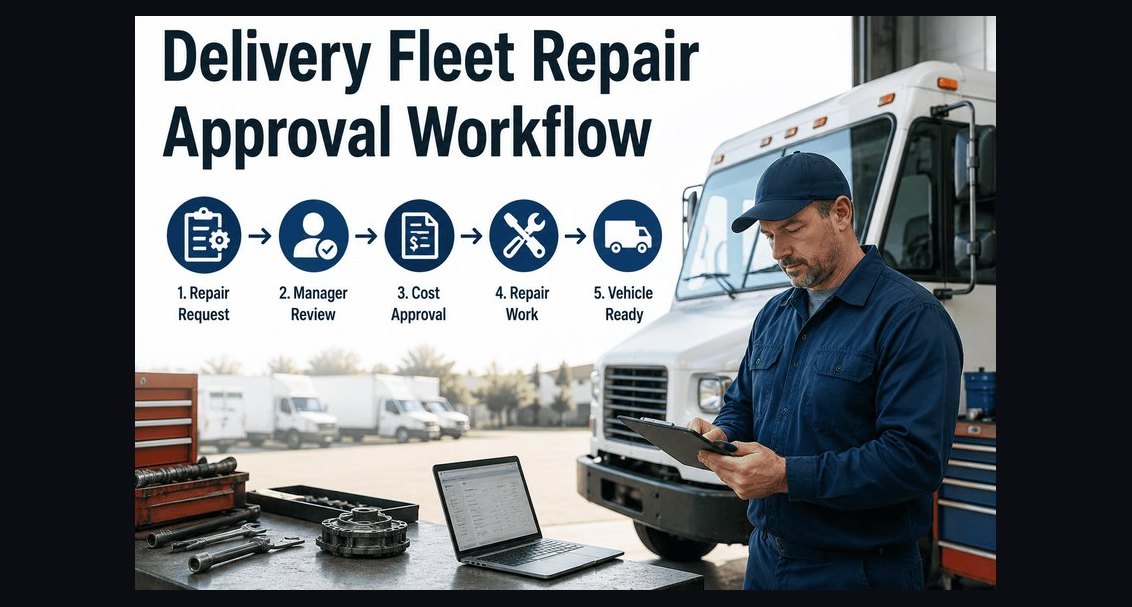 pulse-qShould I Repair or Replace My Delivery Fleet Vehicles as My Landscaping Business Scales in 2027?
 pulse-qHow Do I Score My CSMs on Retention and Expansion in 2026?
 pulse-qShould I Hire a Fractional CRO If I Have No RevOps Function Yet in 2026?
 pulse-qHow Many Baristas Should I Schedule Each Shift at My Coffee Drive-Thru in 2026?
 pulse-qHow Do I Score My Recruiters on Placements and Margin in 2026?