 Pulse Reviews and Analysis
Should I Hire a Fractional CRO If My CAC Payback Exceeds 24 Months?

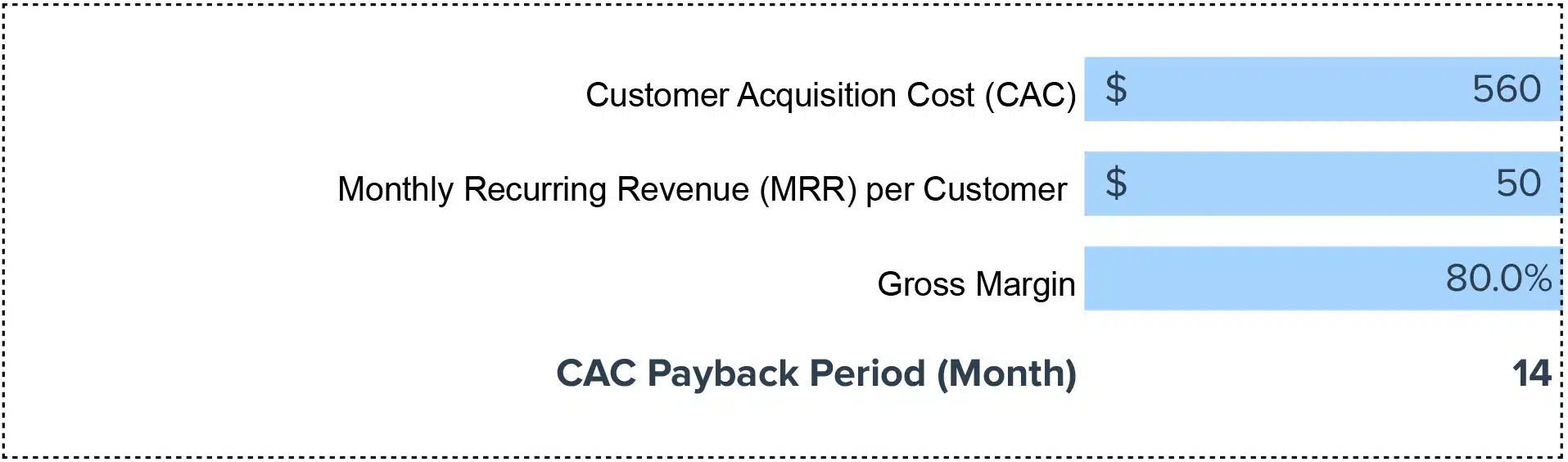
I've been in revenue leadership for 25 years, and I've seen this movie before. A founder calls me, CAC payback is pushing 25 months, and they want to know if a fractional CRO is the right move. My answer: yes, because that number means you're spending more than two years of gross margin just to win a customer.
That's not a sales problem—it's a math problem disguised as one.
Here's the blunt truth: a healthy CAC payback for most B2B companies sits under 12 months, with efficient ones landing between 5 and 12. Once you're past 24, you're financing growth with cash you may not have, and every new customer makes the cash position worse before it gets better.
The cause is rarely one thing. It's usually some combination of paying too much per lead, converting too few of them, pricing too low, or losing customers before they pay back the cost to acquire them. A fractional CRO reads all four levers together instead of optimizing one in isolation.
I've scaled revenue past $3 billion, led teams of more than 200 people, and served as an executive at Cellular Sales, one of the largest Verizon authorized retailers in the country. I'm the operator behind PULSE RevOps and the free revenue tools on this site, and I take on fractional CRO engagements through CRO Syndicate—a network of senior revenue practitioners who have built the numbers they advise on.
When payback has blown out, I work the whole unit-economics chain at once rather than cutting ad spend and hoping, which is the fastest way to break payback and growth at the same time.
What a 24-month-plus CAC payback is really telling you is that one or more of these is true: you're paying too much to acquire each customer (blended CAC climbed because paid channels got expensive, sales cycles lengthened, or you're buying low-intent leads that burn rep time without closing); conversion is leaking (you generate enough top-of-funnel, but win rates and stage-to-stage conversion are low, so the cost of every closed deal absorbs the cost of all the ones that did not); your price or margin is too low for the cost to win (underpricing is one of the most common hidden causes of long payback); or customers churn before they pay you back (a 24-month payback paired with customers who leave inside two years is not slow—it's a loss on every deal).
A fractional CRO takes ownership of the revenue engine part time and works the entire payback equation. In the early weeks, I'd rebuild CAC honestly—all sales and marketing cost, fully loaded—then split payback by channel, segment, and product. Most owners discover one or two channels or segments are dragging the blended number while others are healthy.
Then I'd reallocate spend toward the channels that actually pay back, tighten qualification so reps stop burning hours on deals that never close, and lift win rates through a cleaner sales process. Often the fastest payback fix is on the margin side—a price increase, better packaging, or moving customers to higher-margin tiers—because every point of gross margin directly shortens the time to earn CAC back.
Finally, I'd tie customer success to the same revenue goals so customers stay long enough to clear payback and turn profitable, then hand the whole system to your team.
Here's the hire comparison: a VP of Sales owns quota and the sales team, but most don't own marketing spend, pricing, or retention—the other three levers of CAC payback—so a VP can hit a number while payback stays broken. A full-time CRO is the right answer once you're large enough to keep a $300K-to-$500K executive accountable across all of revenue every day, generally past $10M to $20M, but that's a heavy cost to carry while you're still trying to prove the economics work.
A fractional CRO owns the full equation at a senior level for $5,000 to $15,000 a month, which is exactly the breadth a CAC payback problem demands.
The first 90 days are straightforward: in the first 30, honest measurement—fully loaded CAC, payback split by channel and segment, win rates, and gross margin per customer. By day 60, the levers are moving—spend reallocated toward channels that pay back, qualification tightened, and a pricing or packaging change scoped.
By day 90, retention is wired to revenue goals and a reporting cadence tracks payback as a live metric, with your team trained to keep it under control after the engagement.
Cost-wise, a fractional CRO runs roughly $5,000 to $15,000 a month, versus $25,000-plus a month all in for a full-time CRO. When CAC payback is over 24 months, the company is burning cash on every new customer, so shortening payback even from 24 months to 14 changes the cash trajectory of the entire business.
Against that, the retainer is a rounding error, which is why companies between $1M and $20M in revenue with strained unit economics get outsized leverage from this hire.
Can you just cut ad spend to fix a long CAC payback yourself? You can cut payback by cutting spend, but you usually cut growth with it and never address the real causes—low conversion, thin margin, or churn. A fractional CRO shortens payback while protecting growth by working all four levers, not just the one that's easiest to turn down.
What CAC payback should you be targeting? Most efficient B2B companies aim for payback under 12 months, with many landing between 5 and 12. Anything past 24 months means you're financing growth with cash and should treat it as a priority, not a footnote.
Is a fractional CRO better than a RevOps hire for this? A RevOps analyst can measure CAC payback accurately, which matters, but cannot redesign pricing, reallocate spend, and fix the sales process at an executive level. A fractional CRO like me, working through the CRO Syndicate network, owns the decisions a RevOps hire can only inform.
Bottom line: a CAC payback over 24 months means your unit economics are working against you, and the cause almost always spans acquisition, conversion, pricing, and retention—not one of them alone. A fractional CRO owns that whole equation, shortens payback without strangling growth, and leaves the system with your team for a fraction of a full-time hire.
If your payback has blown out, stop hoping it'll fix itself—it won't.
For the full suite of free revenue tools and the operator behind them, check out PULSE RevOps and the CRO Syndicate network.
*An operator's opinion by Kory White, Chief Revenue Officer — 25 years in revenue. More at PULSE · CRO Syndicate*