
Should I open or buy a Body20 franchise in 2027?
 Curated byKory White · Fractional CRO · Maryland
 PULSEKNOWLEDGE LIBRARY
Quality
Certified
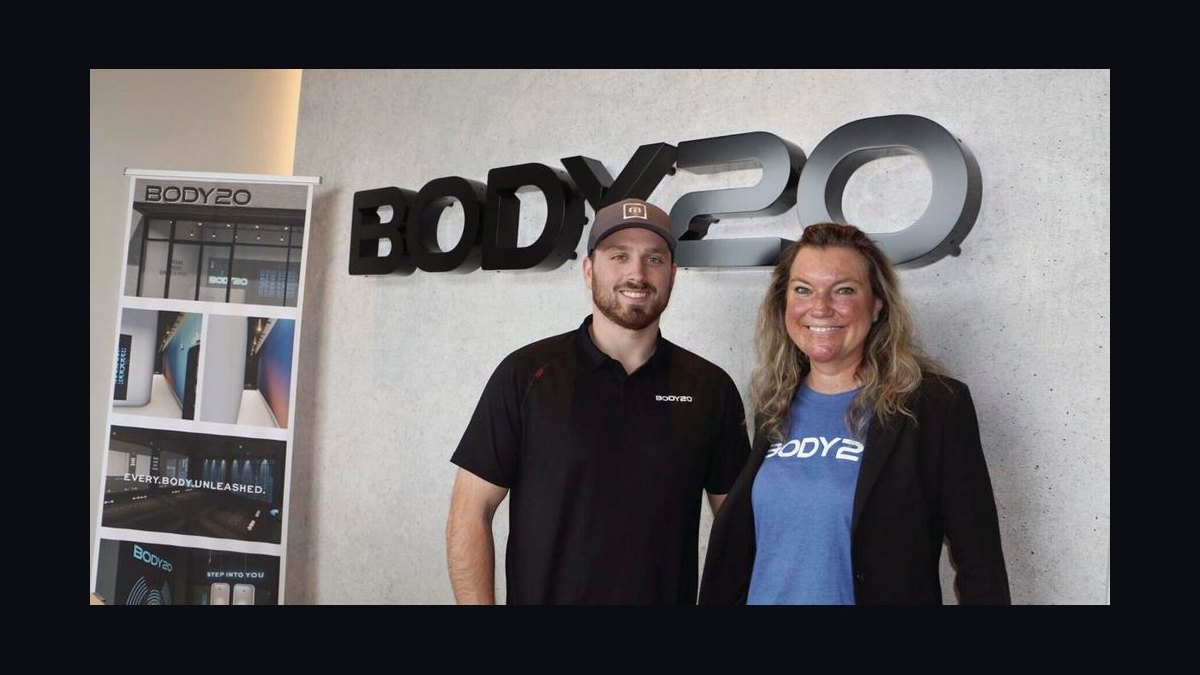
Yes, opening a Body20 franchise in 2027 makes sense for a tech-forward operator entering the EMS (electro-muscle-stimulation) fitness niche, provided you have $300,000-$600,000 in capital, can educate a market unfamiliar with EMS, and are targeting an affluent, time-pressed demographic. Owners who build premium recurring memberships typically clear $70,000-$220,000 annually, but the category's newness and equipment costs make this a moderate-risk, moderate-reward franchise rather than a safe bet.
The outcome you should expect
If you open a Body20 franchise in 2027, expect a slow first year followed by a meaningful but not spectacular payoff. Based on franchisee performance patterns from 2024-2026, most single-unit owners spend 12-18 months building from a near-empty studio to 80-150 active members. During that ramp, expect to operate at a loss or breakeven for the first six to nine months while you cover rent, trainer payroll, and marketing on a membership base too thin to support them. This is not unusual for boutique fitness — Orangetheory and F45 franchisees report similar ramp curves — but EMS carries an additional drag because you're also teaching prospective members what electro-muscle-stimulation training even is before you can sell them on it.
By year two, a reasonably executed studio in a receptive market should gross $450,000-$650,000 annually, with mature, well-run locations reaching $400,000-$900,000. Owner take-home after royalty, marketing fee, rent, trainer labor, and equipment reserves typically lands between $70,000 and $180,000 for a single unit — toward the higher end if you personally coach sessions rather than hiring out every slot. Multi-unit owners running two or three studios with a shared manager often see $150,000-$300,000 combined, because overhead like bookkeeping, regional marketing, and management doesn't scale linearly with unit count.
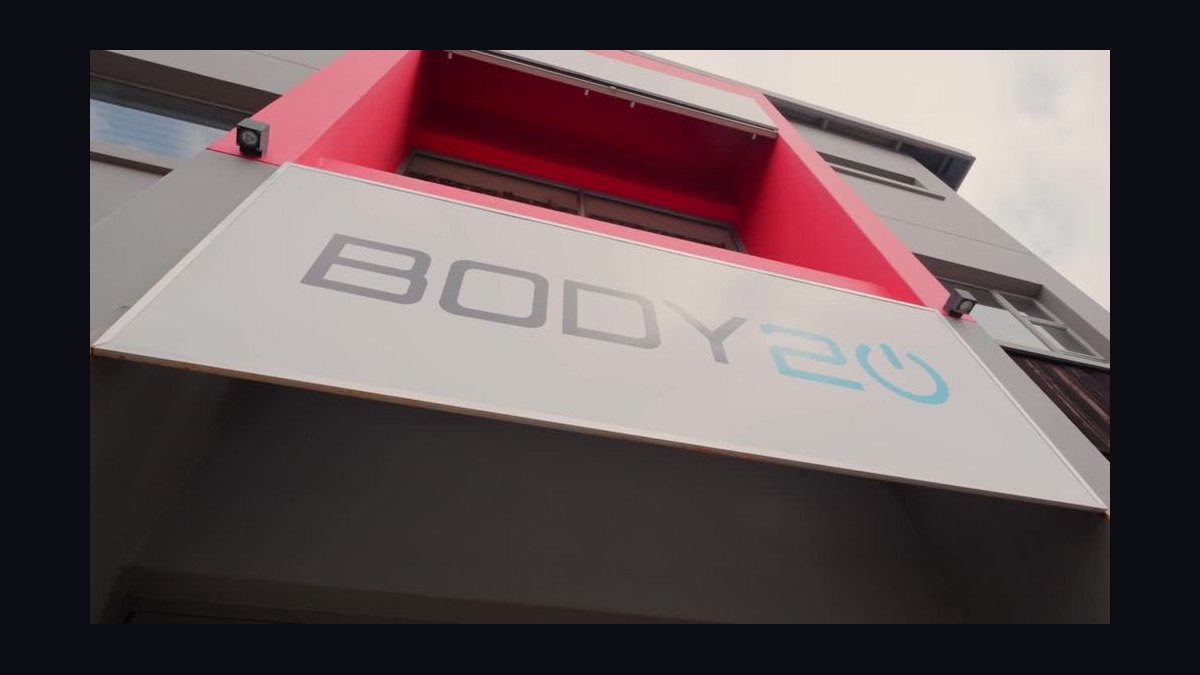
The outcome hinges less on the brand and more on two variables you control: how fast you convert curious visitors into paying members, and how disciplined you are about membership pricing. Because the 20-minute session format lets each station handle 8-12 sessions per day, capacity is almost never your constraint — demand generation is. A studio that under-invests in local marketing and referral programs will plateau at 40-60 members and struggle to cover fixed costs, while one that treats membership sales as an ongoing operating discipline (not a pre-opening sprint) reaches the 100+ member range that makes the unit economics work.
What drives that outcome
The financial outcome of a Body20 franchise is driven by a small number of interacting levers: membership density, average monthly dues, staffing ratio, and the ongoing cost of market education. Because EMS is still an emerging category — even heading into 2027 — a meaningful share of your marketing spend isn't top-of-funnel awareness, it's literally explaining what the suits do and why 20 minutes can substitute for a longer traditional workout. That education tax shows up nowhere on the FDD's Item 7 investment table, but it shows up every month in your marketing line and in how long your sales cycle runs compared to a conventional gym.

Staffing works in your favor structurally: because sessions are one-on-one or small-group, you need far fewer trainers per member than a group-fitness studio, and EMS suits reduce the physical toll on trainers compared to running back-to-back HIIT classes. That keeps labor as a percentage of revenue lower than most boutique concepts, which is part of why Body20's margins run 40-55% versus 30-40% for a traditional gym. But the flip side is that your revenue ceiling per location is capped by physical session capacity and by how many members will pay a premium price — you can't discount your way to volume the way a big-box gym can.
The other structural driver is equipment lifecycle. EMS suits and consoles are electronics, and electronics degrade with daily use — replacement typically runs $15,000-$25,000 every three to four years per studio, a cost many first-time owners don't model into their five-year cash flow because it isn't a line item on the initial Item 7 disclosure. Franchisees who set aside a monthly equipment reserve from day one avoid the cash crunch; those who treat year-four suit replacement as a surprise often finance it at a bad moment, right when a competing studio may be undercutting their pricing.

Benchmarks and realistic ranges
Use these ranges to sanity-check any pro forma a Body20 franchise salesperson hands you, and to compare against your own market research before you sign. The 2026 FDD lists a franchise fee of roughly $45,000-$60,000, with total Item 7 investment — buildout, EMS equipment, signage, initial marketing, training, and working capital — landing between $300,000 and $600,000. Ongoing fees run about 6%-7% royalty plus roughly 2% for the marketing fund, both calculated on gross revenue, which means they scale down automatically in a slow month but also compound against you once you're at scale and paying six figures a year to the franchisor.
On the revenue side, expect $400,000-$900,000 gross at a mature single unit, with owner earnings of $70,000-$220,000 depending on how lean you run and whether you supplement with personal coaching hours. Average membership dues run $200-$350 a month in most markets, with some premium urban locations pushing toward $400; in markets that have become saturated with EMS competitors since 2024 — Austin, Denver, and Miami are frequently cited examples — average pricing has compressed 10-15%, so a 2027 entrant into one of those metros should underwrite a $250/month price point rather than $350.
Territory protection typically runs a 3-5 mile radius in the franchise agreement, but in dense urban cores that can shrink to effectively one zip code once you account for how EMS clients actually travel to sessions. Before signing, map every existing Body20 and every EMS competitor within a 10-mile radius; more than three EMS studios in that radius is a signal your ramp will run longer and your marketing budget will need to run higher than the FDD's Item 19 projections assume. On the resale side, be realistic: fewer than ten Body20 locations have changed hands as of 2026, selling at 0.4-0.6x annual revenue versus 0.7-1.0x for mature fitness brands like Anytime Fitness — meaning a $500,000 investment might return only $200,000-$350,000 if you need to exit in five years, though multi-unit packages have fetched 0.7-0.8x by offering a buyer built-in scale.
Risks, edge cases, and failure modes
The single biggest failure mode for a Body20 franchise is opening in a market that isn't ready to pay a premium for an unfamiliar fitness modality. EMS is not yet mainstream the way spin or yoga is; if your local demographic skews price-sensitive or simply hasn't been exposed to electro-muscle-stimulation training, you will spend disproportionately on education relative to revenue, and your membership ramp will stall well below the 80-150 member range that makes the unit profitable. This is the scenario where owners quietly extend their working-capital runway two or three times before admitting the location was mispositioned from day one.
A second, less obvious risk is underestimating equipment lifecycle cost. Because EMS suits and control consoles are the core delivery mechanism — not incidental equipment the way free weights are to a traditional gym — their failure or obsolescence directly caps your session capacity. An owner who hasn't reserved cash for the $15,000-$25,000 replacement cycle every three to four years can find themselves choosing between deferred maintenance (which degrades the member experience and accelerates churn) and an emergency capital outlay funded by high-interest debt.
Territory cannibalization is a real edge case as the brand grows: Body20 is now the largest EMS franchise in the U.S. by unit count, at roughly 60-80 locations as of mid-2026, and continued growth means new franchisees increasingly open near existing ones. If your protected territory is narrow, a nearby Body20 opening — or worse, a competing EMS brand like E-PT, Katalyst, or a well-capitalized independent studio — can fragment the addressable membership base before you've built loyalty. Run the density check described above as a hard go/no-go gate, not a formality.
Finally, treat resale illiquidity as a genuine risk rather than a footnote. Because so few Body20 units have traded hands, you have limited price discovery if you need to sell in a downturn, a health event, or simply a change of plans. Corporate's occasional buyback offers (around 0.5x trailing revenue) function as a partial safety net for underperforming units, but they are not guaranteed and should not be built into your exit assumptions. Anyone running even lightweight RevOps-style tracking on lead source, conversion rate, and membership churn will spot a stalling ramp months before it becomes a cash crisis — that operational discipline is what separates owners who catch a failure mode early from those who discover it in the resale appraisal.
A practical rollout plan
Treat the decision to open a Body20 franchise as a staged validation process, not a single yes/no moment. In the first 20 days, read the full 2026 FDD, especially Item 19's financial performance representations and Item 20's outlet turnover and transfer data — a high churn rate among existing franchisees is a louder signal than anything in the marketing deck. Over the next 20 days, call at least eight to ten existing operators, asking specifically about membership ramp speed, how much they spent on market education versus general marketing, actual equipment maintenance costs, and net profit after all fees — not just the topline revenue they're often quicker to share.
Days 41-60 should validate the actual market, not just the demographic averages in a franchise disclosure packet: confirm household income, fitness spending patterns, and existing EMS or premium-fitness saturation within your real territory, using the 10-mile competitive map as a hard filter. Days 61-90 cover buildout, staff hiring, and EMS equipment installation and calibration, plus getting your trainers comfortable running sessions before members ever walk in. Days 91-120 should front-load a pre-sale membership campaign so you open with a founding cohort rather than an empty schedule, and your marketing in this window should explicitly budget for education content — video, in-person demos, and referral incentives — rather than generic gym-opening ads.
Once open, the ongoing discipline that separates a franchise that hits its Item 19 projections from one that doesn't is monthly tracking of membership conversion rate, average dues, and churn, with a pre-set trigger for corrective action (price adjustment, new referral offer, added marketing spend) if you fall behind pace for two consecutive months. Only after a single unit is stable at 80+ members and cash-flow positive should you evaluate a second unit — multi-unit expansion works because you share management and marketing overhead, but it multiplies your exposure if your first location's ramp assumptions turn out to be wrong.

Related questions
Is EMS fitness a fad or a durable category?
EMS has grown from a fringe concept to a recognized niche in most metros since 2024, but it remains smaller and less proven than group fitness or traditional gyms. Treat it as an emerging category worth entering carefully, not a guaranteed long-term winner.
How does Body20 compare to opening an independent EMS studio?
An independent studio avoids royalty and franchise fees but forfeits brand recognition, training systems, and vendor relationships for EMS equipment. Body20's brand helps with initial trust-building in an unfamiliar category, which is often worth the fee trade-off for first-time fitness operators.
Should I open one Body20 unit or plan for multiple from the start?
Start with one unit and prove the ramp before committing to a second. Multi-unit economics only work once you've validated local demand, pricing, and membership retention — planning multiple units before that risks compounding a bad location decision.
What happens if my territory later gets a second Body20 nearby?
Protected territories run 3-5 miles but can be effectively one zip code in dense areas. Review the exact territory language and the franchisor's development plans for your region before signing, since a nearby unit will split your addressable membership base.
FAQ
What exactly is a Body20 franchise? Body20 is an EMS (electro-muscle-stimulation) fitness franchise where clients complete 20-minute, one-on-one or small-group workouts wearing a suit that electrically stimulates muscle groups during exercise. It runs on a recurring-membership model and requires fewer trainers per session than traditional group fitness.
How much does it cost to open a Body20 franchise? The franchise fee runs roughly $45,000-$60,000, with total initial investment of about $300,000-$600,000 covering buildout, EMS equipment, signage, training, and working capital. Ongoing costs include a 6%-7% royalty and a roughly 2% marketing fee, both on gross revenue.
What revenue and profit can a realistic owner expect? Mature studios typically gross $400,000-$900,000 annually, with owner earnings between $70,000 and $220,000. Most single-unit owners land in the $70,000-$180,000 range after all fees, with results depending heavily on local market receptiveness and membership density.
Is EMS a proven fitness market by 2027? EMS is more established than it was in 2024 but still requires active market education in most territories. It is not yet as mainstream as spin, yoga, or traditional strength training, so budget for ongoing consumer education, not just a one-time launch campaign.
What's the biggest financial trap first-time Body20 owners fall into? Underestimating EMS equipment replacement cost, which runs $15,000-$25,000 every three to four years per studio and isn't itemized in the initial FDD investment table. Owners who don't reserve cash for it can face a forced, high-interest financing decision at year three or four.
How liquid is a Body20 franchise if I need to sell? Resale liquidity is limited — fewer than ten units have changed hands as of 2026, selling at 0.4-0.6x annual revenue versus 0.7-1.0x for mature fitness brands. Multi-unit packages have fetched better multiples (0.7-0.8x) by offering a buyer immediate scale.
Sources
- https://www.ftc.gov/business-guidance/resources/franchise-rule-compliance-guide
- https://www.entrepreneur.com/franchises/directory
- https://www.ibisworld.com/united-states/industry/gyms-fitness-clubs/1785/
- https://www.ihrsa.org/
- https://www.statista.com/markets/419/health/
- https://www.franchisebusinessreview.com/
- https://www.franchise.org/
- https://www.census.gov/topics/income-poverty.html
Related on PULSE
- [Should I open or buy an Oxi Fresh Carpet Cleaning franchise in 2027?](/knowledge/q15521)
- [Should I open or buy an Oil Can Henry's franchise in 2027?](/knowledge/q15520)
- [Should I open or buy a KidStrong franchise in 2027?](/knowledge/q15519)
- [Should I open or buy a Premier Garage franchise in 2027?](/knowledge/q15518)
- [Should I open or buy a Jazzercise franchise in 2027?](/knowledge/q15517)
- [Should I open or buy a Nekter Juice Bar franchise in 2027?](/knowledge/q15516)
This page will be disappearing soon. Save it to your device for $1 — or read it free while it is here.
@Kory-White- · if Venmo asks, the last 4 of my number are 2012
This page is gone.
This one is off the shelf now. $1 keeps it on your phone for good — the whole page, pictures and diagrams included.
 pulse-qTop 10 Objection Coaching Responses for Enterprise Sellers in 2027
 pulse-qShould I open or buy a Cookies Crumbl alternative — Insomnia Cookies — franchise in 2027?
 pulse-qShould I Sign a Personal Guarantee on a Commercial Lease?
 pulse-qHow Many Sales Reps Do I Need to Hire for My Equipment Rental Company?
 pulse-qShould I open or buy a The NOW Massage franchise in 2027?
 pulse-qHow do you coach reps to improve their lead-to-opportunity rate?
 pulse-qWho Pays for the Demising Wall Between Tenant Spaces?
 pulse-qHow Do I Budget a Nail Salon Buildout?
 pulse-qShould I open or buy a Restore Hyper Wellness franchise in 2027?
 pulse-qShould I open or buy a LaMar's Donuts franchise in 2027?