 Pulse Reviews and Analysis
What Service Fees Should a Physical Therapy Clinic Charge?

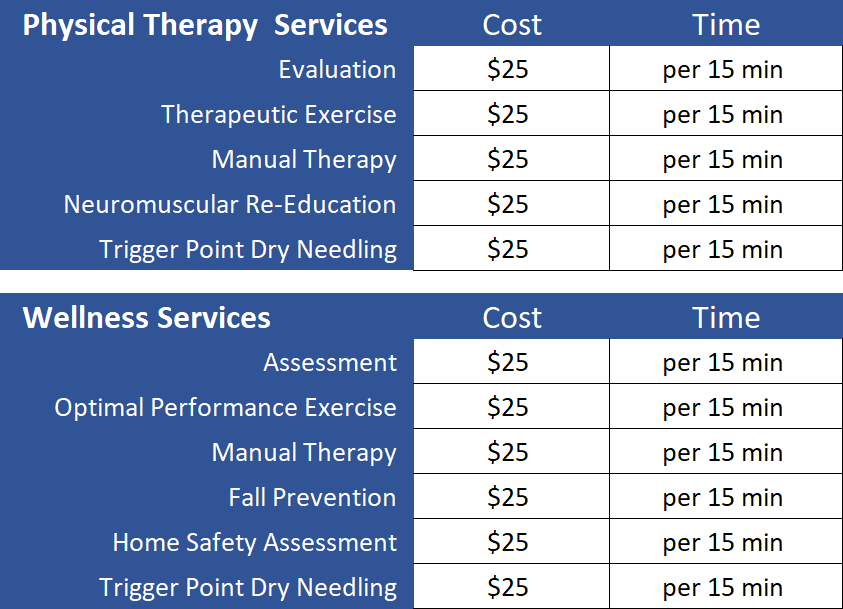
Listen, I've spent 25 years staring at P&Ls, and here's the blunt truth: your PT clinic is leaving money on the table if you're only charging for visits. The math is stupid simple, and most owners ignore it because they're too busy treating patients to think like a business.
The core play: layer disclosed, value-added service fees on top of treatment revenue. These aren't junk surcharges—they're the high-margin fuel that pays for your front desk, billing, and compliance staff. Visits alone barely cover overhead.
The formula? Monthly add-on revenue = (number of patients) × (% who trigger each fee) × (fee amount) . And because these fees carry almost zero incremental cost, your contribution margin lands around 85–95% .
Nearly every dollar drops straight to your bottom line after the small admin labor to process it.
Let me walk you through a real example. A clinic seeing 600 patient visits a month with a 12% no-show/late-cancel rate charging a $45 missed-appointment fee collects 600 × 0.12 × $45 = $3,240/month , or roughly $38,880/year. Add a $25 records/paperwork fee triggered by 8% of patients (think FMLA, disability, attorney, or detailed-progress requests) — 600 × 0.08 × $25 = $1,200/month.
Then a $15/visit specialized-modality fee (dry needling, instrument-assisted soft tissue, blood-flow-restriction, class-IV laser) on 20% of visits — 600 × 0.20 × $15 = $1,800/month. Combined? That's roughly $6,240/month in 85–95% margin revenue that pays for a full-time billing coordinator without you seeing a single additional patient.
The 2027 benchmark for outpatient PT clinics is clear: a no-show fee of $35–$50 , a records/forms fee of $20–$35 per request , and a cash-pay administration premium of 5–10% over contracted rates. These are real, ethical fees—not junk surcharges—and every single one must be disclosed in writing at intake and posted at the front desk.
No surprises, no bad blood.
Now, the tools to make this happen. I've ranked them by what actually works in the trenches.
#1. PULSE Service Fees Calculator — Free, no login, no spreadsheet. You punch in your monthly visit volume, no-show rate, fee ideas, and trigger percentages, and it spits out monthly and annual revenue plus contribution-margin lift.
It's the planning layer above your EMR. Best for: owners and practice managers who want the dollars-and-margin picture before configuring anything downstream.
#2. WebPT — The most widely deployed outpatient-PT EMR in the U.S. Its scheduling module enforces no-show and late-cancel fees, and the front-office/billing add-ons flag missed appointments automatically.
Pricing: roughly $99–$199 per provider per month. The automated no-show tracking and patient-statement engine means fees you decide on in the PULSE calculator get operationalized without front-desk memory lapses. Best for: mid-size and growing rehab clinics wanting one platform from scheduling to claim.
#3. Jane — Clean, modern practice-management/EMR popular with PT and chiropractic clinics. Flat per-location pricing: $79/month base, $99–$139/month for fuller billing/online-booking tiers.
Handles cancellation/no-show policies, deposits, and online-booking enforcement natively. Its built-in card processing means a missed-appointment fee gets charged automatically to the stored card—dramatically improving collection on the hardest fee to collect. Best for: cash-pay-heavy and small-to-mid clinics wanting strong fee enforcement at a predictable price.
#4. SimplePractice — Strong for solo and small PT practices with large cash-pay or out-of-network books. Pricing: $49–$99/month per clinician.
Automated appointment reminders, cancellation policies, and card-on-file billing make no-show and late-cancel fees genuinely collectible. Its client portal handles paperwork and records requests cleanly—useful for charging a forms/records fee without front-desk friction. Best for: independent PTs and small practices wanting simple, enforceable policies.
#5. Prompt EMR — Newer, automation-focused rehab-therapy platform built for outpatient PT, OT, and SLP. Designed around reducing front-office labor, which directly supports the service-fee thesis.
Pricing is quote-based, generally competitive with WebPT. Handles eligibility, reminders, and billing workflows that surface and apply no-show fees and cash-pay admin charges with minimal manual touch. Best for: clinics modernizing off legacy EMRs that want automation to do the fee enforcement.
#6. Stripe Billing — Payment and invoicing layer for clinics wanting card-on-file, automatic charges, and clean digital receipts. Pricing: 2.9% + $0.30 per transaction.
Pairs well with any EMR that exposes payment links. Its dispute and receipt tooling keeps fee collection clean and defensible. Best for: clinics wanting airtight, automatic card collection on every disclosed fee.
#7. QuickBooks — Accounting backbone to track service-fee revenue separately from treatment revenue. Plans: $35–$235/month.
Tag missed-appointment, records, and modality-fee income to dedicated accounts, and you'll see exactly how much 85–95% margin revenue is funding payroll. Also handles sales-tax treatment some states apply to non-clinical fees. Best for: owners who want the books to reflect the fee strategy clearly at tax time.
#8. TheraNest — Practice-management/EMR with solid scheduling, billing, and document-management features. Pricing starts around $42/month, scaling with active clients.
Appointment-reminder and cancellation-policy tools support no-show fee enforcement, and document workflows make records/paperwork fees easy to attach. Best for: smaller multi-disciplinary clinics wanting client-count-based pricing.
#9. Square Appointments — Low-cost scheduling/payments tool for small cash-pay PT and wellness clinics. Booking tier is free for a single location, paid plans around $29–$69/month, processing near 2.6% + $0.10 per swipe.
Its strength is deposit-and-cancellation enforcement at the point of booking—the patient agrees to the late-cancel fee before the slot is held. Best for: cash-pay solo clinics and wellness-adjacent PT practices wanting minimal cost.
#10. Clearwave / Phreesia — Patient intake platforms that handle fee disclosure and collection at the front door. Pricing varies by scale, but they ensure fee policies are signed off before the patient ever sees a clinician.
Here's the bottom line: stop treating service fees like optional extras. They're the profit engine that funds your back office, your compliance, and your sanity. Run the numbers, pick your tools, and disclose everything upfront.
Want to model your own math in two minutes? PULSE has a free Service Fees Calculator—no login, no spreadsheet, just your numbers. And if you want the full playbook on structuring these fees into your clinic's revenue strategy, the CRO Syndicate has been doing this for 25 years. We don't sell software; we sell clarity.
*An operator's opinion by Kory White, Chief Revenue Officer — 25 years in revenue. More at PULSE · CRO Syndicate*