 Pulse Reviews and Analysis
How Do I Build a Deal Desk for Multi-Year Enterprise Contracts in 2027?
 Curated by Kory White · Fractional CRO, CRO Syndicate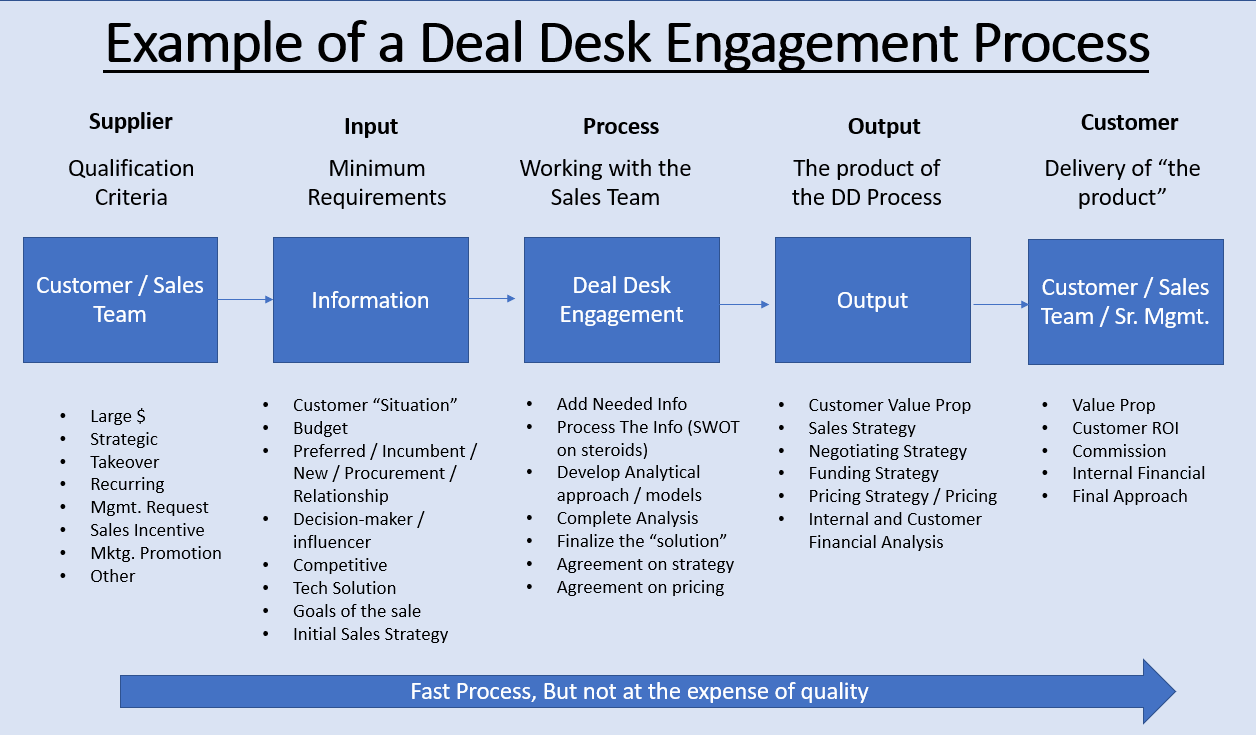
Direct Answer
To build a deal desk for multi-year enterprise contracts in 2027, create a cross-functional approval function that reviews large, complex, or non-standard deals before they reach legal and signature — checking pricing, discount, payment terms, ramp schedules, and contractual risk against pre-approved guardrails, and escalating only the true exceptions.
Multi-year enterprise deals carry traps a rep cannot see alone: revenue-recognition implications of ramped pricing, churn risk from over-discounting year one, payment-term concessions that wreck cash flow, and bespoke legal clauses that create future liability. A deal desk turns those from ad-hoc fire drills into a fast, governed workflow with clear thresholds, an approval matrix, standard playbooks for common concessions, and tight SLAs so it speeds deals up rather than slowing them.
The goal is protected margin and clean contracts without becoming the bottleneck reps resent.
Why Multi-Year Enterprise Deals Need a Desk
A single multi-year contract can be worth more than dozens of small deals, so a mistake is expensive and durable — you live with bad terms for years. The risks cluster in a few places. Discounting to win year one can destroy lifetime margin and reset price expectations.
Ramp schedules (lower price early, higher later) interact with revenue recognition and forecasting. Payment terms — annual upfront versus quarterly, net-30 versus net-90 — directly hit cash flow. And non-standard legal language (uncapped liability, aggressive SLAs, custom indemnities) creates risk the rep is not equipped to evaluate.
A deal desk concentrates the right expertise so these get caught before signature, not after.
Set Thresholds So the Desk Sees Only What Matters
The desk should not review every deal — that creates a bottleneck. Define trigger thresholds: deal size above a limit, discount beyond a band, contract length beyond standard, non-standard payment terms, or any redlined legal clause. Deals inside the guardrails auto-approve and flow straight to signature.
Only exceptions hit the desk. This keeps small and standard deals fast and reserves human review for the consequential ones.
The Approval Matrix
Build a tiered approval matrix mapping the size and type of concession to who must approve. Small discounts: sales manager. Larger discounts or extended payment terms: RevOps/deal desk plus finance.
Major non-standard legal terms: legal and an executive. Publish the matrix so reps know in advance what a given ask will require, which lets them set customer expectations and avoid surprises late in the cycle.
Standardize the Common Concessions
Most "exceptions" repeat. Build pre-approved playbooks for the common ones — a standard ramp structure, an approved multi-year discount curve, accepted payment-term alternatives, and fallback legal positions. When a rep's ask matches a playbook, the desk approves fast or it auto-approves.
This is how a desk stays quick: it only deliberates on the genuinely novel.
Protect Cash, Margin, and Rev-Rec
For multi-year deals specifically, the desk should evaluate: total contract value and effective annual discount, the cash timing of payment terms, the revenue-recognition treatment of ramps and usage commitments (with finance), and renewal risk created by year-one concessions.
CPQ tooling (e.g., Salesforce CPQ or DealHub), a contract-management/CLM system (e.g., Ironclad or DocuSign CLM), and finance/billing systems (e.g., NetSuite or Zuora) should connect so approved terms flow cleanly into the contract and the financials — no rekeying, no drift between what was approved and what was signed.
SLAs and the Anti-Bottleneck Rule
A deal desk that is slow gets bypassed. Commit to response SLAs (e.g., a defined turnaround for standard exceptions, faster for end-of-quarter), staff for peak periods, and measure your own cycle time. Track how often deals route through the desk versus auto-approve; if everything routes, your guardrails are too tight.
Staffing and Measuring the Desk
A deal desk is only as good as the people and metrics behind it. For most mid-market and enterprise teams it sits inside RevOps, staffed by people fluent in pricing, CPQ, and contract terms, with on-call partners in finance and legal for the exceptions that need them. During peak periods — especially quarter-end and year-end, when the volume of large, negotiated deals spikes — staff up or pre-clear common concessions so the desk does not become the reason deals slip.
Measure the desk on two axes at once: speed (turnaround time on exceptions, percentage handled within SLA) and protection (average discount held versus requested, margin defended, contract-risk issues caught before signature). Watching only speed turns the desk into a rubber stamp; watching only protection turns it into a bottleneck.
Reporting both keeps it honest, and tracking the auto-approve rate tells you whether your guardrails are tuned correctly — if nearly everything routes for review, the thresholds are too tight and reps will start working around the desk.
Common Pitfalls
- Reviewing every deal. Turns the desk into a bottleneck reps route around.
- No published matrix. Reps cannot set customer expectations and concessions surprise everyone late.
- Ignoring rev-rec on ramps. Multi-year ramp pricing can create accounting and forecasting problems.
- Over-discounting year one. Wins the deal, destroys lifetime margin and renewal leverage.
- Disconnected systems. Approved terms drift from signed terms when CPQ, CLM, and billing are not integrated.
FAQ
What deals should route to the deal desk? Only exceptions — deals above a size threshold, beyond a discount band, with non-standard length or payment terms, or with redlined legal clauses. Standard deals should auto-approve.
How do I keep the deal desk from slowing deals down? Set clear guardrails so most deals never touch the desk, publish an approval matrix, pre-approve common concessions as playbooks, and commit to response SLAs.
Why are multi-year contracts riskier? Their size and duration magnify mistakes — over-discounting, payment-term concessions, ramp revenue-recognition issues, and bespoke legal terms all create long-lived exposure.
Who approves big discounts and non-standard terms? A tiered matrix: managers for small concessions, finance and the desk for larger ones, and legal plus an executive for major non-standard legal language.
How do I keep approved terms from drifting in the final contract? Integrate CPQ, contract management, and billing so approved pricing and terms flow into the signed document and the financial systems without rekeying.
Sources
- Salesforce CPQ and DealHub — configure-price-quote and approval-workflow documentation.
- Ironclad and DocuSign CLM — contract lifecycle management and redline workflow documentation.
- WorldatWork and CFO/finance guidance — revenue recognition (ASC 606) and concession-risk principles.
- Gartner — deal-desk and quote-to-cash process research.
- Zuora and NetSuite — subscription billing and multi-year contract revenue documentation.
Related on PULSE
- How do you design a deal-desk discount approval matrix that does not slow deals in 2027?
- How Do I Design a Sales Commission Clawback and Draw Policy in 2027?
- How Do I Run RevOps for a Usage-Based or Consumption Pricing Model in 2027?
- How do you design a discount governance policy that protects margin in 2027?
- Explore the Pulse Tools library for a deal-desk approval-matrix template.