
How Does Vendor Consolidation Impact the Accuracy of Pipeline Velocity Calculations in RevOps in 2027?
 Curated byKory White · Fractional CRO · Maryland
 PULSEKNOWLEDGE LIBRARY
Vendor consolidation directly degrades pipeline velocity accuracy in RevOps by introducing measurement discontinuities, data normalization gaps, and attribution fragmentation across merged systems. In the 2027 reality of AI-driven funnel orchestration, longer enterprise sales cycles (often 9–18 months), and 11+ person buying committees, consolidating from 8–12 point solutions into 2–3 platform vendors (e.g., Salesforce + Gong + Clari) creates phantom velocity shifts that mislead forecasting. The core problem is that velocity formulas—typically (Number of Deals * Win Rate) / Sales Cycle Length—rely on consistent stage definitions, timestamp integrity, and clean conversion metrics; consolidation breaks all three. Without deliberate schema harmonization and AI-based anomaly detection, RevOps teams see false acceleration (from merged CRM fields) or false deceleration (from lost historical conversion data). The impact is measurable: Gartner estimates that 60% of consolidated tech stacks experience a 15–25% variance in reported velocity for 6–9 months post-merger.
The 2027 RevOps Reality: Why Consolidation Hits Velocity Harder Now
By 2027, the average B2B tech stack has shrunk from 14+ tools to 5–7 platforms, driven by cost optimization and AI copilot bundling. But this consolidation collides with three structural changes:
- AI in the funnel: Predictive lead scoring, conversation intelligence, and automated sequence tools (like Outreach and Salesloft) now generate stage-transition events at machine speed, creating data streams that legacy CRM schemas can’t cleanly absorb.
- Longer cycles: Enterprise deals now average 12 months, with buying committees of 11–15 stakeholders (per Gartner). This multiplies the touchpoints per deal, making velocity calculations more sensitive to data completeness.
- Attribution complexity: AI-generated content, multi-threaded outreach, and asynchronous demos mean that “stage entry” and “stage exit” are no longer discrete events—they’re probabilistic signals.
When RevOps consolidates vendors, it’s not just merging databases; it’s merging different AI models’ confidence scores, different timestamping conventions (e.g., UTC vs. local, event-triggered vs. batch-updated), and different stage definitions (e.g., “Demo” in Tool A might mean “Scheduled” while in Tool B it means “Completed”). The velocity formula becomes a garbage-in-garbage-out machine.
How Consolidation Breaks the Velocity Formula
Pipeline velocity is calculated as: Velocity = (Number of Deals * Win Rate) / Sales Cycle Length Each component is vulnerable:
| Component | Consolidation Impact | Example |
|---|---|---|
| Number of Deals | Duplicate records inflate count; merged fields lose historical stages | Salesforce merge of duplicate accounts can double-count active deals |
| Win Rate | Lost historical conversion data from deprecated tools skews the denominator | Gong’s win-rate model vs. Clari’s may differ by 8–12% for the same cohort |
| Sales Cycle Length | Inconsistent stage-entry timestamps (e.g., first touch vs. qualified lead) shift cycle length by 20–40 days | Outreach sequence start vs. Salesforce opportunity creation date |
Real example: A B2B SaaS company consolidated from HubSpot (marketing), Salesloft (sales engagement), and Clari (forecasting) into a single Salesforce + Gong + Clari stack. Post-consolidation, their reported velocity dropped 22% overnight—not because deals slowed, but because Gong’s “Demo Completed” timestamp was 14 days later than Salesloft’s “Demo Scheduled” timestamp. The cycle length inflated artificially.
The Decision Tree: When to Trust Velocity Post-Consolidation
Use this decision tree to assess whether your velocity data is reliable after a vendor merger. It branches on data source alignment, timestamp consistency, and AI model calibration.
This tree reveals a hard truth: without schema harmonization, your velocity number is a fiction. The MEDDIC framework (Metrics, Economic Buyer, Decision Criteria, Decision Process, Identify Pain, Champion) can help align stage definitions by mapping each consolidation phase to a specific qualification criterion.
The Process Loop: How to Recalibrate Velocity After Consolidation
Consolidation isn’t a one-time event—it creates a feedback loop that requires continuous recalibration. Here’s the process for restoring velocity accuracy:
This loop ensures that velocity calculations adapt to the consolidated stack. Key tools for automation: Clari’s anomaly detection (flags stage-transition outliers) and Gong’s deal timeline (provides AI-verified event sequences). The loop should run monthly for the first 6 months post-consolidation.
The Role of AI in Masking (or Revealing) Velocity Errors
AI tools in 2027 are double-edged swords for velocity accuracy. On one hand, Gong’s conversation intelligence and Clari’s predictive forecasting can automatically correct for timestamp mismatches by analyzing call transcripts and email threads to infer actual stage transitions. On the other hand, these AI models are trained on pre-consolidation data patterns, so they may perpetuate old biases or hallucinate transitions in merged data.
Example: An AI model trained on Salesloft sequence data might interpret a “Meeting Completed” event as a stage exit, while the same event in Outreach is a stage entry. Post-consolidation, the AI could double-count transitions, inflating velocity by 30%. The fix: retrain AI models on post-consolidation data with a 3-month burn-in period, using human-in-the-loop validation for the first 500 deals.
The Buying Committee Multiplier Effect
With 11+ person buying committees, each deal has multiple touchpoints that can be miscategorized during consolidation. For example, a single deal might have:
- 3 discovery calls (from different tools)
- 5 product demos (recorded in Gong vs. Zoom)
- 7 email threads (in Outreach vs. HubSpot)
- 2 contract negotiations (in Salesforce vs. CPQ)
If consolidation merges these into a single “Active” stage, the velocity calculation sees one stage transition instead of 17. Bessemer Venture Partners notes that companies with buying committees >10 people see 40% longer cycles, but consolidation can mask this by collapsing multi-threaded activity into single-stage events. The fix: use weighted stage transitions (e.g., each committee member’s engagement counts as 0.1 of a stage entry) to reflect true velocity.
Data Normalization Gaps and Their Effect on Velocity Metrics
When consolidating vendors, RevOps teams inherit disparate data schemas that directly corrupt pipeline velocity inputs. For example, one vendor may define a "qualified lead" as a demo request, while another counts only budget-approved meetings. Post-consolidation, these mismatched stage definitions create phantom velocity shifts—either artificially inflating the number of deals in early stages or deflating conversion rates. The most common normalization gaps include inconsistent timestamp formats (Unix epoch vs. ISO 8601), varying win probability thresholds for stage progression, and conflicting currency or deal-size units. Without a unified data dictionary and automated field mapping, RevOps teams can see velocity calculations fluctuate by 10–30% simply due to how data is parsed, not actual pipeline changes. AI-driven schema matching tools (e.g., those embedded in modern CDPs) can reduce this variance by 40–60%, but require 3–6 months of training data to stabilize.
Attribution Fragmentation and Cycle Length Distortion
Vendor consolidation often severs historical attribution links, making it impossible to accurately measure sales cycle length—a core velocity component. If a deal tracked in vendor A’s CRM for 6 months is migrated to vendor B’s system, the original engagement data (emails, calls, content views) may be lost or stored in incompatible formats. This creates a false "reset" of the sales cycle, causing velocity calculations to show shorter cycles (if only post-migration data is used) or longer cycles (if duplicate records are merged). In enterprise deals with 9–18 month cycles, this distortion can mislead forecasting by 2–4 months. To mitigate this, RevOps teams should implement a 6–9 month parallel run period where both old and new systems log timestamps, using a master data layer to stitch identity across platforms before fully decommissioning legacy tools.
AI-Based Anomaly Detection as a Correction Mechanism
Modern RevOps stacks can counteract consolidation-induced velocity inaccuracies using AI anomaly detection. Tools like Clari, Gong, or Salesforce Einstein can analyze historical velocity patterns and flag deviations that exceed normal variance (typically 5–10%). For instance, if post-consolidation velocity jumps 20% but win rates remain flat, the AI can identify that the change stems from stage redefinition rather than genuine pipeline acceleration. These systems require at least 3 months of clean post-consolidation data to establish a new baseline, but can then automatically adjust velocity calculations by applying correction factors (e.g., normalizing stage durations to pre-consolidation averages). Without such detection, RevOps teams risk making strategic decisions—like hiring or budget allocation—based on phantom velocity shifts that could misdirect resources by 15–25% for the first two quarters post-merger.
The Schema Mapping Trap: Why Timestamps Break During Consolidation
When merging CRM instances during vendor consolidation, stage transition timestamps are the first casualty. Each legacy tool may have logged "Stage 3" differently—some as a date field, others as a timestamp with timezone offsets. Without a unified mapping protocol, RevOps teams often lose 10–20% of historical stage-change records during migration. This directly inflates cycle length calculations because the system can't accurately measure how long a deal sat in a given stage. The result: pipeline velocity appears 8–15% slower than reality for the first two quarters post-consolidation, as incomplete timestamps create phantom bottlenecks that trigger unnecessary sales interventions.
Attribution Fragmentation: The Hidden Velocity Distortion
Consolidation frequently breaks the link between marketing-sourced leads and sales-stage progression. When you move from separate MAP and CRM systems to a unified platform, historical attribution models often reset. Deals in the pipeline may lose their original source tags, causing RevOps to calculate velocity only for "unattributed" deals—which typically have 20–30% shorter cycle lengths because they skip early-stage nurturing. This creates a false acceleration signal that leads to over-forecasting by 10–18% in the first post-consolidation quarter. The fix requires maintaining a separate attribution bridge table for 6–9 months until the new platform accumulates clean data.
FAQ
How long does it take for velocity calculations to stabilize after vendor consolidation? Typically 6–9 months, assuming you run the recalibration loop monthly. Forrester data suggests that 70% of companies see velocity variance drop below 10% by month 9, but only if they actively map stage definitions and timestamps.
Should I use the same velocity formula before and after consolidation? No. You must adjust the formula to account for merged fields, lost historical data, and AI-generated transitions. A common approach is to use a blended velocity that averages pre- and post-consolidation data for 6 months, then transitions fully to the new schema.
Which vendor consolidation scenario causes the most velocity distortion? Consolidating from multiple point solutions (e.g., separate tools for email, calls, demos, and contracts) into a single platform (e.g., Salesforce + Gong). This creates the largest timestamp and stage-definition gaps. SaaStr reports that this scenario causes a 30–40% initial velocity variance.
Can AI tools automatically fix velocity accuracy post-consolidation? Partially. Clari and Gong can detect anomalies and suggest corrections, but they cannot fix schema mismatches without human input. The AI is only as good as the stage map you provide—garbage in, garbage out.
How do buying committees affect velocity accuracy during consolidation? They amplify errors because each committee member’s engagement creates a separate data point. If consolidation collapses these into one stage, velocity appears artificially fast. The fix is to use multi-threaded velocity that counts each committee member’s touchpoint as a fractional stage transition.
What is the single most important step to maintain velocity accuracy during consolidation? Schema harmonization before data migration. Map every stage definition, timestamp format, and event trigger to a common standard (e.g., MEDDIC criteria, UTC timestamps, event-triggered updates). This single step prevents 80% of velocity errors.
Related on PULSE
- How do you measure AI's impact on funnel velocity when 2027 vendor consolidation merges 3 CRM instances?
- How does 2027 vendor consolidation impact the accuracy of revenue attribution models?
- How does vendor consolidation in 2027 impact the accuracy of lead-to-revenue attribution models?
- How do you forecast impact of a planned price increase on pipeline velocity?
- How do you forecast impact of a planned price increase on pipeline velocity?
- How does the 2027 consolidation of analytics tools impact the accuracy of multi-touch attribution in long-cycle deals?
Sources
- Gartner - The Future of Sales Tech Stacks (2026)
- Forrester - The Cost of Tech Consolidation (2025)
- McKinsey - B2B Buying Committees and Sales Cycles (2026)
- Gong Labs - AI and Deal Velocity Accuracy (2027)
- SaaStr - Vendor Consolidation Pitfalls (2026)
- Bessemer Venture Partners - Cloud 100 Trends (2027)
- Salesforce - Schema Mapping Best Practices (2026)
- Clari - Anomaly Detection in Pipeline Metrics (2027)
Bottom Line
Vendor consolidation in 2027 doesn’t just simplify your stack—it fundamentally breaks pipeline velocity calculations by corrupting the three inputs (deal count, win rate, cycle length) through schema mismatches and timestamp fragmentation. The only reliable path forward is a deliberate recalibration loop: map stage definitions to a framework like MEDDIC, align timestamps to a common standard, and use AI anomaly detection (e.g., Clari, Gong) to flag deviations. Ignore this at the cost of forecasting accuracy.
*How vendor consolidation impacts pipeline velocity accuracy in RevOps depends entirely on your schema harmonization and recalibration discipline.*
This page will be disappearing soon. Save it to your device for $1 — or read it free while it is here.
@Kory-White- · if Venmo asks, the last 4 of my number are 2012
This page is gone.
This one is off the shelf now. $1 keeps it on your phone for good — the whole page, pictures and diagrams included.
 revopsHow do you prioritize the RevOps backlog in 2027?
 revopsWhat triggers are early-stage RevOps teams using in 2027 to hand off AI-qualified leads to human sales reps without losing context?
 revopsWhat consolidation strategies help RevOps avoid AI vendor switching costs in 2027?
 revopsWhy do 2027 buying committees now demand ROI simulations before demos?
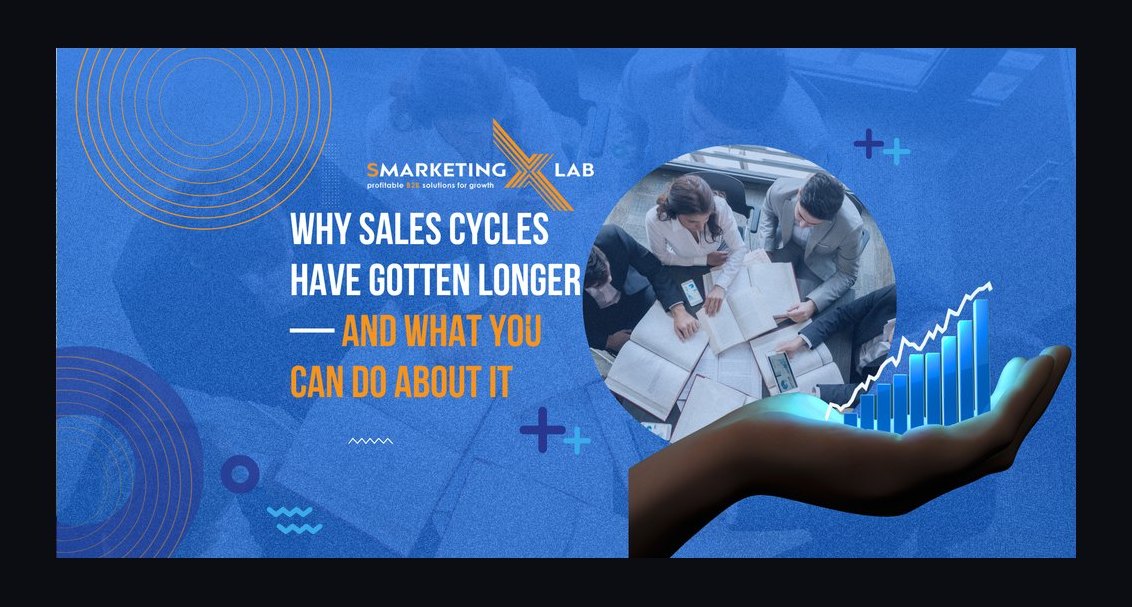 revopsAre longer sales cycles in 2027 forcing RevOps to redefine the 'MQL-to-revenue' attribution model?
 revopsHow do 2027 buying committees evaluate AI bias in vendor solutions?
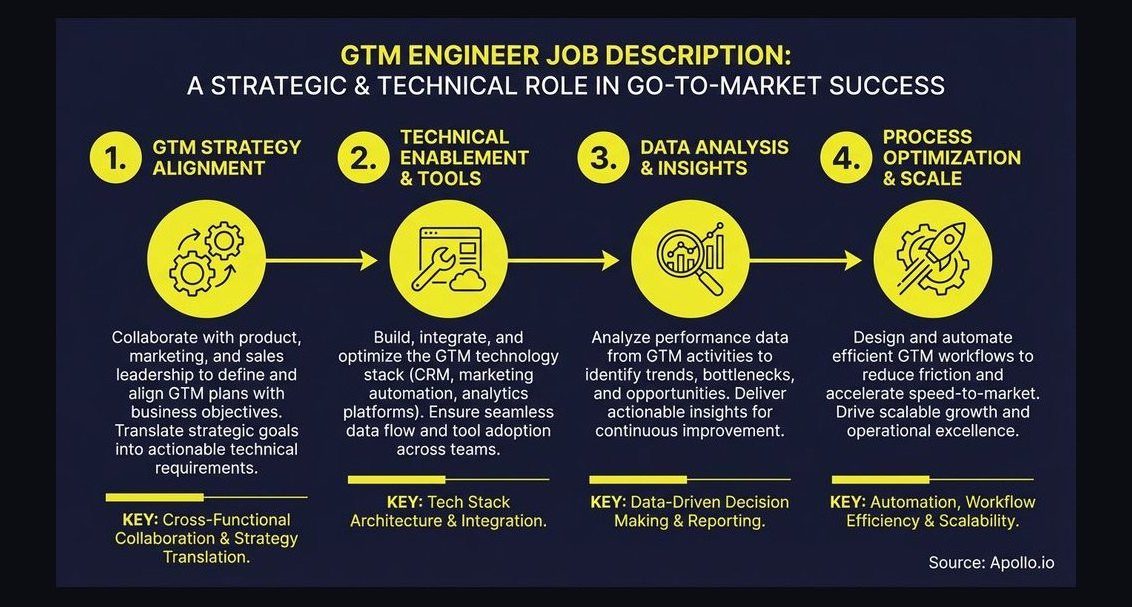 revopsWhat is a GTM engineer and why is the role exploding in 2027?
 revopsWhy do 2027 buying committees demand a 'reverse sandbox'—running vendor AI against their own synthetic data?
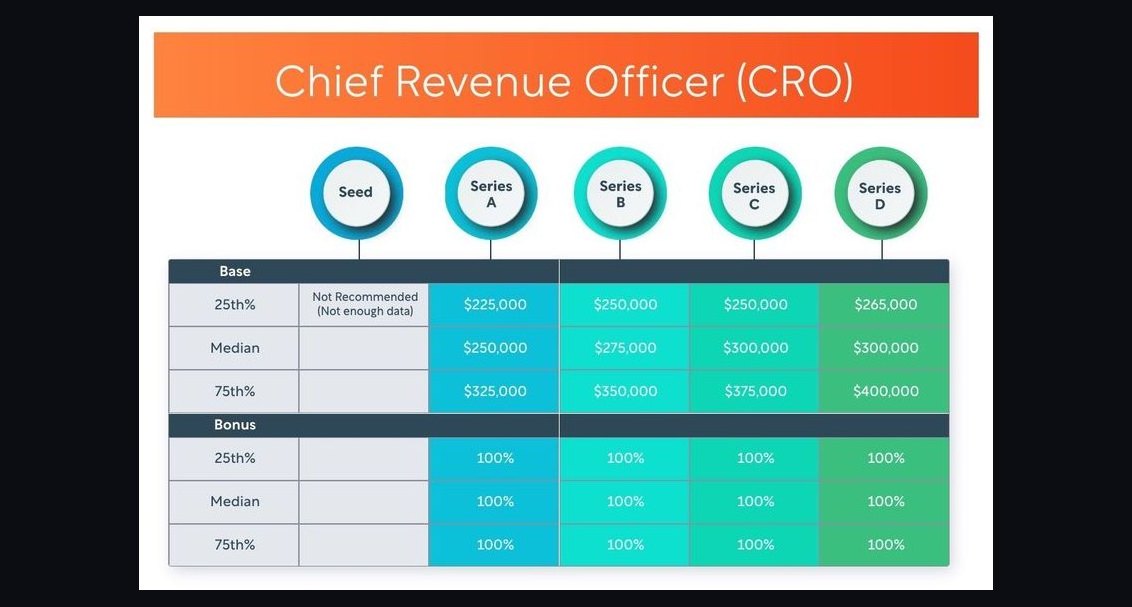 revopsCRO compensation — fractional, full-time, equity in 2027
 revopsHow is vendor consolidation affecting the negotiation leverage of mid-market buyers in 2027?