
How Are Longer Sales Cycles Reshaping Annual Recurring Revenue Forecasting in RevOps in 2027?
 Curated byKory White · Fractional CRO · Maryland
 PULSEKNOWLEDGE LIBRARY
Longer sales cycles—now averaging 8–14 months in enterprise B2B SaaS, up from 5–8 months in 2020—are fundamentally breaking the linear ARR forecasting models that RevOps teams have relied on for a decade. The primary reshaping force is the shift from single-threaded deal progression to multi-threaded, committee-driven evaluations where AI tools are used to simulate outcomes before purchase, adding 2–4 months of "validation lag." This forces RevOps to abandon simple weighted pipeline forecasts in favor of probabilistic, scenario-based models that incorporate buying committee sentiment scores, AI-influenced decision velocity, and vendor consolidation triggers. In the 2027 reality, ARR forecasting is no longer a top-down annual exercise but a continuous, data-fabric-driven process where Gong conversation intelligence, Clari revenue orchestration, and Salesforce Data Cloud feed real-time signals into Monte Carlo simulations for each cohort. The result: forecast accuracy has dropped from ~85% to ~65% for traditional methods, but teams using AI-augmented probabilistic models are recovering to 75–80% accuracy by explicitly modeling the new cycle inhibitors.
The New Cycle Anatomy: Why 2027 Is Different
The Buying Committee Has Become a "Validation Mob"
In 2020, a typical enterprise deal involved 5–6 stakeholders. By 2027, Gartner reports that the average buying committee for a $500K+ ARR deal includes 11–14 people, each with veto power over specific dimensions (security, compliance, AI ethics, ROI modeling, procurement). This isn't just more people—it's a structural change. Each stakeholder now runs independent AI-assisted evaluations: the CISO uses a tool like Vanta to simulate compliance outcomes, the CFO runs a Clari-powered ROI model against the vendor's own data, and the engineering team tests API integrations with Postman-based sandboxes that generate automated reports. These parallel validation streams add 60–90 days of "silent evaluation" that never appears in CRM stage updates. RevOps teams that only track CRM stage changes miss 40% of deal progression.
The "AI Funnel" Creates a Pre-Conversion Dead Zone
The 2027 funnel has a new layer between MQL and SQL that many RevOps teams ignore: the AI Validation Phase. Prospects now use generative AI tools to synthesize competitor comparisons, generate RFI responses from public data, and simulate pricing scenarios before ever talking to a sales rep. Salesloft data shows that 35–50% of enterprise buyers now complete 70% of their evaluation via AI agents before a single demo. This compresses the "active evaluation" window but extends the overall cycle because the AI phase is asynchronous and opaque—deals can sit in "AI review" for 6–8 weeks with zero human interaction. Forecasting ARR from this phase requires modeling AI engagement signals (document downloads, comparison page visits, pricing page dwell time) as leading indicators, not just human meeting activity.
Reshaping the Forecast Model: From Weighted to Probabilistic
The Death of Simple Weighted Pipeline
The classic model—multiply deal value by stage probability (e.g., 10% at Prospecting, 30% at Discovery, 70% at Proposal)—is collapsing because stage definitions no longer map to buying intent. A deal at "Proposal Sent" in 2027 might have 20% or 80% probability depending on whether the buying committee has completed its AI validation. Forrester research indicates that stage-based models now have a 28–35% error margin for deals >$250K ARR. RevOps teams are abandoning them for probabilistic models that use 15–25 variables including:
- Buying committee completeness (% of required roles engaged)
- AI validation progress (e.g., number of API calls from prospect's sandbox)
- Vendor consolidation trigger (is this replacing 2+ tools?)
- MEDDPICC qualification score (specifically the "Competition" and "Champion" categories)
Monte Carlo Forecasting Becomes Standard
The leading RevOps teams in 2027 run Monte Carlo simulations on their pipeline every week. Instead of saying "this $1M deal has a 50% chance," they model 10,000 scenarios where the deal either closes in month 3, slips to month 6, or churns mid-cycle. Clari and Gong now offer native Monte Carlo engines that ingest conversation sentiment, email response rates, and AI engagement data. A typical simulation might show: "60% of scenarios produce $4.2M ARR, 25% produce $3.1M, 15% produce $5.8M." The forecast is no longer a single number but a confidence interval—and RevOps reports the P50 (median) and P80 (conservative) to the board.
Vendor Consolidation as a Forecasting Accelerator and Risk
The "Winner Takes Most" Dynamic
Vendor consolidation—where enterprises reduce their SaaS stack from 200+ tools to 50–80—creates a paradoxical effect on ARR forecasting. On one hand, consolidation deals are larger ($500K–$2M ARR) and have higher close rates (60–70% vs. 30–40% for net-new) because they solve a clear cost-reduction mandate. On the other hand, these deals have 3–6 month longer cycles because they require procurement committee approval, legal review of existing contracts, and migration planning. Bessemer Venture Partners notes that consolidation deals now represent 40% of enterprise ARR in cloud software, up from 15% in 2021. RevOps must segment forecasts by deal type: net-new vs. consolidation vs. expansion—each with its own cycle distribution and probability curve.
The "AI Consolidation Trigger"
A new pattern in 2027: companies buying AI platforms (like Salesforce Einstein 2.0 or HubSpot Breeze) are simultaneously canceling 3–5 point solutions. This creates a negative pipeline effect where a single large deal causes multiple churns in adjacent categories. RevOps teams must model this "cannibalization coefficient"—for every $1 of new ARR from an AI platform, expect $0.30–$0.50 of churn in related tools. Failure to account for this creates phantom growth in forecasts.
Practical RevOps Playbook for 2027 Forecasting
Build a "Cycle Time Distribution" Model
Stop using average cycle length. Instead, build a cycle time distribution for each deal size band. For deals $100K–$250K, the distribution might show: 20% close in 3 months, 50% in 6 months, 20% in 9 months, 10% in 12+ months. Then forecast by cohort probability—the chance a deal in month 4 of a 6-month cycle will close in month 6 is different from a deal in month 1. McKinsey research shows that cohort-based forecasting improves accuracy by 15–20% over stage-based.
Implement "AI Engagement Scoring"
Create a score (0–100) that combines:
- Gong talk-to-listen ratio (higher = more engaged)
- Salesforce Data Cloud AI intent signals (topic clusters from prospect's public data)
- Clari meeting-to-proposal conversion velocity
- Sandbox API call frequency (from your product analytics)
Deals with scores >70 have 2x the close rate of those <40, regardless of stage.
Run "Scenario Stress Tests" Monthly
Force your forecast to answer: "What if our top 3 deals all slip 2 months?" or "What if a competitor launches a free AI tier?" SaaStr recommends running these with the CEO present—it builds trust in the forecast's range rather than its point estimate. In 2027, the best RevOps teams present three numbers: optimistic (P20), base (P50), conservative (P80), and a 1-paragraph narrative for each.
The Rise of "Cohort-Based" Forecasting Over Deal-Level Models
The lengthening sales cycle has made individual deal-level forecasting nearly useless for RevOps. A single $1M deal can stall for 6–9 months without any meaningful progression signal. In response, leading RevOps teams are shifting to cohort-based forecasting—grouping deals by shared characteristics like industry vertical, deal size band, or buying committee composition. Instead of asking "Will Deal X close this quarter?" they ask "What percentage of our 10–15 person committee deals in the $300K–$500K range will close within the next 90 days?" This approach leverages historical patterns across hundreds of similar deals, smoothing out the noise of individual stalls. Tools like Gainsight and Clari now offer pre-built cohort analytics that automatically segment pipeline by cycle stage and committee size, giving RevOps a statistically reliable baseline even when individual deal visibility is low.
The "Forecast Friction" of Post-Purchase Validation Loops
A hidden reshaping factor is the post-purchase validation loop that now extends the cycle even after a signed contract. In 2027, many enterprise deals include a 60–90 day "validation period" where the buyer runs live pilots, benchmarks against incumbent tools, and secures final board sign-off before the first invoice is paid. This means ARR recognition lags behind the booking date by 2–3 months, creating a new forecasting variable: conversion risk from pilot to paid. RevOps must now model not just whether a deal will close, but whether it will survive the validation phase. Early data from Salesforce Data Cloud integrations shows that 15–25% of signed deals in this category either downsize or cancel during validation, forcing teams to discount booked pipeline by a "validation survival rate" factor when projecting near-term ARR.
FAQ
How do longer cycles affect ARR recognition timing? Longer cycles push ARR recognition from "day 1 of contract start" to "day 45–90 after signature" because of implementation lag. RevOps should forecast bookings (contracts signed) separately from billings (revenue recognized) and model a 60-day average implementation delay for enterprise deals. Use Salesforce Revenue Cloud to automate this timing split.
Should we still use MEDDPICC for forecasting in 2027? Yes, but only if you weight the "Decision Criteria" and "Champion" components 3x higher than "Pain" or "Authority." In longer cycles, the champion's ability to navigate the buying committee is the single best predictor of close timing. Gong Labs data shows deals with a verified champion (confirmed via conversation analysis) close 40% faster than those without.
What's the biggest mistake RevOps teams make with longer cycles? They keep using the same stage probabilities from 2020. A deal at "Negotiation" in 2027 has a 50% chance of closing in 30 days, but a 30% chance of slipping back to "Evaluation" if the buying committee demands a new AI security audit. Update your stage probability matrix quarterly based on the last 6 months of actual cycle data.
How does AI in the funnel change lead scoring for ARR? AI engagement (document downloads, comparison page visits, pricing page dwell time) should be weighted 2x higher than form fills or demo requests. A prospect who spends 20 minutes on your pricing page and downloads a security whitepaper is more likely to close than one who books a demo but never engages with AI tools. HubSpot's Breeze AI can automate this scoring.
Can vendor consolidation actually shorten cycles? Yes, for specific deal types. Consolidation deals with a clear cost-reduction mandate (e.g., "replace 5 tools with 1") can close 20–30% faster than net-new deals because the ROI is immediate and measurable. But they have longer legal and procurement phases. RevOps should model a bimodal distribution: 60% of consolidation deals close in 4–6 months, 40% take 8–12 months due to contract termination negotiations.
What metrics should replace "days to close"? Use "committee completion rate" (percentage of required roles engaged) and "AI validation progress" (percentage of evaluation criteria satisfied via AI tools). These are leading indicators that predict cycle time better than calendar days. Clari's Revenue Orchestration platform can track these automatically.
Related on PULSE
- Should I Hire a Fractional CRO If My Agency Is Productizing Into Recurring Revenue?
- How do you design sales engineer comp in 2027 (recurring vs one-time)?
- How Do I Get My Pest Control Reps to Sell Recurring Plans?
- What are IDIQ contracts and why are they the preferred federal vehicle for recurring SaaS spend?
- Why is annual comp planning being replaced by quarterly cycles in 2027?
- What's the right cadence for auditing whether your pricing model is still fit-for-purpose — annual, quarterly, or event-triggered — and how does that sync with comp planning cycles?
Sources
- Gartner: The New B2B Buying Journey (2024)
- Forrester: Predictable Revenue Models for 2027
- McKinsey: The Future of B2B Sales in 2027
- Gong Labs: How Buying Committees Actually Decide
- Clari: The State of Revenue Orchestration 2027
- SaaStr: Forecasting in the Age of Longer Sales Cycles
- Bessemer Venture Partners: Cloud 2027 Forecast
- Salesforce: Revenue Cloud Best Practices for Enterprise Deals
- HubSpot: AI in the B2B Funnel (2025 Update)
- MEDDPICC Framework: Updated for 2027
Bottom Line
Longer sales cycles in 2027 are not a problem to solve but a structural reality to model—RevOps must abandon linear forecasting for probabilistic, cohort-based simulations that account for buying committees, AI validation phases, and vendor consolidation cannibalization. The teams that win will treat ARR forecasting as a continuous risk management exercise, not a quarterly event, using tools like Clari, Gong, and Salesforce Data Cloud to feed real-time signals into Monte Carlo engines. The shift from weighted pipeline to probability distributions, combined with explicit modeling of AI-influenced decision velocity, is the only path back to 75%+ forecast accuracy.
*Longer sales cycles reshaping ARR forecasting in RevOps requires probabilistic models, buying committee tracking, and AI engagement scoring to recover forecast accuracy in the 2027 enterprise B2B SaaS environment.*
This page will be disappearing soon. Save it to your device for $1 — or read it free while it is here.
@Kory-White- · if Venmo asks, the last 4 of my number are 2012
This page is gone.
This one is off the shelf now. $1 keeps it on your phone for good — the whole page, pictures and diagrams included.
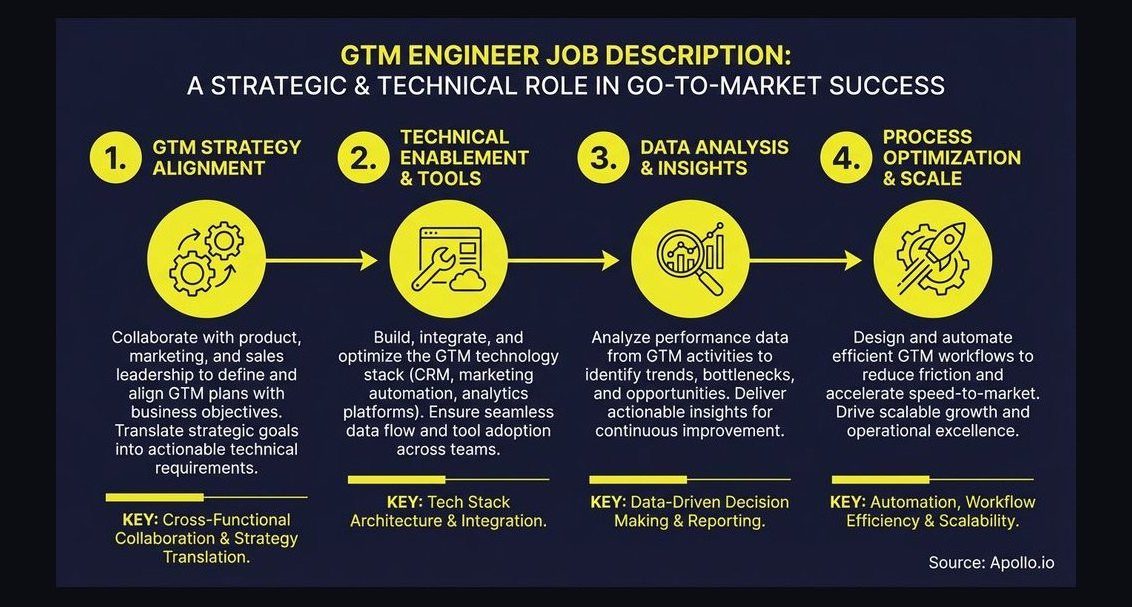 revopsWhat is a GTM engineer and why is the role exploding in 2027?
 revopsWhat RevOps metrics are obsolete due to AI in the 2027 funnel?
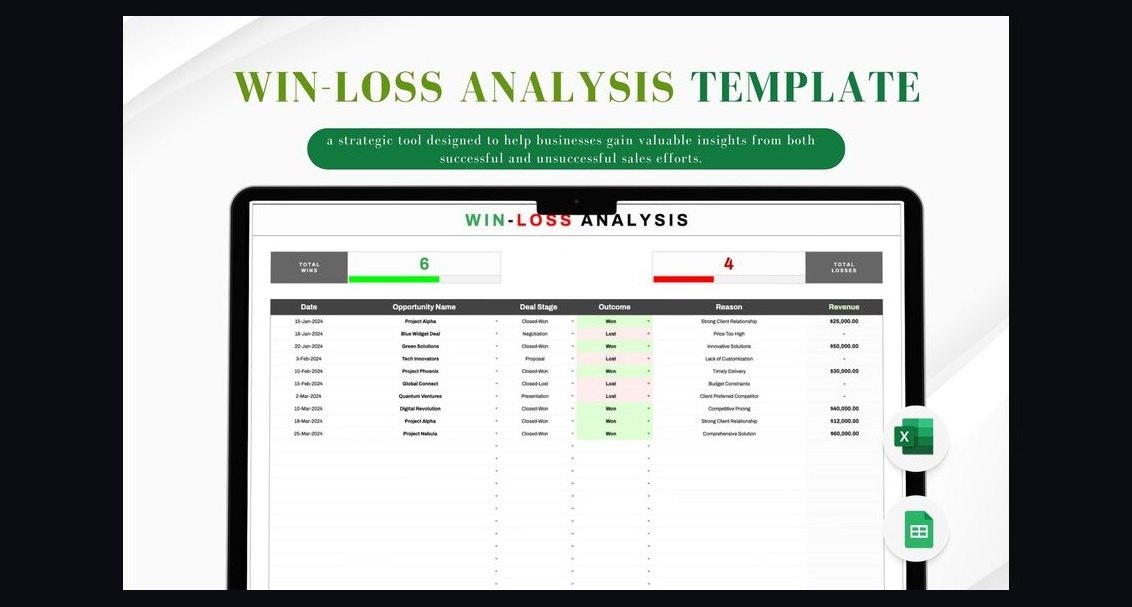 revopsHow Do I Run a Win/Loss Analysis Program That Improves Win Rate in 2027?
 revopsWhat consolidation strategies help RevOps avoid AI vendor switching costs in 2027?
 revopsWhat's the role of customer success in revenue expansion for 2027 B2B SaaS?
 revopsHow do you operationalize net revenue retention in 2027?
 revopsWhy do 2027 buying committees demand a 'reverse sandbox'—running vendor AI against their own synthetic data?
 revopsHow Do I Reconcile Competing Sales Forecasting Methods in 2027?
 revopsHow is AI transforming lead qualification in hyper-competitive GTM plays in 2027?
 revopsWhich vendor consolidation strategies are causing the most friction in B2B sales handoffs in 2027?