
Why Do Buying Committees Now Insist on AI-Generated ROI Proof Before Vendor Demos in 2027?
 Curated byKory White · Fractional CRO · Maryland
 PULSEKNOWLEDGE LIBRARY
Quality
Certified

Buying committees now insist on AI-generated ROI proof before demos because budget scrutiny has tightened, committees have grown larger and more cross-functional, and generative tools make it cheap to model a vendor's claimed impact against the buyer's own data. A credible pre-demo projection replaces vendor storytelling with auditable numbers, letting finance, procurement, and RevOps disqualify weak fits early.
What pre-demo ROI proof actually is and why it matters now
Pre-demo ROI proof is a buyer-specific, data-grounded projection of financial impact that arrives before a sales engineer ever opens a screen-share. It is not a generic "customers see 3x ROI" slide, and it is not a total-cost-of-ownership spreadsheet built from list prices over a five-year horizon. The working version has three parts: a baseline assembled from the buyer's own operating numbers, a modeled delta tied to specific workflow changes the product would cause, and a stated confidence range with the assumptions written down. When those three pieces exist, a committee can argue about inputs instead of arguing about trust.
The reason this moved from nice-to-have to gate is structural. Buying groups have widened — it is now common for a single software decision to touch revenue operations, finance, security, legal, data, and the eventual end users, each with a separate approval. A wider group cannot run on one champion's conviction. It needs a shared artifact that survives being forwarded to someone who never attended the call. A projection with named inputs survives forwarding; a demo recording does not.
Second, the cost of producing that artifact collapsed. Tasks that once required an analyst for two weeks — normalizing a pipeline export, benchmarking against peer cohorts, running sensitivity on adoption assumptions — are now hours of work with a general-purpose model plus a spreadsheet. When production cost falls, the expected standard rises. Committees did not suddenly become more skeptical; they became able to afford the skepticism.

Third, the failure mode got expensive. When budgets were loose, a wrong software bet was absorbed. When every line item is defended, a wrong bet is a visible miss owned by a named executive. Committees therefore front-load validation to avoid owning a bad number later. The projection is less a prediction than a liability-transfer device: if the vendor's model and the buyer's model agree, the committee has cover.
For RevOps specifically, this changes the job. RevOps teams are usually the ones holding the cleanest internal data — pipeline history, rep productivity, stage conversion, cost per opportunity. That makes RevOps the natural author of the baseline side of the model, and often the referee when a vendor's numbers and finance's numbers disagree. Teams that treat this as a sales problem rather than a data problem tend to lose the argument by default.

There is also a competitive dimension. When two vendors both pass a technical bar, the one that arrives with a buyer-specific model wins the internal airtime, because the committee can circulate it immediately. The vendor that says "we'll build a business case after the demo" has asked the committee to spend political capital on an unknown. Most committees decline.
The step-by-step process
The workflow below is the one that shows up repeatedly when a committee runs validation properly. Note that the vendor's demo is deliberately late in the sequence — it answers "how," not "whether."
Step one is agreeing on the metric before anyone models anything. Committees that skip this end up with three vendors optimizing three different numbers, which makes comparison impossible. Pick one primary metric — cycle time, cost per qualified opportunity, gross retention, implementation hours — and at most two secondary metrics.

Step two is the baseline. Pull the last four to eight quarters. The most common error is using a period that includes an anomalous quarter, which inflates or deflates everything downstream. Exclude the outlier and say so explicitly.
Step three is cleaning. Deduplicate accounts, normalize stage definitions if they changed mid-period, and strip deals that were never going to close on their own merits. A baseline that includes three logo deals from a founder's network will produce a flattering and useless model.
Step four is where vendors differentiate. A useful submission names its assumptions: expected adoption rate by team, ramp curve in weeks, assumed reduction in a specific manual step, assumed effect on a specific conversion rate. A headline number with no assumptions is not a model, it is a claim.

Step five is independent re-run. The buyer takes the vendor's structure but substitutes its own coefficients. If the result collapses, the disagreement is about coefficients, which is a solvable conversation. If the result collapses because the structure itself depends on an assumption the buyer cannot accept, that is a disqualifier.
Step six is sensitivity. Run the model with adoption 20-30% below plan, ramp two to three months slower, and no improvement in the metric the vendor is least confident about. If the case only works in the optimistic scenario, the committee should treat it as a bet, not an investment.

Step seven is the demo, repositioned. Because the "whether" question is settled, the demo should spend its time on implementation sequencing, integration risk, admin burden, and what happens in month one versus month nine.
The second diagram: when to choose which validation path
Not every deal deserves the same rigor. The decision framework below helps a RevOps lead allocate validation effort in proportion to deal size and reversibility.
The threshold itself is a policy decision, and it should be written down. A common pattern is a lightweight path below a defined annual spend, a standard path in the middle, and a full path for anything that touches regulated data or multi-year commitment. Publishing the thresholds stops every deal from becoming a negotiation about process.
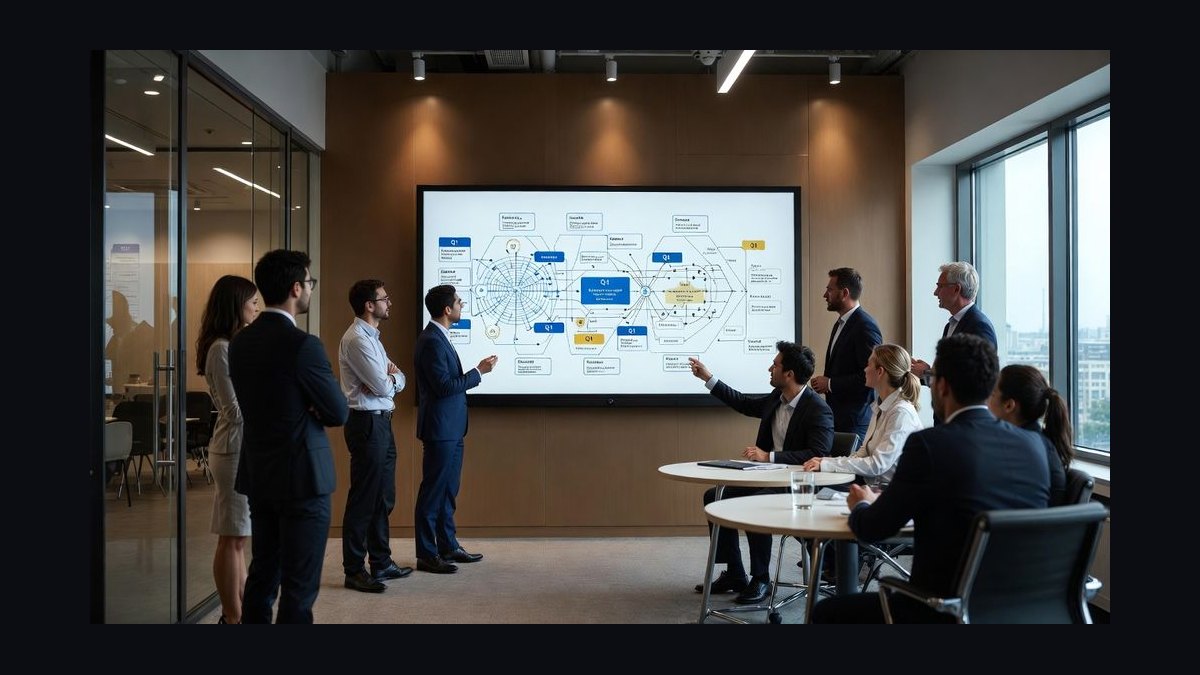
The phased-rollout branch matters more than it looks. When the pessimistic case fails, the answer is often not "no" but "not this scope." A pilot with pre-agreed exit criteria converts an unresolvable ROI argument into a bounded experiment, which committees find easier to approve than a large unproven commitment.
Costs, timelines, and typical ranges
The validation layer is not free, and pretending otherwise is why some teams under-resource it and then abandon it after two cycles.
On the buyer side, a defensible baseline typically requires 12 to 24 months of usable history. If CRM data completeness sits below roughly 80% on the fields that matter — close date, stage history, owner, source — the model's error band widens substantially and committees should widen their tolerance accordingly. Teams that have invested in a warehouse and a semantic layer can produce a baseline in days. Teams still exporting spreadsheets by hand should budget one to three weeks for the first one and considerably less thereafter, because the queries get reused.
Effort, not license cost, is the real constraint. A first full validation cycle commonly consumes 20 to 60 hours spread across RevOps, finance, and the eventual business owner. Subsequent cycles reuse the template and drop to roughly a third of that. If a team is running four or more vendor evaluations a quarter, building a reusable intake template and a standard assumption sheet pays back within two cycles.
On the vendor side, maintaining credible benchmark data is a standing cost. It requires someone to keep the reference set current, segment it sensibly, and retire stale cohorts. A model built on two-year-old benchmarks will fail reconciliation against a buyer's current data, and a failed reconciliation is worse than no model at all. Vendors that cannot sustain that maintenance are usually better served by publishing transparent methodology and letting buyers supply their own coefficients than by shipping an opaque calculator.

Timeline effects are the most underrated part of this. Adding a validation stage does lengthen the front of the cycle, often by two to four weeks. The trade is that the back half compresses: fewer stakeholders re-litigate the decision, security and legal review start earlier because the business case is already documented, and contracting moves in parallel rather than sequentially. Teams that measure only time-to-first-demo will conclude the process is slower. Teams that measure time-to-signed-contract usually find it is flat or better, with far less rework.
Discount behavior also shifts. When the business case is documented and agreed, price conversations become about scope rather than about proving value. That tends to reduce the size of end-of-cycle concessions, because the buyer is no longer using price as a proxy for uncertainty.
Where teams get it wrong
The most common failure is modeling the wrong metric. Teams pick something easy to measure rather than something the business actually cares about, produce a clean-looking number, and then watch the committee ignore it. If the CFO's stated priority this year is gross retention, a model about rep productivity will not get airtime no matter how rigorous it is.

The second failure is a baseline built on the vendor's data rather than the buyer's. Vendor-provided benchmarks are useful for sanity-checking, but a model whose inputs all come from the party with an incentive to inflate them is not validation, it is marketing with decimal places. Committees spot this quickly, and it damages credibility beyond the single deal.
The third is false precision. Reporting a projection to the dollar when the underlying assumptions carry wide uncertainty is a tell that the modeler does not understand their own error bars. Ranges with named drivers are more persuasive than a single number, and they survive scrutiny better.

The fourth is treating the model as a one-time artifact. Assumptions change during the demo, during security review, during negotiation. A model that is not updated becomes stale within weeks, and a stale model is a liability if someone re-reads it later and finds the inputs no longer match reality.
The fifth is process theater — running the validation because it is required, without giving anyone authority to act on the result. If a model that fails the pessimistic case still proceeds to a demo, the committee learns that the gate is decorative and stops investing effort in it. The gate only works if it can actually stop something.
The sixth is ignoring the human cost. Validation work lands disproportionately on RevOps and finance analysts who already have full plates. If the process is added without capacity, it degrades into rubber-stamping within two quarters. Budget the hours explicitly or the rigor will quietly disappear.
Related questions
Does this apply to renewals, or only new purchases?
It applies to both, but the mechanics differ. Renewals already have a baseline — the incumbent's actual results — which makes the model easier to build and harder to argue with. Expansion requests increasingly get the same treatment as new purchases because they carry the same budget question.
Who should own the buyer-side model?
RevOps usually owns the baseline and the assumption sheet; finance owns the hurdle rate and the final sign-off. Splitting it that way keeps the model honest, since the person supplying the inputs is not the person deciding whether the answer is good enough.
How much does a vendor's model need to match ours?
Exact agreement is neither realistic nor necessary. What matters is that the disagreement traces to identifiable, discussable assumptions rather than to an unexplained gap. A model that lands within a reasonable band and explains its drivers is more useful than one that matches precisely by coincidence.
What if we have no clean historical data?
Start smaller. Use a single quarter, a single team, or a single product line, and state the limitation openly. A narrow but honest baseline beats a broad but unreliable one, and the first cycle usually reveals exactly which fields need fixing.
FAQ
Is AI-generated ROI proof just a vendor calculator with a new label? Not if it is done properly. A calculator applies the vendor's assumptions to the buyer's inputs. Real validation means the buyer can see, challenge, and replace every assumption, and can re-run the model independently. The distinguishing feature is auditability, not the presence of a model.
Why has this become a precondition rather than a later step? Because the cost of a bad software decision has risen relative to the cost of evaluating one. When budgets are defended line by line, committees prefer to spend effort early and disqualify cheaply rather than discover a mismatch after months of evaluation. Early validation is simply cheaper than late regret.
Does requiring a model disadvantage smaller vendors? It disadvantages vendors who cannot explain their assumptions, regardless of size. A small vendor with transparent methodology and a willingness to use the buyer's coefficients can compete effectively. A large vendor shipping an opaque calculator has the same problem.
How do we keep this from becoming a bureaucratic bottleneck? Tier the process by contract value and reversibility, publish the thresholds, and reuse templates across evaluations. The goal is a repeatable intake, not a bespoke analysis for every request. If every deal gets the full treatment, the process will be abandoned within a year.
What happens when the model turns out to be wrong after purchase? Document the assumptions at decision time so the post-mortem is about which assumption failed, not about who was wrong. That distinction is what allows an organization to improve its models instead of abandoning them.
Does this replace reference calls and analyst research? No, it sequences them. Quantitative validation answers whether the economics can work. References and analyst research answer whether the vendor delivers reliably. Committees generally want the economic question settled before they spend relationship capital on the second question.
Sources
- Gartner: The B2B Buying Journey
- Forrester: B2B Buying Research
- McKinsey: B2B Growth and Sales Insights
- Salesforce: State of Sales Research
- HubSpot: Sales ROI Calculator
- Gong Labs: Revenue Research
- Clari: Revenue Operations Resources
- Winning by Design: Revenue Architecture Resources
Related on PULSE
- Why are buying committees increasingly demanding proof of AI model bias mitigation in vendor RFPs?
- Why do 2027 buying committees now demand ROI simulations before demos?
- Why are buying committees in 2027 demanding AI-generated ROI breakdowns before first demos?
- How do you run QBR pipeline reviews when proof-of-concept work delays stage progression?
- What's the playbook when a buyer says they have no budget but still wants a demo and proof of concept?
- DevTools sales to engineering orgs: why do technical evaluations run long, and how should you compress the proof cycle?
This page will be disappearing soon. Save it to your device for $1 — or read it free while it is here.
@Kory-White- · if Venmo asks, the last 4 of my number are 2012
This page is gone.
This one is off the shelf now. $1 keeps it on your phone for good — the whole page, pictures and diagrams included.
 revopsWhy do 2027 buying committees now demand ROI simulations before demos?
 revopsCan AI in the funnel effectively replace human-led qualification for enterprise buying committees in 2027?
 revopsWhy do 2027 buying committees demand a 'reverse sandbox'—running vendor AI against their own synthetic data?
 revopsWhich vendor consolidation patterns are signaling a shift toward single-platform GTM stacks in 2027?
 revopsHow do you transition from sales-led to PLG (product-led growth) in 2027?
 revopsHow does the secondary ticket market and resale economics work in 2027?
 revopsWhat vendor consolidation moves are most likely to disrupt existing ABM workflows in 2027?
 revopsWhy are longer sales cycles in 2027 driving adoption of AI-based meeting summarization tools?
 revopsBest fractional CRO firms in 2027
 revopsWhat role does AI play in reducing vendor bloat for enterprise GTM stacks in 2027?