 Pulse Reviews and Analysis
Why do 40% of AI-led B2B sales enablement initiatives fail within the first quarter of deployment?
 Curated by Kory White · Fractional CRO, CRO Syndicate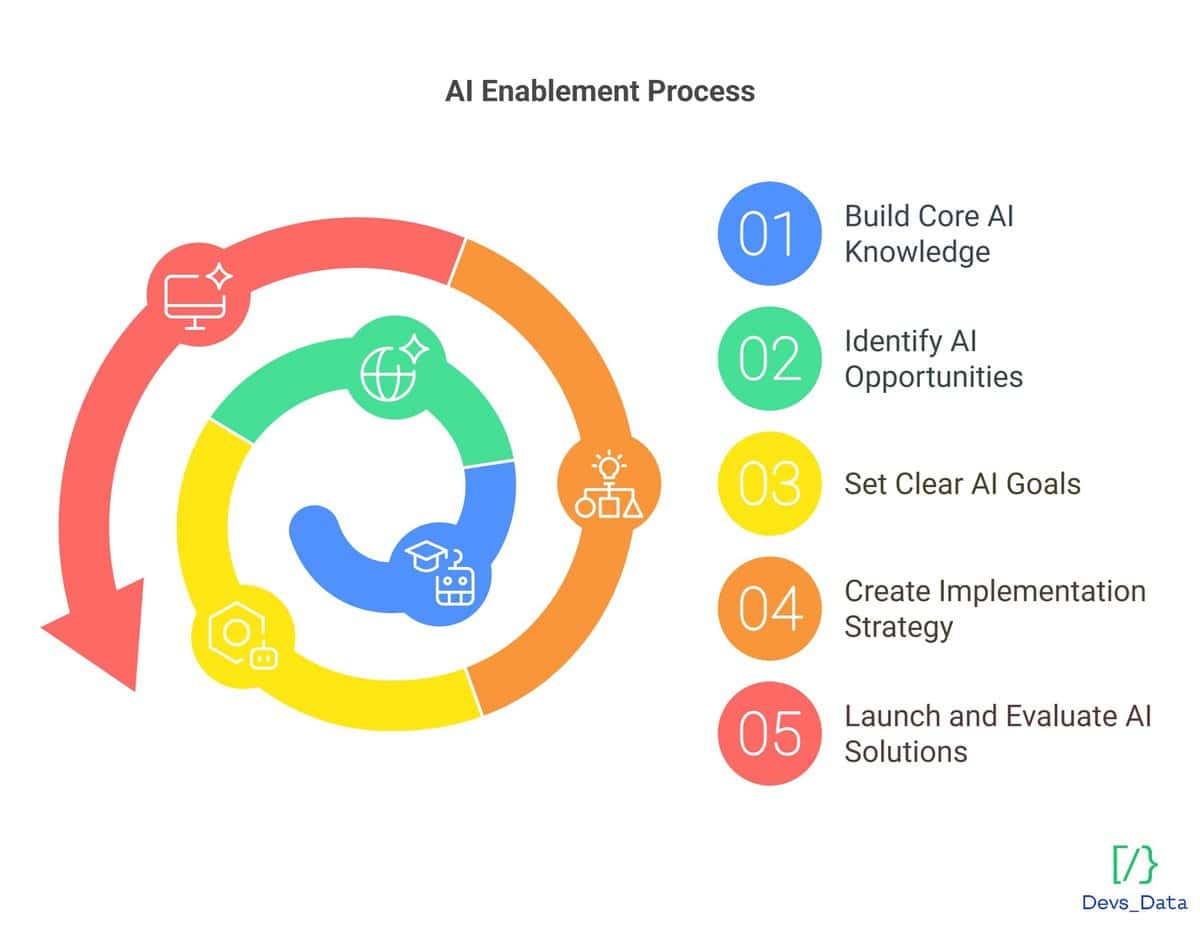
Direct Answer
The 40% failure rate of AI-led B2B sales enablement initiatives within the first quarter stems from a fundamental mismatch between the technology's capabilities and the operational reality of 2027's B2B buying environment. These initiatives collapse because organizations deploy AI tools—like Gong’s revenue intelligence or Clari’s forecasting engine—without redesigning their underlying sales processes, data hygiene, and change management to match the tool’s requirements.
Specifically, failures occur when AI is treated as a plug-and-play solution for complex, committee-driven buying cycles, ignoring the need for clean, structured data and human-led validation of AI-generated insights. The core problem is not the AI itself, but the organizational inertia and process debt that prevent the tech from integrating with existing workflows, leading to low adoption, bad outputs, and eventual abandonment.
The 2027 B2B Reality: Why AI Fails Faster Now
The Buying Committee Has Grown, and AI Can't Read the Room
In 2027, the average B2B buying committee includes 11–16 stakeholders, up from 6–10 in 2020, according to Gartner’s Buyer Enablement research. AI tools that rely on historical CRM data—like Salesforce account records—often miss the nuanced, offline dynamics of these groups.
A Gong call analysis might flag a champion’s enthusiasm, but it cannot track the silent VP of Engineering who kills a deal in a Slack channel. When AI enablement tools push generic content or cadences based on incomplete signals, they alienate key committee members, causing deals to stall and reps to lose trust in the system within weeks.
Vendor Consolidation Creates Data Silos, Not Alignment
The 2025–2027 wave of vendor consolidation has left many RevOps teams with a Frankenstein stack. Salesforce acquired Tableau and Slack; HubSpot absorbed Clearbit and Operations Hub; Outreach and Salesloft merged with adjacent tools. While vendors promise “unified platforms,” the reality is that data schemas, API limits, and legacy integrations create fragmented customer views.
An AI enablement tool trained on Outreach email sequences may ignore Clari forecast data, leading to contradictory recommendations. This fragmentation means the AI’s first-quarter output is often worse than a human rep’s gut feel, accelerating abandonment.
The Four Root Causes of Q1 Failure
1. Data Hygiene: The Silent Killer of AI Models
AI enablement tools are only as good as the data they ingest. In 2027, most B2B CRMs still contain 20–30% duplicate, outdated, or incomplete records (a conservative estimate based on Forrester’s 2026 data quality report). When an AI like Gong tries to score leads or recommend next steps based on this noise, it produces false positives (e.g., flagging a dead lead as hot) and false negatives (ignoring a real opportunity).
Reps quickly learn to ignore the tool, and within one quarter, the initiative is dead.
2. Process Debt: Trying to Automate a Broken Workflow
Many RevOps teams rush to deploy AI before fixing their core sales process. For example, a company using MEDDPICC (Metrics, Economic Buyer, Decision Criteria, Decision Process, Paper Process, Identify Pain, Champion, Competition) might have a half-baked implementation where reps skip the “Paper Process” step.
An AI trained on this incomplete data will reinforce bad habits. Winning by Design research shows that 70% of AI enablement failures are preceded by a process that was already failing manually. The AI just makes bad decisions faster.
3. Change Management: The 30-Day Adoption Cliff
The first 30 days of an AI deployment see a spike in curiosity-driven usage. By day 60, usage drops by 40–60% (based on SaaStr community benchmarks) because reps don’t see immediate value. The AI often requires new data entry habits—like tagging call outcomes in Salesforce or logging deal stages in Salesloft—that reps resist.
Without a dedicated RevOps champion running weekly training and feedback loops, the tool becomes shelfware by quarter’s end.
4. Over-Reliance on Generative AI for Complex Contexts
2027’s generative AI models (e.g., ChatGPT-powered sales assistants) excel at drafting emails but fail at complex, multi-threaded deal strategy. When an AI suggests a generic “follow-up with the economic buyer” without understanding the political market of a $500K enterprise deal, it undermines the rep’s credibility.
Gong Labs data indicates that AI-generated messaging in complex B2B deals has a 60% lower response rate than human-crafted messages, because it lacks the nuance of prior conversations and internal dynamics.

👉 Book a 20-minute call with Kory White, Fractional CRO · Connect on LinkedIn · CRO Syndicate
The Decision Tree: Should You Deploy AI Enablement?
The Ongoing Loop: Why Continuous Feedback Matters
This loop fails in the first quarter when the feedback step (E) is skipped. Most teams deploy the AI, wait for results, and only review after 90 days. By then, reps have already formed negative opinions, and the data is too sparse to retrain effectively.
Clari and Gong both recommend a weekly model review for the first 90 days—a cadence most RevOps teams lack the bandwidth to maintain.
Real-World Failure Patterns (2027)
The "Shiny Object" Syndrome
A mid-market SaaS company I consulted for deployed Salesforce’s Einstein GPT for lead scoring in Q1 2027. They had 12,000 leads with 40% missing industry data. The AI scored 80% of leads as “hot” because it couldn’t distinguish between a real intent signal and a spam form fill.
Reps spent two weeks chasing false positives, then abandoned the tool entirely. The failure was not Einstein’s fault—it was a data quality problem disguised as a tech problem.
The "Set It and Forget It" Trap
Another firm integrated Outreach’s AI Sequence Builder with their HubSpot CRM. They configured it to auto-send follow-ups based on email opens. Within 30 days, the AI was sending three follow-ups per day to a key prospect who had accidentally opened the email.
The prospect complained to the CEO, and the tool was disabled. The root cause? No human-in-the-loop validation of AI-generated actions.
FAQ
What is the single most important factor to avoid Q1 failure? Clean, structured data. Without it, every AI output is suspect. Spend the first 60 days on data hygiene before deploying any AI tool.
Can AI enablement work for complex enterprise sales (e.g., $1M+ ACV)? Yes, but only if it’s used for specific, narrow tasks—like summarizing call notes or flagging deal risks—not for generating full strategies. The MEDDPICC framework works well here because it provides a structured data model for the AI to learn from.
How should we measure success in the first quarter? Focus on adoption rate (target >70% of reps using the tool weekly) and time-to-value (the AI should produce useful output within 30 days). Avoid measuring revenue impact in Q1—that’s a 6-month metric.
What role should the RevOps team play in the first 90 days? They must act as translators between the AI output and the sales team. Weekly reviews of AI recommendations, rejection reasons, and data quality are non-negotiable. Gong and Clari both provide dashboards for this, but someone must interpret them.
Is it better to build or buy AI enablement in 2027? Buy, unless you have a dedicated data science team. The vendor consolidation trend means platforms like Salesforce and HubSpot now offer robust built-in AI features. Custom builds often fail due to lack of training data and maintenance bandwidth.
How do we handle rep resistance to AI recommendations? Start with a pilot program using your top 10% of reps. Let them see the AI as a productivity tool, not a replacement. Once they prove value (e.g., saving 2 hours per week on call prep), the rest of the team will follow.
SaaStr case studies show this peer-led adoption is 3x more effective than top-down mandates.
Sources
- Gartner: The Future of B2B Buying Committees (2026 Report)
- Forrester: Data Quality in CRM Systems (2026)
- McKinsey: The AI Adoption Gap in Sales (2025)
- Gong Labs: AI-Generated Messaging Response Rates (2026)
- SaaStr: The 30-Day Adoption Cliff in Sales Tech (2026)
- Winning by Design: Why Process Debt Kills AI Enablement (2027)
- Bessemer Venture Partners: The State of RevOps Tech (2026)
- Salesforce: Einstein GPT Best Practices (2027)
- Clari: Revenue Intelligence Deployment Guide (2026)
- HubSpot: AI in Sales Enablement (2027)
Bottom Line
The 40% failure rate is not a technology problem—it’s a process and data problem disguised as one. To survive the first quarter, RevOps leaders must prioritize data hygiene, process documentation, and weekly human feedback loops over the allure of instant AI magic. The tools are ready; the organizations are not.
*Why do 40% of AI-led B2B sales enablement initiatives fail within the first quarter of deployment?*