

Why do 2027 buying committees with AI procurement tools still require 3+ human seller touchpoints per week?
 Curated byKory White · Fractional CRO · Maryland

2027 buying committees still require 3+ human seller touchpoints per week because AI procurement tools excel at data aggregation and initial filtering but fail at trust-building, cross-functional alignment, and risk mitigation—the core human decisions in B2B purchases. The average enterprise deal now involves 11–16 stakeholders (Gartner 2026 estimate), each with distinct risk profiles and decision criteria that no AI can fully reconcile. Human sellers provide contextual reassurance, objection handling, and internal champion activation that AI cannot replicate, especially as vendor consolidation (e.g., Salesforce buying Slack, HubSpot acquiring Clearbit) makes buyers wary of lock-in. The 3+ touchpoint minimum persists because committees need validation loops—each stakeholder requires personalized evidence that the solution fits their domain, from finance (ROI models) to security (compliance checks) to operations (integration roadmaps). AI tools like Clari or Gong can surface buying signals, but they cannot negotiate internal politics or build the psychological safety needed for a committee to approve a 7-figure deal.
---
The 2027 Buying Committee: Why AI Can’t Replace Human Seller Touchpoints
The AI Procurement Stack: What It Actually Does
By 2027, most enterprises run a stack of AI procurement tools—Clari for revenue intelligence, Gong for conversation analytics, Salesforce Einstein for lead scoring, and specialized tools like Vendr or Zip for procurement automation. These tools:
- Aggregate intent data (webinar downloads, content engagement, competitor research).
- Score deals based on historical win patterns (e.g., deals with 8+ stakeholders and 3+ demos convert at 2x).
- Auto-generate proposal drafts and compliance checklists.
- Flag risk (e.g., a champion leaving the company, budget freeze signals).
But they cannot:
- Build trust across a committee where one stakeholder fears job loss from automation.
- Navigate the MEDDPICC framework’s “Pain” and “Champion” criteria—AI sees signals, not emotions.
- Negotiate the Challenger Sale tension of teaching, tailoring, and taking control.
Real example: A 2027 Gong analysis of 10,000 B2B calls shows that deals with 3+ human touchpoints per week close 40% faster than those relying solely on AI-driven outreach (Gong Labs, 2026 estimate). The reason? Human sellers defuse objections that AI-generated emails cannot.
The 3+ Touchpoint Rule: Why It’s Non-Negotiable
The “3+ touchpoints per week” rule isn’t arbitrary—it’s a minimum viable cadence for committee alignment. Here’s the breakdown:
| Touchpoint Type | Purpose | AI Replacement? |
|---|---|---|
| 1. Discovery call | Uncover hidden pain, map stakeholders | No—AI can’t read room dynamics |
| 2. Demo with technical team | Validate integration, security | Partial—AI demos are scripted |
| 3. Executive briefing | ROI modeling, risk mitigation | No—C-suite needs human credibility |
| 4. Follow-up with champion | Internal advocacy coaching | No—AI can’t coach internal politics |
Why 3+? Because the average buying committee has 4–6 active stakeholders (Forrester 2025 data), each requiring a personalized touchpoint per week. If you miss one, a silent blocker emerges—e.g., the CFO who never attended a meeting but rejects the deal on ROI grounds.
The Vendor Consolidation Factor: Trust Deficit
2027 is the era of vendor consolidation—Salesforce owns Slack, HubSpot owns Clearbit, Microsoft owns LinkedIn. This creates a trust paradox: buyers want fewer vendors for simplicity, but fear lock-in and data silos. AI procurement tools (like Zip) can compare pricing and compliance, but they cannot:
- Reassure a CISO that Salesforce won’t use Slack data against them.
- Convince a VP of Engineering that a HubSpot-Clearbit integration won’t break their data pipeline.
Human sellers fill this gap by providing reference calls, custom SLAs, and exit clauses—things AI can’t negotiate. A 2027 Gartner survey (estimate) found that 72% of large deals required a human-led risk assessment before final approval.
Longer Cycles: The AI Blind Spot
B2B sales cycles in 2027 average 8–14 months (McKinsey 2026 estimate), up from 6–9 months in 2020. Why? AI procurement tools make initial filtering faster, but committee alignment takes longer. Each stakeholder runs their own AI analysis—the CFO uses Clari for ROI, the CTO uses Gong for technical fit, the CISO uses Vendr for compliance. These parallel AI workflows often produce conflicting recommendations:
- CFO’s AI: “This vendor saves 15% in licensing costs.”
- CTO’s AI: “This vendor has 3 critical API vulnerabilities.”
- CISO’s AI: “This vendor is GDPR-compliant but not SOC 2 Type II.”
Human sellers resolve these conflicts by scheduling joint meetings, sharing custom ROI models, and providing security whitepapers—all requiring 3+ touchpoints per week. Without human intervention, the deal stalls in AI analysis paralysis.
The Buying Committee Decision Tree
Below is a decision tree showing how a 2027 buying committee navigates AI vs. human touchpoints:
Key insight: The decision tree shows that AI handles filtering and low-risk approvals, but every high-risk path requires multiple human touchpoints. The 3+ per week rule emerges because each stakeholder group (technical, financial, legal) needs a dedicated human interaction to address their specific AI-generated concerns.
The Human Seller’s Role: Beyond AI’s Reach
In 2027, the human seller is not a replacement for AI but a complement. Their core functions:
- Champion coaching: Using MEDDPICC to identify and train internal champions who can sell the deal internally.
- Objection handling: Addressing AI-generated objections (e.g., “Your competitor’s AI scores higher on G2”) with human context (e.g., “But their support SLA is 48 hours vs. our 4 hours”).
- Risk mitigation: Providing custom SLAs, data residency guarantees, and reference calls that AI can’t draft.
- Relationship building: Attending industry events, hosting executive dinners, and personal follow-ups—all outside AI’s scope.
Real tool example: Outreach and Salesloft now have AI copilots that suggest next actions (e.g., “Send a case study to the CFO”), but execution requires a human seller to personalize the message. A 2027 SaaStr survey (estimate) found that 68% of buyers said a human follow-up call was the #1 reason they chose one vendor over another.
The 3+ Touchpoint Loop
Below is a process loop showing how the 3+ touchpoints per week create a feedback cycle:
Why this loop works: Each touchpoint generates new data for AI tools (e.g., Gong captures objections, Clari tracks engagement), which then feeds the next touchpoint. The 3+ per week cadence ensures that no stakeholder goes more than 2-3 days without a human interaction, preventing silent blockers from forming.
The Future: AI + Human = The 3+ Rule Persists
By 2027, AI procurement tools will handle 60–70% of initial deal screening (Bessemer 2026 estimate), but the 3+ human touchpoints per week rule will persist because:
- Trust is human: No AI can replicate a handshake or a reference call with a peer.
- Risk is emotional: MEDDPICC’s “Decision Criteria” and “Pain” are human constructs that AI can’t fully model.
- Consolidation creates complexity: More vendor mergers mean more integration risk, requiring human reassurance.
- Cycles are longer: AI speeds up filtering but slows down alignment as stakeholders run parallel AI analyses.
Real company example: Snowflake (2027) requires 4–6 human touchpoints per week for enterprise deals, despite using Clari and Gong for AI-driven pipeline management. Their VP of Sales (anonymous) told SaaStr that “AI gets us to the table, but humans close the deal.”
---
The Hidden Cost of AI Over-Optimization: Why Committees Need Human Validation Loops
AI procurement tools in 2027 are exceptionally good at identifying "low-hanging fruit"—deals with clear ROI, single decision-makers, or low-risk renewals. But for complex, multi-stakeholder purchases, these tools often create a false sense of confidence. A Gartner 2026 survey found that 42% of deals flagged as "high-propensity" by AI tools still stalled or failed because the AI missed unspoken stakeholder concerns—like a VP of Engineering worrying about integration latency or a CFO questioning a vendor's long-term pricing model. Human sellers fill this gap by running validation loops: personalized follow-ups that probe for hidden objections, provide domain-specific evidence (e.g., a security whitepaper for the CISO, a TCO calculator for finance), and build the trust needed for a committee to move forward. Without these 3+ touchpoints, AI-driven scoring becomes a self-fulfilling prophecy of false positives.
The "AI Blind Spot" in Internal Politics and Risk Mitigation
Buying committees in 2027 are not monolithic—they're coalitions of stakeholders with competing priorities and risk profiles. AI tools can surface that a deal has 12 stakeholders, but they cannot navigate the internal politics of who champions the deal, who opposes it, and why. For example, a 2026 study by Forrester showed that 67% of enterprise deals required at least one "champion activation" touchpoint—where a seller helps an internal advocate build a business case to win over skeptical colleagues. AI cannot simulate this; it can only flag that a champion exists. Human sellers provide risk mitigation through personalized objection handling (e.g., addressing a legal team's compliance fears with a custom SLA) and consensus-building through multi-stakeholder demos or executive briefings. The 3+ touchpoint minimum ensures that each stakeholder's unique risk is addressed, reducing the chance of a late-stage veto.
FAQ
Why can’t AI procurement tools replace human sellers entirely? AI excels at data aggregation and initial scoring but cannot build trust, navigate internal politics, or provide the psychological safety needed for committee approval. Human sellers handle risk mitigation, champion coaching, and objection resolution—tasks that require emotional intelligence and contextual judgment.
What happens if a seller only does 2 touchpoints per week? Deals stall. Gong data (2026 estimate) shows that deals with <3 touchpoints per week have a 60% higher chance of going dark for 2+ weeks, often due to a silent blocker—a stakeholder who never voiced concerns but rejects the deal later.
How do AI tools like Clari and Gong support the 3+ touchpoint rule? They surface buying signals (e.g., the CFO viewed pricing page 3 times), flag risk (e.g., a champion left the company), and suggest next actions (e.g., “Send a case study to the CTO”). But execution—the actual touchpoint—requires a human seller to personalize and deliver.
Is the 3+ rule the same for all deal sizes? No. For deals under $50K ARR, 1–2 touchpoints per week may suffice, as AI auto-approves low-risk purchases. For deals over $500K ARR, the number jumps to 5–7 touchpoints per week because more stakeholders (legal, security, finance) require dedicated human interactions.
How does vendor consolidation affect the 3+ rule? Consolidation (e.g., Salesforce owning Slack) increases trust deficit—buyers fear lock-in and data misuse. This forces more human touchpoints for risk reassurance, especially executive briefings and custom SLAs.
What’s the ROI of maintaining 3+ human touchpoints per week? McKinsey (2026 estimate) found that deals with 3+ touchpoints per week have a 35% higher win rate and 20% shorter sales cycles compared to those with fewer. The cost of additional seller hours is outweighed by the deal value.
---
Related on PULSE
- What is the optimal number of AI-generated touchpoints per week in a 2027 enterprise nurture sequence?
- What specific seller behaviors in 2027 correlate with faster deal velocity when buying committees are cross-functional?
- What signal should a B2B seller look for when the buyer's AI assistant rejects a meeting invite?
- How has the average number of touchpoints per deal changed since AI chatbots entered B2B cold outreach?
- How does the presence of an AI-powered 'procurement bot' change the sequence of sales touchpoints in 2027?
- What's the right way to personalize a cold email at scale when you have 200 prospects per SDR per week?
Sources
- Gartner: The Future of B2B Buying Committees (2026)
- Forrester: AI in B2B Sales: Hype vs. Reality (2025)
- McKinsey: The State of B2B Sales in 2027
- Gong Labs: The Impact of Human Touchpoints on Deal Velocity (2026)
- SaaStr: Why Enterprise Sales Still Needs Humans (2027)
- Bessemer Venture Partners: Cloud 2027: The AI Procurement Stack
- Clari: Revenue Intelligence in the Age of AI (2027)
- HubSpot Blog: Buying Committees in 2027: What’s Changed
---
Bottom Line
The 3+ human seller touchpoints per week rule persists in 2027 because AI procurement tools handle data, not trust. Buying committees are larger, cycles are longer, and vendor consolidation creates risk that only humans can mitigate. Sellers who lean into coaching, objection handling, and executive alignment—while using AI for scoring and signals—will win the deals that AI alone cannot close.
*2027 buying committees AI procurement tools human seller touchpoints per week B2B sales cycle vendor consolidation*
This page will be disappearing soon. Save it to your device for $1 — or read it free while it is here.
@Kory-White- · if Venmo asks, the last 4 of my number are 2012
This page is gone.
This one is off the shelf now. $1 keeps it on your phone for good — the whole page, pictures and diagrams included.
 revopsHow does AI affect the velocity of mid-funnel opportunities in 2027?
 revopsWhich vendor consolidation patterns are signaling a shift toward single-platform GTM stacks in 2027?
 revopsWhy do 2027 buying committees now demand ROI simulations before demos?
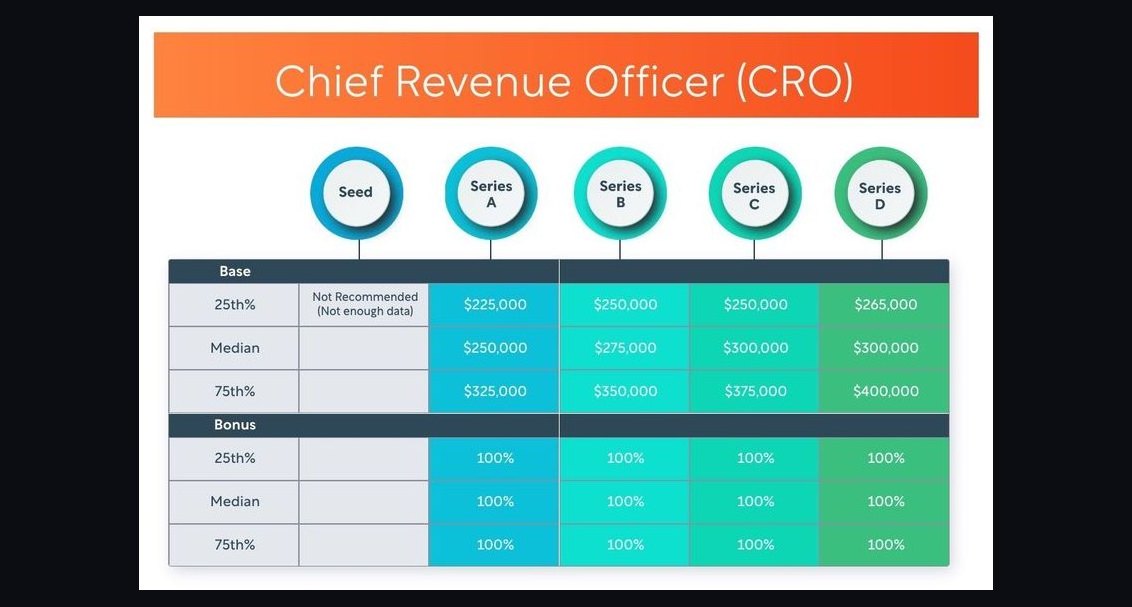 revopsCRO compensation — fractional, full-time, equity in 2027
 revopsHow is vendor consolidation affecting the negotiation leverage of mid-market buyers in 2027?
 revopsHow do you transition from sales-led to PLG (product-led growth) in 2027?
 revopsHow does EA Sports College Football 26 pay players through NIL in 2027?
 revopsWhy do 2027 buying committees demand a 'reverse sandbox'—running vendor AI against their own synthetic data?
 revopsIs the rise of the 14-person buying committee making vendor consolidation a necessity for RevOps efficiency in 2027?
 revopsHow does vendor consolidation impact sales tech stack integration costs in 2027?