
What specific changes to the MEDDIC framework are necessary for 2027’s AI-mediated discovery calls?
 Curated byKory White · Fractional CRO · Maryland
 PULSEKNOWLEDGE LIBRARY
Quality
Certified

MEDDIC still works in 2027, but each letter needs a second layer: Metrics must be AI-validated against the buyer's own revenue-intelligence baseline, the Economic Buyer becomes a human-plus-policy-engine pair, Decision Criteria include machine-readable trust signals, and the Champion must be AI-literate enough to override automated gatekeepers.
Two ways to modernize MEDDIC: patch the letters, or bolt on a machine layer
There are really only two credible paths, and most RevOps teams pick one by accident rather than on purpose. The first is the in-place patch: keep MEDDIC's six letters exactly as they are, keep the same CRM fields, the same scorecard, the same coaching language, and simply redefine what counts as acceptable evidence for each letter. Under this approach, "Metrics" doesn't become a new field — it becomes a field with a stricter definition. A rep can no longer write "they want 20% more conversion" and call it captured; they have to write the number, the source, and whether the source was human-stated or machine-derived from the buyer's own analytics. The letter stays. The bar moves.
The second path is the parallel machine layer: leave the original six letters untouched as the human-qualification record, and add a second, explicitly separate set of fields that describe the automated side of the buying process. In this model you'd have M and M-AI, EB and EB-Policy, DC and DC-Machine. The human layer records what people told you. The machine layer records what the buyer's systems will enforce regardless of what people told you. Deals get scored on both, and a deal that's strong on the human layer but unknown on the machine layer is explicitly flagged as unqualified rather than quietly rolled forward.
The trade-offs run in opposite directions. The in-place patch is cheap — no schema change, no new reports, no retraining on a new framework, and no risk that a half-adopted second layer becomes a graveyard of blank fields. Its weakness is that it hides the problem. When a rep fails to discover the buyer's automated procurement threshold, that failure is invisible; it looks like a normal, slightly thin MEDDIC score rather than a specific, nameable gap. You cannot build a coaching program around evidence you never separated out. Managers end up saying "your discovery was weak" instead of "you never found out what their procurement system auto-rejects."

The parallel layer's strength is exactly that visibility. Every automated gate becomes a field with a name, so you can report on it: what percentage of open pipeline has an identified approval-automation path, what percentage has a documented security or compliance prerequisite, what percentage has a Champion who has actually seen the internal scorecard your solution was rated on. That's a dashboard a CRO can act on. The cost is real, though — more fields means more rep friction, more empty-field noise, and a higher chance the whole thing gets abandoned in two quarters. Field-adoption decay is the default outcome for any qualification schema that grows faster than the coaching around it.
A third position, worth naming because plenty of teams end up there by drift, is do nothing and rely on the reps. This is defensible in a low-ACV, short-cycle, single-decision-maker motion where there is no procurement automation to speak of. It is indefensible in enterprise. If your average deal touches a security review, a legal review, and a spend-management platform, then a meaningful share of your qualification signal already lives in systems your reps never see, and pretending otherwise is how a forecast develops a slow leak that nobody can locate.
My recommendation for most mid-market and enterprise RevOps teams: patch the letters first, add the machine layer only where you have evidence of automated gating. Start with the definitional change because it costs nothing but a coaching cycle. Then, after a quarter of loss reviews, look at which specific automated gates actually killed deals. If security questionnaires killed six of your last twenty losses, add one field for security-review status — not six fields for a theoretical committee of agents. Build the machine layer out of your own loss data, not out of a framework diagram.

How to decide between the in-place patch and the parallel layer
The decision hinges on four measurable things about your motion, and you can answer all four from data you already have. First, deal size and cycle length: below roughly $25K ACV and under a 45-day cycle, automated procurement gating is rare enough that the in-place patch is almost certainly correct. Above six figures with a cycle past 90 days, the machine layer starts paying for itself. Second, the composition of your buying committee: pull your last thirty closed-won deals and count distinct contacts who touched the deal. If the number is climbing year over year, more of your process is being routed through functions — security, legal, finance, IT — that operate on checklists and thresholds rather than on conversations.
Third, and most diagnostic: read your closed-lost reasons and count how many are "no decision" or "stalled." Those are the losses where the qualification framework failed silently. If "no decision" is a small slice, your reps are already reading the room fine and a heavier framework will just add drag. If it's a large slice, something is killing deals late that you are not capturing early, and that is exactly what the machine layer is designed to surface.
Fourth: whether you have anyone to own it. A parallel field layer with no owner becomes stale in about one quarter. It needs someone in RevOps who runs a monthly field-completeness report and a monthly loss review, and who has the standing to tell a sales manager their team's machine-layer fields are 20% filled. Without that person, choose the patch.

Run the decision in that order — the flowchart below is the same logic in a form you can hand to a sales leader.
One more decision input that gets skipped: how much of your discovery is already asynchronous. If a meaningful share of your first-touch qualification happens through recorded video, a self-serve trial, or an interactive demo rather than a live call, then "discovery" has already partly stopped being a conversation. In that world the in-place patch is weaker than it looks, because half your qualification evidence is behavioral telemetry rather than something a rep heard. The letters still apply, but the evidence collection has to move to where the buyer actually is — and that usually means product analytics feeding the record alongside call notes.
The concrete numbers behind each option
Cost first, since that's what gets the decision made. The in-place patch is a definitional and coaching change: rewrite the MEDDIC field help text, rewrite the scorecard rubric, run one enablement session, and update your deal-review script. Call it a week of RevOps time plus two hours per rep. There is no ongoing cost beyond normal coaching. Nothing breaks if it fails — you revert the help text.

The parallel machine layer is a different order of magnitude. You're looking at CRM schema work, validation rules, at least one new report, changes to your deal-review template, and — the part teams underestimate — an ongoing hygiene tax. Budget two to four weeks of RevOps and admin time for a well-scoped version with four to six new fields, plus something like fifteen to thirty minutes per rep per week in incremental data entry. Across a twenty-rep team that's roughly ten hours a week of selling time. That's the real price, and it's why the "only add fields backed by observed losses" rule matters so much. Six well-chosen fields are worth it. Eighteen speculative ones are a tax with no return.
Now the thresholds worth writing into the rubric itself. These are policy choices, not measured facts, but the point is that a rubric without explicit numbers is a rubric nobody applies consistently:
- Metrics: the deal doesn't count as M-qualified unless you have at least one number the buyer sourced from their own system, with a named owner. "They said it's about 20%" is not qualified. "Their VP of RevOps pulled a 14% figure from their own reporting and owns the target" is.
- Economic Buyer: EB is qualified only when you can name both the human who signs and at least one automated or procedural gate between you and that signature — a spend threshold, a security review, a legal review, a vendor-onboarding step. Zero identified gates in an enterprise deal means you haven't finished discovery, not that there are none.
- Decision Criteria: at least three criteria, and you must know which are hard requirements versus preferences. A missing hard requirement — a certification you don't have, an integration you don't build — is a disqualifier regardless of how well the demo went.
- Decision Process: you need named next steps with dates through contract signature, not just through the next meeting. Any gap longer than two weeks with no named owner is a stall risk.
- Identify Pain: pain must be quantified and tied to a business event with a date. "Data quality is bad" is not pain. "Data quality broke the Q3 board forecast and the CFO asked for a fix by the January planning cycle" is.
- Champion: the Champion is only qualified once they've done something with internal cost — introduced you upward, shared an internal document, defended you in a meeting you weren't in. Enthusiasm is not a Champion.

On the scoring side, a common and workable setup is to score each letter 0–2 (0 = unknown, 1 = partial, 2 = evidenced with a source) for a 12-point ceiling, and to require a minimum score to advance stages rather than a minimum overall. A deal at 10/12 with EB at zero is far more dangerous than a deal at 7/12 spread evenly, because the zero is a single point of failure. Gate on the minimum, not the average. Teams that gate on the average systematically forecast deals that die at legal.
What can you expect the change to buy you? Be honest with your leadership here: the realistic near-term win is not a higher win rate, it's a shorter time-to-no. Better qualification kills bad deals earlier, which shows up first as a smaller, uglier pipeline and a better forecast accuracy number. Win rate improvements follow later, if at all, and mostly because reps stopped spending time on deals that were never going to close. If you promise a CRO a win-rate lift in one quarter, you'll be judged against a number the change doesn't directly move.
Implementation details and sequencing
Sequence matters more than scope here. The failure pattern is predictable: a RevOps team announces a new qualification framework, ships eight new required fields on a Monday, and by the following month the fields are 30% filled with garbage and the sales managers have quietly stopped referencing them. Avoid that by making the first two phases entirely free of new fields.
Phase one, weeks one and two — diagnose. Pull your last thirty to fifty closed-lost and no-decision deals. For each, answer one question: what actually stopped it? Categorize into human reasons (wrong champion, no pain, lost to a competitor on capability) and structural reasons (failed security review, exceeded a spend threshold, blocked at legal, required an integration you don't have, procurement mandated an incumbent). The structural bucket is your specification. If it's thin, stop — you don't need a machine layer and the in-place patch is your whole project.

Phase two, weeks three and four — patch the definitions. Rewrite the evidence bar for each of the six letters using the thresholds above. Change the deal-review script so managers ask "what's your source for that?" on every Metrics claim and "what stands between you and signature?" on every Economic Buyer claim. Coach it in one session and reinforce it in deal reviews for a month. This alone catches a surprising amount, because the most common qualification failure isn't a missing field — it's a filled field backed by nothing.
Phase three, weeks five through eight — add only the fields your loss data justified. For each structural loss reason that showed up more than twice, add exactly one field. Failed security reviews become a "security review status" picklist. Spend-threshold rejections become a "budget approval path" text field. Make them optional at first and required only at stage advancement, and only at the stage where the rep can plausibly know the answer. Requiring a security-review field at first-meeting stage guarantees garbage data.
Phase four, ongoing — instrument and prune. Monthly, run field completeness by team and a loss review against the new fields. Any field under 50% completion after two months either needs coaching or needs deleting; pick one and act, because a half-filled field is worse than no field — it looks like signal and isn't. Every quarter, re-run the phase-one loss analysis and check whether the gates you're tracking are still the gates that kill deals. Procurement practices change; a field that mattered a year ago may be dead weight now.

Two implementation details that are easy to get wrong. First, do not make the machine-layer fields part of the same score as the human letters — keep them as a separate flag. If you fold them into one number, a strong human score masks a structural blocker, which is precisely the problem you set out to solve. Second, write the field help text as a question, not a label. "Budget approval path" gets you a shrug; "What has to happen between verbal yes and signature, and who does it?" gets you an answer. Field labels are the cheapest coaching surface you have and almost nobody uses them.
What the discovery call itself has to change
The framework changes are the easy part. The harder shift is what a rep actually says on the call, and this is where the specific adaptations get real. Three question patterns are worth adding to every discovery script.
Ask about evidence provenance on every number. "Where does that number come from — is that from your own reporting, or a rough sense?" This is a mild, non-confrontational question that separates real metrics from aspirational ones, and it works whether the buyer's data comes from a spreadsheet or a revenue-intelligence platform. Buyers who arrive at discovery calls having already run their own analysis are increasingly common; when that happens, ask to see it. A buyer who has done pre-call homework will usually share it, and their internal baseline is far more predictive of how success gets measured post-purchase than any ROI model you build for them.

Ask about the path to signature, not the path to the next meeting. "Walk me through what happens after you decide you want this — who else has to touch it, and does anything get reviewed or scored automatically?" Reps ask about the decision process and get an org chart. They rarely ask about the procedural machinery, which is where deals actually die. This question is where you learn about spend thresholds, mandatory security reviews, preferred-vendor lists, and renewal-cycle timing constraints.
Ask about what has already been ruled out and why. "Before we talked, did you look at anything else? What got eliminated, and what eliminated it?" The elimination criteria are the real Decision Criteria — far more so than the wish list a buyer recites. If three vendors got cut for missing a certification, that certification is a hard requirement whether or not it appeared on the stated list.
There's a matching change to how the rep prepares. If your product's public documentation is thin, incomplete, or contradicts your sales narrative, you lose deals before anyone talks to you — because a growing share of vendor shortlisting happens through research the buyer does without you, using whatever material is publicly available. This is a RevOps and marketing problem as much as a sales one. Auditing your own public surface — docs, integration listings, review-site profiles, security and compliance pages — is a legitimate pipeline intervention, and it's usually cheaper than another SDR.

Where this bleeds into adjacent RevOps work
Qualification changes don't stay inside qualification. Three downstream effects are worth planning for.
Forecasting. If you tighten the evidence bar mid-quarter, your qualified pipeline drops — not because anything got worse, but because deals that were always weak stopped being counted. Tell the CRO before you ship, not after the number moves. The right framing is that the coverage ratio was never real; you're correcting the measurement, not losing pipeline. Expect one uncomfortable quarter, and expect forecast accuracy to improve on the far side of it.
Handoff to customer success. The Metrics you capture in discovery should be the same numbers CS uses to define success at onboarding. In most organizations they're not — sales captures an aspirational number, CS invents its own baseline eight weeks later, and nobody can say whether the customer got what they bought. Making the discovery Metrics field the literal input to the onboarding success plan is a small integration change with an outsized effect on renewal conversations two years out.

Marketing and demand gen. Every hard requirement that eliminates you — a missing certification, a missing integration, a compliance gap — is a content and roadmap signal. Feeding disqualification reasons back to marketing monthly is the highest-return reporting loop most RevOps teams don't run. It's also the cheapest way to find out that you're paying to generate leads you're structurally incapable of closing.
Partner and channel motions. If you sell through partners, they need the same evidence bar, and they usually get a watered-down version. A partner-sourced deal that arrives with a name and a budget number and nothing else is the same unqualified deal your reps used to create; the framework has to reach the partner's discovery too or you've just moved the problem outside your reporting.
One last caution, and it's the most important thing in this entry. Every change described here is necessary only to the extent your own loss data says it is. There is a real and specific failure mode where a RevOps team reads about buying-committee complexity and automated procurement, decides the framework must be rebuilt, and ships an elaborate schema for a motion that doesn't have those problems. The result is rep friction, field decay, and a quiet return to gut-feel qualification with worse morale than before. Diagnose first. Patch the definitions. Add fields only where a loss actually happened. That sequence is the whole method.
Related questions
Does MEDDIC still work when the buyer does most of their research without a rep?
Yes, but the evidence has to come from more places. When buyers self-educate, product telemetry, content engagement, and what got eliminated before you were contacted become primary qualification evidence. The letters hold; the sources broaden beyond what a rep heard on a call.
Should we switch to MEDDPICC instead of patching MEDDIC?
Only if Paper Process and Competition are where your deals actually die. Adding two letters costs the same coaching cycle as tightening six. Check your loss reasons: if legal and procurement paperwork stalls deals, MEDDPICC's Paper Process field earns its place. Otherwise it's overhead.
How do I know if my qualification framework is actually being used?
Look at field completeness by rep and, more tellingly, at field *variance*. If every deal scores identically, reps are filling boxes rather than qualifying. Real qualification produces a wide, ugly distribution with plenty of zeros in it.
What's the minimum viable version of this for a five-person sales team?
Skip the schema work entirely. Rewrite the six evidence definitions, put them on one page, and ask "what's your source?" in every deal review. At that size the framework lives in conversation, not in fields, and adding CRM structure buys you nothing.
How often should the qualification rubric be revisited?
Quarterly, driven by loss review. The rubric's thresholds are policy choices, and policy choices drift out of alignment with reality as your average deal size, buyer mix, and competitive set change. A rubric nobody has edited in two years is decoration.
FAQ
Do I need to replace MEDDIC entirely for AI-mediated discovery calls?
No. The six letters are still the right decomposition of a complex B2B deal — they identify the same failure modes they always have. What changes is the evidence standard behind each letter and the addition of structural gates the buyer's systems enforce independent of what any person told you. Replacing the framework wholesale means retraining everyone for marginal gain; raising the evidence bar costs one enablement session.
Which single change should I make if I can only make one?
Add a source requirement to Metrics. Every number in the qualification record has to carry where it came from and who owns it. This one change exposes more bad qualification than any other, because unsourced metrics are the most common form of a field that looks complete and means nothing. It also costs nothing to implement — it's a help-text and deal-review change.
How do I identify automated or procedural gates during discovery without sounding paranoid?
Ask it as a logistics question rather than an interrogation: "After you decide, what's the path to a signature — does anything get reviewed, scored, or routed automatically?" Buyers answer this readily because it's a question about their own process, not a challenge to their authority. Most people are happy to warn you about their own procurement department.
What if my reps push back that this is more admin work?
Their objection is usually correct, and the answer is scope discipline. Add fields only where your loss data proves a gate exists, delete any field under half-filled after two months, and show the team the loss review that justified each one. Reps accept fields they've seen kill a deal. They reject fields that arrived by memo.
Will tightening qualification hurt my pipeline coverage number?
Yes, immediately and visibly — and that's the point. The coverage you lose was never real; it was deals with unknown blockers being counted as if they were qualified. Warn leadership before you ship the change so the drop reads as a measurement correction rather than a performance problem. Forecast accuracy typically improves on the other side of it.
Does any of this apply to renewals and expansion, or only new business?
It applies, with different weights. In expansion deals the Champion and Pain letters usually resolve quickly because you already have a relationship, while the Economic Buyer and structural approval path are often *harder* — an existing customer's spend thresholds and procurement review requirements apply to increases too, and teams routinely get surprised by a renewal that suddenly needs a full security re-review.
Sources
- MEDDIC Academy — the MEDDIC framework
- Harvard Business Review — The New Sales Imperative
- Gartner — B2B buying journey
- Gong Labs — sales research and data
- McKinsey — growth, marketing and sales insights
- Salesforce — State of Sales research
- Forrester — B2B sales and marketing research
- SaaStr — sales and go-to-market archives
- HubSpot — sales blog
Related on PULSE
- What new qualification framework best predicts a deal's progression through an AI-mediated B2B funnel?
- How do you coach reps to use MEDDIC in discovery?
- What's the best discovery call framework for complex B2B sales in 2027?
- How do you design a RevOps control tower in Palantir Ontology that catches champion job changes mid-quarter before weekly commit calls for PLG-to-sales handoff with finance on NetSuite?
- How do you design a RevOps control tower in Palantir-driven forecast simulations that catches sandbox changes breaking production flows before weekly commit calls for consumption ramp deals with customer success on Gainsight?
This page will be disappearing soon. Save it to your device for $1 — or read it free while it is here.
@Kory-White- · if Venmo asks, the last 4 of my number are 2012
This page is gone.
This one is off the shelf now. $1 keeps it on your phone for good — the whole page, pictures and diagrams included.
 revopsHow do longer sales cycles in 2027 change the optimal frequency of B2B follow-up communications?
 revopsHow does AI affect the velocity of mid-funnel opportunities in 2027?
 revopsWhat role does AI play in reducing vendor bloat for enterprise GTM stacks in 2027?
 revopsHow Do I Reconcile Competing Sales Forecasting Methods in 2027?
 revopsHow do you operationalize net revenue retention in 2027?
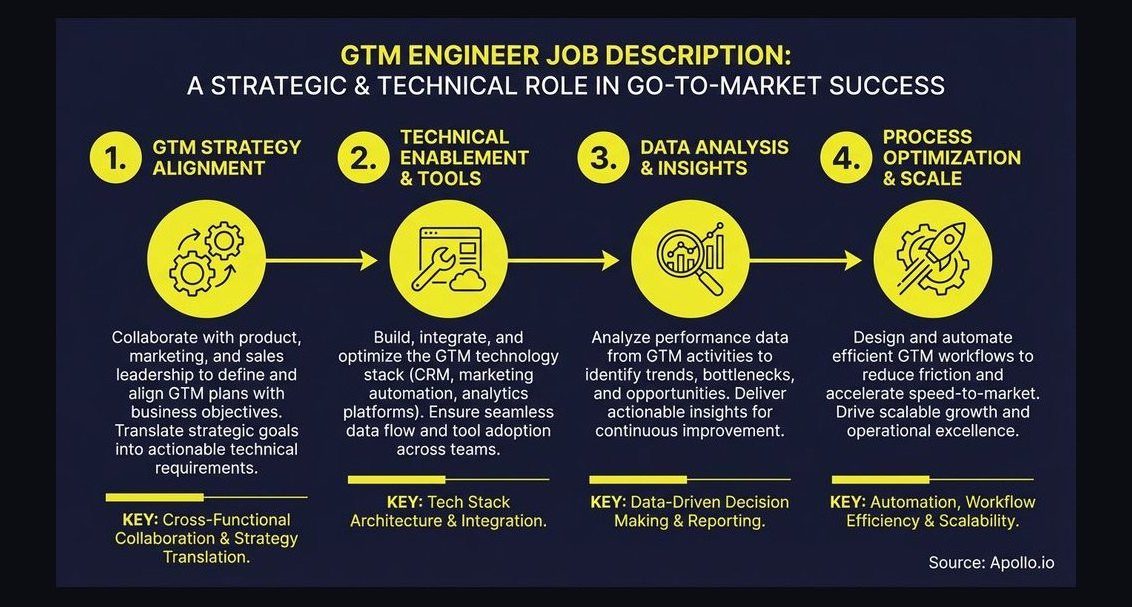 revopsWhat is a GTM engineer and why is the role exploding in 2027?
 revopsHow Do I Build a Board-Ready GTM Efficiency Dashboard in 2027?
 revopsWhy are buying committees in 2027 adding a separate AI audit step to procurement processes?
 revopsWhy are 2027 sales cycles 40% longer for AI-native product launches?
 revopsHow does vendor consolidation impact sales tech stack integration costs in 2027?