

How does the 2027 buying committee shift toward decision-by-consensus affect the optimal cadence of follow-up emails?
 Curated byKory White · Fractional CRO · Maryland
Quality
Certified

Consensus buying collapses the value of frequency and raises the value of relevance. The optimal 2027 cadence is roughly four to seven触 touches per stakeholder spread across six to ten weeks, each tied to a role-specific objection or an observed signal, with sequences paused when a committee goes quiet rather than accelerated.
A deal that stalled because the cadence was too loud
Picture a mid-market RevOps team selling a $90K-ACV platform into a manufacturing company. The champion is a director of demand planning. Behind them sit an IT architect, a security reviewer, a finance analyst, a VP of operations, and — surfacing in week five out of nowhere — a procurement lead with a mandate to consolidate vendors. Seven people, none of whom can sign alone, all of whom can quietly stall.
The rep does what the sequence tells them to. Ten touches in fourteen days, cloned across every contact the SDR scraped into the opportunity. Seven people times ten emails is seventy messages landing in a single company's inboxes inside a fortnight. The champion, who was genuinely interested in week one, starts getting Slack messages from colleagues asking why this vendor is spamming everyone. By week three the champion has stopped replying — not because the product lost, but because advocating for it now carries a small social cost inside their own organization.
That is the failure mode consensus creates, and it is not a personalization problem. It is an arithmetic problem. Cadence math that was designed for one decision-maker multiplies by committee size, and nothing in the standard sequence builder knows that. A seven-step sequence feels reasonable to the rep who built it and feels like a siege to the account that receives it.

Now reverse the scenario. Same deal, same seven people, but the cadence is built around the committee rather than the contact. The champion gets four emails over eight weeks. The IT architect gets two — one integration architecture note, one link to the API documentation. Security gets one email containing the compliance package and nothing else. Finance gets two, both containing numbers. Procurement, who appears in week five, enters a fresh three-touch thread that starts from where they actually are rather than resuming a sequence they never saw the start of.
Total volume drops from roughly seventy messages to about twelve. Every one of those twelve has a reason to exist that the recipient can identify within two seconds of opening it. The champion is no longer defending the vendor's behavior to colleagues; they are forwarding the security package to the reviewer because it saves them the work of chasing it. That is what a consensus-aware cadence buys you — not more attention, but less friction inside the buying group.
The adjacent version of this problem shows up in renewals and expansions, where the committee is often larger than it was at first purchase and the seller has less patience because the relationship feels established. The same arithmetic applies. An expansion motion that blasts a fifteen-person post-sale stakeholder map does more damage than a new-logo sequence, because those recipients already have a support channel and read unsolicited sales email as a breakdown of account management.

How the mechanism actually works
The underlying mechanic is that consensus decisions are made in meetings you are not invited to, and your emails are inputs to those meetings rather than substitutes for them.
Break it into stages. In the exploration stage, one or two people are looking, and nobody else knows the evaluation exists. Your email here is competing only for the champion's attention, and moderate frequency is tolerable because the blast radius is one inbox. In the validation stage, the champion has told colleagues, and each of those colleagues owns a specific veto: security, integration feasibility, budget fit, workflow disruption. Your emails now circulate. A message written for a champion and forwarded to a CISO reads as fluff, and the champion pays the credibility cost.
In the alignment stage, the group is negotiating internally about priority and sequencing against other projects. This is the phase where high-frequency outreach does the most damage, because there is genuinely nothing for the buyer to tell you and every email demands a status update they cannot give. The correct move is a long, deliberate gap punctuated by one genuinely useful asset — an implementation timeline, a reference contact, a scoping document that helps them argue internally.

Then there is the commitment stage, where procurement and legal enter and the useful cadence flips back to responsive and fast. Once someone asks for a redlined agreement, a twenty-four-hour reply window matters more than anything you did in the preceding two months.
The practical implication: cadence should be a function of stage and role, not of days elapsed since the last send. A sequence engine that only knows "day 5, day 9, day 14" is structurally incapable of respecting a consensus process. A sequence engine that can pause on stage transitions, branch by role, and resume on an observable event is the minimum viable architecture.
There is a second mechanism worth naming: internal forwarding is your highest-leverage distribution channel and you cannot measure it. When a champion forwards your email, your open-tracking pixel fires under their name or not at all, your click attribution collapses, and your CRM shows one engaged contact when in fact four people read the message. This means the observable engagement signal systematically undercounts committee reach, and cadences that escalate on low engagement are often escalating against a phantom. The defensive design is to write every email as if it will be forwarded — self-contained context, no "as we discussed," no unexplained pronouns, a clear subject line that survives being read cold by a stranger.

Real numbers, ranges, and benchmarks
Precise industry-wide figures for a year that has barely begun should be treated with suspicion, so here are the ranges that hold up across the deal sizes RevOps teams actually run, stated as planning defaults rather than laws.
Committee size. Enterprise deals above roughly $100K ACV commonly involve six to twelve people with meaningful influence, of whom three to five have genuine veto power. Mid-market deals in the $25K–$100K band typically run three to six. Below $25K you often still have a single economic decision-maker plus one technical reviewer, and the classic single-threaded cadence remains fine. The threshold to change your cadence architecture is roughly three named stakeholders with distinct functional concerns.
Total touch budget. Plan per-stakeholder, then check the account total. Four to seven touches per stakeholder over six to ten weeks is the workable envelope for a consensus deal. Multiply by committee size and sanity-check: a six-person committee at five touches each is thirty messages to one company. If that number makes you wince, it should — trim the peripheral threads first. A reasonable ceiling for a single quarter into one account across all reps and all sequences is somewhere in the twenty-five to forty range, and most teams discover on audit that they are well past it because marketing nurture, SDR prospecting, and AE follow-up are counted in three separate systems.

Spacing. Five to seven days between touches during active evaluation. Ten to fourteen days during internal alignment, when the buyer has nothing new to tell you. Two to four days in the commitment stage. Thirty to forty-five days for revival attempts after a full stall. The single most common calibration error is using evaluation-stage spacing during alignment.
Coverage rather than open rate. The metric that predicts consensus deals is what fraction of the mapped committee has had at least one meaningful interaction — email reply, meeting attendance, document view, call participation. Aim to have touched a majority of the mapped committee within the first four to six weeks. A deal where you have deep engagement with one person and zero with the other five is a single-threaded deal wearing a committee costume, and it will die when that person changes jobs.
Cycle length. Consensus deals run materially longer than single-decision-maker deals of the same size — plan for something in the region of one-and-a-half to two times the cycle you would forecast otherwise. This matters for cadence because your sequence has to survive the gap. A ten-week sequence in a nine-month cycle covers about a quarter of the deal; the rest is meetings, silence, and quarterly re-engagement. Design the sequence as one instrument among several, not as the whole motion.
Reply-rate expectations. Role-specific emails to correctly identified stakeholders substantially outperform generic multi-contact blasts, but the absolute numbers stay modest. Plan on low single-digit reply rates for cold committee members and considerably higher for anyone the champion has warmed. The correct read of a low reply rate from a security reviewer is not "send more" — it is that security reviewers do not reply to vendors until they are asked to by someone internal.

Volume audit cadence. Run a quarterly account-level touch audit that sums every automated email hitting a target account across marketing automation, SDR sequences, and AE follow-up. Teams that do this routinely find two to three overlapping systems firing at the same contacts. Deduplicating that is usually the single largest cadence improvement available, and it costs nothing but a suppression rule.
Trade-offs and alternatives
Nothing here is free, and the low-frequency committee-aware model has real costs you should choose deliberately.
Fewer touches means slower discovery of dead deals. High-frequency cadences are brutal but efficient at surfacing disinterest — you learn in two weeks that nobody cares. Stretch to ten weeks and you carry the deal in the pipeline longer, forecast it, and spend AE time on it. The mitigation is an explicit disqualification trigger: if no second committee member has engaged by week four, the deal drops to nurture regardless of how warm the champion sounds. Without that rule, low-frequency cadence becomes an excuse for pipeline that never resolves.

Role-specific content is expensive to build and maintain. A four-role branching sequence needs four content tracks kept current. Most teams that attempt this ship two good tracks and two stale ones, and the stale ones actively hurt. The honest alternative for a small team is two tracks — business and technical — plus one genuinely excellent security package that gets sent on request rather than on schedule.
Trigger-based pacing depends on signal quality you may not have. Intent and engagement signals are noisy. A pricing-page visit might be a competitor, an analyst, or a bored intern. Building a cadence that only fires on signals means a low-signal account gets nothing at all. The pragmatic hybrid: a slow time-based floor of roughly one touch every two to three weeks per active thread, with signals allowed to accelerate but never to be the sole trigger.
Multi-threading can be read as going around the champion. If you email a champion's boss without telling the champion, you may win the meeting and lose the advocate. The trade-off is real and the mitigation is procedural rather than technical: tell the champion who you plan to contact and why, and let them route the introduction where they can.

There is also a channel trade-off hiding inside the email question. Some of what a consensus cadence needs to deliver is not email-shaped at all. A shared deal room that all stakeholders can access asynchronously does the job of three follow-up emails and produces a cleaner engagement signal, because a view is unambiguous in a way an open is not. A single well-run group call collapses two weeks of asynchronous alignment. LinkedIn works for a first touch to a peripheral stakeholder in a way that cold email increasingly does not. Treating email cadence as the whole answer is the most common framing error in this space.
Common pitfalls and how to avoid them
Cloning the champion sequence across the committee. This is the default behavior of most sequence tools and the single biggest destroyer of consensus deals. If you enroll five contacts in the same sequence, they receive identical emails, they notice, and your credibility drops to zero across the entire account simultaneously. Fix: hard rule that no two contacts at the same account share a sequence.
Treating silence as a reason to escalate. During internal alignment, silence means the buyer is doing exactly what they should. Escalating frequency during this window is the behavior buyers cite most often when explaining why they dropped a vendor. Fix: encode a mandatory slow phase — once a deal reaches internal-review stage, cap outreach at one touch every two weeks until a stage change or explicit request.

Never mapping the committee at all. You cannot run a role-aware cadence against a contact list of two people when the real committee has seven. Fix: make committee mapping a stage-gate field. The opportunity cannot advance past discovery without named stakeholders and their functional role, and the sequence branching keys off that field.
Letting procurement arrive mid-sequence. Late-arriving stakeholders inherit sequences designed for people who have been in the process for two months. A procurement lead receiving touch five of seven gets an email referencing conversations they were not part of. Fix: any contact added after week three enters a dedicated short onboarding thread, never the in-flight sequence.
Counting touches per contact instead of per account. Every system in the stack counts individually. The buyer experiences the sum. Fix: an account-level touch counter with a hard cap and a suppression rule that pauses lower-priority sequences when the cap approaches.

Writing emails that only make sense to the recipient. Given how much internal forwarding drives consensus, an email that depends on prior context breaks the moment it is shared. Fix: every email standalone-readable, with a subject line that a stranger can parse and a first sentence that establishes context without assuming history.
Optimizing the wrong metric. Open rate and reply rate reward frequency, because more sends produce more absolute opens. If your team is measured on those, they will rebuild the ten-touch sequence no matter what the playbook says. Fix: measure committee coverage rate, stage-advance rate per touch, and account-level unsubscribe or complaint rate. Instrumentation drives behavior more reliably than documentation.
Automating the judgment instead of the mechanics. Automation should handle enrollment, suppression, timing floors, and signal detection. The decision about what a specific stakeholder needs to hear next is the part that requires a human who was on the call. Teams that automate that decision produce emails that are individually plausible and collectively obviously robotic.
Related questions
Does this apply to renewals and expansions too?
Yes, and more sharply. Post-sale committees are often larger and include people who never chose you. Expansion cadence should run even slower — one touch every three to four weeks — and route through the customer success relationship rather than parallel to it.
What committee size justifies redesigning the cadence?
Roughly three or more named stakeholders with distinct functional concerns. Below that, the multiplication problem is small enough that a conventional sequence works. Above it, per-contact touch counts compound into account-level volume the buyer experiences as spam.
How do you cadence a stakeholder who has never replied to anything?
Sparsely, and only with assets that serve their specific function — a compliance package for security, an architecture note for IT. Two touches maximum, then stop and ask the champion to route the introduction internally. Cold persistence with a functional reviewer rarely converts.
Should marketing nurture keep running during an active sales cadence?
Almost never at full volume. Suppress nurture for contacts in active opportunities, or you double the touch count invisibly. This is the most common source of account-level over-messaging and one of the easiest to fix.
Is a shared deal room a substitute for follow-up email?
Partly. It replaces the informational touches and produces cleaner signals, since a document view is unambiguous where an open is not. You still need email to prompt the visit and to carry role-specific framing.
FAQ
How many total emails should one account receive during a consensus deal?
Think in account totals rather than per-contact counts. For a six-person committee over a ten-week active window, somewhere in the range of twelve to twenty-five total messages across all threads is defensible. Beyond forty, you are almost certainly generating internal complaints you will never hear about directly. Audit the sum across marketing automation, SDR sequences, and AE follow-up together, because those three systems each look reasonable in isolation.
Should every committee member get their own sequence?
Every distinct functional role should, but not every individual person. Two finance stakeholders can share a track. A finance stakeholder and a security reviewer cannot — their objections have nothing in common, and one message covering both is a message that persuades neither. Three to four role tracks covers most committees; more than that is usually over-engineering.
What is the right response when a committee goes completely silent for a month?
One well-constructed revival touch, then a long pause. The revival email should contain something genuinely new — a relevant customer outcome, a product change, a shift in their market — and should explicitly offer the option of closing the loop. Multiple revival attempts in quick succession read as desperation and permanently reduce the odds of the deal returning later.
Does AI-generated personalization solve the volume problem?
No, it makes it worse if used naively, because it lowers the cost of sending. The constraint in consensus selling is buyer attention and champion credibility, not production capacity. AI is genuinely useful for drafting role-specific variants from a single approved message and for surfacing which stakeholders have gone quiet. It is not useful for deciding whether an email should be sent at all — that remains a judgment call informed by what happened on the last call.
How do you know an email actually reached the wider committee?
Mostly you don't, which is the core measurement gap. Proxies that help: ask the champion directly who has seen what, use uniquely linked shared documents so views are attributable, and notice when a new contact appears in a reply chain. Design for forwarding — self-contained, no unexplained references — rather than trying to instrument it precisely.
What should RevOps build first if the current setup is a single generic sequence?
Two things, in order. First, an account-level touch counter with a suppression rule, because it stops active harm immediately and requires no content work. Second, a required committee-mapping field on the opportunity that sequence branching can key off. Content tracks come third — they are worthless until you know who you are writing to and how loud you are currently being.
Sources
- Gartner — B2B Buying Journey research
- Harvard Business Review — The New Sales Imperative
- McKinsey — B2B sales and marketing insights
- Gong Labs — sales research and benchmarks
- Forrester — B2B buyer research
- LinkedIn Sales Blog — B2B selling research
- Salesforce — State of Sales research
- HubSpot — sales research and benchmarks
Related on PULSE
- How do 2027 AI agents in the funnel affect the cadence of follow-up emails?
- How do longer sales cycles in 2027 change the optimal frequency of B2B follow-up communications?
- How do you coach a rep to write better follow-up emails?
- How does the 2027 trend toward outcome-based contracts change the GTM motion for SaaS startups?
- Which vendor consolidation patterns are signaling a shift toward single-platform GTM stacks?
This page will be disappearing soon. Save it to your device for $1 — or read it free while it is here.
@Kory-White- · if Venmo asks, the last 4 of my number are 2012
This page is gone.
This one is off the shelf now. $1 keeps it on your phone for good — the whole page, pictures and diagrams included.
 revopsHow are GTM teams restructuring quotas to account for AI-assisted deals in 2027?
 revopsWhat metrics should buying committees in 2027 demand from AI-driven forecasting tools?
 revopsHow can RevOps use AI to map influence dynamics inside buying committees in 2027?
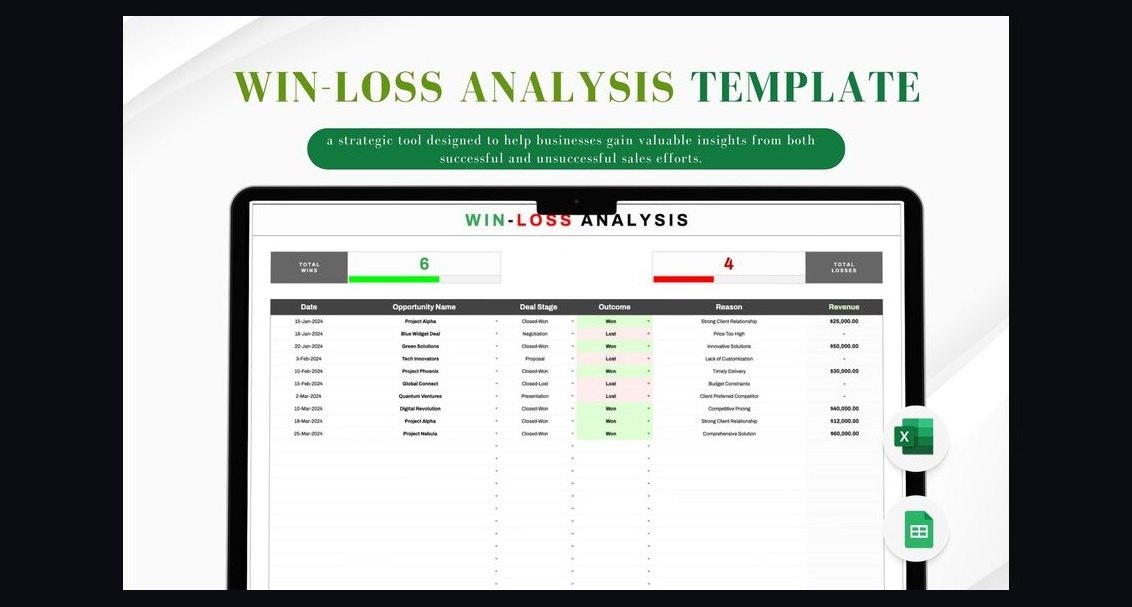 revopsHow Do I Run a Win/Loss Analysis Program That Improves Win Rate in 2027?
 revopsWhat triggers are early-stage RevOps teams using in 2027 to hand off AI-qualified leads to human sales reps without losing context?
 revopsHow do you measure outbound effectiveness in 2027?
 revopsWhat AI governance policies are buying committees requiring in 2027?
 revopsHow do longer sales cycles in 2027 impact the calculation of customer acquisition cost?
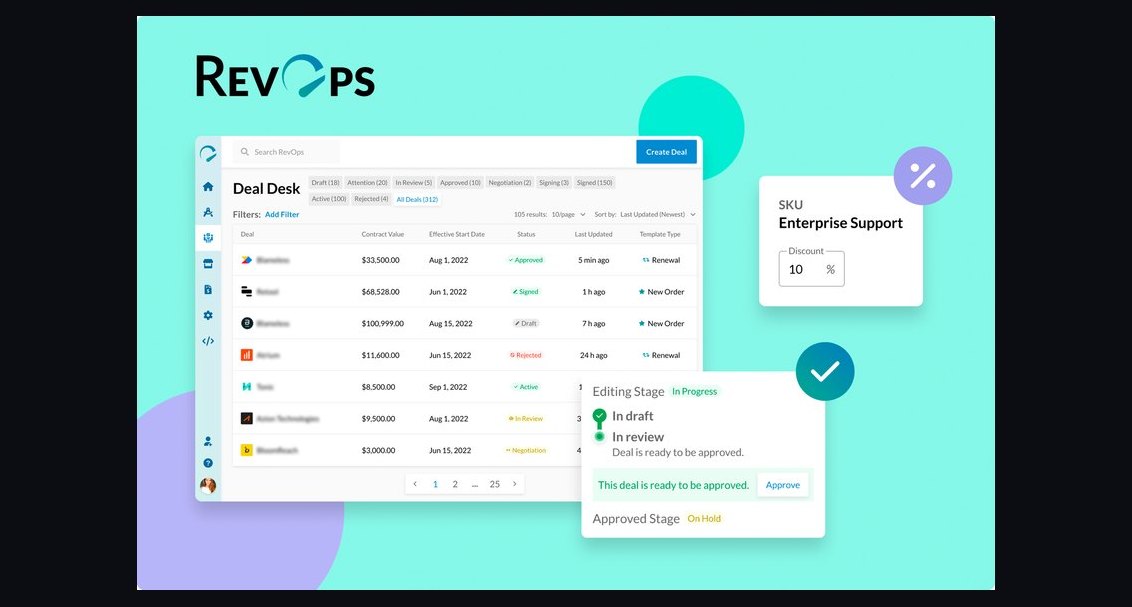 revopsHow should RevOps in 2027 adjust quota carrying capacity when AI automates 60% of outbound tasks?
 revopsWhy are 2027 sales cycles 40% longer for AI-native product launches?