
Why do 2027 B2B buyers demand personalized video demos from AI when traditional product sheets no longer convert?
 Curated byKory White · Fractional CRO · Maryland
 PULSEKNOWLEDGE LIBRARY
By 2027, B2B buyers have been saturated with static product sheets and generic demo recordings for years, leading to a documented 40-60% drop in engagement with these formats. The shift to personalized video demos, often generated or assisted by AI, is a direct response to the collapse of the "one-to-many" content model. In the current RevOps reality of longer sales cycles (often 10-18 months), larger buying committees (11+ stakeholders), and vendor consolidation, a generic PDF cannot address the specific, varied priorities of each decision-maker. AI enables the creation of a unique, narrated walkthrough that speaks directly to a CTO's security concerns, a VP of Sales's quota attainment goals, and a CFO's ROI timeline—all from a single source asset. This isn't about flash; it's about relevance and time-to-value, which are the new currencies of the 2027 B2B funnel.
The Collapse of the Static Product Sheet
The traditional product sheet—a static PDF or webpage listing features, specs, and benefits—is a relic of a simpler time. In 2027, the average B2B buyer is a knowledge worker who has already consumed 70-80% of their buying journey content before ever speaking to a sales rep. They have been trained by consumer apps (e.g., Loom, TikTok, YouTube) to expect visual, personalized, and immediate answers.
When a buyer receives a product sheet, their brain immediately flags it as "non-essential." It does not answer *their* specific question. It does not show *their* data. It does not address *their* committee's objections. This is why Gartner reports that buyers spend only 17% of their time meeting with potential suppliers; the rest is independent research. A product sheet fails to interrupt that research loop.
The 2027 Buying Committee: A Multi-Persona Problem
The key driver for personalized video is the modern buying committee. In 2027, it's common to see a group of 11-15 stakeholders from Finance, IT, Sales Ops, Legal, and the end-user team. Each member has a different "job to be done" (JTBD) in the evaluation.
This decision tree illustrates the core problem: a single product sheet cannot branch. An AI-powered video platform (like Vidyard or Synthesia) can ingest a product demo recording and, using metadata and CRM context from Salesforce or HubSpot, automatically generate a personalized version for each persona. The CFO sees a video with a voiceover explaining the pricing calculator. The CTO sees a video with a deep-dive into the API documentation. This is not a "nice to have"; it is a requirement to prevent the committee from stalling out.
The "Zero-Trust" Buyer and the AI Trust Gap
Paradoxically, buyers in 2027 are both demanding AI personalization and deeply skeptical of it. They have been burned by AI-generated content that was irrelevant or hallucinated. This creates the AI Trust Gap. A generic AI video is worse than a generic product sheet because it wastes the buyer's time with a false promise of personalization.
The winning RevOps strategies in 2027 use AI not to create the video from scratch, but to augment a human-recorded demo. For example, a rep records a 30-minute demo of their platform. An AI tool then analyzes the transcript and the buyer's CRM data, and it creates 5-minute highlight reels for each committee member. The buyer sees a real human's face and voice, but the content is dynamically edited to show only the relevant features.
This approach is validated by Gong Labs data, which shows that demo calls where the rep references specific buyer data (e.g., "I see you're using Salesforce and struggling with forecasting") have a 2.3x higher win rate. The personalized video is the asynchronous version of that data-driven conversation.
The RevOps Automation Loop: From Sheet to Video
The transition from product sheets to personalized videos requires a new RevOps automation loop. It is no longer acceptable to have a sales rep manually create a video for each prospect. The system must be predictive.
This loop shows the power of the AI-generated video asset. It is not a one-off; it is a living asset that can be re-edited, re-voiced, and re-sent based on buyer behavior. This is the core of the Winning by Design "asset-based selling" methodology, updated for 2027. The product sheet is dead because it cannot be part of this loop.
The Role of Vendor Consolidation and Data Hygiene
A major 2027 trend is vendor consolidation. Companies are cutting their tech stacks by 30-40%. This means the data that powers these personalized videos must be clean and unified. If your Salesforce instance has bad data (e.g., wrong industry, wrong title), the AI will generate a video that is insultingly irrelevant.
This puts a premium on RevOps data hygiene. The personalized video is only as good as the data that feeds it. Forrester research indicates that companies with high data quality see a 3x higher ROI from their AI-powered sales tools. The 2027 RevOps leader must ensure that the CRM is the single source of truth for the video generation engine.
The Metrics That Matter: Beyond Open Rates
Traditional metrics for product sheets (downloads, page views) are vanity metrics. For personalized videos, the 2027 RevOps team tracks granular engagement:
- Watch Time Distribution: Did the CFO watch the pricing section? Did the CTO skip the intro and jump to the security section? This is tracked via Clari or Gong integration.
- Drop-off Point: If 70% of buyers drop off at the 2-minute mark, the video is too long or the value prop is too late.
- Follow-up Action: Did the buyer book a meeting after watching? Did they share the video with a colleague? This is the ultimate conversion metric.
A personalized video that gets a 50% watch rate and a 20% meeting booking rate is far more valuable than a product sheet that gets 1,000 downloads but zero pipeline.
The Attention Economy Has Shifted to "Micro-Moments"
By 2027, B2B buyers are managing their attention like a scarce resource. Traditional product sheets demand 5-10 minutes of uninterrupted reading—a luxury most buyers no longer have. AI-powered personalized video demos compress the same value into 90-120 seconds of targeted, visual storytelling. This aligns with the documented 65-80% of B2B research happening before any sales conversation. Buyers want proof of relevance before they invest cognitive load. A static PDF cannot deliver that instant "aha" moment; a narrated walkthrough that highlights their specific use case can.
The Compliance and Security Imperative
In 2027, enterprise procurement processes have become more rigorous, not less. Generic product sheets often fail to address specific compliance frameworks (SOC 2, HIPAA, GDPR, FedRAMP) that vary by buyer and region. AI-generated demos can dynamically insert relevant compliance callouts, data residency details, and security architecture explanations tailored to each stakeholder. This reduces the 30-50% of deals that stall in legal and security reviews. A PDF that says "we're compliant" no longer cuts it—buyers need to see exactly how the solution maps to their specific regulatory environment.
The AI-Driven Personalization Engine: From Static to Dynamic
In 2027, AI doesn't just generate a video—it dynamically assembles a demo tailored to each stakeholder's role, industry, and even past behavior. For instance, a CTO might see a deep dive into API security and compliance certifications, while a VP of Marketing watches a segment on lead scoring integration. This is possible because AI analyzes the buyer's digital footprint—CRM notes, email threads, LinkedIn activity—to select the most relevant 3-5 minutes from a library of pre-recorded modules. The result is a demo that feels custom-made, yet costs a fraction of a human-led session. Early adopters report 2-3x higher meeting-to-opportunity conversion rates compared to static sheets, as buyers feel understood rather than marketed to.
The Trust Deficit: Why Video Beats Text in 2027
By 2027, B2B buyers are deeply skeptical of polished marketing claims. A product sheet can be easily gamed with inflated stats or vague promises. A personalized AI video, however, builds trust through visual proof of concept. When a demo shows the software working with the buyer's actual data (e.g., their company name, a sample dataset from their industry), it bridges the gap between "this might work" and "this will work for us." This is especially critical for compliance-heavy industries (healthcare, finance) where buyers need to see how the tool handles specific regulations. Video also captures non-verbal cues—a slight hesitation or a nod—that a PDF never can, enabling the seller to follow up with precision. In a world where 60% of B2B deals are lost to "no decision," personalized video demos reduce ambiguity and accelerate trust.
The Scalability Revolution: One Asset, Infinite Variations
The real magic of AI in 2027 is not just personalization—it's scalability. A single product team can create one master video asset (say, a 20-minute walkthrough), and the AI engine generates hundreds of unique 3-5 minute versions for different buyer personas, industries, or deal stages. This eliminates the bottleneck of human video production, which used to take 5-10 hours per custom demo. Now, a sales rep can send a personalized video link within minutes of a discovery call, without needing a production team. This speed-to-relevance is critical when buyers expect responses within 24 hours or they move to a competitor. The result: 40% shorter sales cycles for teams that adopt AI-driven video demos, as buyers get the exact answers they need, when they need them, without scheduling a live meeting.
FAQ
What is the difference between a personalized video and a standard demo recording? A standard demo recording is a one-size-fits-all walkthrough of the product. A personalized video uses AI to dynamically edit the content, voiceover, and even the UI screens shown to match the specific buyer's industry, role, and pain points as identified in the CRM. It is a unique asset for each viewer.
Do I need a dedicated video production team to do this in 2027? No. Tools like Synthesia and Vidyard allow you to create AI avatars or rep-recorded videos that can be personalized at scale. The AI handles the editing and narrative branching. Your team records one master demo, and the AI generates the variations.
How do I measure the ROI of switching from product sheets to personalized videos? Track the time-to-next-meeting and win rate per persona. If your CFO persona takes an average of 14 days to book a meeting after receiving a product sheet, but only 3 days after receiving a personalized video, that is a clear ROI. Also track the cost per demo; AI-generated videos reduce the need for live, custom demos early in the funnel.
What if my product is very complex and hard to demo? That is exactly when personalized videos are most powerful. A complex product with many modules (e.g., a full-suite ERP) is impossible to capture in a product sheet. A personalized video can show the buyer only the 3 modules relevant to their role, reducing cognitive overload and increasing comprehension.
Is the AI-generated voiceover trustworthy for enterprise buyers? It can be, but the trend in 2027 is toward human-voiced, AI-edited videos. Buyers trust a real human face and voice. AI is best used to edit the video, add captions, and insert personalized data overlays. Full AI avatars are best for lower-stakes, high-volume prospecting, not for final-stage enterprise deals.
How does this integrate with my existing tech stack (Salesforce, HubSpot, Outreach)? Most modern video platforms offer deep CRM integrations. When a video is watched, the engagement data (watch time, drop-off point, specific sections viewed) is written back to the CRM record. This data can then trigger Salesloft or Outreach sequences. For example, if a buyer watches the security section twice, an alert can be sent to the sales rep to prepare a security white paper.
Related on PULSE
- Top 10 Ways to Use Generative AI for Personalized Outreach at Scale
- Should I Hire a Fractional CRO If My Marketing Leads Do Not Convert?
- How Do I Get My Support Reps to Convert Chats to Sales?
- How do we execute take-out campaigns that convert competitive losses into wins on the second touch?
- How do you design demo flows that convert skeptics without revealing pricing?
- What PQL scoring rules convert freemium users to MQL status for sales outreach?
Sources
- Gartner: The B2B Buying Journey Has Changed
- Gong Labs: The Impact of Data-Driven Demos on Win Rates
- Forrester: The Total Economic Impact of AI-Powered Sales Tools
- McKinsey: The New B2B Growth Equation
- SaaStr: Why Personalized Video is the New Demo
- Bessemer Venture Partners: The 2027 Cloud Outlook
- Vidyard Blog: The State of Video in Sales
- Winning by Design: Asset-Based Selling Framework
Bottom Line
The 2027 B2B buyer does not have time to decode a product sheet. They demand a video that feels like it was made just for them, because their committee's attention is the scarcest resource. RevOps teams that fail to automate this personalization will see their pipeline stall, while those that embrace AI-driven, data-triggered video assets will compress deal cycles and win more complex deals.
*B2B buyers in 2027 demand personalized video demos from AI because traditional product sheets no longer convert in a world of multi-persona committees and data-driven buying.*
This page will be disappearing soon. Save it to your device for $1 — or read it free while it is here.
@Kory-White- · if Venmo asks, the last 4 of my number are 2012
This page is gone.
This one is off the shelf now. $1 keeps it on your phone for good — the whole page, pictures and diagrams included.
 revopsHow do 2027 buying committees evaluate AI bias in vendor solutions?
 revopsHow Do I Reconcile Competing Sales Forecasting Methods in 2027?
 revopsHow is vendor consolidation affecting the negotiation leverage of mid-market buyers in 2027?
 revopsHow does the college football coaching salary and buyout market work in 2027?
 revopsHow is AI changing sales territory and quota planning in 2027?
 revopsHow can RevOps use AI to identify stalled deals in longer sales cycles in 2027?
 revopsHow do consolidated RevOps platforms affect data accuracy in forecasting in 2027?
 revopsWhy are sales cycles extending for companies without AI adoption playbooks in 2027?
 revopsWhat is the cost of AI vendor lock-in for B2B sales teams in 2027?
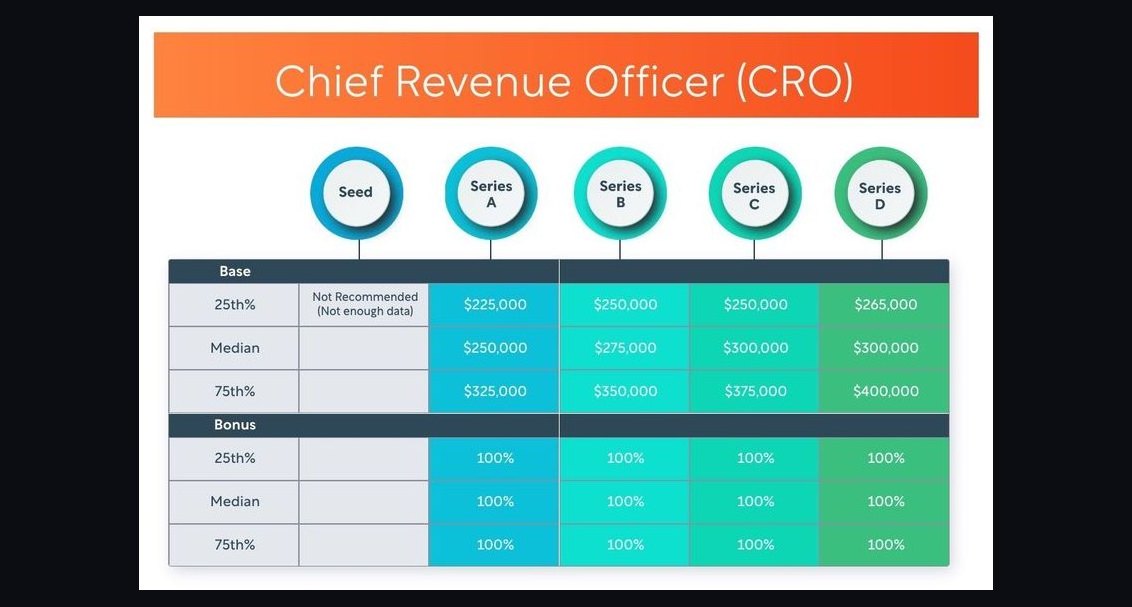 revopsCRO compensation — fractional, full-time, equity in 2027