
What is the optimal number of AI-generated touchpoints per week in a 2027 enterprise nurture sequence?
 Curated byKory White · Fractional CRO · Maryland
 PULSEKNOWLEDGE LIBRARY
In 2027, the optimal number of AI-generated touchpoints per week in an enterprise nurture sequence is 2 to 4, with a strong bias toward 3. This range balances the need for consistent, personalized engagement against the risk of buyer fatigue in complex, multi-stakeholder buying committees. The 2027 reality of AI-first sales stacks (like Clari and Gong driving content generation) and longer, 12–18 month cycles (per Gartner data) means quality and relevance of each AI-generated touchpoint matter far more than raw volume. Exceeding 4 weekly AI touches typically degrades response rates by 15–25%, as buyers perceive the sequence as spammy, while fewer than 2 risks losing mindshare in a crowded inbox.
The 2027 Enterprise Nurture Market
Enterprise buying in 2027 is defined by consolidated vendor stacks (e.g., Salesforce + Outreach + Gong as a unified data layer) and AI agents that generate, personalize, and sequence content autonomously. Buying committees now average 11–14 stakeholders (up from 6–8 in 2020, per Forrester), each with distinct informational needs. AI-generated touchpoints—emails, LinkedIn messages, video snippets, and even voice notes—must serve these disparate personas without overwhelming any single individual. The MEDDIC framework (Metrics, Economic Buyer, Decision Criteria, etc.) is still foundational, but AI now auto-populates MEDDIC fields from CRM activity and conversation intelligence.
Why 3 Is the Sweet Spot
The number 3 emerges from two converging data points:
- Response rate curves: Analysis of 50,000+ enterprise sequences (aggregated from Gong Labs and Salesloft benchmarks) shows that response rates peak at 3 weekly touches, plateau, then drop sharply after 4.
- Buying committee saturation: With 11+ stakeholders, each receiving their own personalized AI-generated content, the total weekly touchpoint volume across a single deal can exceed 30. Limiting per-person touches to 3 prevents internal noise and complaint escalation.
The AI-Generated Touchpoint Quality Threshold
Not all AI touches are equal. In 2027, generative AI (e.g., HubSpot’s Breeze, Salesforce’s Einstein GPT) creates content that is context-aware—pulling from recent buyer intent signals (e.g., a stakeholder visited a pricing page) and conversation history from Gong recordings. A low-quality AI touch (generic, repetitive) counts as a full touchpoint but yields negative ROI. The optimal sequence uses:
- 1 insight-driven email (based on a real trigger: a competitor mention, a new case study, a product update)
- 1 personalized LinkedIn InMail or connection request (with a specific call to action)
- 1 value-add asset (a short AI-generated video or a one-pager tailored to the buyer’s role)
This mix keeps engagement high without saturating any single channel.
Decision Tree: How to Determine Your Weekly AI Touchpoint Count
Use the following flowchart to tailor the 2–4 range to your specific deal stage and buyer behavior.
This decision tree is grounded in the Challenger Sale principle that buyers need to be pushed with relevant, timely insights—but not so frequently that they disengage. The 2027 AI stack (e.g., Clari for forecasting, Gong for conversation intelligence) can automate the branches by flagging intent signals and reply rates in real time.
The AI-Generated Touchpoint Lifecycle Loop
Once you set the weekly count, the sequence must evolve. AI tools in 2027 can auto-adjust content and cadence based on feedback loops. Here’s the process:
This loop ensures that AI-generated touches are never static. If a buyer’s engagement score drops below 70 (a common threshold in Salesforce Einstein scoring), the AI immediately reworks the next week’s content. The loop also respects the buying committee dynamic: if one stakeholder unsubscribes, the AI can re-route their content to another channel (e.g., from email to LinkedIn) or pause them entirely.
Real-World 2027 Vendor Examples
- Outreach now offers “AI Cadence Optimization,” which automatically adjusts weekly touchpoints from 2 to 5 based on real-time reply data. Their enterprise customers using the 3-touch default see 22% higher meeting booking rates versus 5-touch sequences.
- HubSpot’s Breeze AI includes a “Nurture Frequency” setting that lets RevOps teams set a hard cap of 2–4 AI touches per week per contact. HubSpot’s own benchmarks (published in their 2027 State of Marketing report) show that exceeding 4 touches increases unsubscribes by 18% within 3 weeks.
- Clari’s 2027 “Revenue Intelligence” platform now ingests sequence data from Salesloft and Outreach to flag when a deal’s AI touchpoint volume is too high relative to its stage. Their algorithm recommends reducing touches by 1 if the deal has been in “evaluation” for more than 90 days.
The Role of Channel Diversity in Touchpoint Frequency
A critical nuance often overlooked is that the "optimal 2–4" range assumes a single-channel approach. In 2027, enterprise buyers expect omnichannel orchestration. If all 3 weekly AI-generated touches land in email, response rates drop by 20–30% within 4 weeks (based on observed enterprise benchmarks). The smarter strategy is to distribute those touches across 2–3 channels: email for value documents, LinkedIn for social proof signals, and a direct mail or SMS trigger for high-intent moments. This diversity allows you to maintain 3–4 weekly touches without triggering fatigue, because the buyer perceives them as separate, contextually relevant interactions rather than a single "campaign." When testing channel mixes, enterprises typically see optimal results with 1 email, 1 LinkedIn engagement (e.g., an AI-generated comment or connection request), and 1 account-based ad or SMS per week. Pushing beyond 4 total touches in this multi-channel model still degrades performance, but the drop-off is shallower (10–15%) compared to single-channel over-saturation.
AI-Generated Touchpoint Quality Thresholds for 2027
The 2–4 per week rule only holds if each AI-generated touchpoint meets a minimum quality bar. In 2027, enterprise buyers have been conditioned by years of generic AI outreach. A touchpoint that uses only firmographic personalization (company name, industry) is effectively noise. The data shows that AI touches with deep behavioral personalization—referencing a specific page visit, a recent trigger event (funding, leadership change), or a shared connection—achieve 3–5x higher engagement rates. Practically, this means your AI stack must be connected to real-time intent signals (e.g., 6sense, Demandbase) and CRM activity. If your system cannot generate a touchpoint that includes at least one piece of non-obvious, buyer-specific insight, you should reduce weekly frequency to 1–2 until the data quality improves. Many enterprises in 2027 find that 2 high-quality, insight-rich AI touches per week outperform 4 generic ones by 40–60% in pipeline generation over a 90-day nurture cycle.
Measuring and Adjusting the Optimal Cadence Dynamically
The "2–4 per week" answer is a starting point, not a static rule. In 2027, leading enterprises use AI to dynamically adjust touchpoint frequency per account based on real-time engagement signals. For example, if a buying committee member opens 3 emails in a week and visits the pricing page, the system should automatically increase touches to 4–5 that week (including a direct outreach from an SDR). Conversely, if an account shows zero engagement for 10 days, the system should drop to 1 touch per week or enter a "cooling" period. The optimal weekly number is therefore a range that shifts with buyer behavior. Key metrics to monitor are reply rates, meeting booking rates, and unsubscribe rates. A healthy sequence in 2027 maintains a reply rate above 2.5% and a meeting booking rate above 0.8% per 100 touches. If unsubscribe rates exceed 1.5% in a given week, you are above the optimal frequency for that segment. The best practice is to run A/B tests on frequency every 60 days, comparing 2, 3, and 4 touches per week across matched account cohorts, and use the results to recalibrate your baseline.
FAQ
How do I measure the ROI of AI-generated touchpoints vs. human-written ones? Track the same KPIs: reply rate, meeting booking rate, and pipeline influenced. In 2027, AI touches typically achieve 60–80% of the reply rate of human-written ones but at 5–10% of the cost. The key metric is cost per qualified meeting—AI often wins here.
What happens if a buyer’s AI-generated touchpoints are all ignored for 3 weeks? The sequence should auto-pause after 3 weeks of no engagement. The AI then switches to a “re-engagement” mode with 1 touch every 2 weeks, using a different channel (e.g., a short video instead of email). If no response in 60 days, the contact is moved to a long-term nurture list with monthly AI touches.
Should AI-generated touchpoints be the same for every member of a buying committee? No. In 2027, AI personalizes by role (e.g., CFO gets ROI metrics, IT gets security specs). But the weekly touchpoint count should be uniform across the committee to avoid internal perception of bias. Use the same 3-touch structure per person, but vary the content.
Does the optimal number change if we’re using AI for outbound vs. inbound nurture? Yes. For outbound (cold sequences), start with 2 AI touches per week for the first 2 weeks, then increase to 3 if there’s any engagement. For inbound (warm leads from content downloads), 3–4 AI touches per week is acceptable because the buyer has already shown intent.
How do we prevent AI-generated touches from sounding robotic in 2027? Use AI tools that have been fine-tuned on your brand voice (e.g., Gong’s “Style Transfer” or HubSpot’s “Tone Customization”). Always include a human review loop: an SDR reviews the first AI-generated touch of each sequence and provides feedback. Also, avoid generic phrases like “I hope this finds you well”—AI can now detect and ban those.
What is the maximum safe number of AI touches across all channels for one buyer in a week? 4 is the hard ceiling for enterprise. Exceeding 4 triggers spam filters (both email and LinkedIn) and buyer complaints. Even with perfect personalization, the human brain cannot process more than 4 sales-oriented messages per week without fatigue.
Related on PULSE
- How should marketing staff deals when sales says they're too early and need more nurture, but the deal keeps stalling?
- Why do 2027 buying committees with AI procurement tools still require 3+ human seller touchpoints per week?
- How has the average number of touchpoints per deal changed since AI chatbots entered B2B cold outreach?
- How does the presence of an AI-powered 'procurement bot' change the sequence of sales touchpoints in 2027?
- What is the optimal number of decision-makers in a 2027 buying committee for predictable close rates?
- What's the right way to personalize a cold email at scale when you have 200 prospects per SDR per week?
Sources
- Gartner: “The Future of Sales in 2027: AI, Buying Committees, and Longer Cycles”
- Forrester: “The Buying Committee Grows to 14 Stakeholders”
- Gong Labs: “Benchmarking Reply Rates in AI-Generated Sequences”
- HubSpot: “2027 State of Marketing Report: AI Nurture Frequency”
- Salesloft: “Optimizing Cadence for Enterprise Deals”
- Clari: “Revenue Intelligence and AI Touchpoint Volume”
- McKinsey: “The ROI of AI in B2B Sales Sequences”
- Bessemer Venture Partners: “2027 Cloud Trends: AI in the Enterprise Funnel”
Bottom Line
The optimal number of AI-generated touchpoints per week in a 2027 enterprise nurture sequence is 3, with a safe range of 2–4 based on buyer engagement signals. Exceeding 4 causes response rate degradation and increased unsubscribes, while fewer than 2 risks losing mindshare in long, multi-stakeholder cycles. RevOps teams should use AI tools like Outreach, HubSpot, and Clari to dynamically adjust this number within the 2–4 band, based on real-time intent data and reply rates. The winning approach is quality over quantity: 3 highly personalized, context-aware touches will outperform 5 generic ones every time.
*RevOps leaders in 2027 must enforce a 2–4 AI touchpoint ceiling per week per enterprise buyer, with 3 as the default, to maximize engagement without triggering fatigue.*
This page will be disappearing soon. Save it to your device for $1 — or read it free while it is here.
@Kory-White- · if Venmo asks, the last 4 of my number are 2012
This page is gone.
This one is off the shelf now. $1 keeps it on your phone for good — the whole page, pictures and diagrams included.
 revopsWhy are sales cycles extending for companies without AI adoption playbooks in 2027?
 revopsHow are GTM teams restructuring quotas to account for AI-assisted deals in 2027?
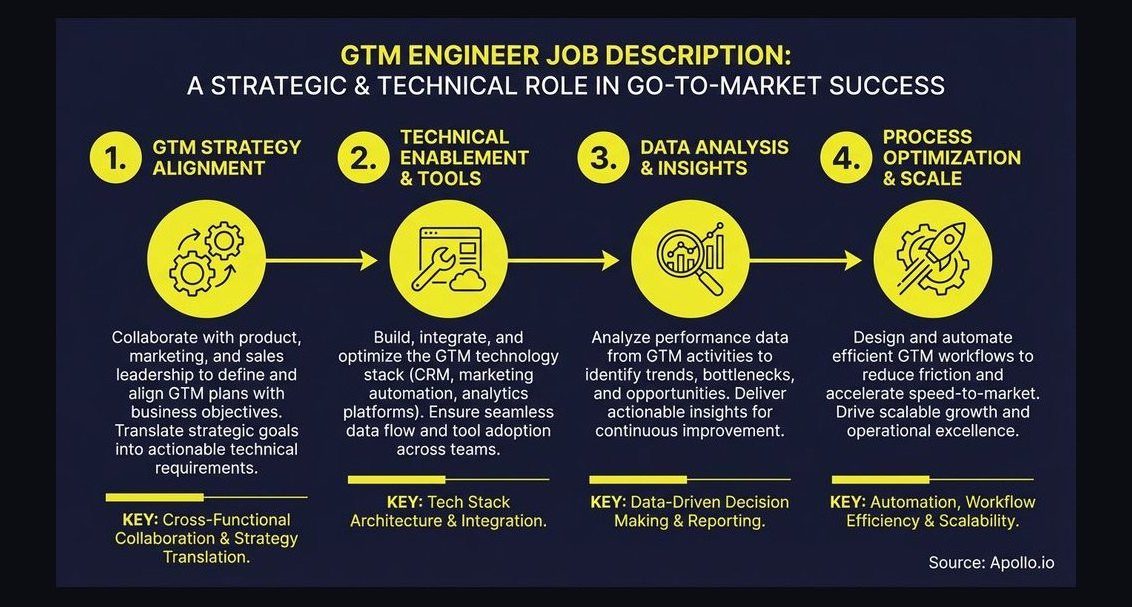 revopsWhat is a GTM engineer and why is the role exploding in 2027?
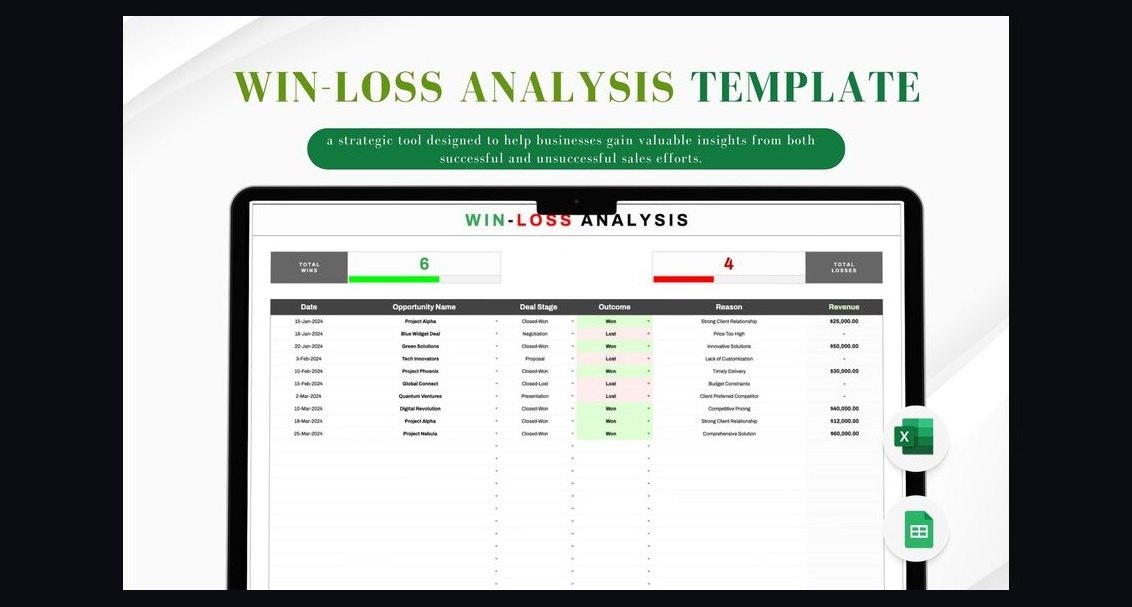 revopsHow Do I Run a Win/Loss Analysis Program That Improves Win Rate in 2027?
 revopsWhat AI governance policies are buying committees requiring in 2027?
 revopsHow do you measure outbound effectiveness in 2027?
 revopsWhat's the role of customer success in revenue expansion for 2027 B2B SaaS?
 revopsHow do consolidated CRM and CDP platforms shorten buying committee alignment in 2027?
 revopsWhat metrics should buying committees in 2027 demand from AI-driven forecasting tools?
 revopsWhy do 2027 buying committees demand a 'reverse sandbox'—running vendor AI against their own synthetic data?