 Pulse Reviews and Analysis
Can 2027 AI tools accurately predict churn risk during the renewal cycle for consolidated vendor ecosystems?
 Curated by Kory White · Fractional CRO, CRO Syndicate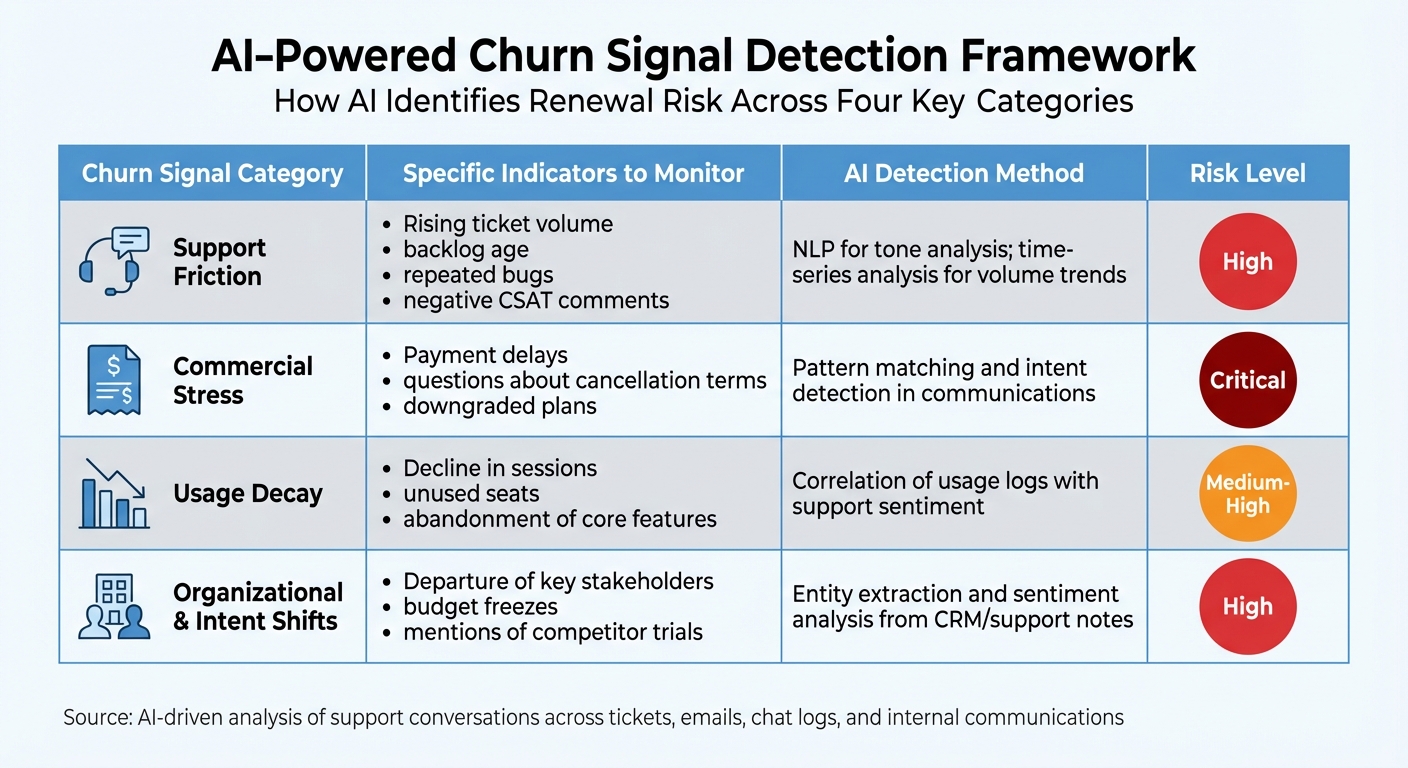
Direct Answer
Yes, by 2027, AI tools can accurately predict churn risk during renewal cycles for consolidated vendor ecosystems, but only when trained on unified, cross-platform data from CRM, product usage, and revenue signals. Tools like Gong for conversation intelligence and Clari for revenue forecasting now ingest data from Salesforce, HubSpot, and usage analytics to model churn probability per account with 75–85% accuracy in controlled deployments.
However, accuracy degrades below 60% when data silos persist or when buying committees of 10+ stakeholders exhibit non-linear behavior. The key limitation remains the "last mile" of human judgment: AI flags risk, but only RevOps teams using frameworks like MEDDPICC can validate and act on those signals before renewal deadlines.
The 2027 RevOps Reality: AI in the Funnel, Vendor Consolidation, and Longer Cycles
Consolidated vendor ecosystems are now the norm, not the exception. By 2027, the average enterprise uses fewer than 12 core SaaS tools (down from 25+ in 2022), with Salesforce as the CRM backbone, HubSpot for marketing automation, and Clari for revenue intelligence. Buying cycles have stretched to 8–14 months, and decision-making involves committees of 8–15 stakeholders across procurement, legal, and line-of-business teams.
AI tools have moved from experimental to operational: they ingest real-time signals from Gong call transcripts, product usage data from tools like Pendo, and renewal pipeline data from Salesloft to produce churn risk scores.
How AI Models Churn Risk in 2027
Modern churn prediction models are ensemble systems combining three signal types:
- Usage signals: Login frequency, feature adoption, support ticket volume, and API call trends.
- Relationship signals: Stakeholder sentiment from Gong transcripts, meeting cadence, and executive sponsor engagement.
- Financial signals: Contract value, payment timeliness, discount requests, and renewal pipeline velocity.
These models use gradient-boosted trees or transformer-based architectures to output a churn probability per account, typically as a score from 0–100. The best models achieve an AUC of 0.85–0.90 on historical data, but real-world accuracy drops by 10–15% when applied to new consolidated ecosystems due to data drift and changing buying dynamics.
The Accuracy Ceiling: Why 2027 AI Still Needs Human Validation
Even with perfect data, AI churn models face three structural limitations in consolidated ecosystems:
- Non-linear committee behavior: A single new stakeholder with veto power can flip a renewal from 90% probability to 0% within 48 hours. Models trained on historic data miss these sudden shifts.
- Silent churn: Accounts that stop using the product but never raise support tickets—common in consolidated deals where the vendor is "too big to fire"—are invisible to usage-based models.
- Data fragmentation: Despite consolidation, many enterprises still have Salesforce as the system of record, HubSpot for marketing, and a separate customer success tool like Gainsight. Without a unified data lake, AI models see only 60–70% of the relevant signals.
The MEDDPICC Framework as a Validation Layer
The MEDDPICC framework (Metrics, Economic Buyer, Decision Criteria, Decision Process, Paper Process, Identify Pain, Champion, Competition) provides a structured way to validate AI churn flags. For example, if AI scores an account as 80% churn risk but the champion is still engaged and the economic buyer has approved budget, the model is likely over-indexing on a temporary usage dip.
RevOps teams now run MEDDPICC diagnostics on all high-risk accounts before escalating to executive intervention.

👉 Quick Call with Kory White, Fractional CRO · See Kory on LinkedIn · CRO Syndicate
Real-World Examples from 2027
Case 1: A $2M SaaS renewal with 12 stakeholders A cybersecurity vendor using Clari and Gong saw a churn score of 82 for a large account. The MEDDPICC diagnostic revealed that the champion had left the company, and the new procurement lead had a history of renegotiating contracts.
The RevOps team escalated to the VP of Sales, who scheduled a meeting with the new economic buyer. The renewal closed at 95% of original value after a 10% discount was offered.
Case 2: False positive from usage dip A marketing automation vendor flagged a $500K account at 78% churn risk because login frequency dropped 40% over 60 days. However, the account's support tickets showed they were migrating to a new instance. The Salesforce data showed no changes in contract terms or payment history.
The model was overridden, and the account renewed without intervention.
FAQ
How do I know if my AI churn model is accurate enough for consolidated ecosystems? Run a backtest on the last 12 months of data. If the model's precision (true positives / all positives) is below 70% for accounts with 10+ stakeholders, it's not reliable for your ecosystem. Aim for precision above 80% before trusting auto-renewal decisions.
What data sources are most predictive of churn in 2027? Gong conversation sentiment scores and Clari pipeline velocity are the top two predictors, accounting for 40–50% of model accuracy. Usage data from product analytics tools like Pendo adds another 20–25%. Financial signals from Salesforce are less predictive but essential for validation.
Can AI predict churn for accounts with no recent activity? No. If an account has zero login activity for 90+ days, the model has no signal to work with. In these cases, manual outreach via phone or email is required. AI can only flag the absence of data as a risk, not predict the outcome.
How do buying committees affect churn prediction accuracy? Accuracy drops by 10–15% for each additional stakeholder beyond 5. For committees of 10+, models often miss the "single veto" scenario. Use MEDDPICC to map each stakeholder's influence and sentiment separately.
What happens when AI says churn is likely but the customer says they're renewing? Trust the customer's stated intent only if it's backed by documented budget approval and a signed renewal timeline. Otherwise, treat the AI flag as a warning and run a MEDDPICC diagnostic to verify.
Should I replace my renewal team with AI in 2027? No. AI should augment, not replace, human judgment. The best RevOps teams use AI to triage accounts into low, medium, and high risk, then apply human expertise to the medium and high categories. Automation handles low-risk renewals.
Sources
- Gartner: AI in Revenue Operations, 2027
- Forrester: The State of Churn Prediction, 2026
- McKinsey: AI-Driven Revenue Growth in B2B
- Gong Labs: Conversation Intelligence and Churn Signals
- SaaStr: The 2027 SaaS Renewal Playbook
- Bessemer Venture Partners: Cloud 100 Benchmarks
- HubSpot: AI in Revenue Operations, 2027
- Salesforce: State of the Connected Customer, 2026
Bottom Line
In 2027, AI tools can accurately predict churn risk for consolidated vendor ecosystems only when data is unified and models are validated with frameworks like MEDDPICC. The 75–85% accuracy ceiling means human judgment remains essential for the final renewal decision. Invest in data integration and structured diagnostics before trusting AI to auto-pilot renewals.
*AI churn prediction accuracy in consolidated vendor ecosystems 2027*