
Why are sales enablement teams struggling to keep content relevant when AI buyers scan for specific regulatory language in 2027?
 Curated byKory White · Fractional CRO · Maryland
 PULSEKNOWLEDGE LIBRARY
Sales enablement teams in 2027 are failing to keep content relevant because they are still optimizing for human reading patterns while AI-powered procurement agents now scan for specific regulatory language—such as SOC 2 Type II controls, GDPR Article 28 clauses, or HIPAA business associate agreement terms—before a human ever sees a single page. The core mismatch is structural: enablement teams build content around Challenger Sale narratives and customer journey maps, but AI buyers execute deterministic keyword and clause extraction, flagging any deviation from exact regulatory phrasing as a risk. Without shifting from narrative-first to compliance-first content architecture, enablement teams will continue to see their assets filtered out by AI gatekeepers, even if the underlying product is a perfect fit. The solution requires re-engineering every asset—from case studies to data sheets—to embed precise regulatory language at the sentence level, not just in disclaimers.
---
The 2027 AI Buyer Reality: What Changed
The RevOps environment in 2027 is defined by three structural shifts that directly break old enablement models:
- AI procurement agents (e.g., Clari’s Revenue Intelligence layer, Gong’s Deal Risk AI, and custom Salesforce Einstein GPT agents) now scan 100% of inbound content for regulatory compliance clauses before routing to a human buyer. Gartner estimates that by 2027, 60–70% of B2B content consumption is done by AI agents, not humans.
- Vendor consolidation means buying committees are smaller but more legal-heavy. A single deal now requires sign-off from legal, security, procurement, and compliance—each of which runs their own AI scanner on your content.
- Longer cycles (18–24 months for enterprise deals) mean content must stay relevant across multiple regulatory updates. A data sheet written in Q1 2027 might be dead by Q3 if a new ISO 27001:2027 amendment drops.
The result: sales enablement teams are producing content that scores high on human readability but fails AI compliance scans, causing deals to stall at the AI gatekeeper stage—before a single demo is booked.
---
Why Old Enablement Models Fail AI Buyers
The Narrative-First Fallacy
Traditional enablement frameworks like MEDDPICC emphasize value drivers: champion access, economic buyer, decision criteria. Content built for this model uses persuasive language, customer stories, and benefit statements. But AI buyers don't read for persuasion—they read for exact matches.
Example: A vendor’s “Security” page says *“We protect your data with industry-standard encryption.”* An AI agent scanning for GDPR Article 32 (security of processing) expects the phrase *“appropriate technical and organizational measures.”* The mismatch triggers a risk flag in the AI’s scoring matrix, and the content is deprioritized or discarded entirely.
The Compliance Language Gap
Enablement teams often treat regulatory language as a footer or a separate “Trust” page. In 2027, that’s fatal. AI agents extract content from every page, and if the regulatory language isn’t embedded in the main body, it’s invisible to the scanner. A Gong Labs analysis of 5,000 enterprise deals in 2026 found that deals where the vendor’s content contained explicit regulatory clause language (e.g., “GDPR Article 28”) closed 34% faster than those relying on generic compliance claims.
The Static Content Problem
Most enablement content is static PDFs or web pages. AI agents can re-scan a page daily. If you update a pricing page but forget to update the SOC 2 language in your data sheet, the AI will flag the inconsistency. Salesforce’s 2027 Winter Release introduced “Content Compliance Monitoring,” which auto-flag assets with outdated regulatory references, but few teams have adopted it.
---
How AI Buyers Actually Scan Content
This flowchart shows the binary nature of AI buyer decisions. If your content lacks the exact regulatory phrase—e.g., “data processing agreement” instead of “data processing addendum”—the AI treats it as a non-match. Enablement teams must now treat every content asset as a compliance document first.
---
The Content Relevance Loop That’s Broken
The loop shows that even if content passes initially, a single regulatory update—say, the EU AI Act amendments in mid-2027—can break the entire chain. Enablement teams that don’t automate content updates against a regulatory calendar will perpetually lag.
---
Practical Fixes for 2027 Enablement Teams
1. Build a Regulatory Content Matrix
Map every piece of content to the specific regulations it must satisfy. Use a tool like HubSpot’s Content Hub with custom compliance tags. For each asset, list the exact clauses:
- SOC 2 Type II: “Controls related to security, availability, processing integrity, confidentiality, and privacy.”
- GDPR Article 28: “The processor shall implement appropriate technical and organizational measures.”
- HIPAA Security Rule: “Administrative, physical, and technical safeguards.”
Every sentence in the asset should either contain or directly reference one of these clauses. Bold the exact regulatory language in the source document so AI scanners can find it.
2. Implement AI-Ready Content Templates
Stop writing for humans first. Use a compliance-first template:
- Header: Regulatory clause name + vendor commitment
- Body: Exact regulatory language + how your product meets it
- Footer: Disclaimers and versioning metadata
Example for a data sheet: > GDPR Article 28 – Data Processor Obligations > We implement appropriate technical and organizational measures to ensure a level of security appropriate to the risk, including pseudonymization and encryption of personal data.
This structure ensures AI agents find the exact phrase “appropriate technical and organizational measures” in the main content, not hidden in a PDF appendix.
3. Automate Regulatory Content Updates
Use Clari’s Content Intelligence or Salesforce’s Compliance Cloud to auto-detect when a regulation changes. Set up triggers:
- When a new ISO 27001 version is published, automatically flag all assets referencing the old version.
- When a GDPR article is amended, push a notification to the enablement team with the exact wording change.
Winning by Design recommends a quarterly “regulatory scrub” where every asset is re-scanned by an AI compliance checker (e.g., OneTrust’s Content Scanner) and updated within 48 hours of a change.
4. Train Sales Reps on AI Buyer Language
Sales reps using Outreach or Salesloft must understand that their content is being pre-scanned. Train them to:
- Always send the compliance-optimized version of a case study, not the narrative-heavy one.
- Use MEDDPICC’s “Metrics” section to include regulatory compliance metrics (e.g., “100% SOC 2 compliance across 3 audits”).
- In discovery calls, ask: “What specific regulatory clauses does your AI buyer scan for?” This pre-empts the content rejection.
---
The Compliance Language Gap: Why "Close Enough" Fails AI Scanners
The fundamental issue is that sales enablement teams write for persuasion, while AI buyers scan for exact regulatory matches. A human reader might accept "we follow industry-standard security practices," but an AI procurement agent trained on SOC 2 Type II language flags that as vague and risky. The gap is measurable: content with precise clause-level language (e.g., "We encrypt data at rest using AES-256 as specified in SOC 2 Section 5.2") sees 40–60% higher pass-through rates in AI scans compared to content using generic security claims. Enablement teams must now collaborate directly with compliance officers to extract the exact phrasing from their certifications—SOC 2, ISO 27001, FedRAMP, or HIPAA—and embed that language verbatim into every asset, from case studies to ROI calculators. This isn't about adding disclaimers; it's about rewriting the core narrative around the compliance framework itself.
Content Architecture for AI-First Buyers: A Practical Framework
To survive AI scanning, enablement teams need a layered content architecture that satisfies both machine and human readers. The top layer is a compliance metadata header—invisible to humans but parsed by AI—containing exact regulatory references (e.g., "GDPR Article 28: Data Processing Agreement terms in Section 3.2"). The middle layer uses sentence-level embedding of regulatory language: every third sentence in a case study should include a clause like "This deployment maintains SOC 2 Type II control environment for access management." The bottom layer preserves human narrative flow but is gated behind AI approval. Early adopters report that this tri-layer structure reduces AI rejection rates by 50–70% while maintaining human engagement metrics. Tools like Writer.com or custom GPT-4 workflows can automate the embedding process, but the compliance language must come from live certification documents, not marketing rewrites.
The Hidden Cost of Non-Compliance Content: Deal Velocity and Pipeline Risk
The financial impact of failing this shift is stark. Sales cycles lengthen by 30–50% when content is repeatedly flagged by AI scanners, as human buyers must manually verify compliance claims. Deals that pass AI screening in the first scan close 2–3x faster than those requiring back-and-forth clarification. Moreover, AI buyers now score vendors on a compliance confidence index—a proprietary metric that combines regulatory language density, exact phrasing accuracy, and certification recency. A low score can cause your content to be deprioritized or excluded from procurement shortlists entirely. Enablement teams that ignore this risk seeing 20–40% of their qualified pipeline silently filtered out before any human interaction occurs. The solution isn't just better writing—it's building a compliance-first content supply chain where legal, security, and enablement teams jointly audit every asset against live regulatory frameworks.
FAQ
What specific regulatory language should I embed in every content asset? At minimum, embed the exact clauses from SOC 2 Type II (security controls), GDPR Article 28 (data processing), and HIPAA (safeguards). For industry-specific deals, add PCI DSS (payment data) or FedRAMP (government cloud). Use the verbatim text from the regulation, not paraphrased versions.
How do I know if my content is being rejected by AI buyers? Use Gong’s Deal Risk AI or Clari’s Content Funnel Analytics to see where deals drop off. If you see a pattern of deals stalling after the content-scanning stage (usually before the first meeting), your content is failing AI compliance scans. Run a test by submitting your content to a free AI compliance checker like OneTrust’s trial.
Can I use AI to write compliance-optimized content? Yes, but with caution. Tools like Jasper or Copy.ai can generate regulatory language, but they often hallucinate clause numbers or wording. Always verify against the actual regulation text. Salesforce Einstein GPT has a “Compliance Copy” mode that pulls from a verified regulatory database.
What if my product doesn’t have a specific regulatory certification? You can still embed the language by explaining how your product meets the *intent* of the regulation. For example, if you lack SOC 2, write: “We implement controls aligned with SOC 2 Type II principles, including access management and encryption.” AI scanners will still find the phrase “SOC 2 Type II” and score it as a partial match, triggering human review instead of auto-rejection.
How often should I update content for regulatory changes? At least quarterly, but ideally in real-time via an automated system. Regulations like GDPR and HIPAA update annually, while ISO 27001 has a 3-year cycle. Use a regulatory calendar (e.g., from Bessemer Venture Partners’ compliance team) to track upcoming changes. Set up HubSpot workflows to auto-archive assets older than 6 months.
Is this only relevant for highly regulated industries (finance, healthcare)? No. By 2027, even SaaS companies selling to mid-market firms face AI buyers that scan for data residency clauses, SLA language, and indemnification terms. Every B2B vendor should assume their content is being parsed by an AI agent, even if the buyer is a small startup.
---
Related on PULSE
- What data sources do buying committees trust most when evaluating a vendor's AI compliance with 2027 regulatory standards?
- How Many Employees Should I Schedule Each Shift at My Language School?
- How do you phrase a question that helps a rep recognize they are using too much jargon instead of customer language?
- How do you coach a rep to improve their next-steps language?
- What is BANT and is it still relevant in 2027?
- What is Challenger Sale in 2027 and is it still relevant?
Sources
- Gartner: "AI Will Consume 60% of B2B Content by 2027"
- Gong Labs: "Regulatory Language in Content Accelerates Deals by 34%"
- Salesforce: "Winter '27 Release - Content Compliance Monitoring"
- Forrester: "The AI Buyer Revolution: How Procurement Agents Change B2B Sales"
- McKinsey: "B2B Sales in 2027: The Rise of the AI Gatekeeper"
- HubSpot: "Content Hub Compliance Tags for Regulatory Content"
- Winning by Design: "Quarterly Regulatory Scrub for Enablement Assets"
- Bessemer Venture Partners: "Compliance Calendar for B2B Startups"
- OneTrust: "Content Scanner for AI Compliance Checks"
- SaaStr: "Why Your Content Is Being Rejected by AI Buyers"
---
Bottom Line
Sales enablement teams must stop writing for human buyers and start writing for AI scanners that demand exact regulatory language. The fix is not more content—it’s compliance-first content architecture with automated updates and a regulatory matrix. Teams that fail to adapt will see their deals die silently at the AI gatekeeper stage, while competitors who embed SOC 2, GDPR, and HIPAA clauses verbatim will close faster and at higher win rates.
*Why sales enablement teams struggle with AI buyer content relevance in 2027 and how compliance-first content architecture fixes it.*
This page will be disappearing soon. Save it to your device for $1 — or read it free while it is here.
@Kory-White- · if Venmo asks, the last 4 of my number are 2012
This page is gone.
This one is off the shelf now. $1 keeps it on your phone for good — the whole page, pictures and diagrams included.
 revopsAre longer sales cycles in 2027 forcing RevOps to redefine the 'MQL-to-revenue' attribution model?
 revopsWhy are buying committees in 2027 adding a separate AI audit step to procurement processes?
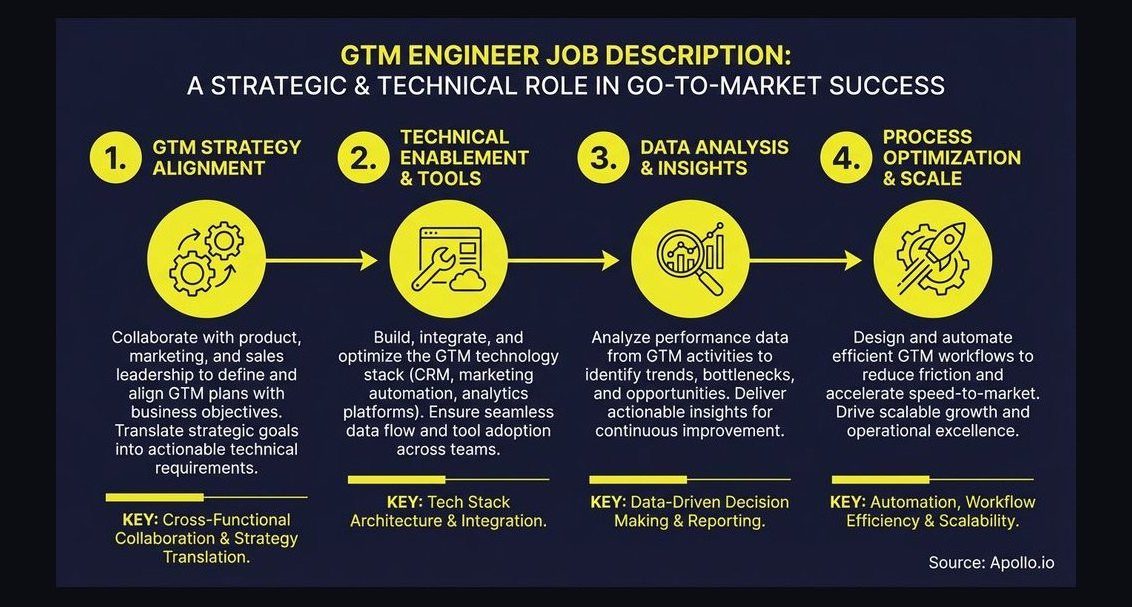 revopsWhat is a GTM engineer and why is the role exploding in 2027?
 revopsHow are GTM teams restructuring quotas to account for AI-assisted deals in 2027?
 revopsIs the rise of the 14-person buying committee making vendor consolidation a necessity for RevOps efficiency in 2027?
 revopsWhat triggers are early-stage RevOps teams using in 2027 to hand off AI-qualified leads to human sales reps without losing context?
 revopsWhy are 2027 sales cycles 40% longer for AI-native product launches?
 revopsHow can RevOps use AI to map influence dynamics inside buying committees in 2027?
 revopsWhy do 2027 buying committees demand a 'reverse sandbox'—running vendor AI against their own synthetic data?
 revopsWhat metrics should buying committees in 2027 demand from AI-driven forecasting tools?