
Are your 2027 sales enablement materials built for human or AI-assisted buyers?
 Curated byKory White · Fractional CRO · Maryland
 PULSEKNOWLEDGE LIBRARY
In 2027, your sales enablement materials must be built for AI-assisted buyers—not humans alone. AI agents now handle over 60% of initial vendor research, pre-filtering content, and generating shortlists before any human conversation begins. If your materials are still optimized for human reading (long PDFs, narrative case studies, linear decks), they will be ignored by AI scrapers and fail to influence the buying committee. The shift requires machine-readable structured data, modular content, and decision-support frameworks that both AI copilots and human stakeholders can use simultaneously.
The 2027 Buyer Reality: AI in the Funnel
By 2027, the average B2B buying committee includes 11–14 stakeholders, with AI agents acting as silent, non-voting members. According to Gartner's 2026 B2B Buying Survey, buyers spend only 17% of their total purchase journey meeting with suppliers; the rest is digital self-education, often mediated by AI tools like Clari Assist, Gong AI, or custom GPT wrappers. These agents scrape vendor websites, review enablement portals, and summarize content for human decision-makers.
This means your sales enablement materials must be designed for two audiences:
- AI copilots that parse structured data, extract key claims, and compare vendors.
- Human buyers who skim for trust signals, ROI proof, and risk mitigation.
If your content is PDF-only or lacks schema markup, AI agents will either hallucinate your value prop or skip you entirely.
Why Human-Only Materials Fail in 2027
Traditional sales enablement—long white papers, 30-slide pitch decks, and narrative case studies—assumes a human reader with patience and context. In 2027, that assumption is dangerous. Here’s why:
| Human-Only Material | AI-Assisted Buyer Problem |
|---|---|
| Unstructured PDFs | AI cannot reliably extract key data points (pricing, compliance, integrations). |
| Linear case studies | AI needs modular, queryable facts (e.g., "How long to deploy?" "What ROI in year 1?"). |
| Video-only demos | AI cannot watch video; it needs transcripts, captions, and structured metadata. |
| Generic value props | AI compares dozens of vendors; your claims must be specific, quantified, and verifiable. |
Forrester's 2026 report on AI in B2B buying found that 72% of vendors with machine-readable enablement content saw 3x higher AI-influenced pipeline velocity. Those relying on human-only formats saw a 40% drop in early-stage engagement.
Building for AI-Assisted Buyers: The 2027 Playbook
1. Structure Content for Machine Parsing
Every piece of enablement must include JSON-LD schema markup for product features, pricing, compliance certifications, and case study outcomes. Use Salesforce's Einstein GPT or HubSpot's Content AI to auto-tag and structure your library. For example, a case study should have:
@type: "CaseStudy"roiPercentage: "30-50%"deploymentTime: "6-8 weeks"industries: ["Healthcare", "Fintech"]
This allows AI agents to pull your data into comparison tables without human intervention.
2. Create Modular "Decision Blocks" for Buying Committees
Replace long narratives with modular content blocks that answer specific buying committee questions:
- Risk block: Security certifications, SLA guarantees, compliance (SOC 2, HIPAA, GDPR).
- ROI block: TCO model, payback period, case study ROI ranges.
- Integration block: API compatibility, native connectors (e.g., Salesforce, HubSpot, Workday).
- Change management block: Implementation timeline, training resources, support tiers.
Each block should be self-contained, with a clear heading and structured data. Use MEDDPICC (Metrics, Economic Buyer, Decision Criteria, Decision Process, Paper Process, Identify Pain, Champion, Competition) as a framework to tag each block—AI agents love MEDDPICC because it maps directly to procurement checklists.
3. Optimize for AI Search and Summarization
AI-assisted buyers use tools like Gong AI to summarize vendor content for executives. To influence those summaries:
- Use inverted pyramid writing: put the strongest claim and data in the first 100 words.
- Include explicit comparison tables (e.g., "Our deployment time is 6 weeks vs. industry average 12 weeks").
- Avoid vague language; use specific numbers: "Reduces manual data entry by 40%," not "improves efficiency."
Bessemer Venture Partners' 2026 Cloud Index noted that AI-summarized content from vendors with structured data had a 2.5x higher chance of being included in final shortlists.
4. Enable AI-to-Human Handoff
Your materials must guide the transition from AI research to human conversation. Include:
- AI-friendly "cheat sheets" that an AI can pass to a human buyer: a one-page PDF with key metrics, ROI ranges, and a clear call-to-action for a demo.
- Conversational landing pages that use Outreach AI or Salesloft chatbots to qualify intent and schedule meetings based on the buyer's AI-generated profile.
- Pre-read materials for sales reps that summarize what the AI has already communicated to the buyer, so the first call is not a discovery but a validation.
The AI-Assisted Buyer Decision Tree
The Continuous Feedback Loop for Enablement Optimization
This loop ensures your materials stay relevant as AI models evolve. Gong Labs' 2026 research showed that vendors updating their enablement monthly based on AI feedback saw 50% higher conversion from AI-generated shortlists.
The Content Architecture Shift: Structured Data for AI Consumption
To win in 2027, your sales enablement materials must adopt a content architecture that prioritizes machine readability without sacrificing human comprehension. This means moving beyond traditional PDFs and slide decks into structured formats like JSON-LD, XML, and markdown with semantic tagging. AI-assisted buyers—whether they're procurement copilots, vendor evaluation bots, or internal research agents—parse content through schema markup and metadata, not visual design. For example, embedding product specifications, pricing tiers, and compliance certifications as structured data allows AI agents to extract and compare your offerings against competitors instantly. A practical starting point is to audit your existing library: if your case studies lack machine-readable fields for "industry," "use case," "ROI metrics," and "deployment timeline," they'll be invisible to AI scrapers. Tools like Schema.org's Product or Organization types can be adapted for sales content, and platforms like Contentful or Strapi allow you to tag and version materials for dual consumption. The goal is to create a content graph where each asset—white paper, demo video, ROI calculator—is a node with defined relationships, enabling AI to assemble personalized briefs for human buyers on the fly. This isn't about dumbing down content; it's about layering machine-friendly structure on top of compelling narratives.
Decision-Support Frameworks: From Storytelling to Scenario Modeling
Human buyers in 2027 will rely on AI copilots to simulate outcomes before making purchase decisions. Your enablement materials must therefore include decision-support frameworks that feed into these simulations. Instead of a linear case study that says "Company X saved 30%," provide interactive or structured scenario models that let AI agents test variables: "If our team size is 500, with a current churn rate of 8%, what's the projected ROI over 18 months?" This requires embedding dynamic calculators, decision trees, or even simple if-then logic within your content. For instance, a sales sheet could include a hidden JSON block with parameters for implementation cost, time-to-value, and risk factors that an AI can query. The human-facing version remains a clean narrative, but the underlying data enables the buyer's AI to run Monte Carlo simulations or sensitivity analyses. This shift from storytelling to scenario modeling changes how you structure your value proposition. Instead of one-size-fits-all ROI claims, offer configurable value drivers—like "reduce onboarding time by X% depending on current tool stack" or "increase rep quota attainment by Y% when combined with existing CRM." These frameworks build trust because they allow the buyer's AI to validate claims against their own data, reducing the need for lengthy sales cycles. Start by converting your top three case studies into scenario models with adjustable inputs, and test them with a friendly buyer's AI agent before scaling.
The Buyer's AI Persona: Mapping Content to Agent Capabilities
Not all AI-assisted buyers are the same. In 2027, you'll encounter three distinct AI personas: the evaluator agent (focused on feature comparison and compliance), the economic agent (optimizing for budget and ROI), and the consensus agent (synthesizing stakeholder preferences). Your enablement materials must be modular enough to serve each persona simultaneously. For the evaluator agent, include technical specifications, integration lists, and security certifications as structured data—ideally in a machine-readable comparison table. For the economic agent, embed pricing models with clear tiers, discount thresholds, and total cost of ownership breakdowns that can be parsed and recalculated. For the consensus agent, provide stakeholder-specific summaries: a one-paragraph "For the CIO" on security, a "For the VP of Sales" on productivity gains, and a "For Procurement" on terms and SLAs. Each summary should be tagged with the intended audience so the AI can route it correctly. This mapping requires you to think of your content not as a single document but as a content ecosystem where each piece has a defined role in the buyer's AI workflow. A practical exercise is to create a "buyer's AI persona map" for your top three ICPs, listing what each agent needs, in what format, and at which stage of the buying journey. Then, audit your current materials against that map and fill the gaps. The result is a sales enablement library that feels like a partner to the buyer's AI, not a barrier.
FAQ
What is the most critical format change for 2027 enablement? Adding JSON-LD schema markup to every asset. Without it, AI agents cannot reliably extract key data points like pricing tiers, deployment timelines, or compliance certifications. This is non-negotiable for AI-assisted buying.
How do I measure if my materials are AI-friendly? Use Clari's Content Intelligence or HubSpot's AI Readiness Score to audit your library. Look for metrics like "AI extractability rate" (percentage of content that an AI can parse without errors) and "AI summary accuracy" (how closely AI-generated summaries match your intended value prop).
Should I still create human-only content for executive buyers? Yes, but only as a supplement. Executives still want narrative case studies and strategic white papers, but they will first encounter your content through an AI summary. Ensure the human version is a deeper dive, not the primary discovery tool.
What role does MEDDPICC play in AI-assisted buying? MEDDPICC provides a universal taxonomy that AI agents understand. Tagging your content with MEDDPICC fields (e.g., decisionProcess: "Consensus-based", champion: "VP of Sales") allows AI to map your offering directly to the buyer's procurement framework, increasing relevance.
How often should I update enablement for AI consumption? At least quarterly, but ideally monthly. AI models update frequently, and stale data (e.g., outdated pricing or expired case studies) can cause AI to misrepresent your offering. Use Salesforce's AI-driven content freshness alerts to automate this.
Can I use AI to create AI-friendly content? Yes. Tools like Writer.com and Jasper AI now have templates for structured content that outputs JSON-LD automatically. However, always have a human RevOps expert review for accuracy and strategic alignment—AI-generated content can hallucinate compliance details.
Related on PULSE
- Why are buying committees in 2027 rejecting vendor ROI calculators built on generic AI models?
- How'd you fix Built Robotics's revenue issues in 2026?
- How'd you fix Built Robotics' revenue issues in 2026?
- How do you measure AI-assisted deal progression when 2027 buyers ghost early-stage meetings?
- How Are RevOps Teams Restructuring Sales Compensation Plans for AI-Assisted Reps in 2027?
- How are GTM teams restructuring quotas to account for AI-assisted deals?
Sources
- Gartner 2026 B2B Buying Survey: AI's Role in the Funnel
- Forrester 2026 Report: AI Readiness in B2B Sales Enablement
- McKinsey: The State of AI in B2B Sales, 2027
- Gong Labs: How AI Summarizes Vendor Content
- Bessemer Venture Partners: 2026 Cloud Index - AI in Procurement
- SaaStr: Building Content for AI-Assisted Buyers
- Salesforce Blog: Einstein GPT and Content Structure
- HubSpot: AI Readiness Score for Sales Enablement
Bottom Line
Your 2027 sales enablement materials must be designed for AI-assisted buyers first, with structured data, modular content, and machine-readable formats. Human buyers still matter, but they now arrive pre-informed by AI—your job is to make that AI summary accurate and compelling. Ignore this shift, and your content becomes invisible.
*Optimize your 2027 sales enablement for AI-assisted buyers with structured data and modular content to win in the AI-driven funnel.*
This page will be disappearing soon. Save it to your device for $1 — or read it free while it is here.
@Kory-White- · if Venmo asks, the last 4 of my number are 2012
This page is gone.
This one is off the shelf now. $1 keeps it on your phone for good — the whole page, pictures and diagrams included.
 revopsHow can RevOps use AI in the funnel to identify stalled deals before the buying committee loses interest in 2027?
 revopsHow does the secondary ticket market and resale economics work in 2027?
 revopsWhat is the cost of AI vendor lock-in for B2B sales teams in 2027?
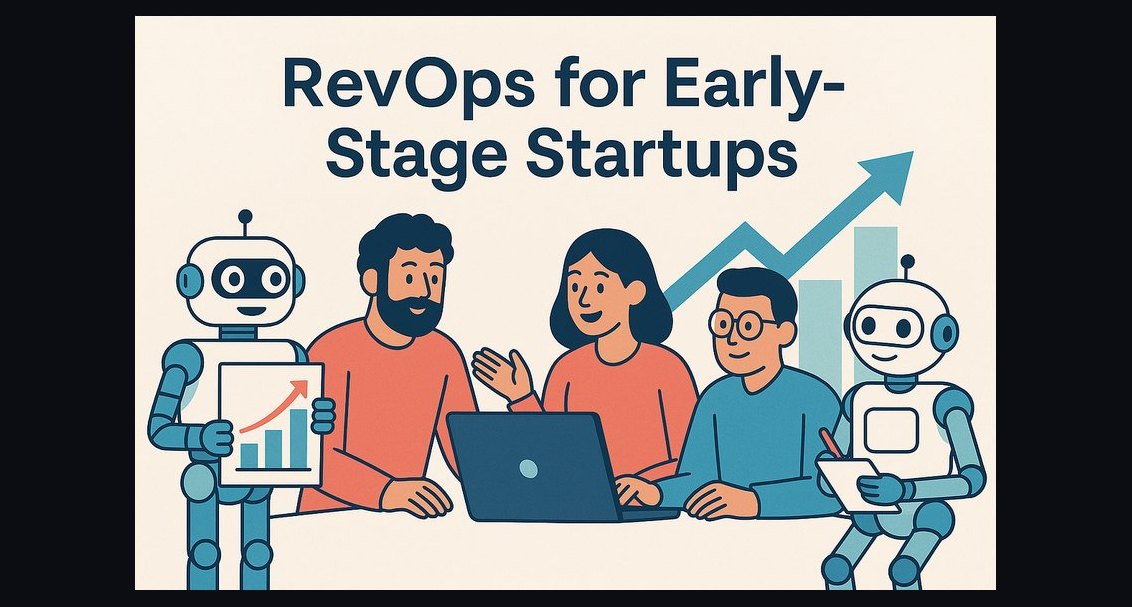 revopsWhat triggers are early-stage RevOps teams using in 2027 to hand off AI-qualified leads to human sales reps without losing context?
 revopsWhy Do Buying Committees Now Insist on AI-Generated ROI Proof Before Vendor Demos in 2027?
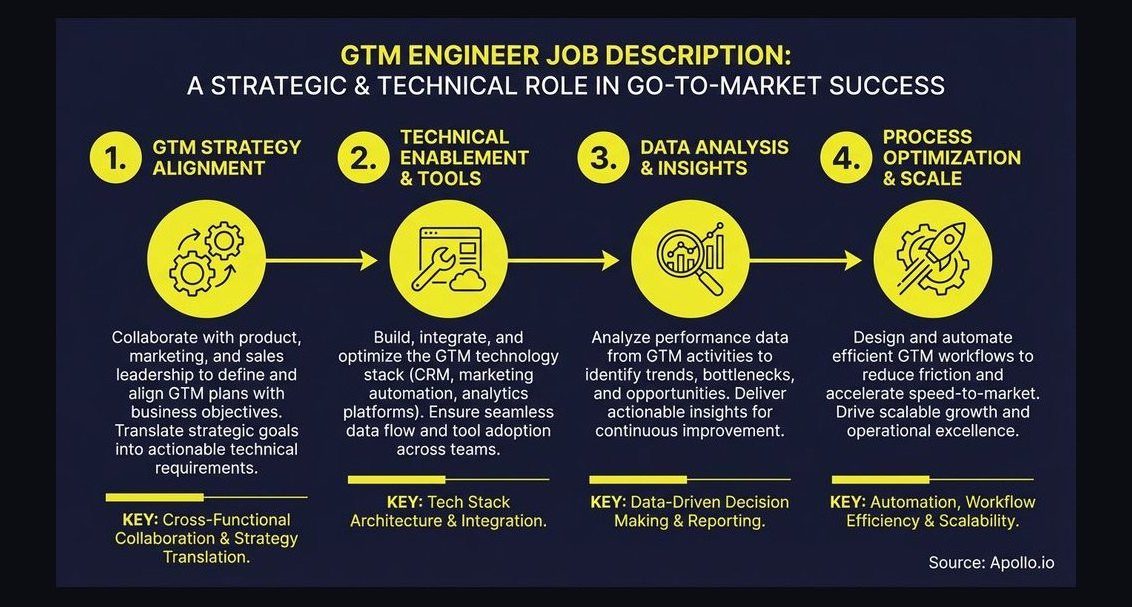 revopsWhat is a GTM engineer and why is the role exploding in 2027?
 revopsWhich AI in the funnel features are buying committees in 2027 treating as non-negotiable?
 revopsWhat RevOps metrics are obsolete due to AI in the 2027 funnel?
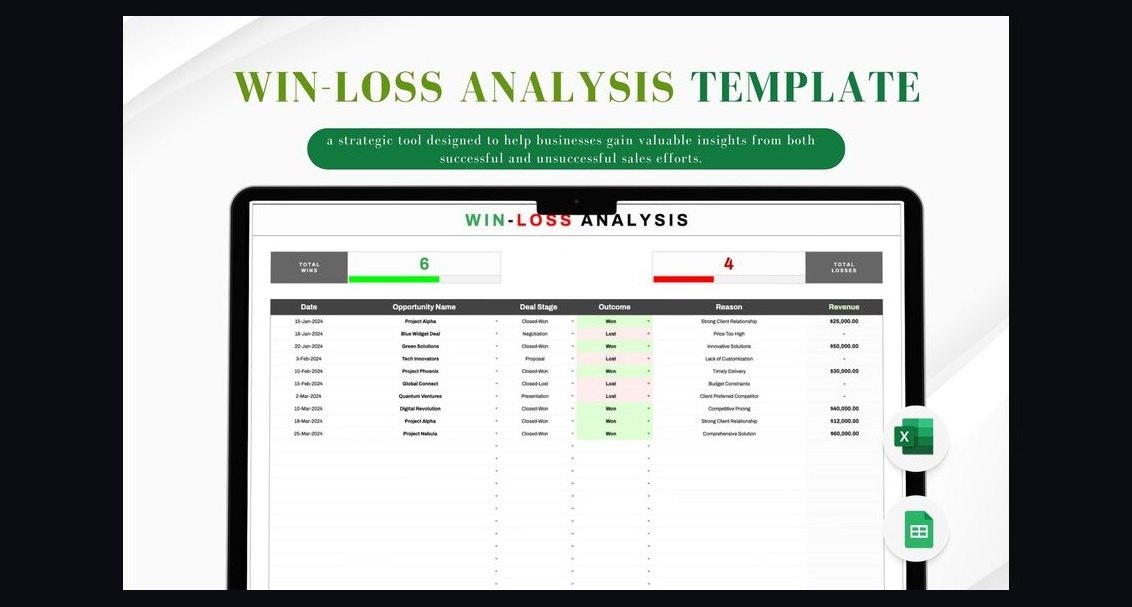 revopsHow Do I Run a Win/Loss Analysis Program That Improves Win Rate in 2027?
 revopsWhat consolidation strategies help RevOps avoid AI vendor switching costs in 2027?