
How does vendor consolidation in 2027 affect your data privacy compliance for outbound?
 Curated byKory White · Fractional CRO · Maryland
 PULSEKNOWLEDGE LIBRARY
Quality
Certified

Vendor consolidation in 2027 concentrates your outbound data flows into fewer, larger platforms, which tightens privacy compliance by reducing the number of data processing agreements you manage while increasing liability per vendor. A single consolidated vendor's failure—whether through sub-processor negligence, weak data residency, or AI training misuse—can cascade across your entire outbound pipeline, demanding more rigorous audits and contractual safeguards than scattered point solutions ever required.
What consolidation means for outbound privacy compliance
The 2027 vendor landscape looks fundamentally different from the fragmented martech stacks of the early 2020s. Major platforms have absorbed once-independent point solutions: Salesforce brought Outreach and ZoomInfo deeper into its ecosystem, HubSpot folded Clearbit into its native enrichment, and Gong and Clari now sit inside or tightly integrate with the CRMs they once complemented. For RevOps teams running outbound motion, this changes the privacy compliance calculus in ways that are easy to underestimate.
Before consolidation, a typical outbound stack might include a separate tool for enrichment, another for sequencing, a third for dialing, a fourth for intent data, and a fifth for conversation analytics. Each vendor had its own data processing agreement, its own storage locations, its own breach notification process, and its own sub-processor list. Your compliance team audited fifteen or more vendors, mapped data flows across dozens of integrations, and tracked consent signals that fragmented across platforms. It was messy, but it offered a kind of distributed resilience—if one vendor suffered a breach, you could isolate it, notify the relevant authorities, and keep the rest of your pipeline running.
In 2027, that distributed model has largely collapsed. Your outbound data now flows through a single consolidated vendor ecosystem. The same platform that stores your CRM records also runs your sequences, enriches your leads, scores your prospects, and manages your opt-out signals. This concentration creates a fundamentally different risk profile. Instead of managing twenty small, siloed contracts, you are negotiating one or two master service agreements with platforms like Salesforce or HubSpot. Each agreement is more complex, covering sub-processors, data residency options, AI training policies, and breach notification timelines across multiple outbound functions.

The compliance burden shifts from breadth to depth. You no longer spend your time tracking which vendor has the weakest DPA; you spend it verifying that your single vendor handles AI-scraped intent data, consent signals, and cross-border transfers without violating opt-out requests. The operational overhead drops, but the strategic risk rises. If your one consolidated vendor's privacy posture slips, your entire outbound operation is exposed simultaneously.
This matters because outbound in 2027 is not what it was even two years ago. AI-driven prospecting tools generate personalized sequences at scale, pulling intent signals from third-party providers and scoring leads based on real-time buying behavior. Buying committees now average eleven to fourteen stakeholders, each with different consent preferences and jurisdictional requirements. Your outbound emails, LinkedIn sequences, and AI-generated cold calls must comply with GDPR, CCPA, Canada's PIPEDA, and emerging state laws like Colorado's CPA and Virginia's CDPA—all while the data flows through a consolidated vendor's infrastructure. The margin for error is thinner, and the consequences of failure are more concentrated.
The step-by-step process for auditing a consolidated outbound stack
When you consolidate your outbound vendors in 2027, you are not simply reducing your tool count. You are entering a new compliance relationship that requires a structured audit process. Here is the step-by-step approach that RevOps teams should follow, from initial consolidation planning through ongoing monitoring.
Step 1: Map your current data flows before you consolidate. Document every outbound touchpoint: where lead data originates, how it is enriched, which tools process it, where it resides after a prospect opts out, and which sub-processors touch it along the way. This baseline data map is essential because it tells you what you are consolidating and what risks you are concentrating. Use tools like OneTrust or Securiti to automate this mapping if your stack is large.

Step 2: Evaluate the consolidated vendor's sub-processor list. When you consolidate to Salesforce or HubSpot, request their full sub-processor list. Salesforce uses AWS across multiple regions; HubSpot relies on Google Cloud and Stripe. Verify that your outbound contact data stays in regions that match your compliance obligations. If you target EU prospects, you need a DPA that guarantees data remains in Frankfurt or Ireland. If you target California residents, you need to confirm CCPA compliance across the vendor's processing chain.
Step 3: Negotiate data residency controls. Both major platforms offer region-pinning options. Salesforce's Hyperforce allows you to pin outbound contact data to specific regions. HubSpot offers data residency add-ons for the EU, APAC, and the US. If your outbound targets multiple jurisdictions, segment your data by region within the same vendor instance. This avoids cross-border transfer issues under Schrems II and UK GDPR.
Step 4: Configure consent management at the vendor level. Your consolidated vendor must support GDPR consent signals, including IAB TCF 2.2 where applicable. Configure your outbound sequences to check a consent status field before sending any AI-generated message. Ensure that your conversation analytics tool does not analyze calls from prospects who have opted out. Enforce this via permission sets and field-level security.

Step 5: Audit AI training data usage. Ask your consolidated vendor whether they train their AI models on your outbound data. Salesforce's Einstein GPT uses customer data for model improvement by default, with an opt-out available. HubSpot's Breeze AI trains on sequence performance data. Ensure your contract prohibits using outbound contact data for AI training unless it is fully anonymized.
Step 6: Establish breach notification SLAs. Push for 24-hour notification for outbound data breaches, even though GDPR requires 72 hours and some US state laws allow longer. Your contract should include automatic suspension of outbound sequences if a breach is detected, plus a root cause analysis within seven days and coverage of regulatory fines if the breach stems from sub-processor negligence.
Step 7: Run quarterly data mapping audits. After consolidation, conduct quarterly audits that trace every outbound touchpoint through the vendor's infrastructure. Document these flows in a living data privacy impact assessment to demonstrate due diligence to regulators.

Costs, timelines, and typical ranges for consolidation compliance
The financial and temporal dimensions of vendor consolidation in 2027 are not trivial, and RevOps leaders who underestimate them often find themselves scrambling when compliance gaps emerge. Understanding the typical ranges helps you budget realistically and set expectations with your executive team.
Contract negotiation timelines. Moving from fifteen point solutions to one or two consolidated platforms is not a quick procurement exercise. Expect contract negotiations to take eight to sixteen weeks, depending on how aggressively you push for customized privacy terms. Standard vendor contracts are built for speed; your compliance requirements will slow things down. Sub-processor change notification clauses, data residency guarantees, AI training prohibitions, and breach response commitments all require legal review and often multiple rounds of redlines.
Implementation costs. The software licensing cost of a consolidated platform is often comparable to the sum of your point solutions, but the implementation costs are not. Data migration, integration configuration, consent field setup, and permission set design can run anywhere from fifty to two hundred thousand dollars depending on the size of your outbound operation and the complexity of your existing data map. If you need professional services from the vendor, add another twenty to fifty percent.

Ongoing compliance overhead. After consolidation, your compliance workload shifts from auditing many vendors to monitoring one or two. This is not necessarily cheaper—it is different. You will spend more time on sub-processor monitoring, AI training audits, and breach response planning. Budget for at least one dedicated privacy operations role if you do not already have one. The cost of that role is typically offset by the reduction in vendor management overhead, but the skill set required is different.
Timeline for full compliance readiness. From the moment you sign the consolidated vendor contract, expect ninety to one hundred twenty days before you are fully compliant. This includes data migration, consent field configuration, AI training policy confirmation, and a full data mapping audit. Rushing this timeline is a common mistake; a half-configured consolidated stack can be more dangerous than a fully audited fragmented one.
Breach response costs. If your consolidated vendor suffers a breach, the costs can be substantial. Regulatory fines under GDPR can reach four percent of global annual revenue. CCPA penalties run up to seventy-five hundred dollars per intentional violation and twenty-five hundred per unintentional violation. Beyond fines, you face notification costs, legal fees, and reputational damage. The 2027 reality is that a single vendor breach can trigger multiple breach notifications across jurisdictions—GDPR requires 72-hour notice, CCPA requires notice without unreasonable delay, and Virginia's CDPA allows 45 days. Coordinating these notifications while your outbound pipeline is suspended is a significant operational burden.
Vendor lock-in costs. The hidden cost of consolidation is lock-in. When a consolidated vendor changes its sub-processor list—shifting data storage from Ireland to the US without notice, for example—you have limited leverage to negotiate because switching costs are high. Include explicit sub-processor change notification clauses in your master service agreements, requiring thirty-day advance notice and a right to terminate without penalty if privacy standards drop. Without these clauses, your outbound compliance becomes hostage to a single vendor's roadmap.

Where teams get it wrong
Even well-intentioned RevOps teams make predictable mistakes when navigating vendor consolidation and privacy compliance. Understanding these failure modes helps you avoid them.
Assuming the vendor handles compliance for you. The most common error is treating your consolidated vendor as a compliance solution rather than a compliance tool. Salesforce and HubSpot provide infrastructure for consent management, data residency, and audit logging, but they do not make your outbound operation compliant. You still need to configure the tools correctly, enforce policies through permission sets, and verify that your sequences respect opt-out signals. A vendor's marketing materials will not protect you in a regulatory investigation.
Failing to test end-to-end opt-out flows. After consolidation, many teams assume that because the vendor has a unified consent table, opt-outs propagate everywhere automatically. This is often false. A prospect who unsubscribes from your email sequences may still receive LinkedIn messages, or their data may remain in your enrichment cache. Test the full opt-out flow after any consolidation: submit a test opt-out, verify it propagates across all outbound channels, and confirm the vendor deletes or suppresses the data as required.

Ignoring AI training implications. In 2027, the AI models embedded in your consolidated vendor's platform are trained on data that flows through the system. If your vendor uses outbound contact data for model improvement without explicit consent, you may violate GDPR Article 22 and CCPA's right to opt-out. Many teams discover this only after a regulatory inquiry. Ask the question upfront, get the answer in writing, and ensure your contract prohibits training on your data unless it is anonymized.
Overlooking sub-processor changes. Consolidated vendors change their sub-processors frequently. A vendor might shift hosting from one cloud provider to another, or add a new analytics sub-processor, without notifying you. If you are not monitoring these changes, you may find your outbound data in a jurisdiction with inadequate privacy protections. Insist on sub-processor change notification clauses and review every update.
Underestimating the cascade risk. A breach at a consolidated vendor exposes your entire outbound pipeline simultaneously. Lead enrichment data, email sequences, call recordings, and AI-generated personalization scores are all in one place. If the vendor's failure triggers breach notifications across multiple jurisdictions, you face simultaneous penalties from multiple regulators. Negotiate a consolidated breach response plan that specifies notification timelines, root cause analysis requirements, and liability coverage.

Treating consolidation as a one-time event. Vendor consolidation is not a project with an end date. It is an ongoing relationship that requires continuous monitoring. Your consolidated vendor will update its AI models, change its sub-processors, and revise its data residency options. Your compliance posture must evolve with these changes. Quarterly audits are the minimum; monthly reviews of vendor security bulletins are better.
Failing to document your rationale. When regulators ask why you consolidated vendors, you need a defensible answer. Document your decision-making process, including the privacy assessments you conducted, the alternatives you considered, and the safeguards you negotiated. This documentation demonstrates due diligence and can mitigate penalties if something goes wrong.
Decision framework: when to consolidate versus keep separate vendors
Not every outbound operation should consolidate its vendors, even in 2027. The decision depends on your specific compliance posture, the sensitivity of your data, and the jurisdictions you target. Here is a framework for making that call.

Consolidate when: You have more than ten point solutions and cannot audit all their DPAs effectively. Your vendors share data through APIs, creating integration-level leaks that are difficult to trace. You lack the legal resources to negotiate and monitor dozens of contracts. Your outbound targets a single jurisdiction or a small number of jurisdictions with compatible privacy laws. You have the internal capacity to configure and monitor a consolidated platform properly.
Keep separate vendors when: Your outbound targets multiple jurisdictions with conflicting privacy requirements. You handle highly sensitive data—health information, financial details, or data about minors—that demands specialized processing. Your existing vendors have strong compliance postures and you have already audited them. You have the legal and operational resources to manage multiple contracts. You need the flexibility to isolate a breach to one vendor without suspending your entire pipeline.
The hybrid approach. Many RevOps teams in 2027 choose a middle path: consolidate the core CRM and sequencing functions into one platform, but keep specialized tools for sensitive data handling or niche compliance requirements. This reduces the contract count while preserving some distributed resilience. The trade-off is that you still need to manage integration-level data flows, which can create compliance gaps. If you choose this approach, enforce strict API governance and document every data transfer.
The AI compliance loop in consolidated outbound
The interaction between AI-driven personalization and consent management creates a feedback loop that consolidation intensifies. In 2027, the same vendor that trains its AI on your outbound data also handles opt-out requests. This creates both efficiency and risk.

The loop works like this: your outbound AI scans intent data from third-party providers, generates personalized sequences based on buying signals, sends emails and LinkedIn messages, and then processes opt-out requests when prospects respond negatively. In a consolidated stack, this entire loop happens inside a single platform. The vendor's data cloud serves as the single source of truth for consent signals, and the AI model retrains on updated consent data.
The risk is that the AI model uses consent data for training without proper anonymization. If a prospect opts out of your sequences, their data should be excluded from AI training. If the vendor's model learns from that data anyway, you violate GDPR Article 22 and CCPA's right to opt-out. In 2027, a significant percentage of large enterprises have experienced at least one AI-related privacy incident. Consolidation means you cannot blame a third-party vendor—the liability sits squarely on your single platform.
To manage this loop, enforce strict AI training policies in your contract. Require the vendor to exclude opted-out prospects from model training, anonymize any data used for improvement, and provide audit logs demonstrating compliance. Test the loop regularly: opt out a test prospect, verify their data is excluded from AI training, and confirm the model does not use their information in future personalization.
Related questions
How does vendor consolidation affect data integration across CRM and MAP?
Consolidation simplifies integration by reducing the number of point-to-point connections. However, it concentrates data flows into fewer pipelines, meaning a misconfiguration in one integration can expose more data. RevOps teams should audit integration-level data flows after consolidation and enforce strict API governance to prevent leaks.
What data privacy concerns in 2027 are causing buying committees to slow down due diligence?
Buying committees in 2027 are increasingly concerned about how vendors handle AI training data, sub-processor relationships, and cross-border transfers. They are asking detailed questions about data residency, breach notification timelines, and consent management. Slower due diligence reflects a broader market shift toward privacy-conscious procurement.
Which 2027 data privacy update is blocking RevOps teams from tracking buying committee members?
Emerging state laws like Colorado's CPA and Virginia's CDPA create fragmented consent requirements that complicate tracking. AI-powered tracking tools may infer sensitive data about buying committee members without explicit consent, triggering compliance violations. RevOps teams must balance personalization with privacy.
How do I negotiate breach notification SLAs with a consolidated vendor?
Push for 24-hour notification for outbound data breaches, even though GDPR requires 72 hours. Include automatic suspension of outbound sequences upon breach detection, a root cause analysis within seven days, and vendor coverage of regulatory fines for sub-processor negligence.
FAQ
Does vendor consolidation in 2027 reduce the number of data processing agreements I need to manage? Yes, consolidating from many point solutions to a few integrated suites typically cuts your DPA count significantly. However, each remaining agreement becomes more complex, covering sub-processors, data residency, and breach notification across multiple outbound functions. You will still need to review every contract carefully.
Will a single consolidated vendor like Salesforce or HubSpot handle all my outbound compliance needs? No single vendor can fully cover every compliance requirement. While they offer broad tools for consent management, data mapping, and opt-out handling, you must still verify their sub-processor lists, cross-border transfer mechanisms, and AI data usage policies. Gaps often remain, especially for niche state laws or custom workflows.
How does consolidation affect my ability to comply with opt-out requests from prospects? Consolidation can simplify opt-out management if the vendor provides a unified consent signal across its suite. But if the vendor does not propagate opt-outs to all integrated tools or third-party data sources, you risk violating CCPA or similar laws. Testing end-to-end opt-out flow is essential after any consolidation.
What happens if my consolidated vendor suffers a data breach in 2027? A breach at a single consolidated vendor can expose your entire outbound pipeline, from lead enrichment to email sequences. Your compliance burden shifts to ensuring the vendor's breach notification timeline meets all applicable laws—often 72 hours under GDPR, but varying by state. You will need a clear incident response plan with that vendor.
Does consolidation make it harder to audit data residency for outbound data? It can, because a consolidated vendor may process data across multiple regions through sub-processors. You must request and review their data residency map, especially if you operate in jurisdictions with strict localization rules like the EU or China. Some vendors offer region-specific instances, but they often cost extra.
Will vendor consolidation in 2027 increase my legal liability for outbound compliance? Yes, concentrating data flows into fewer vendors raises the stakes per contract. A single vendor's failure to honor consent signals, manage sub-processors, or report breaches can cascade across your entire outbound operation. Your legal exposure grows, so negotiating strong liability clauses and audit rights becomes critical.
Sources
- Gartner: AI Privacy Incidents and Enterprise Risk
- Forrester: Vendor Consolidation and Data Privacy
- McKinsey: AI and Consent in the Compliance Market
- Salesforce: Data Cloud and Privacy Compliance
- HubSpot: Data Residency and AI Training Policies
- GDPR Official Text and Compliance Guidance
- California Consumer Privacy Act (CCPA) Official Site
- International Association of Privacy Professionals (IAPP) Resources
- SaaStr: Vendor Consolidation and Compliance Burden
- Bessemer Venture Partners: RevOps Stack and Privacy
Related on PULSE
- What data privacy concerns in 2027 are causing buying committees to slow down due diligence?
- Which 2027 data privacy update is blocking your RevOps team from tracking buying committee members?
- Top 10 Data Privacy Regulations Impacting B2B RevOps Strategies in 2027
- What are the privacy concerns with using AI chatbots like ChatGPT in the workplace?
- What are the real privacy trade-offs between LastPass and 1Password for team password sharing?
- How does vendor consolidation in 2027 affect data integration across CRM and MAP?
This page will be disappearing soon. Save it to your device for $1 — or read it free while it is here.
@Kory-White- · if Venmo asks, the last 4 of my number are 2012
This page is gone.
This one is off the shelf now. $1 keeps it on your phone for good — the whole page, pictures and diagrams included.
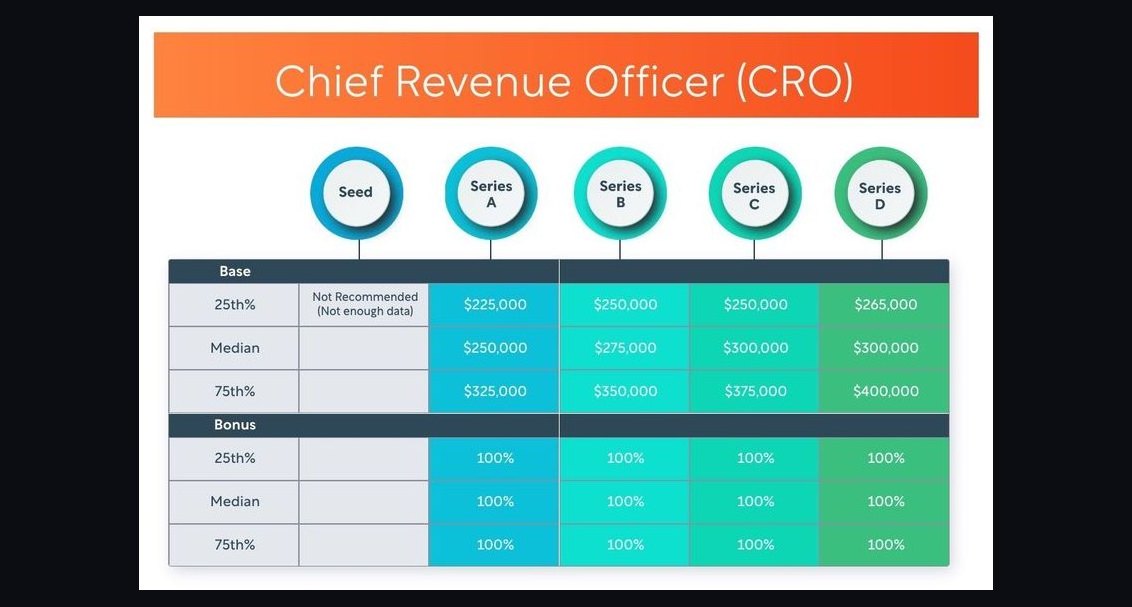 revopsCRO compensation — fractional, full-time, equity in 2027
 revopsAre longer sales cycles in 2027 forcing RevOps to redefine the 'MQL-to-revenue' attribution model?
 revopsWhat is the cost of AI vendor lock-in for B2B sales teams in 2027?
 revopsHow is AI in the funnel reshaping the scoring of B2B inbound leads in 2027?
 revopsWhich vendor consolidation patterns are signaling a shift toward single-platform GTM stacks in 2027?
 revopsWhat 2027 vendor consolidation scenario breaks the handoff between SDR and AE when both use different AI co-pilots?
 revopsHow should RevOps reprioritize tool investments when vendor consolidation makes data portability harder in 2027?
 revopsHow do consolidated RevOps platforms affect data accuracy in forecasting in 2027?
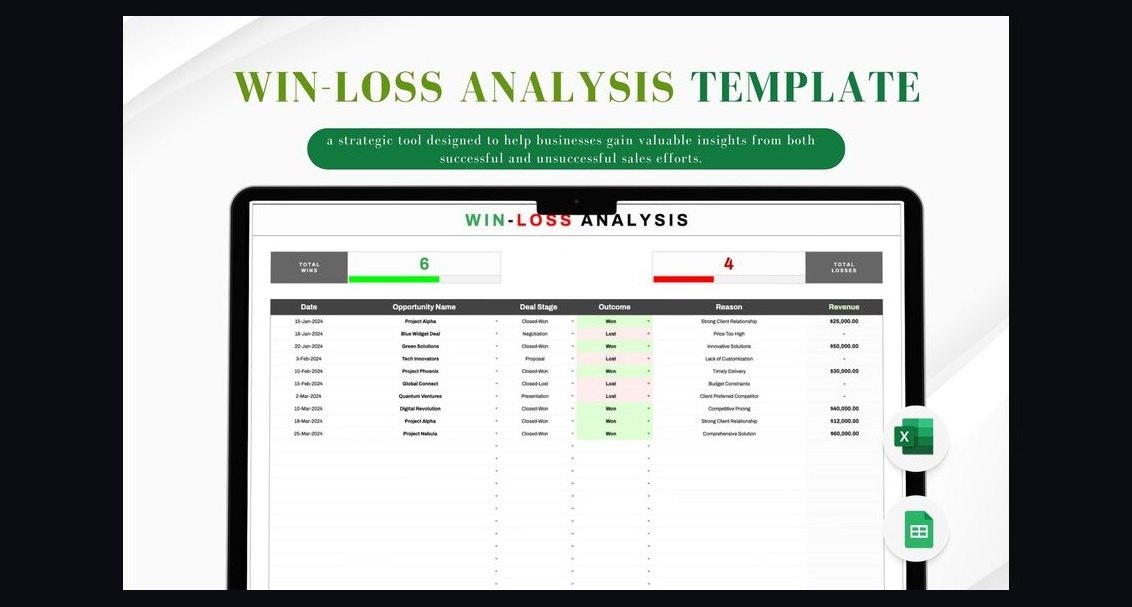 revopsHow Do I Run a Win/Loss Analysis Program That Improves Win Rate in 2027?
 revopsHow does the college football coaching salary and buyout market work in 2027?