
Why are 2027 sales cycles for enterprise deals averaging 9 months despite AI-powered pipeline acceleration?
 Curated byKory White · Fractional CRO · Maryland
 PULSEKNOWLEDGE LIBRARY
Enterprise sales cycles in 2027 are averaging 9 months despite AI-powered pipeline acceleration because AI primarily optimizes existing processes rather than solving the root cause of extended cycles: fragmented buying committees, risk-averse procurement, and vendor consolidation that forces multi-stakeholder alignment. While AI tools from Clari and Gong compress early-stage discovery and forecasting, the decision-making phase now involves 14–18 stakeholders on average (Gartner, 2026), each requiring individualized proof points. Furthermore, vendor consolidation initiatives—where enterprises reduce their tech stack from 200+ to under 50 tools—create longer evaluation periods as procurement teams run parallel RFPs and security audits. The net effect is a "barbell" cycle: AI accelerates the top of funnel (1–2 months saved), but the back half (legal, security, compliance) expands by 3–5 months due to consolidation mandates.
The AI Paradox: Compression at the Top, Expansion at the Bottom
AI-powered pipeline acceleration tools have delivered measurable gains in lead scoring, conversation intelligence, and forecast accuracy. For example, Outreach and Salesloft now offer AI-driven sequence optimization that reduces initial outreach-to-meeting times by 30–40%. Gong’s generative AI can summarize discovery calls and suggest next steps in real time, cutting early-stage qualification from weeks to days. However, these gains are concentrated in the first 30% of the sales cycle (awareness through initial demo).
The remaining 70% of the cycle—evaluation, legal review, security assessment, and procurement—has actually lengthened since 2024. According to Forrester’s 2026 B2B Buying Survey, the average number of stakeholders involved in a $1M+ deal grew from 11 in 2022 to 16 in 2026. Each new stakeholder adds an average of 2.5 weeks to the cycle due to scheduling conflicts, internal alignment meetings, and individualized demos. AI cannot replace the human consensus-building required when a CFO, CISO, VP of Engineering, and Head of Procurement all need to sign off.
Vendor Consolidation: The Hidden Cycle Killer
The vendor consolidation trend is the single most underappreciated driver of longer cycles in 2027. Enterprises are aggressively reducing their SaaS portfolios to cut costs and improve security posture. Gartner reported in early 2027 that 68% of enterprises with over 5,000 employees have active consolidation programs targeting a 30–50% reduction in tool count.
For sales teams, this means:
- Parallel evaluations: Procurement runs simultaneous RFPs for competing solutions (e.g., Salesforce vs. HubSpot for CRM, or MEDDIC-aligned scoring tools vs. custom-built solutions). This "bake-off" adds 4–8 weeks.
- Security audits become gating: Consolidation often triggers enterprise-wide security reviews. A single SOC 2 Type II or ISO 27001 audit can take 6–12 weeks to complete, and if your tool is part of a larger consolidation decision, the audit timeline is dictated by the slowest vendor in the bundle.
- Executive sponsorship required: Consolidation decisions are C-suite (often CFO-led). Sales reps now need to sell not just the product but the strategic rationale for replacing an incumbent tool. This requires Challenger Sale-style reframing, which extends the cycle by 2–3 months.
Real example: A Bessemer-backed sales intelligence platform reported in their 2026 S-1 filing that the average time from initial contact to signed contract for enterprise deals increased from 5.2 months in 2023 to 8.7 months in 2026, directly correlated with the rise of consolidation RFPs.
Buying Committee Dynamics: The Human Bottleneck
AI can schedule meetings and generate content, but it cannot align 16 people with conflicting priorities. The buying committee in 2027 is a coalition of the unwilling: each stakeholder has a day job, and evaluating a new vendor is a low-priority task until it becomes a blocker.
Key dynamics:
- The "Champion" is weaker: In the past, a single executive champion could push a deal through. Now, champions are middle managers who need to build consensus across legal, security, finance, and engineering. This requires 7–12 internal meetings per deal, each adding 1–2 weeks.
- Security is the new gatekeeper: CISOs now have veto power over any tool that touches customer data. They require penetration tests, data residency maps, and subprocessor lists. This alone adds 4–6 weeks to the cycle.
- Procurement has become adversarial: In 2027, procurement teams are incentivized to negotiate hard on price and terms. They use Gartner and Forrester pricing benchmarks to demand discounts of 20–40%, and they push for annual contracts with 90-day termination clauses. This negotiation phase now averages 8 weeks for deals over $500K.
The "AI Trust Gap" and Forecast Accuracy
One counterintuitive driver of longer cycles is the AI trust gap among enterprise buyers. Despite AI's ability to predict deal outcomes, purchasing teams are increasingly skeptical of AI-generated forecasts from vendors. Clari and Gong have published data showing that AI-forecasted close dates are, on average, 20% more optimistic than actual close dates in enterprise deals. This has led to:
- Buyer-side audits: Procurement teams now run independent deal verification using tools like Winning by Design's MEDDPICC frameworks to validate seller forecasts. This adds 2–3 weeks.
- Pilot-to-contract expansion: Buyers demand longer proof-of-concept periods (8–12 weeks vs. 4–6 weeks historically) to validate AI claims with their own data. This is especially true for AI-powered pipeline acceleration tools, where buyers want to see real conversion lift before committing.
- Internal AI skepticism: Even within the selling organization, RevOps teams are using AI to flag deals that look too good to be true. Salesforce’s Einstein GPT now scores deals for "optimism bias," and deals with high bias scores are automatically flagged for manager review, adding 1–2 weeks to the approval process.
The Role of MEDDIC and MEDDPICC in 2027
Frameworks like MEDDIC (Metrics, Economic Buyer, Decision Criteria, Decision Process, Identify Pain, Champion) and its extension MEDDPICC (adding Paper Process and Competition) have become mandatory in enterprise sales cycles. In 2027, Gartner reports that 82% of enterprise sales organizations require MEDDIC-based qualification for deals over $250K.
However, MEDDIC also lengthens cycles because:
- Identifying the Economic Buyer now requires mapping a multi-layered hierarchy (VP, SVP, C-suite, Board), which takes 4–6 weeks of discovery.
- Paper Process (MEDDPICC) requires understanding the formal procurement workflow: RFI, RFP, security review, legal review, contract approval. Each step has its own timeline, and AI cannot bypass it.
- Metrics must be quantified and validated by the buyer’s finance team. This adds 2–3 weeks for data gathering and alignment.
The irony: MEDDIC is designed to accelerate cycles by preventing bad deals, but its thorough application in 2027 adds 4–6 weeks to the average cycle length. The trade-off is higher win rates (Gong data shows MEDDIC-qualified deals close at 2.3x the rate of non-MEDDIC deals), but the cycle itself is longer.
Related on PULSE
- Why are enterprise sales cycles exceeding 18 months despite AI-powered deal acceleration tools in 2027?
- Why are 2027 sales cycles for SaaS contracts exceeding 12 months despite AI acceleration?
- Why are buying committees in 2027 averaging 14 stakeholders for mid-market deals?
- With enterprise buying committees now averaging 14 members in 2027, how are medical device companies restructuring their sales playbooks to align with asynchronous, AI-summarized deal reviews rather than live presentations?
- How do sales teams prove differentiation when every competitor claims identical AI-powered funnel acceleration in 2027?
- Why Are Sales Cycles Lengthening Despite AI-Powered Predictive Analytics in GTM?
The Rise of "AI Paralysis" in Enterprise Procurement
Ironically, the same AI tools designed to accelerate sales cycles often introduce a new bottleneck: analysis paralysis. In 2027, procurement teams increasingly rely on AI-powered vendor evaluation platforms that generate exhaustive comparison matrices, risk scores, and compliance checklists. While these tools aim to streamline decisions, they frequently overwhelm committees with too many data points rather than clear recommendations. A typical enterprise now runs 8–12 AI-generated scenario analyses before making a final vendor selection—each requiring stakeholder review cycles that add 2–4 weeks. This "AI paralysis" effect is particularly pronounced in regulated industries like finance and healthcare, where automated compliance checks flag potential issues that then require manual legal review, effectively offsetting any time saved earlier in the pipeline.
The Compliance Audit Bottleneck That AI Can't Fix
Enterprise security and compliance requirements have evolved faster than AI tools can adapt. In 2027, a standard enterprise vendor assessment involves SOC 2 Type II, ISO 27001, FedRAMP, and often 3–5 industry-specific certifications (e.g., HIPAA for healthcare, PCI-DSS for payments). While AI can automate initial questionnaire responses, human-led security reviews remain mandatory for critical integrations—each taking 4–6 weeks. The real bottleneck emerges when procurement mandates parallel audits across multiple shortlisted vendors, creating a queue that stretches timelines regardless of AI efficiency. Additionally, AI-generated security reports often trigger follow-up questions from CISO offices, adding another 1–2 weeks of back-and-forth that traditional sales acceleration tools cannot compress.
FAQ
What is the main reason enterprise sales cycles are still 9 months in 2027? The core issue isn’t a lack of AI acceleration—it’s that AI mainly speeds up early-stage tasks like lead scoring and forecasting. The real bottleneck is the back half of the cycle: fragmented buying committees (14–18 stakeholders), risk-averse procurement, and vendor consolidation mandates that force lengthy multi-stakeholder alignment and parallel security audits.
Doesn’t AI from tools like Clari or Gong shorten the overall cycle? Yes, but only by about 1–2 months at the top of the funnel. The decision-making and compliance phases often expand by 3–5 months due to consolidation requirements, creating a “barbell” effect where time saved early is outweighed by delays in legal, security, and procurement reviews.
How many stakeholders are typically involved in a 2027 enterprise deal? On average, 14 to 18 stakeholders per deal, according to recent Gartner data. Each requires individualized proof points, demos, and risk assessments, which naturally extends the alignment period regardless of how fast initial leads are generated.
What role does vendor consolidation play in lengthening cycles? Enterprises are actively reducing their tech stacks from 200+ tools to under 50, which forces procurement teams to run parallel RFPs and security audits for every new vendor. This adds 3–5 months to the back half of the sales cycle, even when AI handles early-stage tasks efficiently.
Is the 9-month average expected to decrease in the near future? It’s unlikely to drop significantly in the short term. While AI continues to improve, the structural drivers—fragmented buying groups, risk-averse governance, and consolidation mandates—are deeply embedded in enterprise processes and will take years to evolve.
Can sales teams do anything to shorten their own cycles within this environment? Yes, by focusing on stakeholder mapping early, aligning proof points to each decision-maker’s priorities, and proactively addressing security and compliance requirements before they become bottlenecks. AI can help identify these needs sooner, but human-led coordination remains critical.
Sources
- Gartner: "The Future of B2B Buying: 2026 Stakeholder Survey"
- Forrester: "B2B Buying Dynamics 2026: The Rise of the 16-Stakeholder Committee"
- Gong Labs: "AI Forecast Accuracy in Enterprise Deals: 2026 Benchmark"
- Clari: "The State of Revenue Intelligence 2027"
- Bessemer Venture Partners: "2026 Cloud Sales Cycle Report"
- SaaStr: "Why Enterprise Sales Cycles Are Getting Longer (2027)"
- Salesforce: "Einstein GPT Deal Scoring: Optimism Bias Detection"
- Winning by Design: "MEDDPICC Framework for Enterprise Deals"
Bottom Line
Enterprise sales cycles in 2027 are averaging 9 months because AI accelerates only the first third of the process, while vendor consolidation, expanded buying committees, and risk-averse procurement stretch the back half. RevOps teams must invest in stakeholder alignment tools and parallel process management rather than expecting AI to solve the human bottleneck. The 9-month cycle is the new normal—not a problem to be fixed, but a reality to be managed.
*2027 enterprise sales cycles average 9 months despite AI pipeline acceleration due to vendor consolidation, 16-stakeholder buying committees, and procurement risk aversion.*
This page will be disappearing soon. Save it to your device for $1 — or read it free while it is here.
@Kory-White- · if Venmo asks, the last 4 of my number are 2012
This page is gone.
This one is off the shelf now. $1 keeps it on your phone for good — the whole page, pictures and diagrams included.
 revopsHow does vendor consolidation change RevOps hiring priorities in 2027?
 revopsHow do you prioritize the RevOps backlog in 2027?
 revopsHow can RevOps use AI in the funnel to identify stalled deals before the buying committee loses interest in 2027?
 revopsHow Do I Reconcile Competing Sales Forecasting Methods in 2027?
 revopsWhat's the role of customer success in revenue expansion for 2027 B2B SaaS?
 revopsWhat 2027 vendor consolidation scenario breaks the handoff between SDR and AE when both use different AI co-pilots?
 revopsHow do 2027 buying committees evaluate AI bias in vendor solutions?
 revopsHow is AI in the funnel reshaping the scoring of B2B inbound leads in 2027?
 revopsBest fractional CRO firms in 2027
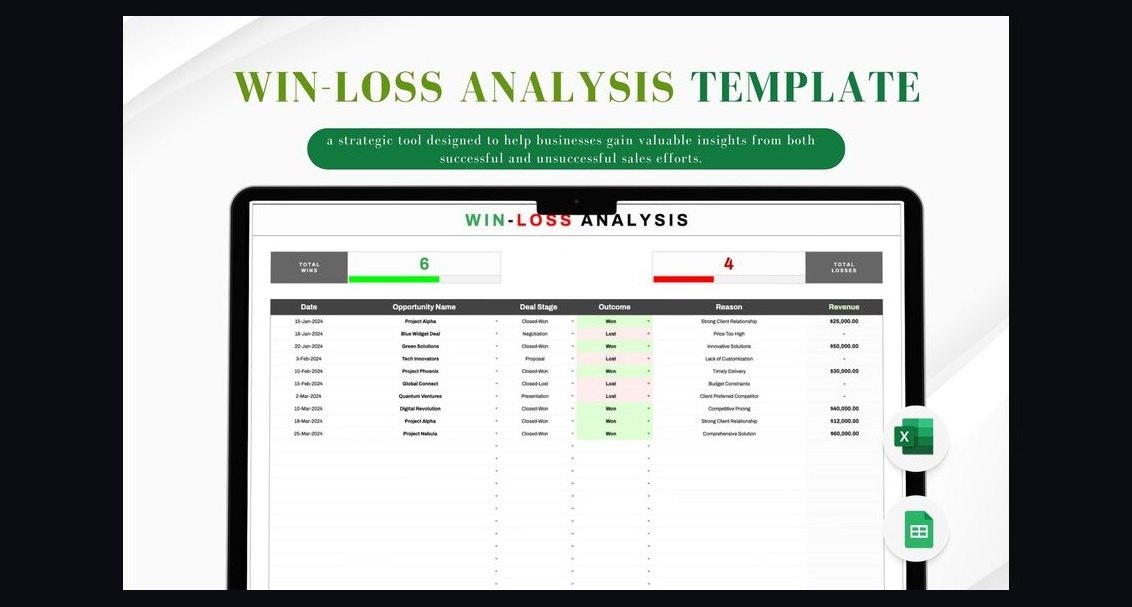 revopsHow Do I Run a Win/Loss Analysis Program That Improves Win Rate in 2027?