 Pulse Reviews and Analysis
What vendor consolidation strategies are GTM teams using to cut tech stacks by 40% in 2027?
 Curated by Kory White · Fractional CRO, CRO Syndicate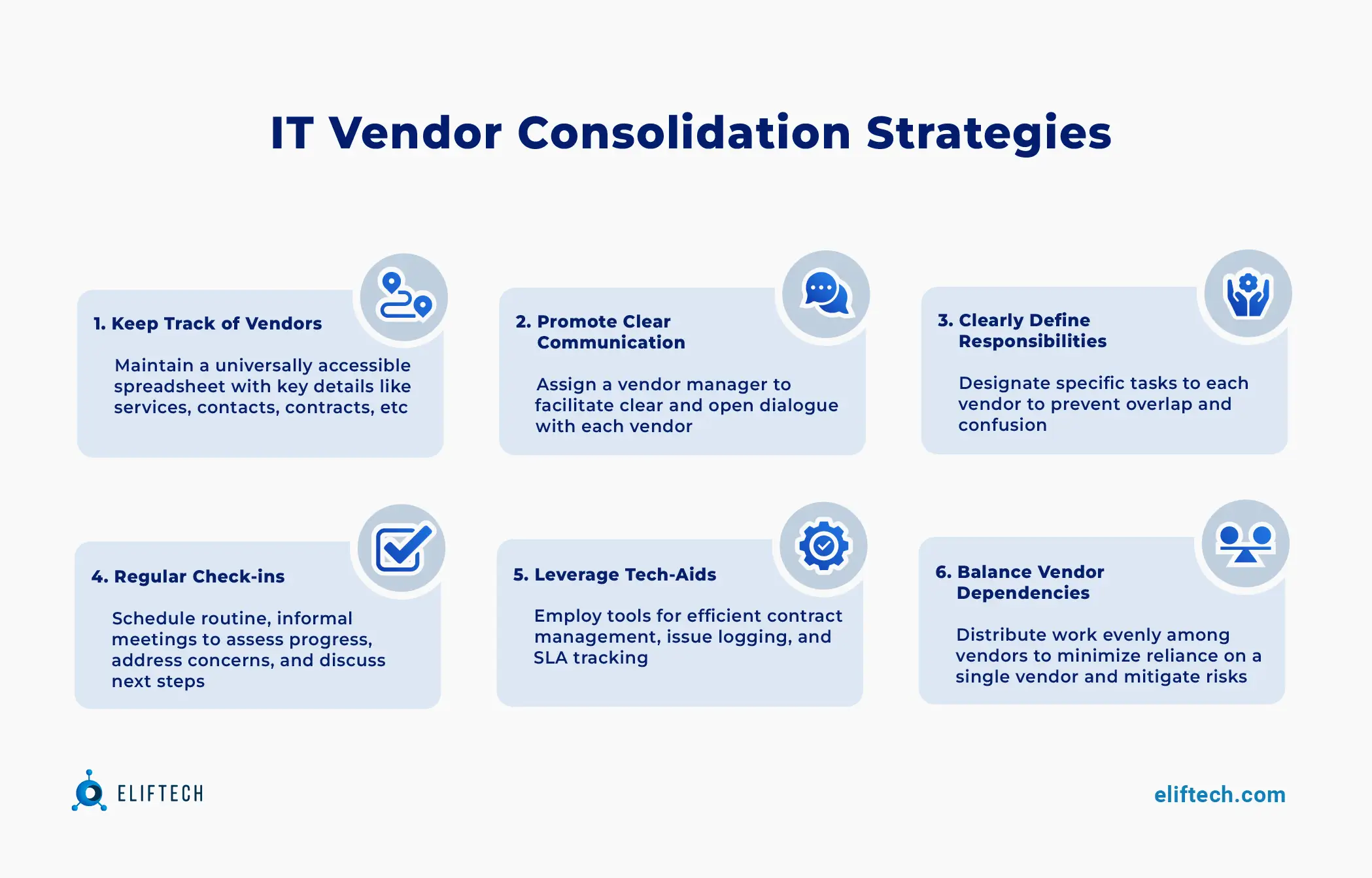
Direct Answer
Vendor consolidation in 2027 is no longer a cost-cutting exercise but a strategic imperative driven by AI agent sprawl, longer B2B sales cycles averaging 8–12 months, and buying committees that now regularly include 8–12 stakeholders. GTM teams are achieving 40% tech stack reductions by ruthlessly eliminating point solutions that don't integrate natively with their core Salesforce or HubSpot CRM, replacing them with all-in-one platforms like Gong for revenue intelligence or Clari for end-to-end forecasting.
The winning strategy is a "platform-first" approach: choose a primary data backbone (CRM), a primary conversation intelligence layer, and a primary revenue orchestration tool, then consolidate every adjacent function—from lead scoring to contract management—into those three pillars.
This cuts tools from 30–40 down to 12–15, slashes integration maintenance costs by 50–70%, and forces teams to actually use the features they already pay for. The 40% reduction is realistic because most teams are carrying 2–3 tools for the same job (e.g., separate tools for email tracking, meeting scheduling, and call recording) that a single Salesloft or Outreach instance can handle.
The 2027 GTM Reality Driving Consolidation
The push for a 40% smaller stack in 2027 is not arbitrary. Three macro forces are colliding:
- AI Agent Sprawl: Every vendor now bakes in "AI agents" for prospecting, summarization, and forecasting. Teams end up with 5–8 AI copilots, each with separate data ingestion, leading to contradictory outputs and no single source of truth. Consolidation is the only way to govern AI-driven actions.
- Longer, More Complex Cycles: MEDDPICC-style qualification now requires proving value to 10+ buying committee members. A fragmented stack means no single view of stakeholder engagement, forcing reps to toggle between 6 dashboards. Unified platforms like Clari provide a single pane of glass.
- The "Integration Tax": Maintaining custom API integrations between 30+ tools costs an estimated $200k–$500k annually in engineering time and failed syncs. Each integration is a failure point. Fewer tools mean fewer breakages.
The "Three-Pillar" Consolidation Framework
The most effective strategy in 2027 is the Three-Pillar Model, which directly targets the 40% reduction.
Pillar 1: The Revenue Data Backbone (CRM + CDP)
- Consolidate: Remove standalone data enrichment tools (ZoomInfo, Lusha), separate lead scoring engines, and legacy marketing automation that doesn't sync to the CRM.
- Move to: Salesforce or HubSpot as the single source of truth. Use their native AI (Einstein, Breeze) for scoring and enrichment. If you need a CDP, choose one that replaces your CRM’s data warehouse, not adds to it.
- Result: Reduction from 4–5 tools to 1–2.
Pillar 2: Revenue Intelligence & Engagement (Conversation + Email + Scheduling)
- Consolidate: Remove separate tools for call recording (Chorus, Gong), email tracking (Mixmax, Yesware), meeting scheduling (Calendly, Chili Piper), and sales engagement (Outreach, Salesloft).
- Move to: A single Gong or Clari instance that handles conversation intelligence, deal risk scoring, and forecasting. Pair it with Outreach or Salesloft that natively handles email sequences, call dialers, and scheduling.
- Result: Reduction from 5–7 tools to 2.
Pillar 3: Revenue Orchestration & Contracting (CPQ + eSignature + Billing)
- Consolidate: Remove standalone eSignature tools (DocuSign, HelloSign), separate CPQ tools, and manual billing systems.
- Move to: Salesforce CPQ or HubSpot CPQ that includes native eSignature and billing. If you need a standalone CPQ, use one that also handles contract lifecycle management (e.g., Ironclad).
- Result: Reduction from 3–4 tools to 1.
The "Kill the Point Solution" Audit
To hit 40%, you must identify and eliminate "shadow tools"—subscriptions bought by individual reps or teams without IT approval. In 2027, the average enterprise has 12–15 shadow tools per 100 reps.
Audit Steps:
- Export all SaaS spend from your procurement system (e.g., Zip, Coupa). Flag any tool with <5 active users in the last 30 days.
- Map every tool to a GTM function. If two tools map to the same function (e.g., "email tracking"), the one with lower usage or weaker API gets cut.
- Run a "feature overlap" report. Most sales engagement platforms now include meeting scheduling, call recording, and basic forecasting. If your Salesloft subscription includes dialer and recording, you don't need a separate RingDNA or Chorus.
- Calculate the "Integration Cost." For each tool, estimate the engineering hours spent on API maintenance. If it's >20 hours/month, that tool must justify its existence with unique, irreplaceable data.

👉 Quick Call with Kory White, Fractional CRO · See Kory on LinkedIn · CRO Syndicate
The "Buying Committee" Impact on Tool Choice
In 2027, the buying committee for your own tech stack is as complex as your customers'. The VP of Sales wants forecasting; the CRO wants pipeline visibility; the CMO wants attribution; the CFO wants cost per lead. A fragmented stack forces each committee member to log into a different tool to get their answer.
Consolidation Strategy: Choose platforms that serve multiple committee members from a single data model.
- Clari serves Sales (forecasting), RevOps (pipeline analytics), and Finance (revenue reporting).
- Gong serves Sales (deal coaching), Marketing (content intelligence), and Customer Success (renewal risk).
- Salesforce serves everyone but requires heavy customization.
This reduces the number of "specialized" tools each committee member demands. Instead of 3 dashboards per person, you have 1 shared dashboard.
The "AI Agent" Consolidation Trap
A common mistake in 2027 is keeping multiple AI agents because each claims to be "best-in-class" for a specific task. This creates AI fragmentation: one agent writes emails, another scores leads, another summarizes calls, and none share context. The result is contradictory recommendations (e.g., one agent says "send email," another says "call").
Consolidation Rule: Keep only the AI agents that natively integrate with your CRM and revenue intelligence platform.
- If you use Salesforce Einstein, it can handle lead scoring, opportunity insights, and email generation. Remove separate AI tools like Apollo or LeadIQ.
- If you use Gong Engage, its AI handles call summaries, next-step recommendations, and email drafting. Remove separate Copy.ai or Jasper instances.
- Result: Reduction from 4–5 AI tools to 1–2.
The "Contract & Vendor Management" Playbook
Achieving a 40% reduction requires aggressive contract renegotiation. In 2027, vendors are desperate to retain customers amidst a consolidation wave. Use this leverage.
Tactics:
- Bundle demand: Tell Outreach you'll drop Salesloft if they give you a 30% discount on a 3-year deal. Most vendors will match.
- Feature unlock: Many tools have features you're not using. Ask your CSM to enable "Enterprise" features (e.g., advanced reporting, AI copilot) without a price increase. This eliminates the need for a separate tool.
- Sunset clauses: Negotiate a 90-day sunset clause. If you cut a tool, you can stop paying immediately, not at contract end.
- Reference the "40% mandate": Tell vendors your board has mandated a 40% reduction. They will offer discounts to avoid being the tool that gets cut.
FAQ
What is the single biggest mistake teams make when trying to cut 40%? They start by cutting the cheapest tools first, which are often the most sticky (e.g., a free Calendly that reps love). Instead, cut the most redundant tools—the second or third tool in a category. The cost of a tool is irrelevant if it duplicates functionality.
How do you handle tools that are "free" but used by the team? Free tools are the biggest hidden cost because they create data silos and shadow IT. For example, a free Trello board for deal tracking means data is not in the CRM. Consolidate by replacing free tools with native CRM features (e.g., Salesforce Kanban view replaces Trello).
If a free tool is critical, build a process to migrate its data into the CRM weekly.
What about tools that are "best-in-class" but don't integrate? In 2027, "best-in-class" without integration is a liability. The cost of custom API maintenance and data inconsistency outweighs the marginal feature advantage. Cut them.
Choose the second-best tool that integrates natively with your CRM. Example: Gong is better than Clari for conversation intelligence, but if your team already uses Salesforce and Outreach, Clari's native integration might make it the better choice for the entire stack.
How do you get buy-in from the CRO or VP of Sales to cut their favorite tools? Show them the "integration tax" report. Calculate the hours their team spends switching between tools and the revenue lost from data delays. Then, present a consolidated stack that gives them a single dashboard (e.g., Clari for forecasting, Gong for coaching) that replaces 5 separate logins.
Frame it as "more time selling, less time toggling."
Is a 40% reduction realistic for a company with 500+ employees? Yes, but it requires a phased approach. Start with the sales tech stack (usually 40% of total tools), then marketing, then customer success. For a 500-person company with 50 tools, a 40% cut means eliminating 20 tools.
This is achievable by consolidating 5–6 tool categories (e.g., email tracking, meeting scheduling, call recording, lead scoring, contract management) into 2–3 platforms.
What happens to the data from the tools we cut? Before cutting, run a data migration to your CRM or data warehouse (e.g., Snowflake, Databricks). Export all historical interactions, notes, and activity logs. Most platforms (e.g., Gong, Salesloft) have bulk export APIs.
Schedule a 30-day overlap where both tools run, then decommission the old one. This ensures no data loss.
Sources
- Gartner: "2027 Tech Stack Consolidation Trends"
- Forrester: "The Cost of Integration Tax in B2B Sales"
- McKinsey: "AI Sprawl and the Future of GTM Tech Stacks"
- Gong Labs: "2027 Revenue Intelligence Benchmark Report"
- SaaStr: "How to Cut Your SaaS Stack by 40% Without Losing Revenue"
- Bessemer Venture Partners: "2027 Cloud Trends: Consolidation and Platformization"
- Salesforce: "Einstein AI and Stack Consolidation"
- HubSpot: "Breeze AI and the All-in-One Platform Strategy"
Bottom Line
Vendor consolidation to a 40% smaller stack in 2027 is not about cutting costs—it's about eliminating the integration tax, reducing AI agent chaos, and giving buying committees a single source of truth. The three-pillar model (CRM, revenue intelligence, engagement) is the proven path, requiring ruthless elimination of point solutions and aggressive contract renegotiation.
Teams that fail to consolidate will drown in data fragmentation and lose deals to faster, more unified competitors.
*Vendor consolidation strategies for 2027 GTM teams cutting tech stacks by 40% with AI and platform-first approaches.*