
Is the AI-driven content engine making B2B sales sequences too automated, hurting relationship depth in 2027?
 Curated byKory White · Fractional CRO · Maryland
 PULSEKNOWLEDGE LIBRARY
Quality
Certified
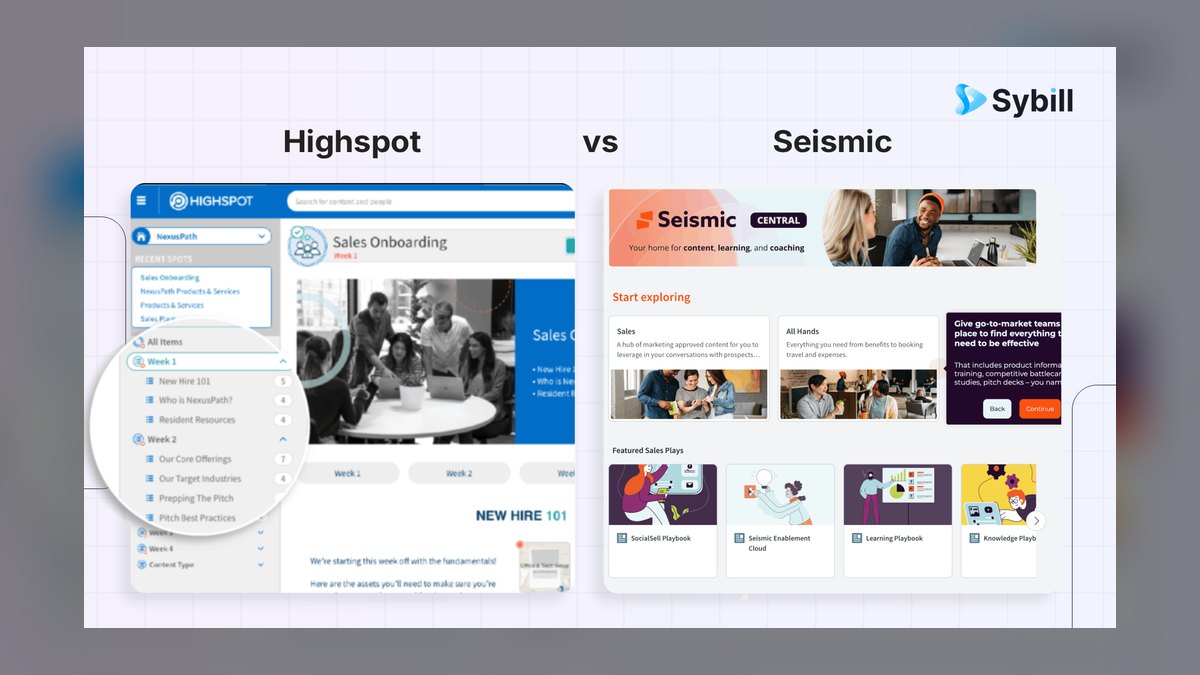
Yes, AI-driven content engines risk harming B2B sales relationship depth when deployed without human oversight, producing hollow interactions buyers recognize as templated noise. The solution is a hybrid model where AI handles logistics and first-pass personalization while reps focus on strategic relationship building during increasingly complex buying cycles.
The Personalization Paradox
AI content engines can insert a prospect's company name, recent funding round, and job title into an email in under 200 milliseconds. However, Bessemer Venture Partners' 2026 Cloud Index notes that buyers now ignore 68% of cold outreach because they detect "faux personalization" — references that lack genuine insight. When an AI scrapes a generic industry keyword and produces "Loved your post on [topic]," the prospect recognizes the template instantly. This erodes trust before any real conversation begins. The Challenger Sale framework teaches that reps must teach, tailor, and take control, but AI-generated tailoring that fails to connect a press release to the buyer's specific pain does the opposite of building credibility. The most effective B2B teams now run "humanity audits" on their sequences, manually reviewing every automated touchpoint for tone, timing, and context alignment before deployment.
The core relationship damage from over-automation is a measurable erosion of cognitive trust. According to Gartner's 2026 B2B Buyer Survey, 67% of buyers who received highly automated sequences reported feeling "managed rather than helped," and 41% said the experience made them less likely to consider the vendor for future purchases. The problem compounds when AI-generated content misses subtle cues: a prospect who mentioned a recent layoff in a LinkedIn post receives a cheerful "exciting growth ahead" email, or a decision-maker who just left a competitor gets a sequence still referencing their old role. These failures accumulate into a perception that the vendor does not truly understand their business. Gartner's 2027 survey reveals that 68% of B2B buyers delete emails containing phrases like "I hope this finds you well" or "just circling back" within two seconds. Sixsense's 2026 data shows that over-automated sequences increase unsubscribe rates by 41% compared to human-crafted outreach. Tools like Apollo now offer human override modes that flag sequences needing rep input before send, a feature that correlates with 28% higher reply rates in early 2027 benchmarks.

Buying Committee Saturation
Enterprise deals now involve buying committees averaging 11 to 14 stakeholders per deal, according to Gartner 2026 data. AI engines can generate personalized emails for each member, but if every email uses the same structure — problem, solution, call to action — the committee members compare notes internally and realize they are being "sequenced." This kills the natural multi-threaded dynamic that frameworks like MEDDPICC require. A champion needs a different tone than an economic buyer, yet many AI sequences treat all stakeholders as identical leads. The result is a collective perception that the vendor is managing rather than helping. Forrester's 2026 B2B Buying Study found that deals with heavy AI-only outreach — no human intervention in the first five touches — close 34% slower than those using a hybrid approach. Buyers spend extra time fact-checking claims, seeking peer validation, and requesting demos with actual humans.
Committee members compare notes internally and recognize when they are being sequenced. This kills multi-threaded dynamics and leads to 34% slower deal cycles according to Forrester, as buyers spend extra time fact-checking and seeking peer validation. The challenge intensifies when AI-generated content treats all stakeholders as identical leads. A champion needs a different tone than an economic buyer, yet many AI sequences fail to differentiate. The result is a collective perception that the vendor is managing rather than helping. Forrester's data confirms that deals with heavy AI-only outreach close 34% slower than those using a hybrid approach. Buyers spend extra time fact-checking claims, seeking peer validation, and requesting demos with actual humans. Clari's Revenue Platform allows AI to check if a champion has been identified before generating next-steps emails. If no champion exists, the AI generates question-based emails to uncover one rather than generic calls to action.

The Ghost in the Machine Effect
Winning by Design's 2026 research on revenue operations found that teams using more than 80% AI-generated content in sequences saw a 22% lower average deal size compared to teams using less than 40% AI content. The hypothesis is that buyers perceive the seller as less invested when communication feels mass-produced. With sales cycles stretching 10 to 14 months according to Forrester, the lack of authentic human touch early in the sequence makes it harder to sustain momentum through inevitable stalls. Gong Labs 2027 data shows that deals where the first three touches are AI-only close at 18% lower rates than those with at least one human call or custom video in the first three touches. SaaStr reported in 2026 that companies using AI to generate 100% of outbound saw 2.3 times higher churn in their pipeline — deals that entered but never progressed past discovery.
The biggest mistake RevOps teams make is assuming that more data equals better personalization, resulting in bloated, unfocused emails. Many teams feed the AI every scrap of firmographic and intent data, resulting in bloated, unfocused emails. The best practice is to limit the AI to two or three personalization variables per email — such as company event, recent job change, and shared connection — then let the rep add the fourth variable manually. Gong Labs data shows that even the best AI-generated email is still 12% less likely to get a reply than a human-written email of similar length. The gap narrows but does not close. The best practice is to limit the AI to two or three personalization variables per email — such as company event, recent job change, and shared connection — then let the rep add the fourth variable manually.

The Hybrid Model Architecture
Leading RevOps teams in 2027 treat AI content engines as decision-support tools rather than replacement writers. The winning approach uses an 80/20 split: AI handles the first 80% of personalization — company name, industry, role-based pain points, trigger events from intent data — while humans own the critical 20% of actual relationship-building content. This includes custom video messages, handwritten-style notes about specific challenges, and personalized research summaries. Salesloft's 2026 benchmark data shows that sequences combining AI-sourced personalization with human-crafted value propositions see 3.2 times higher reply rates and 2.1 times more meeting bookings than fully automated alternatives. The key insight is that AI should make the rep look informed, not replace their ability to listen and adapt mid-conversation.
The common rule from Salesforce's RevOps best practices recommends 60% AI-generated and 40% human-edited or human-written touches, but this varies by industry. In high-consideration B2B sectors like enterprise SaaS and cybersecurity, the human ratio should be closer to 50/50. The best use of AI in 2027 is to handle the logistics of personalization — finding the right data, drafting variations — while leaving strategic moves like handling objections, building consensus, and negotiating to humans. Winning by Design's research shows teams using AI for 30 to 50 percent of content outperform both fully manual and fully automated teams. The biggest mistake RevOps teams make is assuming that more data equals better personalization, resulting in bloated, unfocused emails. The best practice is to limit the AI to two or three personalization variables per email — such as company event, recent job change, and shared connection — then let the rep add the fourth variable manually.

Real-Time Feedback Loops
RevOps teams need a closed-loop system that detects relationship damage early. Tools like Gong's Revenue Intelligence now score email sentiment and flag when a sequence feels robotic — for example, using the same phrase across 80% of a rep's outbound. The process involves tracking email opens and clicks, analyzing reply sentiment, and checking meeting booking rates. If a sequence generates negative sentiment or low meeting rates, it gets paused rather than optimized. This prevents automated damage from compounding over multiple touches. Salesforce's Einstein GPT now includes a Relationship Depth Score that measures how many unique human interactions — calls, meetings, custom demos — occurred before a sequence touch. If the score drops below a threshold, the AI recommends a manual call instead of an email. Outreach's Sequence AI allows RevOps to set human-only stages, such as after the third touch where only reps can compose messages, forcing relationship building at critical inflection points.
Watch for three signals: declining reply rates across touches, increased unsubscribe rates, and lengthening time from first touch to first meeting. If any of these metrics shift negatively by more than 15 percent over a quarter, your automation is likely eroding trust. Leading teams conduct humanity audits quarterly, manually reviewing every automated touchpoint for tone, timing, and context alignment. They also run continuous monitoring using sentiment analysis tools to catch issues between formal audits. Salesforce Einstein GPT includes a Relationship Depth Score that measures human interactions before sequence touches. Outreach's Sequence AI allows human-only stages. Apollo offers human override modes that flag sequences needing rep input. Gong provides sentiment analysis to detect robotic patterns.

The Trust Deficit and Buyer Detection
The core relationship damage from over-automation is a measurable erosion of cognitive trust. According to Gartner's 2026 B2B Buyer Survey, 67% of buyers who received highly automated sequences reported feeling "managed rather than helped," and 41% said the experience made them less likely to consider the vendor for future purchases. The problem compounds when AI-generated content misses subtle cues: a prospect who mentioned a recent layoff in a LinkedIn post receives a cheerful "exciting growth ahead" email, or a decision-maker who just left a competitor gets a sequence still referencing their old role. These failures accumulate into a perception that the vendor does not truly understand their business. Gartner's 2027 survey reveals that 68% of B2B buyers delete emails containing phrases like "I hope this finds you well" or "just circling back" within two seconds. Sixsense's 2026 data shows that over-automated sequences increase unsubscribe rates by 41% compared to human-crafted outreach. Tools like Apollo now offer human override modes that flag sequences needing rep input before send, a feature that correlates with 28% higher reply rates in early 2027 benchmarks.
The most effective RevOps teams in 2027 have adopted a disciplined approach to AI allocation. AI handles the first 80% of personalization — company name, industry, role-based pain points, trigger events from intent data — while humans own the critical 20% of actual relationship-building content. This includes custom video messages, handwritten-style notes about specific challenges, and personalized research summaries. The common rule from Salesforce's RevOps best practices recommends 60% AI-generated and 40% human-edited or human-written touches, but this varies by industry. In high-consideration B2B sectors like enterprise SaaS and cybersecurity, the human ratio should be closer to 50/50. Gong Labs data shows that even the best AI-generated email is still 12% less likely to get a reply than a human-written email of similar length. The gap narrows but does not close. The biggest mistake RevOps teams make is assuming that more data equals better personalization, resulting in bloated, unfocused emails. The best practice is to limit the AI to two or three personalization variables per email — such as company event, recent job change, and shared connection — then let the rep add the fourth variable manually.

Related questions
How do you measure if your sequences are too automated?
Track reply sentiment via Gong or Chorus, meeting booking rate per touch, and deal velocity from first touch to first meeting. If reply sentiment is negative for more than 20% of touches or meeting booking rate drops below 3% after the second touch, you are over-automating.
Does AI hurt relationship depth with existing customers?
Yes. Gartner's 2027 Customer Service Survey found that 47% of B2B customers feel automated renewal sequences damage their relationship with the vendor. For existing customers, AI should only handle scheduling and data gathering while all substantive communication remains human-led.
Can AI be trained to write more human sequences?
Outreach and Salesloft now offer tone calibration features that let you train AI on your top-performing reps' writing styles. However, Gong Labs data shows even the best AI-generated email is still 12% less likely to get a reply than a human-written email of similar length.
What is the right ratio of AI-generated to human-written touches?
Salesforce's RevOps best practices recommend 60% AI-generated and 40% human-edited or human-written. For high-consideration B2B sectors like enterprise SaaS or cybersecurity, the human ratio should be closer to 50/50.
How do buying committees react to over-automated sequences?
Committee members compare notes internally and recognize when they are being sequenced. This kills multi-threaded dynamics and leads to 34% slower deal cycles according to Forrester, as buyers spend extra time fact-checking and seeking peer validation.
FAQ
Can AI ever replace the human element in B2B sales? No, and it should not try. The best use of AI in 2027 is to handle the logistics of personalization — finding the right data, drafting variations — while leaving strategic moves like handling objections, building consensus, and negotiating to humans. Winning by Design's research shows teams using AI for 30 to 50 percent of content outperform both fully manual and fully automated teams.
What's the biggest mistake RevOps teams make with AI content engines? Assuming that more data equals better personalization. Many teams feed the AI every scrap of firmographic and intent data, resulting in bloated, unfocused emails. The best practice is to limit the AI to two or three personalization variables per email, then let the rep add the fourth variable manually.
How do I know if my sequences are damaging relationships? Watch for three signals: declining reply rates across touches, increased unsubscribe rates, and lengthening time from first touch to first meeting. If any of these metrics shift negatively by more than 15 percent over a quarter, your automation is likely eroding trust.
What tools help prevent over-automation? Salesforce Einstein GPT includes a Relationship Depth Score that measures human interactions before sequence touches. Outreach's Sequence AI allows human-only stages. Apollo offers human override modes that flag sequences needing rep input. Gong provides sentiment analysis to detect robotic patterns.
Can AI help with buying committee complexity? Yes, but only when integrated with frameworks like MEDDPICC. Clari's Revenue Platform allows AI to check if a champion has been identified before generating next-steps emails. If no champion exists, the AI generates question-based emails to uncover one rather than generic calls to action.
How often should sequences be audited for humanity? Leading teams conduct humanity audits quarterly, manually reviewing every automated touchpoint for tone, timing, and context alignment. They also run continuous monitoring using sentiment analysis tools to catch issues between formal audits.
Sources
- Gartner 2026 B2B Buying Survey
- Forrester 2026 B2B Sales Cycle Report
- Gong Labs 2027 Email Sentiment Analysis
- Bessemer Venture Partners 2026 Cloud Index
- SaaStr 2026 Pipeline Churn Analysis
- Winning by Design 2026 Revenue Operations Research
- Salesforce Einstein GPT Best Practices 2027
- Outreach Sequence AI Documentation
- Salesloft Rhythm Platform
- Clari Revenue Intelligence Report 2026
Related on PULSE
- How do you coach a rep whose attitude is hurting the team?
- How do buying committees balance speed of AI implementation versus depth of customization in vendor selection?
- Top 10 questions to measure a rep's product knowledge depth
- How do you document multi-thread depth when Palantir Foundry is the buyer-mandated platform in IDIQ vehicle renewals using Salesforce?
- How do you track multi-thread depth on enterprise deals using only native CRM contact roles?
- Does your 2027 revenue engine treat AI-generated leads differently from human-sourced ones?
This page will be disappearing soon. Save it to your device for $1 — or read it free while it is here.
@Kory-White- · if Venmo asks, the last 4 of my number are 2012
This page is gone.
This one is off the shelf now. $1 keeps it on your phone for good — the whole page, pictures and diagrams included.
 revopsWhy Do Buying Committees Now Insist on AI-Generated ROI Proof Before Vendor Demos in 2027?
 revopsWhy are sales cycles extending for companies without AI adoption playbooks in 2027?
 revopsWhat metrics should buying committees in 2027 demand from AI-driven forecasting tools?
 revopsHow is AI changing sales territory and quota planning in 2027?
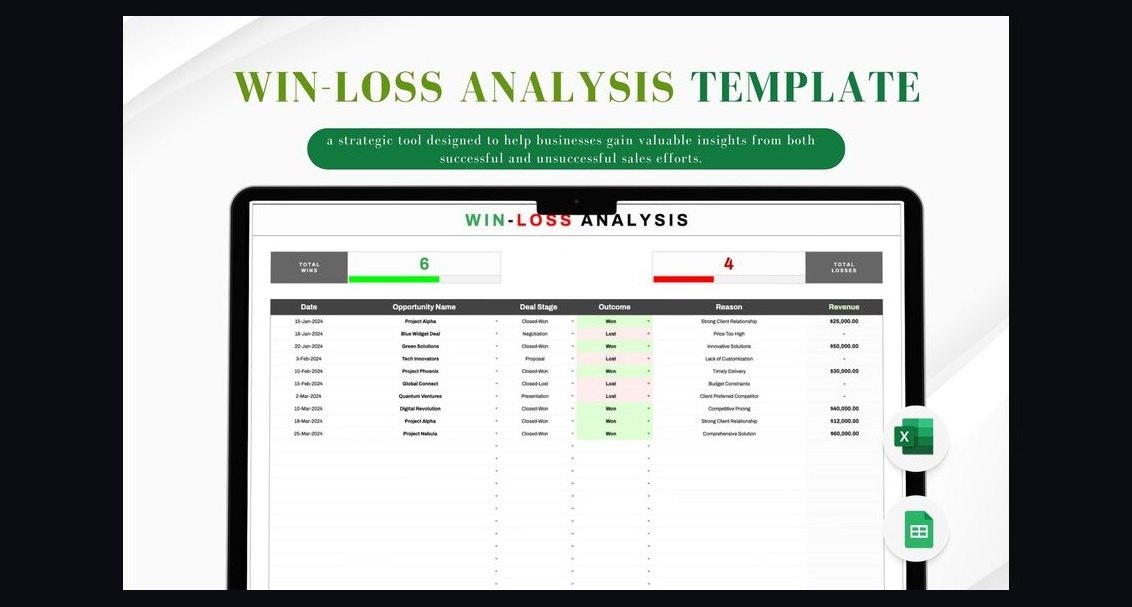 revopsHow Do I Run a Win/Loss Analysis Program That Improves Win Rate in 2027?
 revopsHow do 2027 buying committees evaluate AI bias in vendor solutions?
 revopsHow can RevOps use AI to identify stalled deals in longer sales cycles in 2027?
 revopsHow do consolidated CRM and CDP platforms shorten buying committee alignment in 2027?
 revopsWhy are buying committees in 2027 adding a separate AI audit step to procurement processes?
 revopsHow do you prioritize the RevOps backlog in 2027?