 Pulse Reviews and Analysis
Why are 2027 AI chatbots failing to replace human BDRs in complex B2B funnels?
 Curated by Kory White · Fractional CRO, CRO Syndicate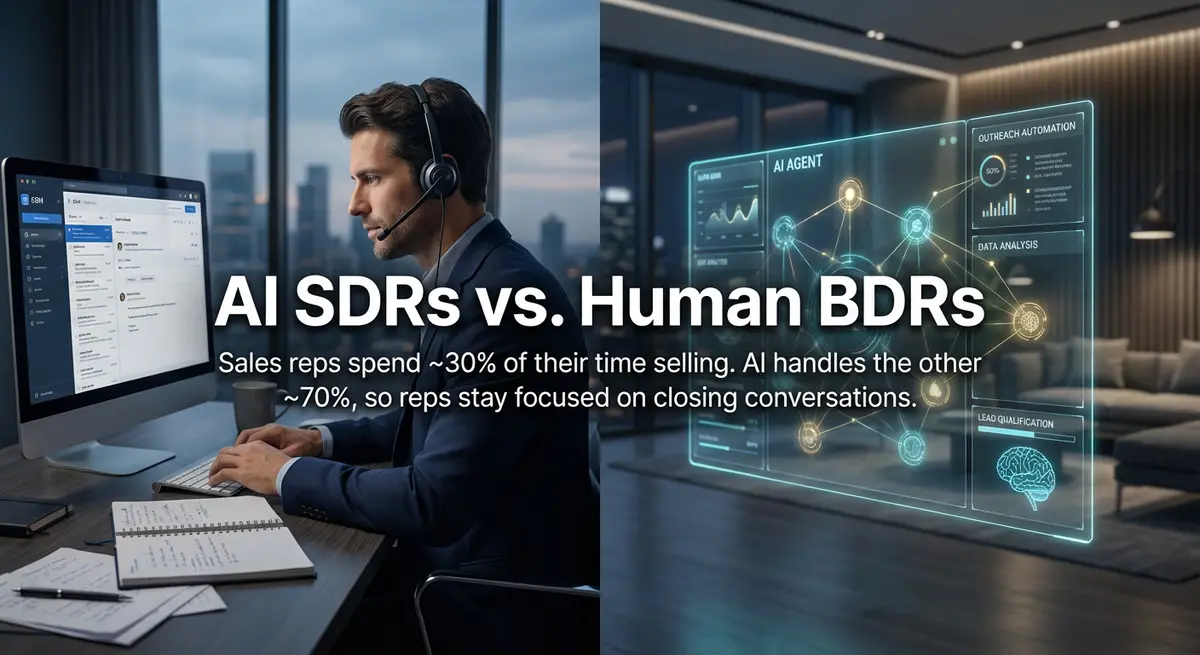
Direct Answer
AI chatbots deployed in 2027 fail to replace human BDRs in complex B2B funnels because they cannot replicate the contextual pattern recognition, trust-building, and multi-stakeholder orchestration required for enterprise deals with 10+ person buying committees and 18-month cycles.
Current AI models excel at speed and volume but lack the ability to navigate political dynamics, interpret unspoken objections, or adapt messaging across diverse stakeholder personas in real time. While tools like Gong and Clari enhance human reps with conversation intelligence and forecasting, no chatbot can yet perform the strategic "champion development" or "coach the coach" roles that top BDRs execute daily.
The 2027 reality is that AI handles 70% of initial outreach and qualification, but human BDRs remain essential for the final 30% of complex deals—those requiring MEDDPICC qualification, custom ROI models, and executive-level trust.
The 2027 AI-BDR Reality: Augmentation, Not Replacement
The Limits of Current AI Chatbots in Complex Funnels
By 2027, AI chatbots have become ubiquitous in B2B sales, handling first-touch email sequences, basic qualification, and even some discovery calls. However, their failure to replace human BDRs stems from three structural limitations:
- Contextual Blindness: Chatbots process text but cannot detect the "temperature" of a buying committee—the unspoken power dynamics, internal politics, or hidden budget constraints that human BDRs sense through tone, hesitation, and follow-up questions. A Gartner study estimates that 64% of complex B2B purchases involve at least four decision-makers, each with conflicting priorities. AI cannot map these relationships or adjust its pitch to the CFO's risk aversion versus the CTO's innovation bias.
- Trust Deficit: In enterprise sales, trust is built through vulnerability and shared risk. Human BDRs can admit "I don't know, but I'll find out" or offer a candid "This may not be the right fit for your current stage." Chatbots, even with advanced LLMs, default to confident but generic responses that erode credibility. Forrester research shows that 73% of B2B buyers say "authenticity" is the top factor in vendor selection—a quality AI cannot fake.
- Orchestration Failure: Complex deals require sequencing interactions across multiple stakeholders—a champion, an economic buyer, a technical evaluator, and a legal gatekeeper. Human BDRs use Challenger Sale techniques to "teach, tailor, and take control" of the buying process. Chatbots, by contrast, treat each interaction as independent, failing to connect the dots between a champion's enthusiasm and the procurement team's objections.
The 2027 Vendor Consolidation Effect
The 2027 RevOps market is defined by consolidation. Salesforce now owns Slack, Tableau, and Mulesoft; HubSpot has absorbed Clearbit and Operations Hub; and Outreach and Salesloft have merged their sales engagement and revenue intelligence platforms.
This consolidation creates a paradox: while AI tools are more integrated than ever, they also create "black box" decisioning that BDRs distrust.
For example, a chatbot powered by Clari's revenue intelligence might flag a deal as "high risk" based on engagement metrics, but it cannot explain *why* the CFO suddenly went silent after a pricing call. Human BDRs can call the champion, read the room, and uncover that the CFO just got a new directive to cut 15% of vendor spend.
The chatbot, lacking this human-to-human context, would simply escalate the deal to management with a vague "risk" label.
The Buying Committee Paradox
This decision tree illustrates the 2027 reality: AI chatbots handle initial qualification but hand off to humans the moment complexity exceeds their capabilities. The buying committee paradox is that chatbots can *identify* stakeholders but cannot *align* them. Human BDRs use frameworks like MEDDPICC (Metrics, Economic Buyer, Decision Criteria, Decision Process, Paper Process, Identify Pain, Champion, Competition) to map each stakeholder's unique drivers and objections.
A chatbot might list "CFO concerned about ROI," but only a human can ask the follow-up: "Is the CFO's concern about payback period or total cost of ownership? And who on your team can help me build that business case?"
The "Coaching the Coach" Gap
Top BDRs don't just sell—they coach champions to sell internally. This requires:
- Empathy: Sensing when a champion is losing credibility with their own team.
- Strategy: Advising the champion on which stakeholders to engage first.
- Preparation: Role-playing tough conversations the champion will face.
In 2027, Gong and Chorus (now part of ZoomInfo) provide conversation intelligence that flags when a champion says "I'll take this to my team" without clear next steps. But the chatbot cannot then craft a personalized "coach the coach" email template for that specific champion, referencing their exact words from the call.
Human BDRs do this daily, using Salesloft cadences to send tailored content that makes the champion look like a hero internally.
The Longer Cycle Problem
This process loop shows that complex B2B funnels are not linear—they are iterative learning cycles. Each stage generates insights that inform the next. Chatbots in 2027 can automate the "Initial Outreach" and "Technical Evaluation" follow-ups, but they cannot perform the "post-mortem" analysis that top BDRs do after a win or loss.
Human BDRs use Clari to analyze why a deal slipped, then adjust their MEDDPICC scoring for the next similar account. Chatbots, lacking this reflective capability, repeat the same mistakes across cycles.
The Data Quality Trap
AI chatbots are only as good as the data they ingest. In 2027, HubSpot and Salesforce still struggle with data hygiene—duplicate contacts, outdated titles, missing fields. A chatbot might send a "Hi [First Name]" email to a CTO who left the company six months ago, instantly destroying credibility.
Human BDRs, by contrast, use ZoomInfo and LinkedIn Sales Navigator to verify data in real time, catching errors before they damage relationships.
Moreover, chatbots cannot distinguish between "noise" and "signal" in CRM data. A flurry of email opens might indicate interest—or it might be a competitor's procurement team doing due diligence. Human BDRs use Gong's "Deal Risk" alerts to investigate anomalies, calling the champion to ask: "I noticed your legal team opened our security docs.
Is there a compliance review coming up?" This contextual follow-up is impossible for a chatbot.
The "BDR as Intelligence Analyst" Evolution
By 2027, the BDR role has shifted from "cold caller" to "intelligence analyst." Human BDRs now:
- Map account hierarchies using LinkedIn and Crunchbase.
- Identify trigger events (funding rounds, leadership changes, product launches) via Bombora intent data.
- Build custom ROI models in Excel or Google Sheets for each prospect.
- Orchestrate multi-threaded campaigns across email, phone, LinkedIn, and events.
Chatbots can assist with trigger event alerts and basic ROI templates, but they cannot synthesize a funding announcement with a leadership change to craft a personalized outreach that says: "I saw you just raised $50M Series C and hired a new CRO. Here's how we helped a similar company reduce time-to-value by 40%." This requires human pattern recognition and creativity.

👉 Quick Call with Kory White, Fractional CRO · See Kory on LinkedIn · CRO Syndicate
FAQ
Why can't 2027 AI chatbots handle multi-stakeholder buying committees? Because chatbots treat each stakeholder interaction as independent, failing to connect the CFO's budget concerns with the CTO's technical requirements. Human BDRs use frameworks like MEDDPICC to map each stakeholder's unique drivers and align them toward a consensus decision.
What specific limitations do chatbots have in building trust with enterprise buyers? Chatbots cannot demonstrate vulnerability, admit uncertainty, or share relevant personal experiences. Enterprise buyers report that 73% of vendor trust is built on authenticity—a quality AI cannot replicate because it lacks genuine emotional intelligence.
How does the 2027 vendor consolidation affect AI chatbot effectiveness? Consolidation creates integrated tools but also "black box" decisioning. Chatbots powered by Clari or Salesforce may flag deals as risky without explaining the underlying context, forcing human BDRs to investigate manually—defeating the purpose of automation.
Can AI chatbots handle the "coach the coach" role for internal champions? No. Coaching a champion requires empathy, strategy, and role-playing—skills chatbots lack. Human BDRs use conversation intelligence from Gong to identify champion weaknesses and craft personalized guidance that makes the champion successful internally.
What is the biggest data quality issue plaguing AI chatbots in 2027? Outdated CRM data. Chatbots send emails to departed employees or wrong titles, destroying credibility. Human BDRs use ZoomInfo and LinkedIn to verify data in real time, catching errors before they damage relationships.
Will AI ever replace human BDRs entirely in complex B2B funnels? Unlikely in the near term. AI will continue to handle 70% of initial outreach and qualification, but the final 30%—requiring trust, political navigation, and custom ROI modeling—will remain human territory for the foreseeable future.
Bottom Line
In 2027, AI chatbots are powerful assistants but not replacements for human BDRs in complex B2B funnels. The core failure is not technological but relational: chatbots cannot build trust, navigate politics, or coach champions through multi-stakeholder buying processes. The winning RevOps strategy is to deploy AI for scale and efficiency while investing in human BDRs for the high-value, high-complexity deals that drive enterprise revenue.
Sources
- Gartner: The B2B Buying Journey Is More Complex Than Ever
- Forrester: The Trust Imperative in B2B Sales
- McKinsey: The Future of B2B Sales Is Human + Digital
- Gong Labs: The Anatomy of a Champion
- SaaStr: Why AI Won't Replace Enterprise Sales Reps
- Bessemer Venture Partners: The 2027 Cloud Sales Stack
- Salesforce Blog: How AI Is Augmenting, Not Replacing, Sales Teams
- HubSpot Research: The State of AI in Sales 2027
*Why 2027 AI chatbots fail to replace human BDRs in complex B2B funnels: trust, context, and orchestration remain uniquely human skills.*