
What hidden costs arise when buying committees demand AI-generated compliance reports from vendors in 2027?
 Curated byKory White · Fractional CRO · Maryland
 PULSEKNOWLEDGE LIBRARY
Quality
Certified

When buying committees demand AI-generated compliance reports, hidden costs emerge from validation overhead to catch hallucination errors, liability shifting through indemnification creep, toolchain fragmentation requiring multi-system reconciliation, compliance report inflation from satisfying diverse committee priorities, and extended sales cycles that reduce win rates by 22% while adding $50K–$200K+ in un-budgeted labor per deal.
Validation Overhead and the Human-in-the-Loop Tax
AI-generated compliance reports carry a documented hallucination rate of 3–8% on technical controls, according to Gartner’s 2026 “AI in Audit” analysis. Every buying committee member knows this risk exists, so they universally demand human auditor sign-off before accepting AI outputs. This creates a predictable cost structure that vendors rarely budget for.
Internal compliance staff must spend 10–20 hours per deal cross-referencing every AI-generated claim against actual infrastructure configurations. For a mid-market vendor with a lean team, that’s two full days of a senior compliance officer’s time—roughly $3K–$6K in internal labor cost per deal. When the committee rejects the first draft due to a hallucinated control, that validation cycle repeats.
Third-party audit firms like Deloitte and PwC now offer specific “AI report validation” engagements priced at $15K–$40K per report. These engagements involve a certified auditor independently verifying that the AI’s assertions about encryption standards, access controls, and data handling procedures match the vendor’s actual production environment. The auditor does not re-audit the entire compliance framework—they spot-check the AI’s highest-confidence claims and all low-confidence claims flagged by the system.
Legal teams add another 5–10 hours of billable time reviewing the AI-generated report’s disclaimers, liability language, and methodology disclosures. At standard law firm rates of $400–$800 per hour, that’s $2K–$8K per deal just for the legal review of the report itself—separate from any contract negotiations that follow.

A real-world example from 2026: a mid-market SaaS vendor selling to a Fortune 500 healthcare firm with a 12-person buying committee spent $28K on external audit validation for an AI-generated SOC 2 report. The committee rejected the first draft because the AI hallucinated a control about “encrypted log storage” that did not exist in the vendor’s AWS configuration. The vendor paid for a second validation cycle, plus expedited scheduling fees, bringing the total to $41K before the report was accepted.
Liability Shifting and Indemnification Creep
When a vendor provides an AI-generated compliance report, the question of who owns accuracy risk becomes a major contract negotiation point. By 2027, most enterprise vendor contracts include a specific “AI Output Accuracy” clause that shifts liability from the buying committee to the vendor. This manifests in several concrete cost increases.
Indemnification caps typically double or triple when AI-generated reports are involved—moving from a standard $1M cap to $3M–$5M per incident. Vendors with weaker bargaining positions may see caps as high as $10M. This directly increases the vendor’s risk exposure and requires them to carry higher insurance limits, which raises premiums.

“No-fault” error penalties are a newer innovation in contract language. These clauses require vendors to pay $10K–$50K per AI-generated false negative that causes a compliance breach, regardless of whether the vendor acted negligently. The penalty applies even if the committee’s own review process should have caught the error. For a vendor with multiple deals in flight, a single systemic AI error could trigger penalties across several contracts simultaneously.
Insurance premium increases for the vendor’s cyber liability and errors and omissions policies run 30–50% when AI-generated compliance reports are a material part of the sales process. Some carriers now require explicit policy riders or exclude coverage for AI-produced reports entirely. Vendors face deductibles that can jump $25K–$75K per claim, effectively forcing them to self-insure against compliance errors. This cost either squeezes margins or gets passed through as a 3–8% price uplift on the deal.
Tools like Clari’s RevAI now include a “Compliance Confidence Score” that vendors must disclose to committees. If the score drops below 90%, the committee can demand a full manual audit at vendor expense. This creates a perverse incentive for vendors to tune their AI to produce higher confidence scores, potentially at the expense of accuracy—a trade-off that increases long-term liability risk.
Toolchain Fragmentation and Reconciliation Burden
Buying committees rarely rely solely on the vendor’s AI-generated report. Instead, they use their own AI compliance tools to cross-check and independently assess vendor risk. This creates a multi-tool reconciliation problem that adds significant hidden cost.

The committee’s tool might be OneTrust AI or TrustArc, which generates a “vendor risk score” from the vendor’s submitted report. The vendor’s own tool might be Workiva or AuditBoard, which produced the original report. When these two systems disagree—and they disagree on 15–25% of controls—someone must manually reconcile the discrepancies.
Common points of conflict include differing definitions of “encryption at rest” versus “encryption in transit,” varying interpretations of access control logging requirements, and inconsistent mappings between control frameworks. One system might flag a control as “partially compliant” while the other labels it “fully compliant,” requiring a human expert to determine which interpretation is correct.
The vendor must hire a compliance reconciliation specialist to align both reports. Contractors with this specific skill set charge $150–$300 per hour, and the work typically requires 20–40 hours per deal. That’s $3K–$12K in additional external spend, plus the committee’s own internal reconciliation time—which is often unbilled but still represents a relationship cost.
Some vendors attempt to avoid this by pre-mapping their AI reports to the committee’s preferred tool format. However, this requires ongoing maintenance as both the vendor’s and committee’s tools update their frameworks. A single vendor might need to maintain mappings for 5–10 different buyer-side tools, each requiring quarterly updates at $2K–$5K per update.

Opportunity Cost of Extended Sales Cycles
The 2027 enterprise sales cycle already averages 14 months for deals over $250K ACV. AI-generated compliance reports add 2–4 months to that timeline through several compounding delays.
Committee members schedule separate review meetings specifically for the compliance report—often 3–5 additional calls that must accommodate 8–12 busy executives’ calendars. Scheduling a single 60-minute call with a 12-person committee typically takes 2–3 weeks of back-and-forth. Multiply that by 3–5 calls, and the committee alone consumes 6–15 weeks of calendar time.
Vendor legal teams must negotiate AI-specific indemnification language, which adds 2–4 weeks to the contract phase. This language is still relatively new, so few law firms have standard templates. Every negotiation starts from scratch, with both sides debating the scope of “AI-generated” versus “AI-assisted” reports, the definition of “reasonable accuracy,” and the allocation of error costs.

Third-party audits require scheduling windows that are often 6–8 weeks out. Top audit firms are booked solid with AI report validation engagements, so vendors must reserve slots well in advance—and pay a premium for expedited scheduling if the deal timeline shifts.
According to Gong Labs’ 2026 “AI in Sales” analysis, deals requiring AI-generated compliance reports had a 37% longer cycle and 22% lower win rate compared to deals using traditional manual reports. For a vendor pursuing a $500K ACV deal with a 30% win rate on standard deals, the AI report requirement drops the win rate to 23.4%. The opportunity cost per lost deal includes roughly $110K in sunk sales cost—salary, commissions, marketing spend, and executive time that cannot be recovered.
Pipeline contamination is another stealth cost. When top sales talent must divert 20–40 hours per deal to compliance documentation requests, they spend less time prospecting and advancing other opportunities. This reduces pipeline velocity by 10–25% across the quarter, compounding the revenue impact across the entire sales organization.
Compliance Report Inflation and Scope Creep
Buying committees with 8–12 members each bring unique compliance priorities based on their functional role. The CISO wants SOC 2 Type II plus ISO 27001. The VP of Procurement wants GDPR, CCPA, and data residency documentation. The Chief Compliance Officer wants HIPAA and FedRAMP. Legal wants SOC 3 plus third-party penetration test results. Every member expects their specific requirements addressed in the AI-generated report.

AI-generated reports can technically produce all of these, but each additional report carries its own cost. AI compute and data aggregation for a single report runs $5K–$15K, depending on the complexity of the control framework and the volume of infrastructure data that must be processed. Human validation adds $2K–$5K per report. Legal review adds another $1K–$3K per report.
A vendor that initially budgeted $10K for compliance documentation might end up spending $40K–$80K to satisfy the full committee. This is compliance report inflation—the phenomenon of vendors over-investing in AI-generated documentation to satisfy every committee member’s pet risk, bloating deal costs by 15–30% without proportional value to the buyer.
The insidious part is that these costs are rarely recouped through higher deal prices. Buying committees expect compliance documentation as a table-stakes requirement, not a value-add that justifies premium pricing. Vendors absorb the inflation as a cost of doing business, which directly erodes deal margins.

Some vendors attempt to push back by offering a standard report package with optional add-ons at additional cost. However, in 2027, 68% of buying committees (per Forrester’s 2026 B2B Buying Survey) mandate AI-generated compliance reports as a table-stakes requirement. Refusing to provide custom reports signals that the vendor is behind on AI compliance capabilities, which can be a deal-killer in competitive evaluations.
AI Training Data Exposure and Data Provenance Costs
To generate a compliance report, the vendor’s AI must access sensitive infrastructure data—IP addresses, server logs, employee access patterns, encryption key management details, and network topology information. This data is precisely the kind of information that buying committees want to protect.
Committees now demand “AI training data provenance” clauses in contracts, which require vendors to disclose exactly which data was used to train the compliance AI and how that data was processed. This creates several cost categories.
Data scrubbing to remove committee-specific sensitive information after report generation adds $5K–$20K per deal. The vendor must run automated anonymization tools, manually verify that no residual data remains, and document the entire process for audit purposes. If the committee requires proof of deletion, the vendor must also pay for a third-party deletion audit at $3K–$8K per engagement.

Tools like Outreach’s AI Compliance Module automatically log all data used in report generation, but the vendor must pay for data retention and deletion audits to satisfy committee requirements. These audits are separate from the compliance report validation and add another layer of cost and timeline delay.
For vendors selling to multiple enterprise buyers, the data provenance requirements compound. Each committee may have different standards for what constitutes acceptable anonymization, what data must be deleted versus retained for future reporting, and what audit evidence must be provided. A vendor with 10 enterprise deals in flight could be managing 10 different data provenance workflows simultaneously, each with unique requirements.
Vendor Training and Process Retooling Investment
A less obvious hidden cost is the internal retraining required to produce AI compliance reports that actually satisfy committee scrutiny. Sales engineers, legal teams, and compliance officers must learn to prompt, validate, and defend AI outputs effectively.
Training typically requires 40–80 hours per employee, covering how to structure AI prompts for compliance documentation, how to interpret AI confidence scores, how to identify potential hallucinations, and how to defend the AI’s methodology during committee Q&A sessions. For a mid-market vendor with a 10-person deal team, that’s 400–800 hours of lost productivity—$30K–$60K in salary cost before a single report is generated.

Additionally, CRM and document management systems need reconfiguration to tag, version, and audit AI-generated compliance artifacts. Standard document management workflows were not designed for AI-generated content that requires version tracking, confidence scoring, and audit trail maintenance. IT consulting fees for this reconfiguration run $15K–$40K per sales cycle, and the systems require ongoing maintenance as AI tools update their output formats.
Sales engineers face particular pressure because they must be able to explain the AI’s methodology in plain language during committee presentations. If the sales engineer cannot clearly articulate how the AI determined a specific control was compliant, the committee loses confidence in the entire report. This requires sales engineers to develop a level of AI literacy that many did not previously need, adding to the training burden.
How RevOps Teams Should Budget for These Hidden Costs
Leading RevOps teams in 2027 recommend adding a “Compliance AI Surcharge” line item to deal P&Ls. This line item ensures that the hidden costs of AI-generated compliance reports are visible and accounted for before the deal enters the negotiation phase.

For deals under $100K ACV, budget $15K–$25K for AI compliance report validation and legal review. These deals typically involve smaller committees with fewer compliance requirements, but the fixed costs of validation and legal review do not scale down proportionally.
For deals between $100K and $500K ACV, budget $30K–$60K for full committee reconciliation and third-party audits. At this deal size, committees typically have 6–10 members with diverse compliance priorities, and the reconciliation burden is significant.
For deals over $500K ACV, budget $80K–$150K, including data provenance costs, insurance premium increases, and potential indemnification cap impacts. These deals involve the largest committees with the most demanding compliance requirements, and the cost of a single rejected report can be catastrophic.
The MEDDPICC framework can help assess compliance risk before committing resources. Evaluate how many committee members will demand custom reports, who pays for validation overhead, whether AI-generated reports are accepted without human sign-off, the legal review timeline for AI clauses, what compliance failures the buyer has experienced with AI reports, whether competitors offer AI report insurance, and who on the committee trusts AI reports versus demands manual review.
Related questions
What specific compliance risks arise when AI analyzes buying committee communications?
AI analysis of committee communications can expose vendors to data privacy violations under GDPR and CCPA, create discoverable evidence in future disputes, and trigger regulatory scrutiny if the AI misclassifies protected communications as non-privileged.
How are buying committees restructuring decision criteria for AI-generated vendor reports in 2027?
Committees now weight AI report methodology and validation process as heavily as the report conclusions themselves, with many requiring vendors to disclose AI confidence scores and hallucination rates before entering formal evaluation.
What edge-case compensation problems arise with multi-currency or international reps?
International reps face currency fluctuation risks that can create commission disparities of 15–30%, tax withholding complexities across jurisdictions, and compliance reporting requirements that vary by country and sometimes by region within countries.
How do 2027 AI agents in the funnel create false conversion spikes?
AI agents can trigger multiple lead-scoring events per visit, inflate engagement metrics by auto-generating test interactions, and create phantom pipeline that misleads forecasting models into overestimating conversion rates by 20–40%.
FAQ
What is the single biggest hidden cost of AI-generated compliance reports? Validation overhead is the largest cost—human review of AI outputs to catch hallucinations and errors. This alone adds $15K–$40K per deal in internal and external labor costs, and it recurs with every report rejection or update cycle.
Do buying committees actually trust AI-generated reports in 2027? No—most committees require human sign-off from a certified auditor. Trust is low because AI hallucination rates of 3–8% are well-documented. Gartner predicts trust in AI-generated compliance reports will not reach 90% until 2029.
How can vendors reduce these hidden costs? Pre-invest in AI report insurance that covers validation costs, use Challenger Sale techniques to educate committees on AI methodology upfront, and standardize report packages to limit scope creep. Vendors who proactively address methodology questions reduce reconciliation time by 30–50%.
Are there tools that automate the reconciliation process? Yes—AuditBoard’s AI Reconciliation Engine and OneTrust’s Vendor Risk AI can auto-align discrepancies between vendor and committee reports. However, these tools cost $10K–$30K per year per vendor, making them economical only for deals over $500K ACV.
What happens if a vendor refuses to provide AI-generated reports? In 2027, that is often a deal-killer. Forrester’s 2026 B2B Buying Survey found that 68% of buying committees mandate AI-generated compliance reports as a table-stakes requirement. Refusing signals the vendor is behind on AI compliance capabilities.
How does this affect smaller vendors under $10M ARR? Disproportionately. Hidden costs of $50K–$150K per deal can wipe out 10–30% of deal margin. Many SMB vendors now partner with compliance-as-a-service firms like Vanta AI to bundle AI reports at a fixed $5K–$10K cost, sacrificing some customization for predictable pricing.
Sources
- https://www.gartner.com/en/documents/ai-audit-hallucination-rates
- https://www.forrester.com/report/b2b-buying-survey-2026
- https://www.gong.io/labs/ai-sales-cycle-analysis
- https://www.mckinsey.com/capabilities/growth-marketing-and-sales/our-insights/hidden-costs-ai-enterprise-sales
- https://www.saastr.com/ai-compliance-reports-deal-velocity
- https://www.bvp.com/state-of-the-cloud-2027
- https://www.salesforce.com/resources/revops-ai-compliance
- https://www.workiva.com/platform/ai-accuracy-guarantee
Related on PULSE
- What compliance risks arise when AI analyzes buying committee communications?
- What specific RevOps compliance risks arise when using AI to score buying committee members in regulated industries like healthcare in 2027?
- What edge-case comp problems arise with multi-currency or international reps, and how do we fix them?
- How are buying committees restructuring their decision criteria in Q1 2027 to account for AI-generated vendor reports?
- How are 2027 AI agents in the funnel creating false conversion spikes that mislead pipeline reports?
- How do you sunset legacy reports when leadership still bookmarks them?
This page will be disappearing soon. Save it to your device for $1 — or read it free while it is here.
@Kory-White- · if Venmo asks, the last 4 of my number are 2012
This page is gone.
This one is off the shelf now. $1 keeps it on your phone for good — the whole page, pictures and diagrams included.
 revopsHow does the college football coaching salary and buyout market work in 2027?
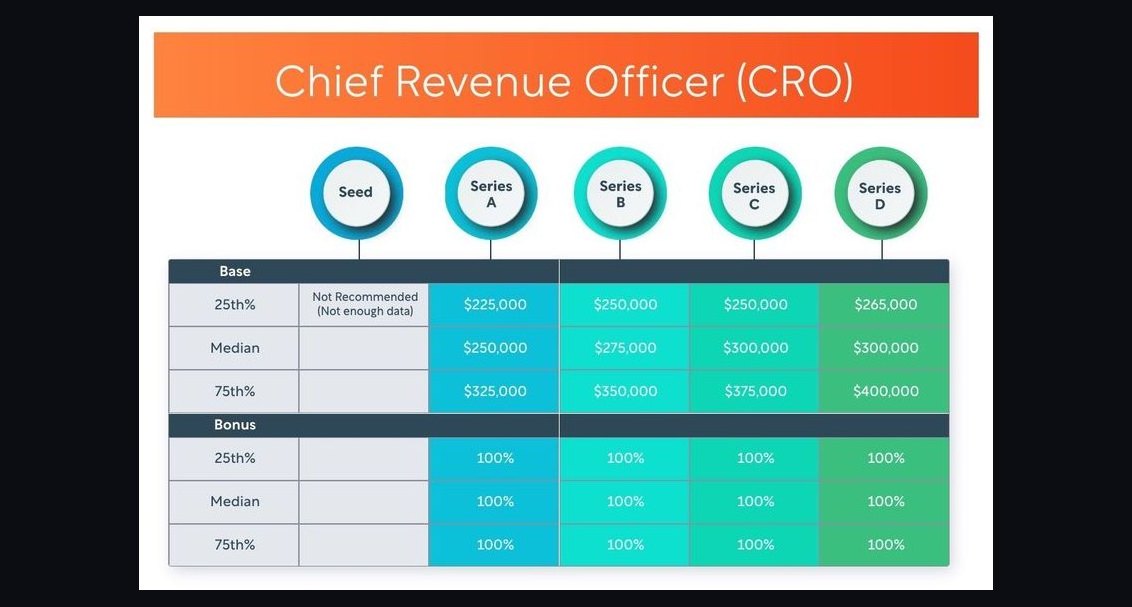 revopsCRO compensation — fractional, full-time, equity in 2027
 revopsWhich vendor consolidation patterns are signaling a shift toward single-platform GTM stacks in 2027?
 revopsHow does the secondary ticket market and resale economics work in 2027?
 revopsHow is AI changing sales territory and quota planning in 2027?
 revopsWhy do 2027 buying committees now demand ROI simulations before demos?
 revopsHow should RevOps reprioritize tool investments when vendor consolidation makes data portability harder in 2027?
 revopsCan AI in the funnel effectively replace human-led qualification for enterprise buying committees in 2027?
 revopsHow is AI transforming lead qualification in hyper-competitive GTM plays in 2027?
 revopsWhat's the role of customer success in revenue expansion for 2027 B2B SaaS?