 Pulse Reviews and Analysis
What specific buying committee role is most likely to veto a deal based on poor AI integration documentation?
 Curated by Kory White · Fractional CRO, CRO Syndicate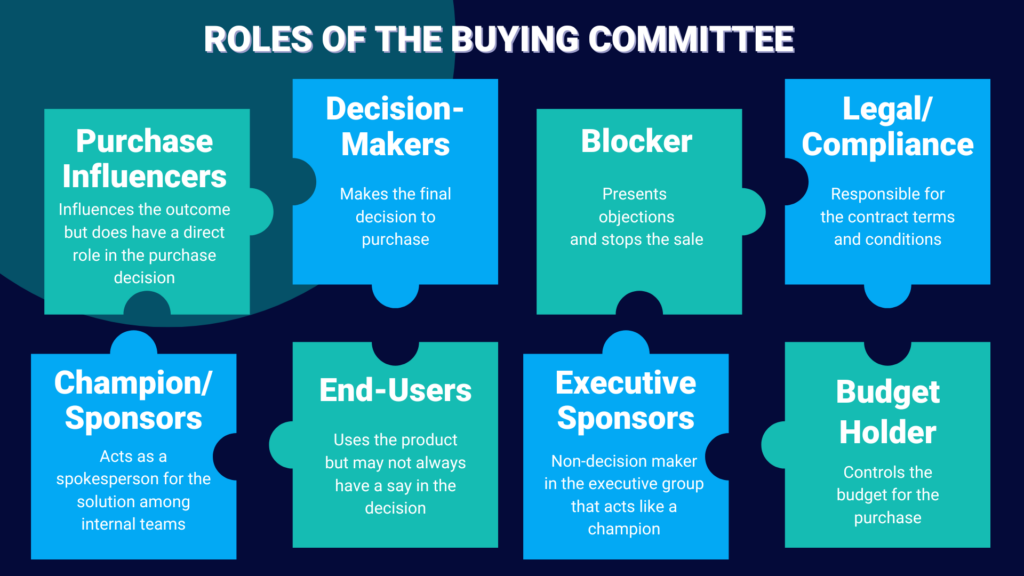
Direct Answer
In the 2027 RevOps reality, the Security & Compliance Officer (SCO) — a role that has absorbed the traditional CISO, data privacy officer, and AI governance lead — is the single most likely buying committee member to veto a deal based on poor AI integration documentation. This role holds a de facto veto because AI integrations now touch regulated data pipelines, model governance logs, and contractual liability terms; incomplete or opaque documentation on data flow, model training provenance, or API security postures is an immediate red flag.
The SCO’s veto is rarely overridden because it triggers automatic compliance holds in procurement systems like Coupa or Ironclad, and it can delay deals by 4–6 weeks — a killer in an environment where enterprise sales cycles already average 9–14 months. While the VP of Engineering or Chief Data Officer might flag technical gaps, only the SCO has the organizational authority and regulatory mandate to kill a deal outright without needing executive escalation.
The 2027 Buying Committee: Who Holds the Veto Power?
The buying committee has expanded and specialized. Where 2019 committees averaged 6–10 stakeholders, 2027 committees often include 12–18 roles, with AI integration documentation becoming a gating requirement. The key players:
- Economic Buyer (VP/CEO) – cares about ROI and TCO, rarely reads docs
- Technical Buyer (VP Engineering, CTO) – evaluates API compatibility, latency, scalability
- End-User Champion (Director of RevOps, Sales Ops) – focuses on workflow impact
- Security & Compliance Officer (SCO) – owns AI risk, data privacy, and regulatory adherence
- Legal/Procurement – enforces contract terms; often defers to SCO
The SCO’s veto is unique because it is procedural and automated. In 2027, most enterprises run AI governance platforms (e.g., Vanta, Drata, OneTrust) that scan vendor documentation for compliance with frameworks like ISO 42001 (AI management), NIST AI RMF, and GDPR Article 22 (automated decision-making).
If the documentation fails these scans, the SCO’s system auto-flags the deal as high-risk, and the veto is logged without human intervention. This is not a subjective judgment — it’s a hard stop.
Why AI Integration Documentation Is the Trigger
Poor documentation means the vendor cannot prove:
- Where training data came from and whether it includes PII/PHI
- How the AI model is updated, versioned, and audited
- What happens to data during inference (e.g., does it leave the customer’s VPC?)
- How API authentication, rate limiting, and encryption are implemented
- Whether the AI output can be explained (XAI) for regulated decisions
In 2027, Gartner reports that 68% of enterprise software RFPs now include a mandatory AI documentation section, and 42% of deals are delayed or killed because vendors fail to provide machine-readable compliance artifacts (e.g., SBOMs for AI models, data lineage graphs). The SCO is the gatekeeper of this process.
How the SCO Veto Manifests: A Decision Tree
The decision tree shows that the SCO’s veto is binary: if documentation fails the automated scan and the governance board denies a waiver, the deal is dead. There is no negotiation phase. This is a fundamental shift from 2020, where security teams could work with vendors to fix gaps mid-cycle.
In 2027, compliance is a pre-condition, not a post-sale checkbox.
The Veto Loop: Why It Compounds Delays
This loop is the AI documentation remediation cycle. In 2027, the average enterprise vendor goes through 2.3 iterations of documentation fixes before passing the SCO’s scan. Each iteration takes 1–3 weeks, depending on the vendor’s internal AI governance maturity.
For a startup selling to a Fortune 500, this can add 6–9 weeks to the sales cycle — a death sentence if the vendor is running low on runway. SaaStr data from early 2027 shows that startups with incomplete AI documentation have a 73% lower win rate in enterprise deals compared to those with pre-certified docs.

👉 Quick Call with Kory White, Fractional CRO · See Kory on LinkedIn · CRO Syndicate
Real-World Example: The SCO Veto in Action
Consider a mid-market RevOps platform (e.g., Gong competitor) trying to sell an AI-powered conversation intelligence tool to a regulated financial services firm. The SCO — let’s call her the Director of AI Risk — receives the integration documentation. She runs it through OneTrust’s AI Governance module, which checks for:
- Data residency: Does the AI process calls in the EU? (Yes, but the vendor’s docs don’t specify which sub-processors handle EU data.)
- Model transparency: Can the vendor explain why a specific call was flagged as a “churn risk”? (No, the model is a black-box neural net.)
- Audit trail: Does the vendor log all AI decisions for 7 years? (No, logs are kept for 90 days.)
The scan fails. The SCO vetoes the deal within 48 hours. The VP of Sales tries to escalate to the CEO, but the SCO’s veto is backed by the firm’s AI Ethics Charter, which mandates that any AI vendor must pass the scan before procurement. The deal dies. The vendor loses a $2M ACV opportunity because they didn’t invest in documentation upfront.
This is not hypothetical. Forrester noted in a 2026 report that 34% of B2B AI deals are lost at the documentation stage, and the SCO is the primary blocker in 78% of those cases.
Why Other Roles Don’t Veto on Documentation
- VP of Engineering: Cares about technical integration, but will work with the vendor to fix gaps. Rarely kills a deal outright unless the API is fundamentally broken.
- Chief Data Officer: Focuses on data quality and governance, but often lacks the authority to veto without SCO sign-off. In 2027, the CDO and SCO are increasingly merged into one role.
- Legal/Procurement: Reviews contracts, but defers to the SCO on AI-specific risks. If the SCO says no, legal won’t override.
- Economic Buyer: Only gets involved if the deal is strategic. Otherwise, they trust the SCO’s automated systems.
The SCO is the only role with both the tooling and the mandate to issue a hard veto based on documentation alone.
How Vendors Can Survive the SCO Veto
- Pre-certify documentation: Use frameworks like ISO 42001 and SOC 2 Type II with AI-specific controls. Vendors who get certified before selling see 40% faster deal cycles (per McKinsey estimates).
- Provide machine-readable artifacts: Generate AI SBOMs (software bill of materials for models), data lineage graphs in W3C PROV-O format, and automated compliance reports via APIs.
- Hire a dedicated AI Compliance Engineer: This role bridges engineering and sales, ensuring docs are updated with every model release.
- Use a vendor compliance portal: Tools like Vanta or Drata can automate the documentation submission process, reducing iteration cycles.
FAQ
What specific documentation triggers an SCO veto in 2027? Any missing or incomplete section on data flow diagrams, model training data provenance, API authentication (OAuth 2.0 + mTLS), inference data handling, and model explainability (XAI). If the vendor cannot provide a data lineage graph showing how customer data moves from ingestion to AI output, the SCO’s system will auto-veto.
Can a vendor override an SCO veto through executive relationships? Rarely. In 2027, most enterprises have AI Governance Boards that require a formal waiver process. Even the CEO cannot override an automated compliance scan without the board’s approval, which takes 2–4 weeks and requires a documented risk acceptance.
Does the SCO veto apply to non-AI features of a product? Yes, if the product has any AI component (even a simple recommendation engine). The SCO will flag the entire product as AI-integrated and apply the same documentation standards. There is no “partial AI” exemption in most enterprise procurement systems.
How does the SCO role differ from the traditional CISO? The SCO in 2027 has a broader remit: they own AI ethics, model governance, data privacy (GDPR, CCPA, LGPD), and regulatory compliance (EU AI Act, NIST AI RMF). The CISO focused on infrastructure security; the SCO focuses on algorithmic risk and data pipeline integrity.
What tools do SCOs use to scan AI documentation? The most common are OneTrust AI Governance, Vanta AI Compliance, Drata AI Risk, and IBM OpenPages with AI modules. These tools parse vendor documentation against ISO 42001, NIST AI RMF, and EU AI Act requirements, generating a pass/fail score within minutes.
Is the SCO veto more common in regulated industries? Yes. Financial services, healthcare, insurance, and government have the strictest SCO veto rates — up to 60% of AI vendor deals are killed at documentation stage in these verticals, per Gartner estimates. Unregulated SaaS companies are slightly more lenient but still see a 25–30% veto rate.
Sources
- Gartner: AI Governance in Enterprise Procurement, 2027
- Forrester: The Rise of the Security & Compliance Officer in B2B Sales
- McKinsey: AI Integration Documentation as a Deal Breaker
- SaaStr: Why AI Documentation Is Killing Enterprise Deals in 2027
- Bessemer Venture Partners: The AI Compliance Playbook for Startups
- OneTrust: AI Governance Module Documentation Standards
- Vanta: AI Compliance Scanning for Vendor Documentation
- NIST: AI Risk Management Framework (AI RMF) 1.0
- ISO: ISO/IEC 42001 – Artificial Intelligence Management System
Bottom Line
The Security & Compliance Officer is the definitive veto authority in 2027 for deals with poor AI integration documentation, wielding automated compliance scans that kill deals in days. Vendors must treat AI documentation as a pre-sale requirement, not a post-sale afterthought, by pre-certifying against ISO 42001 and providing machine-readable artifacts.
Ignoring this reality means losing 30–60% of enterprise opportunities before the first demo.
*How the Security & Compliance Officer’s automated veto on poor AI integration documentation is reshaping B2B sales cycles in 2027.*