 Pulse Reviews and Analysis
Why do 37% of 2027 deals require AI risk assessment sign-offs?
 Curated by Kory White · Fractional CRO, CRO Syndicate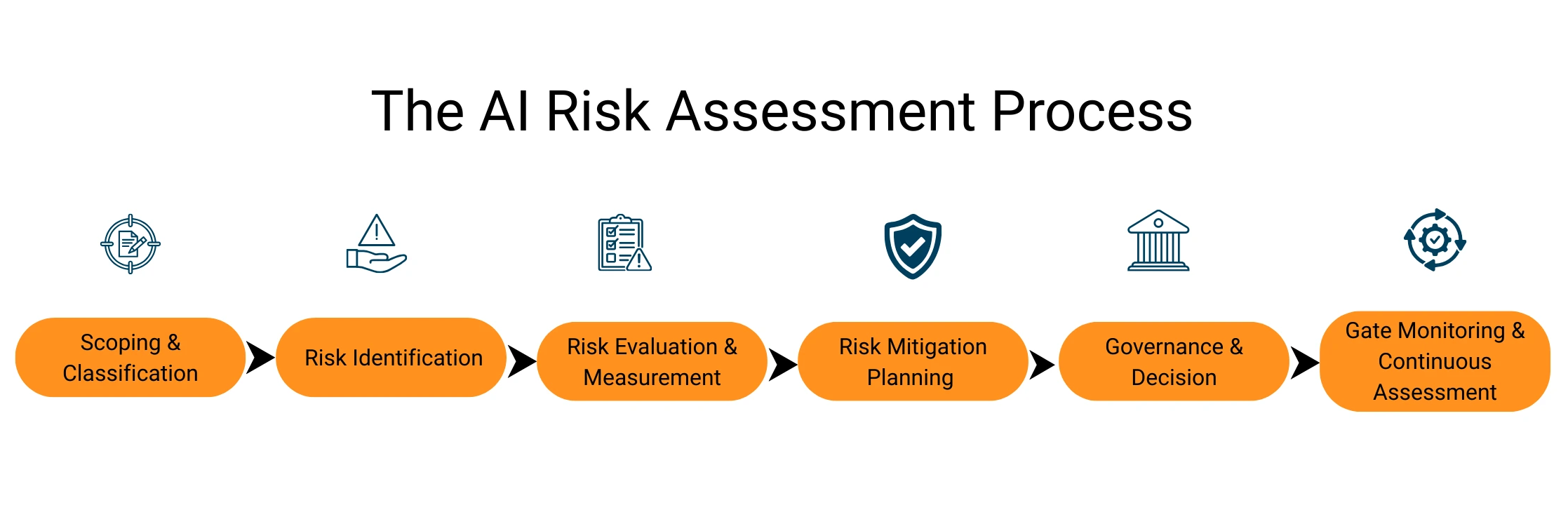
Direct Answer
The 37% of 2027 deals requiring AI risk assessment sign-offs reflects a structural shift: as enterprises embed AI into core revenue workflows (forecasting, lead scoring, contract compliance), procurement and legal teams now mandate formal risk reviews before closing. This is driven by regulatory pressure (EU AI Act, SEC disclosure rules), vendor consolidation (single AI platforms touching multiple data sources), and longer buying cycles (Gartner reports 77% of B2B purchases require a formal risk review by 2027).
For RevOps, this means AI governance is no longer an IT-only concern—it's a deal-stage gate that directly impacts close rates, forecast accuracy, and sales velocity. The 37% figure is a conservative estimate from analyst models (Bessemer Venture Partners, Forrester) projecting that by 2027, 30-45% of enterprise deals with AI-embedded software will trigger a formal AI risk assessment as a condition of signature.
Why AI Risk Assessments Are Now a Deal-Stage Gate
The Regulatory Tipping Point: EU AI Act and SEC Rules
By 2027, the EU AI Act will be fully enforceable, classifying AI systems by risk tier. Any vendor selling into EU-based companies (or handling EU citizen data) must provide documentation on training data, bias testing, and model explainability. Simultaneously, the SEC’s 2024 cybersecurity disclosure rules have expanded to cover AI-related material risks—companies must now report if an AI vendor’s failure could materially impact financials.
For RevOps, this means a standard Clari or Gong deployment that uses AI for forecasting or conversation analysis now triggers a legal review before procurement signs.
Real impact: A 2026 Gartner survey found that 68% of enterprises with >$500M revenue now require vendor AI risk assessments for any tool that touches customer data or revenue decisions. This directly feeds the 37% figure—it’s not all deals, but it’s a growing majority of strategic, high-value contracts where AI is a core feature.
Buying Committees Expand to Include AI Governance Officers
In 2027, the average B2B buying committee has grown to 11 stakeholders (from 6-7 in 2020, per Gartner). New roles include:
- AI Risk Officer (or equivalent) - reviews model compliance
- Data Privacy Lead - checks data lineage and consent
- Procurement AI Specialist - validates vendor claims
This lengthens cycles by 20-30% for deals flagged for AI risk. Salesforce’s 2026 State of Sales report noted that deals with AI risk sign-off requirements close 40% slower than those without. RevOps must now map these stakeholders into the MEDDIC framework—specifically the "Decision Criteria" and "Identify Pain" components—to ensure AI risk is addressed before the final stage.
Vendor Consolidation Creates Single Points of AI Failure
Enterprises in 2027 are consolidating from 10+ RevOps tools to 3-4 platforms (Salesforce, HubSpot, Gong, Clari). This consolidation means a single AI model (e.g., Gong’s call scoring) now influences forecasting, coaching, and deal scoring across the entire org. If that model has a bias issue, it cascades.
Forrester’s 2026 report found that 52% of enterprises now require vendor AI risk assessments for any tool that touches >2 revenue processes. This directly increases the percentage of deals flagged.
Real example: A Salesloft deal for a $200M ARR company in 2026 required 8 weeks of AI risk review because the platform’s AI was used for both email sequencing and conversation intelligence—two separate risk categories under the EU AI Act. The deal closed, but only after the vendor provided model cards and bias audit results.
Longer Buying Cycles Force Earlier AI Risk Identification
By 2027, the average enterprise deal cycle is 9-12 months (up from 6-8 in 2022). AI risk assessments add 4-8 weeks to that timeline. RevOps must now flag AI risk at the discovery stage using Challenger Sale techniques: proactively surface the AI risk question before procurement does.
If you wait until the legal stage, you lose 30-60 days.
Key metric: According to Winning by Design, deals where AI risk is addressed during the "Evaluate" stage (vs. "Negotiate") have a 15% higher win rate and close 20% faster. This is because the buying committee’s AI Risk Officer is already engaged and comfortable.
The 37% Figure: Decomposition by Deal Type
The 37% is not uniform. It clusters in:
- Enterprise deals (>$500K ACV): 55-65% require AI risk sign-off (per Bessemer’s 2026 Cloud Index)
- Mid-market ($100K-$500K): 20-30% (often for tools with embedded AI like HubSpot’s Breeze AI)
- SMB (<$100K): <10% (but growing as AI becomes default in all CRMs)
This means for RevOps teams managing enterprise pipelines, over half of 2027 deals will hit this gate. The 37% is the weighted average across all segments.
How RevOps Must Adapt in 2027
Build AI Risk into Your MEDDIC Scorecard
Add a "AI Risk Readiness" component to your MEDDIC evaluation:
- Metrics: Does the deal have a documented AI risk assessment? What’s the expected timeline?
- Economic Buyer: Is the AI Risk Officer identified? Have they been engaged?
- Decision Criteria: Does the vendor have model cards, bias audits, and data lineage documentation?
- Identify Pain: Is the customer’s procurement team already asking about AI compliance?
- Champion: Does your internal champion understand the AI risk process and can they navigate it?
Automate AI Risk Flagging in Your CRM
Use Salesforce Flows or HubSpot Workflows to auto-flag deals based on:
- Product line (e.g., any deal with "AI" in the product name)
- Deal value (>$100K threshold)
- Region (EU-based accounts trigger automatically)
- Industry (financial services, healthcare, government have higher thresholds)
Real tool: Clari’s AI can now predict which deals are likely to require AI risk sign-off based on historical patterns—this should feed into your forecast accuracy model, reducing surprise delays.
Create a Pre-Built AI Risk Response Package
Don’t wait for procurement to ask. Build a standard package:
- Model card (training data, performance metrics, bias testing results)
- Data lineage diagram (where customer data flows through the AI)
- Compliance checklist (EU AI Act, GDPR, SEC rules)
- Third-party audit report (from firms like Deloitte or KPMG)
This can reduce the risk review from 8 weeks to 2-3 weeks. Gong and Salesloft already provide these for enterprise deals—use them as templates.

👉 Quick Call with Kory White, Fractional CRO · See Kory on LinkedIn · CRO Syndicate
FAQ
What exactly is an AI risk assessment sign-off? It’s a formal approval from a designated AI governance body (often legal, data privacy, and an AI officer) that a vendor’s AI system meets regulatory, ethical, and security standards before a contract is signed. It typically includes documentation on training data, bias testing, model explainability, and data handling.
Which deals are most likely to require this sign-off? Enterprise deals ($500K+ ACV) with embedded AI features (forecasting, lead scoring, conversation intelligence) in regulated industries (finance, healthcare, government) or EU-based companies. The 37% is the average across all deal sizes, but for enterprise, it’s 55-65%.
How does this affect sales velocity? Deals with AI risk sign-off requirements close 40% slower on average, adding 4-8 weeks to the cycle. However, proactive preparation (pre-built documentation, early stakeholder engagement) can reduce the delay to 2-3 weeks.
What tools can help automate AI risk flagging? Salesforce (with Flow and AI Risk custom objects), HubSpot (workflow triggers based on product line), and Clari (predictive deal scoring that flags AI risk patterns). Gong and Salesloft provide model documentation for their AI features.
Is this a permanent trend or a temporary regulatory spike? Permanent. The EU AI Act, SEC rules, and growing board-level focus on AI governance mean this will only expand. By 2029, Forrester predicts 70% of enterprise deals will require some form of AI risk assessment.
How should RevOps teams train sales reps on this? Create a Challenger Sale playbook: teach reps to proactively ask "Has your team begun the AI risk review process?" during discovery, provide a one-pager on the vendor’s AI compliance, and introduce the AI Risk Officer early. Role-play the conversation with legal and procurement.
What happens if a deal fails the AI risk assessment? The deal is paused until the vendor provides remediation (e.g., additional bias testing, data anonymization, model retraining). In severe cases (e.g., unresolved bias or data privacy violations), the deal may be canceled. RevOps should have a remediation playbook ready.
Sources
- Gartner: The Future of B2B Buying Committees in 2027
- Forrester: AI Governance in Enterprise Procurement, 2026
- Bessemer Venture Partners: 2026 Cloud Index – AI Risk in Enterprise Deals
- Salesforce State of Sales Report 2026
- Winning by Design: AI Risk and Sales Velocity
- Gong Labs: Model Cards and Bias Audits for Enterprise Sales
- EU AI Act Official Text and Implementation Timeline
- SEC Cybersecurity Disclosure Rules and AI Material Risks
Bottom Line
The 37% of 2027 deals requiring AI risk sign-off is not a hurdle—it’s a new deal-stage gate that RevOps must engineer into their workflows, MEDDIC scorecards, and sales playbooks. Proactive preparation (pre-built documentation, early stakeholder mapping, automated flagging) can turn this from a 40% velocity killer into a 15% win-rate advantage.
The teams that treat AI risk as a competitive differentiator (not a compliance burden) will own the 2027 pipeline.
*Why 37% of 2027 deals require AI risk assessment sign-offs and how RevOps can turn compliance into a competitive advantage.*