

How can RevOps use AI to identify stalled deals in longer sales cycles in 2027?
 Curated byKory White · Fractional CRO · Maryland
Quality
Certified

RevOps can identify stalled deals by feeding CRM and revenue-intelligence data into a model that scores every open opportunity for stall risk, then routes the highest-risk deals to reps and managers with a specific recommended action. In longer sales cycles with large buying committees, this replaces manual pipeline review with continuous behavioral monitoring — catching disengagement 10-15 days earlier than a human scanning a dashboard ever could.
The outcome you should expect
When RevOps stands up an AI-driven stall-detection system, the change shows up in three places: earlier detection, fewer surprise losses, and a forecast that stops moving in big jumps at quarter-end. Instead of a rep or manager discovering in week 12 that a deal has gone quiet, the model flags the erosion in week 3 or 4, while there's still time to act. Teams that implement this well typically see stalled-deal volume in the pipeline drop by 15-30% within two to three quarters, because deals that would have died silently now get a re-engagement attempt while the champion relationship is still warm.
The forecast benefit is arguably bigger than the win-rate benefit. In a 9-18 month cycle with a dozen stakeholders, a deal can sit in "Negotiation" for four months after it has effectively died — nobody moves it because nobody has evidence it's dead. AI-driven scoring gives RevOps an evidence-based reason to either re-engage or downgrade the deal, which tightens forecast accuracy because "zombie" deals stop inflating the pipeline. This doesn't happen instantly — it takes a full training cycle (usually two to three quarters of outcomes) before the model's recommendations are specific enough to trust over a rep's gut read. Early on, expect the system to be directionally right but tactically generic; it gets sharper as it accumulates labeled outcomes from your own sales motion.

It's also important to set expectations about what doesn't change: AI does not close stalled deals on its own, and it does not replace the judgment call about whether a deal is worth saving. What it changes is the timing and evidence base of that decision — RevOps and reps make the same calls they always made, just three to four weeks earlier and with a data trail instead of a hunch.
What drives that outcome
The mechanism behind early detection is a scoring model that continuously re-evaluates three signal categories rather than waiting for a scheduled pipeline review. First, engagement velocity — the rate of calls, email replies, meeting acceptances, and document opens — is tracked week over week, because a sustained drop is one of the earliest and most reliable indicators that momentum has stalled. Second, buying committee coverage tracks how many of the identified stakeholders have been engaged recently; a deal where only the original champion is active while the economic buyer and other evaluators have gone silent for 20-30 days carries materially higher risk than one where multiple stakeholders remain engaged. Third, the model watches CRM hygiene and stage behavior — next-step fields sitting blank, close dates pushed more than once without a new activity logged, or a stage duration that's running long relative to your historical average for that stage.

These three signal categories don't carry equal weight at every stage of the cycle. Early in a deal (the first quarter of the cycle), engagement velocity is the dominant predictor — a champion who stops responding to a discovery follow-up is a strong early warning. Late in a long cycle (month nine and beyond), buying committee churn becomes the stronger signal, because by that point everyone who matters should already be engaged, and any one of them going dark is disproportionately risky. RevOps teams that let the model apply stage-appropriate weighting, rather than a single flat formula across the whole cycle, get materially fewer false positives.
Benchmarks and realistic ranges
Because "longer" sales cycles vary widely by deal size and industry, the specific thresholds RevOps should tune for also vary — but the following ranges hold up as reasonable starting points before you have enough of your own outcome data to calibrate a custom model.

- Silence threshold: For most complex B2B cycles (6-18 months), 14-21 days of no meaningful engagement from a previously active stakeholder is a defensible line for flagging risk. Shorter cycles (30-90 days) should tighten that to 5-10 days.
- Engagement velocity drop: A 40-50% decline in call, email, or document-view activity over a rolling two- to three-week window is a widely used trigger point for a risk-score increase, rather than a single missed touchpoint.
- Detection speed improvement: Manual pipeline review typically surfaces a stall 14-21 days after it starts, since it depends on a scheduled review cadence. A continuously scoring model can surface the same stall in 3-7 days because it doesn't wait for a review meeting.
- Stall reduction: Teams that operationalize alerts into a defined rep workflow (not just a dashboard nobody checks) report reductions in the stalled-deal share of pipeline in the 15-30% range within two to three quarters.
- Forecast accuracy improvement: Removing "zombie" deals from a rep's committed forecast, and getting a truer read on what's actually moving, tends to improve forecast accuracy for deals in longer cycles (9-plus months) by a meaningful double-digit percentage — often cited informally in the 15-25% range by RevOps leaders who've implemented this.
- Training data minimum: A model needs roughly 12 months of consistent activity logging and enough closed-won/closed-lost outcomes (a few hundred deals is a reasonable floor) to produce reliable stall-risk scores. Below that volume, a pre-trained vendor model fine-tuned on your data outperforms a from-scratch build.
- Retraining cadence: Quarterly retraining, or after every 100 or so new closed deals, keeps the model aligned with shifts in your sales motion, competitive landscape, or average cycle length — stale training data is one of the fastest ways for a model's recommendations to drift out of relevance.
These are starting ranges, not fixed rules — the right number for "silence threshold" on a 4-month cycle looks very different than on an 18-month enterprise deal, and RevOps should expect to adjust every one of these once six months of real outcome data comes back from the model.

Risks, edge cases, and failure modes
The most common failure mode is not a bad model — it's bad or incomplete input data. If reps don't consistently log calls and emails, the model sees false stalls where activity actually happened off the record; a reasonable target is capturing at least 80% of deal-related interactions before you trust the scores. Enforcing automatic activity capture (email and calendar sync, call-recording integration) matters more to model accuracy than any tuning of the scoring algorithm itself.
A second edge case is confusing natural pauses with real stalls. Budget freezes, fiscal-year-end approval cycles, and known internal review periods (legal, procurement, security) all produce silence that isn't a stall — it's expected. Without a feature that accounts for stage-expected duration (e.g., "Procurement Review" is expected to take 45 days at this account), the model will flag every one of these normal pauses as high risk, training reps to ignore the alerts entirely. This is the single fastest way an otherwise-good system loses credibility with the sales floor.

Third, stale contact data creates false disengagement signals. If 20-30% of contact records have outdated titles or emails, the model may flag a stakeholder as "gone dark" when they've actually left the company or changed roles months ago and the CRM was never updated — the real issue is a data hygiene problem, not a sales problem. Running a recurring contact-data refresh and flagging any account whose data health score falls below a working threshold (many teams use 70%) catches this before it corrupts the model's view of the deal.
Fourth, inconsistent stage definitions across regions or business units quietly break stage-specific weighting. If one team's "Negotiation" is another team's "Proposal," the model's assumptions about what silence means at that stage become meaningless, and risk scores stop being comparable across the pipeline. This has to be fixed at the CRM configuration level before the AI layer can be trusted.

Finally, there's a real risk of alert fatigue. If every deal over 90 days generates a notification regardless of severity, reps learn to dismiss them within a few weeks. The fix is tiering: low-risk deals go to a passive review list, not an active alert, and only medium- and high-risk scores generate a direct notification to a rep or manager. Random spot-checking a sample of the model's calls against what actually happened — comparing a handful of flagged deals each month against real outcomes — is the cheapest way to catch both false positives and a model that's quietly drifted stale.
A practical rollout plan
Rolling this out works best as a phased sequence rather than a single big-bang launch, because both the data pipeline and rep trust need time to mature.

Phase 1 — Data foundation (weeks 1-4). Audit activity-logging completeness, connect your CRM, revenue-intelligence tool, and email/calendar into a single view, and fix the biggest hygiene gaps (blank next-step fields, stale contacts, inconsistent stage definitions) before any scoring model touches the data.
Phase 2 — Baseline model and thresholds (weeks 4-8). Define your silence threshold and expected stage durations using your own historical closed-lost data, then stand up a first-pass risk score, even a simple weighted rules model, rather than waiting for a fully trained AI model. This gives reps something to react to while richer training data accumulates.

Phase 3 — Tiered alerting (weeks 8-10). Route low-risk deals to a passive weekly list, medium-risk deals to an automated rep notification with one recommended action, and high-risk deals to a mandatory rep-plus-manager review within a defined window (24-48 hours is typical). This is the step that turns detection into behavior change.
Phase 4 — Feedback loop and retraining (ongoing, quarterly). Feed every flagged deal's actual outcome — won, lost, or re-engaged — back into the model so it learns which recommended actions actually worked for your specific sales motion, and retrain on a quarterly cadence or after roughly every 100 new outcomes.

Throughout this rollout, RevOps should own the model's scoring logic and thresholds, while sales leadership owns the escalation workflow — splitting those responsibilities is what keeps the system from either being too technical for reps to trust or too loose for RevOps to defend in a forecast review. Vendor consolidation adds friction here: with Salesforce having absorbed Slack and Tableau, and HubSpot having absorbed Clearbit and PieSync, the underlying data pipeline that feeds the model has to be re-validated any time one of those platforms changes its data schema or sync behavior, so build the pipeline with a sync-monitoring step rather than assuming it stays stable indefinitely.
Related questions
How long should a deal be silent before RevOps flags it as stalled?
For most complex B2B cycles, 14-21 days of no meaningful stakeholder activity is a reasonable default threshold, tightened to 5-10 days for shorter 30-90 day cycles. Always adjust for known account-specific review periods before treating silence as risk.
Which signal matters most for detecting a stall early versus late in the cycle?
Early in a cycle, a drop in engagement velocity (calls, email replies, document opens) is the strongest predictor. Late in a long cycle, buying committee churn — a previously active stakeholder going quiet — becomes the dominant signal.
Can AI tell the difference between a real stall and a normal budget-cycle pause?
Yes, if the model includes a stage-expected-duration feature calibrated to your account's known review or budget periods. Without that feature, normal pauses get flagged as false stalls, which quickly erodes rep trust in the alerts.
What's the minimum amount of CRM data needed before this works reliably?
Roughly 12 months of consistent activity logging and a few hundred closed-won/closed-lost outcomes is a reasonable floor. Below that, a vendor's pre-trained model fine-tuned on your data will outperform a model built from scratch.
Does this replace manual pipeline reviews entirely?
No — it changes what those reviews focus on. Instead of scanning every open deal, RevOps and managers spend the review time on the subset the model has already flagged as medium or high risk, which is a much smaller, higher-value list.
FAQ
Does a stalled-deal AI model require replacing our existing CRM? No. The model layers on top of your existing CRM and revenue-intelligence tools rather than replacing them — it needs read access to activity, stage, and contact data, which most modern CRMs already expose through native AI features or an API integration.
How is a "stalled" deal different from a "slow" deal in this system? A slow deal is progressing through an expected long cycle with regular activity; a stalled deal has gone quiet relative to its own expected pace. The model distinguishes them by comparing current engagement against your historical baseline for that deal stage, not against a universal calendar.
What happens if reps ignore the alerts? Alert-ignoring is usually a sign the alerts are too frequent or too generic. Tiering severity and pairing every medium- and high-risk alert with one specific, actionable recommendation (not just "this deal looks risky") is what keeps reps engaging with the system instead of tuning it out.
Can this system work if our sales cycle length varies a lot by deal size? Yes, but the thresholds need to be segmented rather than uniform — a single "days of silence" number applied across a $10K deal and a $500K deal will misfire in one direction or the other. Segment your risk thresholds by deal size or product line.
Who should own the model — RevOps or sales leadership? RevOps typically owns the scoring logic, data pipeline, and threshold tuning, while sales leadership owns the escalation workflow and what happens once a deal is flagged. Splitting ownership this way keeps the system technically sound and operationally adopted.
How do we know if the model itself has gone stale? Watch for a rising rate of alerts that reps dispute as inaccurate, or a widening gap between predicted and actual stall-to-win rates. Both are signs it's time for the quarterly retraining cycle rather than waiting for the scheduled date.
Sources
- Gartner: B2B Buying Journey research
- Gong Labs: Revenue Intelligence research
- Clari: Revenue Intelligence platform
- Salesforce: Einstein for Sales
- HubSpot: Breeze AI for CRM
- Forrester: B2B sales research
- SaaStr: B2B sales operations content
- McKinsey: Growth, Marketing & Sales insights
- Harvard Business Review: Selling in the Age of AI
- Outreach: Sales engagement platform
Related on PULSE
- How can RevOps use AI in the funnel to identify stalled deals before the buying committee loses interest?
- How do you run AI follow-up sequences on stalled enterprise deals?
- What is the real cost of a stalled B2B deal when AI is tracking every touchpoint?
- What is the most effective close plan for a deal stalled by a committee's AI risk simulator?
- How can RevOps quantify the cost of a stalled buying committee?
- Top 10 questions to diagnose a stalled deal in the sales cycle
This page will be disappearing soon. Save it to your device for $1 — or read it free while it is here.
@Kory-White- · if Venmo asks, the last 4 of my number are 2012
This page is gone.
This one is off the shelf now. $1 keeps it on your phone for good — the whole page, pictures and diagrams included.
 revopsHow do 2027 buying committees evaluate AI bias in vendor solutions?
 revopsHow does EA Sports College Football 26 pay players through NIL in 2027?
 revopsHow can RevOps use AI to map influence dynamics inside buying committees in 2027?
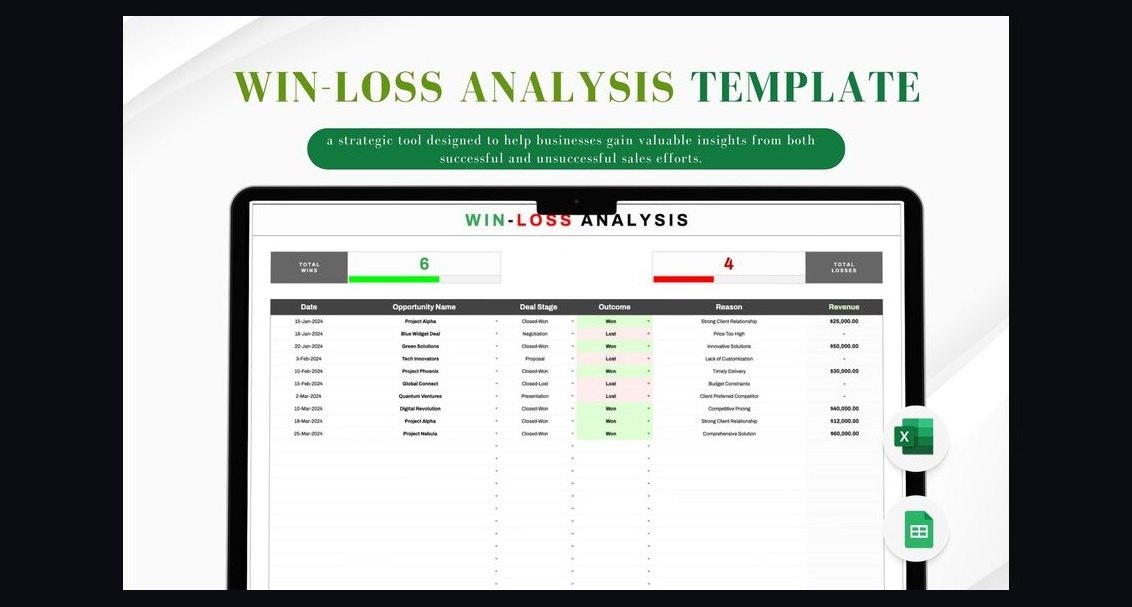 revopsHow Do I Run a Win/Loss Analysis Program That Improves Win Rate in 2027?
 revopsHow is AI changing sales territory and quota planning in 2027?
 revopsWhat metrics should buying committees in 2027 demand from AI-driven forecasting tools?
 revopsWhich AI in the funnel features are buying committees in 2027 treating as non-negotiable?
 revopsWhat triggers are early-stage RevOps teams using in 2027 to hand off AI-qualified leads to human sales reps without losing context?
 revopsAre longer sales cycles in 2027 forcing RevOps to redefine the 'MQL-to-revenue' attribution model?
 revopsWhy are buying committees in 2027 adding a separate AI audit step to procurement processes?