
How is AI in the funnel reshaping the scoring of B2B inbound leads in 2027?
 Curated byKory White · Fractional CRO · Maryland
 PULSEKNOWLEDGE LIBRARY
Quality
Certified
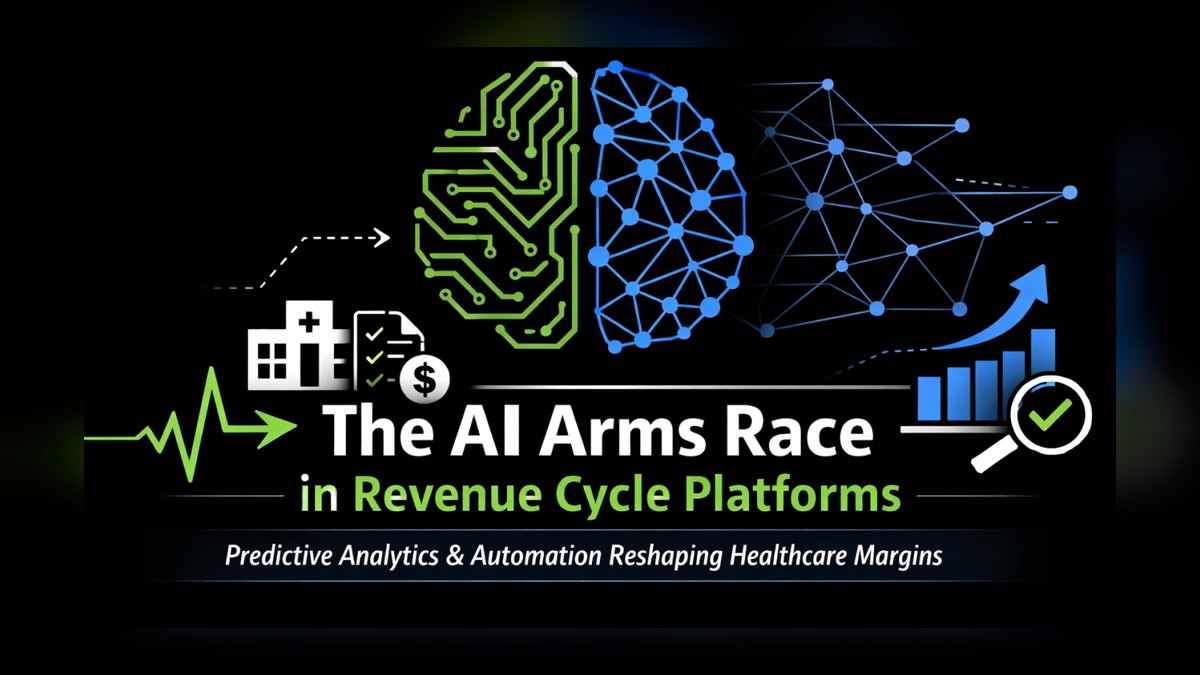
AI is reshaping B2B inbound lead scoring by replacing static, individual-level point systems with real-time models that score entire buying committees. Instead of ranking a single form-fill, AI ingests call transcripts, CRM activity, and account-level engagement to predict whether a group of stakeholders is moving toward consensus — shifting RevOps from lead scoring to opportunity scoring.
From Static MQLs to Real-Time Opportunity Scoring
The old inbound funnel ran on a simple idea: assign points to actions (whitepaper download, pricing-page visit, webinar attendance), sum them, and hand anything over a threshold to sales as a Marketing Qualified Lead. That model was built for a world where one person filled out a form and one person bought. It breaks down as deal complexity rises, because most B2B purchases now involve a group — a champion, an economic buyer, a technical evaluator, procurement, sometimes legal and security — and the person who fills out the form is rarely the person who kills or approves the deal.
AI changes what gets scored, not just how fast it happens. Rather than treating a form submission as the unit of analysis, modern scoring engines treat the account and its buying committee as the unit of analysis. They pull behavioral data (page visits, email opens, content consumption), conversational data (call and demo transcripts from platforms like Gong, Chorus, or Salesloft), and CRM relationship data (who from the account is meeting with whom, how often, and for how long) into a single model that outputs a probability: how likely is this group of people to reach a buying decision, and on what timeline.

This is also where a MEDDPICC-style overlay has become common practice. Instead of scoring behavior in isolation, AI assigns a sub-score to each MEDDPICC dimension — Metrics, Economic Buyer, Decision Criteria, Decision Process, Paper Process, Identify Pain, Champion, and Competition — based on inbound signals it can actually observe. A visit to an ROI or pricing page contributes to the Metrics score. An email thread involving a VP or C-suite title contributes to Economic Buyer. Repeated calls with the same internal advocate who uses language like "I need to get this past legal" contributes to both Champion and Paper Process. The result is a qualification score that maps onto a sales methodology reps already understand, instead of an opaque black-box number they have to trust blindly.
Why this matters for RevOps specifically: the handoff between marketing and sales has historically been the single biggest source of dropped inbound leads. A committee-aware, real-time score gives RevOps a defensible, auditable reason for every routing decision — AE, SDR sequence, or nurture — instead of a fixed point threshold that quietly stops matching reality as buying behavior shifts.

The AI Scoring Pipeline, Step by Step
A modern inbound scoring pipeline runs continuously rather than at a single moment in time. In practice it looks like this:
- Capture — every inbound touch (form fill, chat, content download) creates or updates an account and contact record, and every call or meeting is transcribed and attached to that account.
- Layered scoring — three signal layers are scored independently: behavioral-intent (who visited what, weighted by seniority and recency), conversational (what was said on calls — budget language, competitive mentions, named stakeholders), and committee-health (is the group of engaged contacts at the account growing, stable, or shrinking).
- Aggregation — the three layers combine into one opportunity or intent score, typically on a 0–100 scale, recalculated on a fixed cadence (commonly every few hours rather than once a day).
- Routing — the score determines the next action: high scores go straight to an account executive for direct outreach, mid-range scores enter an SDR-driven sequence with automated nurture support, and low scores sit in a re-evaluation pool rather than being discarded.
- Feedback capture — every outcome (meeting booked, opportunity created, deal closed or lost) is logged back against the original signals that produced the score.

The loop at the bottom is the important part: outcomes feed back into the same accounts and contacts, so the model has fresh training data every cycle instead of a static rulebook that never updates.
What It Costs and How Long Rollout Takes
Cost and timeline depend heavily on whether a team buys native scoring inside an existing platform or builds a custom model.

Native/platform scoring (using AI scoring features already built into a CRM or revenue platform such as Salesforce, HubSpot, or a dedicated revenue intelligence tool) is the cheapest and fastest path. These features are typically bundled into existing subscription tiers or available as a paid add-on, and initial setup — connecting data sources, defining routing thresholds, and validating scores against a few weeks of historical outcomes — usually takes two to six weeks for a team with clean CRM data. The trade-off is less control: you're scoring on the vendor's model logic and can't always see exactly why a score moved.
Custom-built scoring (combining CRM, call-intelligence, and intent data in a warehouse like Snowflake or Databricks, then training or fine-tuning a model on top) gives full control over signal weighting and is where the MEDDPICC-style overlay is easiest to implement precisely, but it requires data engineering and data science time that most mid-market RevOps teams don't have in-house. Realistic timelines run three to six months from data unification to a production-ready model, and ongoing maintenance (retraining, monitoring for drift, adjusting thresholds) is a recurring cost, not a one-time project.

On thresholds: most teams that run committee-level scoring settle into a three-tier band — roughly the top 20–30% of scored accounts routed to direct AE outreach, a middle band (often 30–45% of volume) into an SDR-assisted sequence, and the remainder held in nurture. These bands are starting points, not fixed rules — they should be tuned against your own conversion data in the first quarter of use, because a threshold copied from another company's funnel will misroute leads until it's recalibrated against yours.
Retraining cadence is a real cost line, not a footnote. Weekly retraining is achievable for high-inbound-volume companies with enough closed-won and closed-lost data flowing in every week; for lower-volume B2B companies, monthly retraining is more realistic, and stretching much beyond a quarter between retrains is where model drift starts eroding accuracy, because sales motion, pricing, and buyer behavior change faster than an untouched model can track.

Where RevOps Teams Get Scoring Wrong
The most common failure is summing individual scores instead of scoring the committee. A team that scores five contacts independently and adds their points together will consistently overrate a single loud, high-scoring champion surrounded by silent or disengaged colleagues, and underrate a quieter group of five moderately engaged stakeholders who are actually further along toward consensus. Graph-style relationship scoring — looking at shared meetings, cross-contact email threads, and whether the group is expanding or contracting — corrects for this, but only if someone deliberately builds it in rather than defaulting to a simple sum.
A second common mistake is treating the AI score as a black box the sales team is expected to trust without explanation. Reps who don't understand why a lead scored 78 instead of 45 will ignore the score and revert to gut instinct, which defeats the entire investment. Scoring systems that expose the underlying signals (which MEDDPICC dimension moved, which call triggered a boost, which contact drove a committee-health increase) get adopted; ones that output a single unexplained number typically get worked around within a quarter.

A third mistake is never closing the feedback loop. If SDRs and AEs aren't required to tag outcomes back into the CRM — marking a lead as genuinely hot, cold, or a false positive — the model has nothing accurate to retrain against, and it will keep reinforcing whatever bias existed in the original training data, including biases from reps who ignore high-scoring leads that quietly convert anyway.
A fourth, more operational mistake is letting data silos survive vendor consolidation. Moving to fewer tools doesn't automatically mean unified data — a company running marketing, sales, and service clouds under one vendor can still have lead data, opportunity data, and support data that aren't joined at the account level. AI scoring models need an explicit unified data layer to query across these objects; without it, the model is scoring on a partial picture of the account and will systematically miss committee-health signals sitting in a different silo.

Finally, teams get wrong the assumption that scoring replaces the SDR function. It doesn't — it changes it. SDRs stop spending time manually qualifying inbound volume and instead spend their time engaging the accounts AI has already identified as high-probability, which only works if the organization retrains SDR incentives and workflows around that shift rather than leaving them measured on old activity metrics.
Choosing the Right Scoring Model for Your Funnel
Not every RevOps team needs the same scoring architecture. The right choice depends mainly on inbound volume, deal complexity, and available data engineering capacity.

- Low inbound volume, simple deals, small team: native platform scoring (CRM-built or a lightweight add-on) is almost always the right starting point. The overhead of a custom model isn't justified until there's enough volume and enough closed data to train against.
- High inbound volume, multi-stakeholder deals, dedicated RevOps/data function: a custom committee-level model with a MEDDPICC overlay, built on a unified data layer, pays for itself through better routing accuracy and fewer wasted AE hours on the wrong accounts.
- Mid-market teams in between: a hybrid is common — native scoring for baseline routing, supplemented with a lightweight committee-health check (contact count and cross-contact activity at the account) built with existing CRM automation rather than a full custom model.
Whichever path a team picks, the decision should be revisited as volume and deal complexity change — a model sized for a small inbound funnel will underperform once deal size and stakeholder count grow, and an over-engineered custom model is wasted cost for a team that doesn't yet have the closed-deal volume to train it properly.

Related questions
Does AI scoring eliminate the need for lead qualification calls?
No. AI narrows down which accounts deserve attention and in what order, but a human still needs to confirm pain, budget, and decision process on a call — the score is a prioritization tool, not a replacement for discovery.
How is AI reshaping the buying committee's role in the funnel, not just scoring?
Beyond scoring, AI is used to map relationships between contacts at an account (shared meetings, email threads) to flag whether a committee is aligned or fragmented, which changes how and when sales engages each stakeholder.
What data do I need before I can build committee-level scoring?
At minimum: clean CRM contact and account records, call or meeting transcripts, and enough historical closed-won/closed-lost data to identify which signals actually predicted outcomes — without that, any model is guessing.
Can small B2B companies use AI lead scoring without a data team?
Yes — native scoring features built into mainstream CRM and revenue platforms require no custom data engineering and are the realistic starting point for teams without dedicated data science resources.
FAQ
Is opportunity scoring the same thing as lead scoring? Not quite. Lead scoring rates an individual contact's likelihood to convert; opportunity scoring rates the likelihood that an entire account or buying committee will reach a purchase decision, which is a broader and more accurate unit of measurement for complex B2B deals.
Do I need to throw away my existing MQL definition? Not immediately, but it should stop being the primary routing trigger. Many teams keep a lightweight MQL threshold as a minimum filter while opportunity or intent scoring does the real prioritization work.
What's the minimum data needed to start scoring committees instead of individuals? You need multiple contacts per account tracked in your CRM with timestamped activity, plus a way to see cross-contact interaction (shared meetings or email threads) — without that, you can't distinguish an engaged committee from a single active contact.
How do call transcripts actually factor into the score? Conversation intelligence tools transcribe calls and flag specific signals — named stakeholders, budget mentions, competitor mentions, timeline language — which are converted into score adjustments rather than read manually by a rep.
What causes AI scoring models to drift out of accuracy? Drift happens when the underlying buying behavior, pricing, or sales motion changes faster than the model is retrained. Going more than a quarter without retraining on fresh closed-deal data is the most common cause.
Should SDRs be measured differently once AI scoring is in place? Yes. Once AI handles qualification and routing, SDR performance should be measured on engagement and meeting quality with pre-qualified accounts rather than raw call or email volume, since the qualification work has moved upstream.
Sources
- Gartner — B2B Buying Journey
- Forrester — B2B Revenue Operations research
- McKinsey — B2B digital buying journey
- Gong — Revenue Intelligence
- Salesforce — Einstein for Sales
- Clari — Revenue Platform
- 6sense — Account Engagement Platform
- SaaStr — Sales Development resources
- Winning by Design — Revenue architecture
Related on PULSE
- How is AI in the funnel reshaping B2B lead scoring accuracy in late 2027?
- How is AI-driven predictive lead scoring reshaping B2B sales cycles in 2027?
- How is AI reshaping the B2B sales funnel in Q1 2027 away from linear stages?
- How do you build a real ICP scoring model that reps actually use to filter inbound leads instead of working everything?
- How is the 2027 AI buying committee reshaping your B2B sales cycle length?
- How is the 2027 AI compliance overhaul reshaping your B2B sales discovery stage?
This page will be disappearing soon. Save it to your device for $1 — or read it free while it is here.
@Kory-White- · if Venmo asks, the last 4 of my number are 2012
This page is gone.
This one is off the shelf now. $1 keeps it on your phone for good — the whole page, pictures and diagrams included.
 revopsHow can RevOps use AI to identify stalled deals in longer sales cycles in 2027?
 revopsHow does AI affect the velocity of mid-funnel opportunities in 2027?
 revopsHow do you prioritize the RevOps backlog in 2027?
 revopsBest fractional CRO firms in 2027
 revopsHow are GTM teams restructuring quotas to account for AI-assisted deals in 2027?
 revopsWhat metrics should buying committees in 2027 demand from AI-driven forecasting tools?
 revopsAre longer sales cycles in 2027 forcing RevOps to redefine the 'MQL-to-revenue' attribution model?
 revopsHow can RevOps use AI to map influence dynamics inside buying committees in 2027?
 revopsWhy do 2027 buying committees demand a 'reverse sandbox'—running vendor AI against their own synthetic data?
 revopsIs the rise of the 14-person buying committee making vendor consolidation a necessity for RevOps efficiency in 2027?